Institute of Cardiovascular and Medical Sciences, British Heart Foundation Glasgow Cardiovascular Research Centre, University of Glasgow, Glasgow, Scotland, United Kingdom.
Institute of Cardiovascular and Medical Sciences, British Heart Foundation Glasgow Cardiovascular Research Centre, University of Glasgow, Glasgow, Scotland, United Kingdom.
Can J Cardiol. 2020 May;36(5):659-670. doi: 10.1016/j.cjca.2020.02.081. Epub 2020 Feb 24.
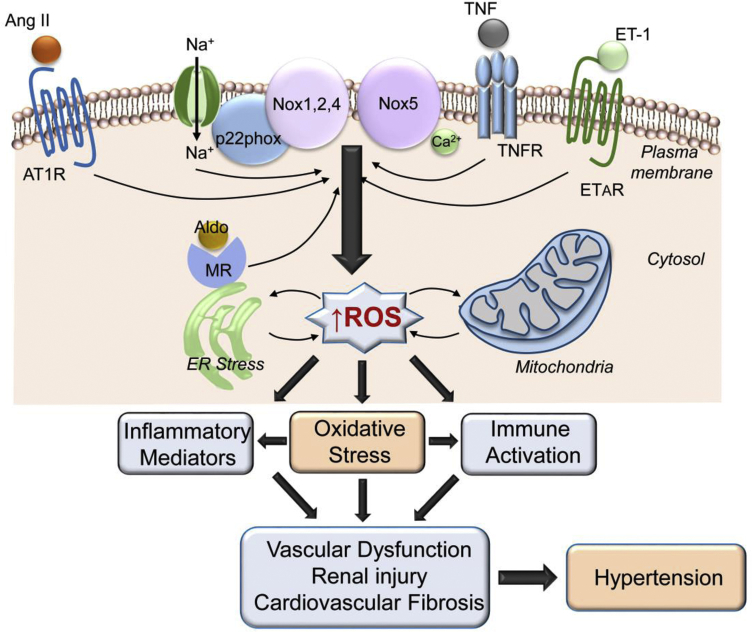
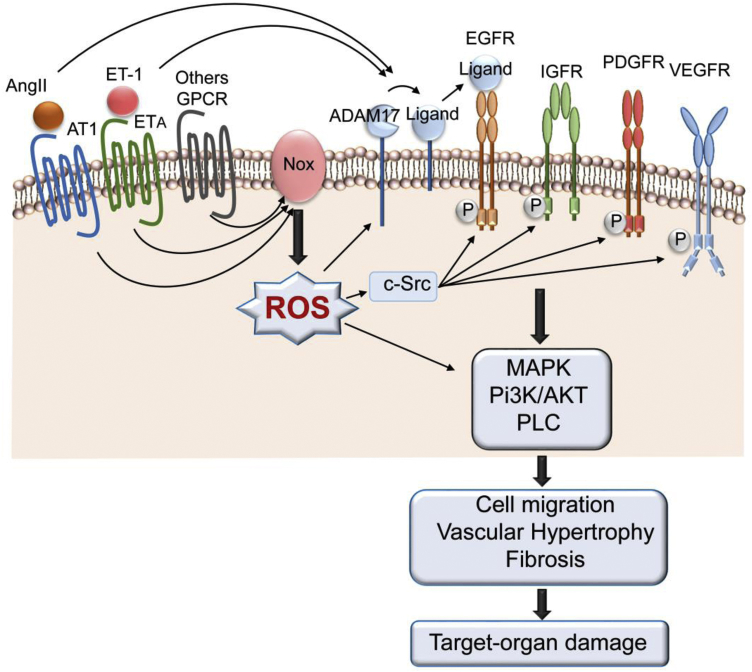
The etiology of hypertension involves complex interactions among genetic, environmental, and pathophysiologic factors that influence many regulatory systems. Hypertension is characteristically associated with vascular dysfunction, cardiovascular remodelling, renal dysfunction, and stimulation of the sympathetic nervous system. Emerging evidence indicates that the immune system is also important and that activated immune cells migrate and accumulate in tissues promoting inflammation, fibrosis, and target-organ damage. Common to these processes is oxidative stress, defined as an imbalance between oxidants and antioxidants in favour of the oxidants that leads to a disruption of oxidation-reduction (redox) signalling and control and molecular damage. Physiologically, reactive oxygen species (ROS) act as signalling molecules and influence cell function through highly regulated redox-sensitive signal transduction. In hypertension, oxidative stress promotes posttranslational modification (oxidation and phosphorylation) of proteins and aberrant signalling with consequent cell and tissue damage. Many enzymatic systems generate ROS, but NADPH oxidases (Nox) are the major sources in cells of the heart, vessels, kidneys, and immune system. Expression and activity of Nox are increased in hypertension and are the major systems responsible for oxidative stress in cardiovascular disease. Here we provide a unifying concept where oxidative stress is a common mediator underlying pathophysiologic processes in hypertension. We focus on some novel concepts whereby ROS influence vascular function, aldosterone/mineralocorticoid actions, and immunoinflammation, all important processes contributing to the development of hypertension.
高血压的病因涉及遗传、环境和病理生理因素之间的复杂相互作用,这些因素影响许多调节系统。高血压的特征通常与血管功能障碍、心血管重塑、肾功能障碍和交感神经系统的刺激有关。新出现的证据表明,免疫系统也很重要,激活的免疫细胞迁移并积聚在组织中,促进炎症、纤维化和靶器官损伤。这些过程的共同点是氧化应激,即氧化剂和抗氧化剂之间的失衡有利于氧化剂,导致氧化还原(redox)信号和控制以及分子损伤的破坏。在生理上,活性氧(ROS)作为信号分子,通过高度调节的氧化还原敏感信号转导来影响细胞功能。在高血压中,氧化应激促进蛋白质的翻译后修饰(氧化和磷酸化)和异常信号传导,导致细胞和组织损伤。许多酶系统会产生 ROS,但 NADPH 氧化酶(Nox)是心脏、血管、肾脏和免疫系统中细胞的主要 ROS 来源。在高血压中,Nox 的表达和活性增加,是心血管疾病中氧化应激的主要系统。在这里,我们提供了一个统一的概念,即氧化应激是高血压病理生理过程的共同介导者。我们专注于一些新的概念,即 ROS 如何影响血管功能、醛固酮/盐皮质激素作用和免疫炎症,所有这些都是导致高血压发展的重要过程。