Verma Alexander K, Messerli Shanta M, Miskimins W Keith
Cancer Biology and Immunotherapies Group, Sanford Research, Sioux Falls, SD, USA.
Oncotarget. 2020 Apr 28;11(17):1493-1504. doi: 10.18632/oncotarget.27348.
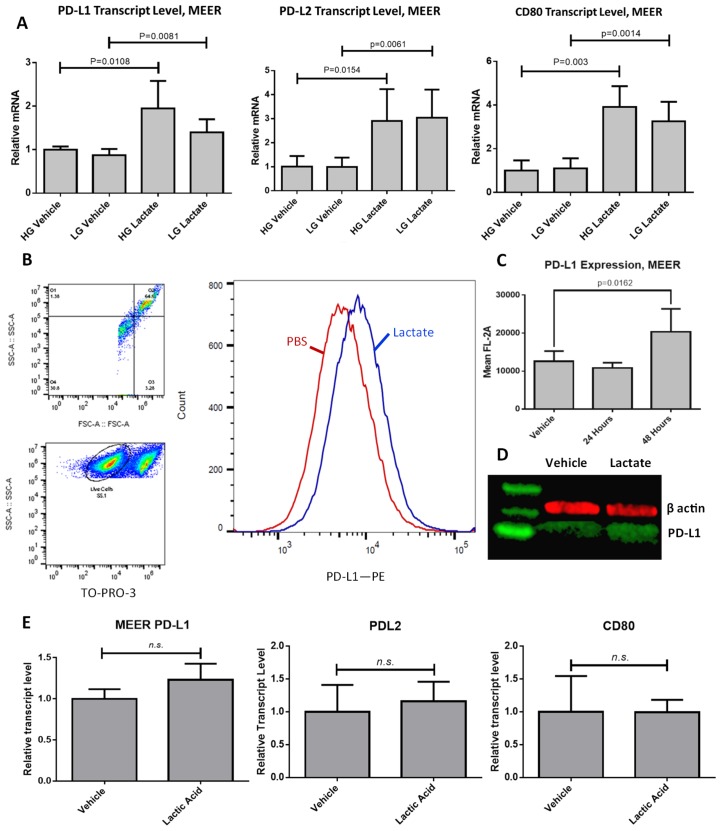
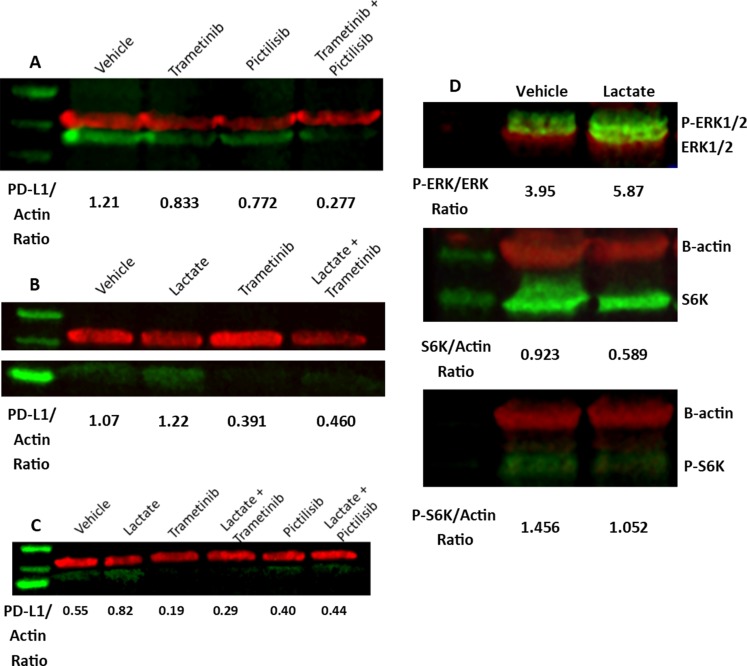
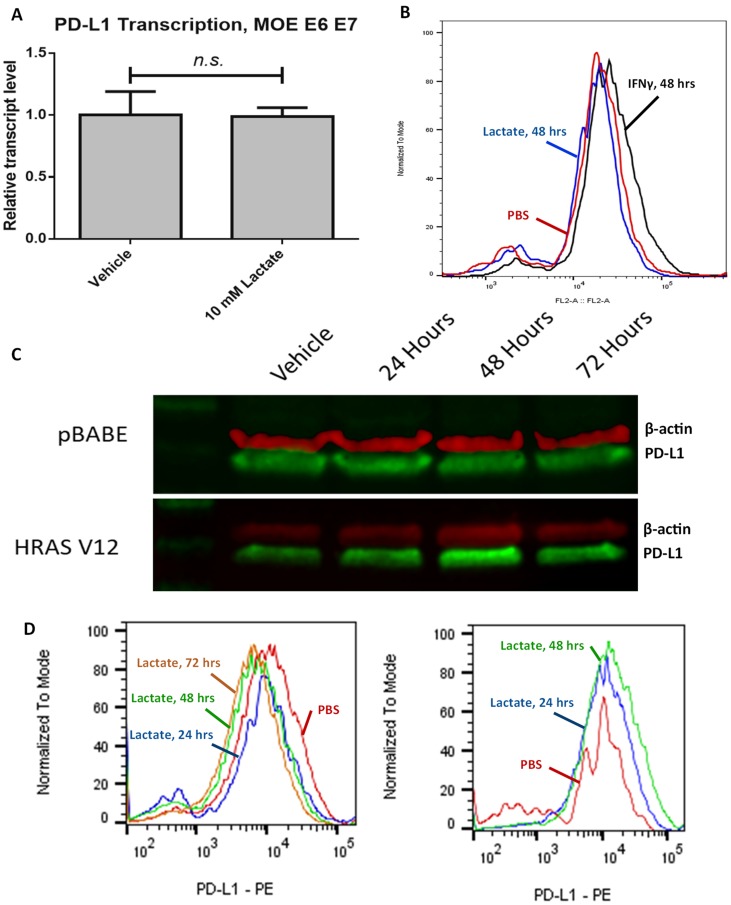
Intratumoral lactate production negatively correlates with survival and tumor clearance in the setting of human papillomavirus positive oropharyngeal squamous cell carcinoma (HPV-positive OPSCC). Robust anti-tumor immune activity is required for tumor clearance in human patients and animal models of this disease, and intratumoral lactate interferes with this process. While lactate is known to directly inhibit T cell activity, recent evidence has demonstrated that lactate can affect gene expression in multiple cell types. We therefore sought to determine if lactate in the tumor microenvironment could aid immune evasion by inducing the expression of immune checkpoint co-inhibitors. Using a mouse cell line transformed with HPV16 E6, E7, and HRAS, we determined that OPSCC cells carrying the HRAS mutant showed significantly increased expression of PD-L1 in the presence of extracellular lactate. Furthermore, we demonstrate here that lactate activates the MEK/ERK pathway in Ras-mutated cells.
在人乳头瘤病毒阳性口咽鳞状细胞癌(HPV阳性OPSCC)中,肿瘤内乳酸生成与生存率和肿瘤清除呈负相关。在这种疾病的人类患者和动物模型中,强大的抗肿瘤免疫活性是肿瘤清除所必需的,而肿瘤内乳酸会干扰这一过程。虽然已知乳酸会直接抑制T细胞活性,但最近的证据表明,乳酸可影响多种细胞类型的基因表达。因此,我们试图确定肿瘤微环境中的乳酸是否会通过诱导免疫检查点共抑制因子的表达来帮助免疫逃逸。使用经HPV16 E6、E7和HRAS转化的小鼠细胞系,我们确定携带HRAS突变体的OPSCC细胞在细胞外乳酸存在的情况下,PD-L1表达显著增加。此外,我们在此证明,乳酸可激活Ras突变细胞中的MEK/ERK通路。