Nasello Gabriele, Alamán-Díez Pilar, Schiavi Jessica, Pérez María Ángeles, McNamara Laoise, García-Aznar José Manuel
Multiscale in Mechanical and Biological Engineering (M2BE), University of Zaragoza, Zaragoza, Spain.
Biomechanics Section, Department of Mechanical Engineering, KU Leuven, Leuven, Belgium.
Front Bioeng Biotechnol. 2020 Apr 24;8:336. doi: 10.3389/fbioe.2020.00336. eCollection 2020.
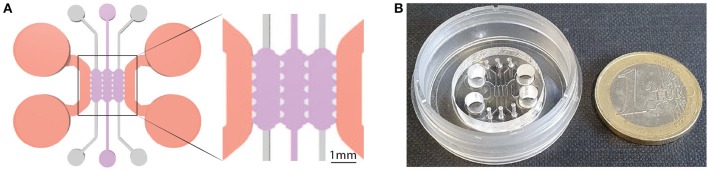
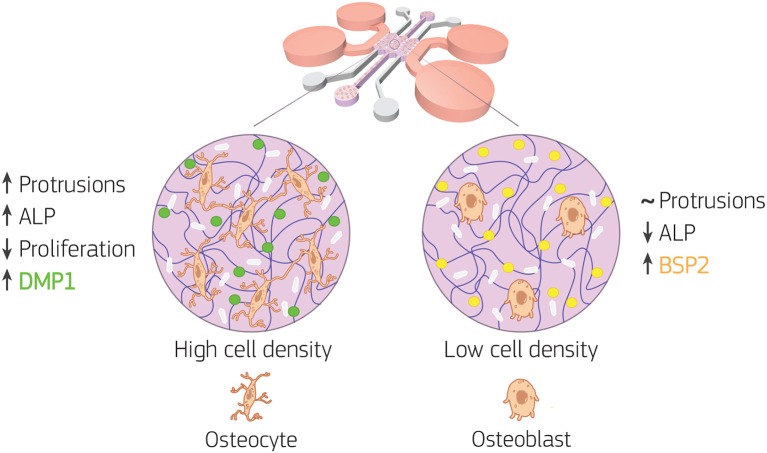
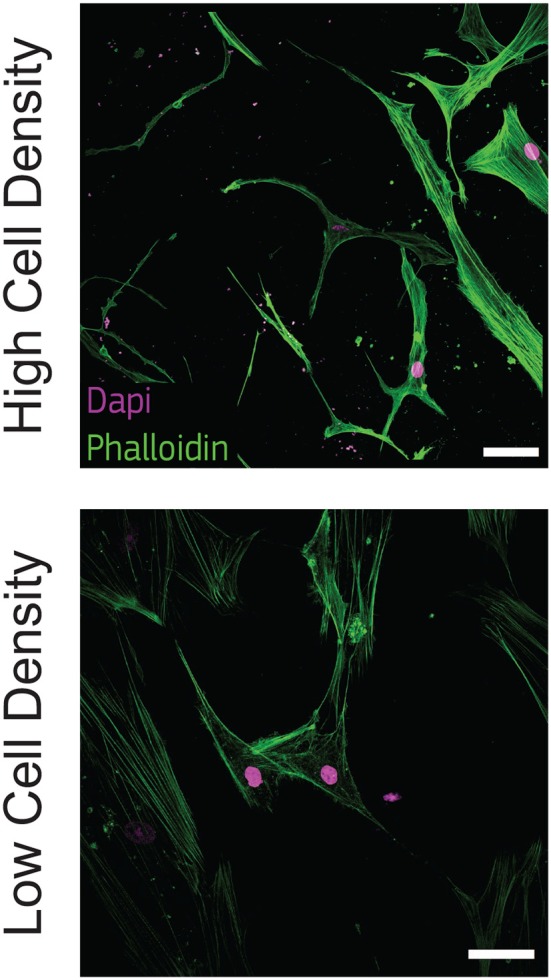
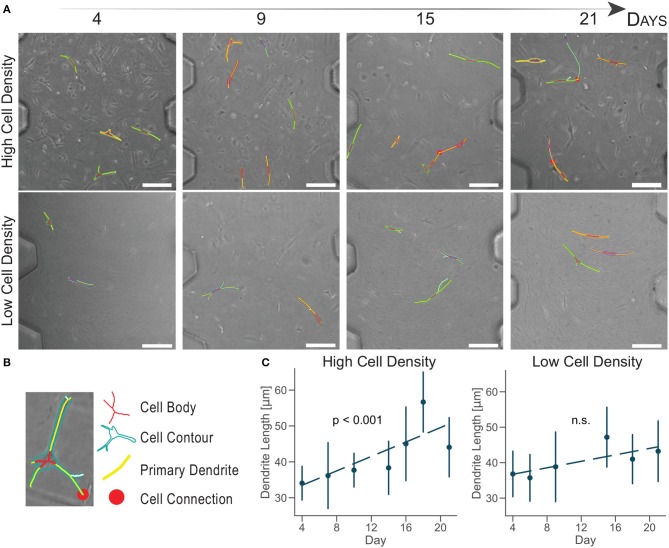
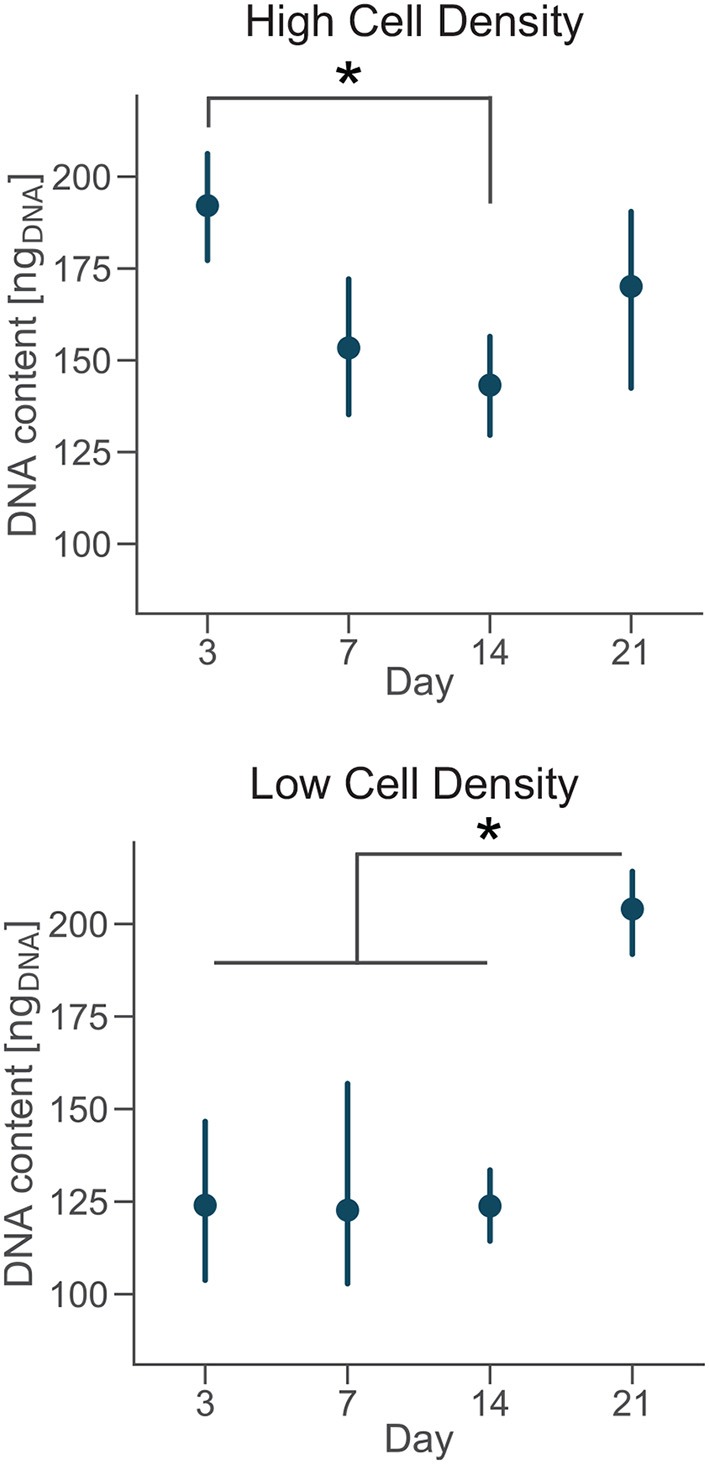
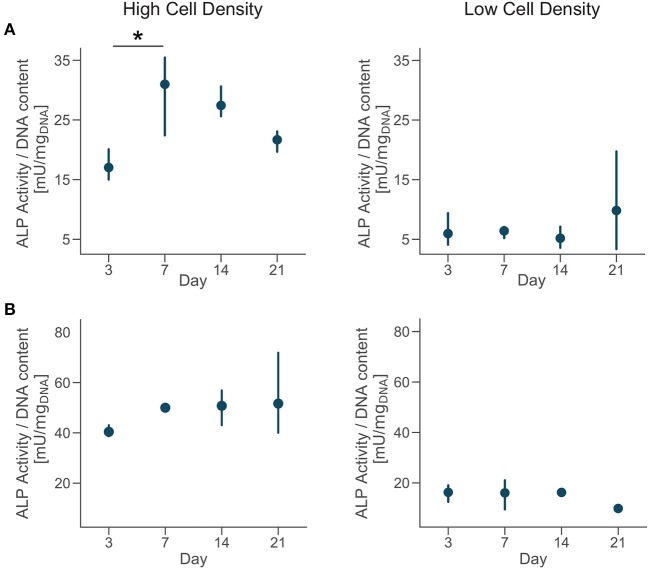
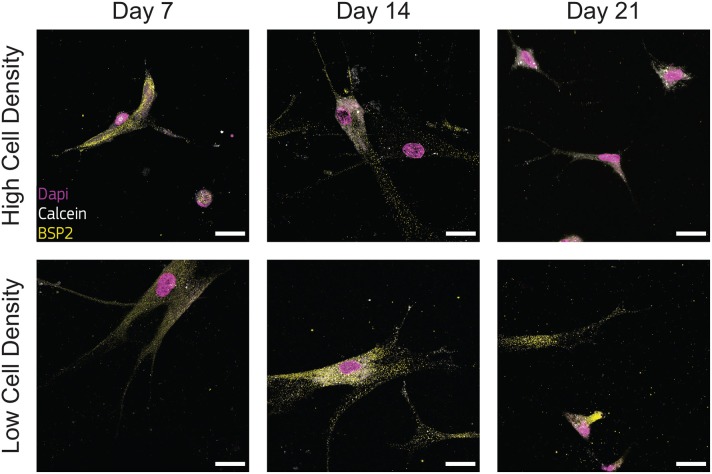
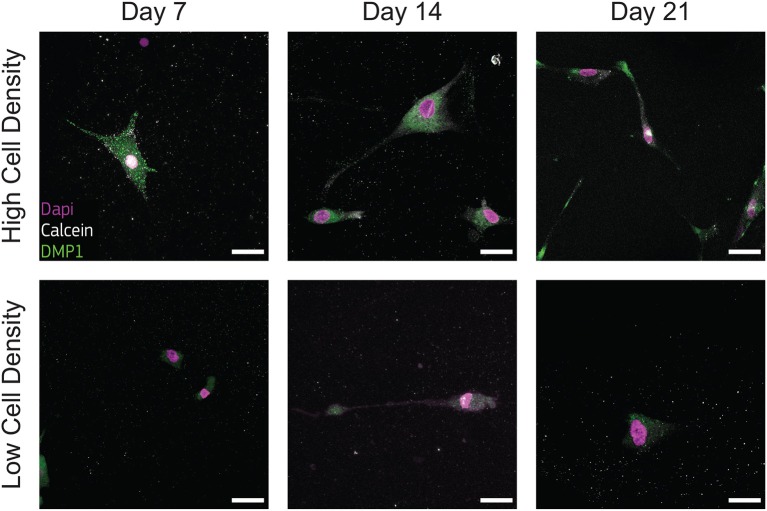
Microengineered systems provide an strategy to explore the variability of individual patient response to tissue engineering products, since they prefer the use of primary cell sources representing the phenotype variability. Traditional systems already showed that primary human osteoblasts embedded in a 3D fibrous collagen matrix differentiate into osteocytes under specific conditions. Here, we hypothesized that translating this environment to the organ-on-a-chip scale creates a minimal functional unit to recapitulate osteoblast maturation toward osteocytes and matrix mineralization. Primary human osteoblasts were seeded in a type I collagen hydrogel, to establish the role of lower (2.5 × 10 cells/ml) and higher (1 × 10 cells/ml) cell density on their differentiation into osteocytes. A custom semi-automatic image analysis software was used to extract quantitative data on cellular morphology from brightfield images. The results are showing that cells cultured at a high density increase dendrite length over time, stop proliferating, exhibit dendritic morphology, upregulate alkaline phosphatase (ALP) activity, and express the osteocyte marker dental matrix protein 1 (DMP1). On the contrary, cells cultured at lower density proliferate over time, do not upregulate ALP and express the osteoblast marker bone sialoprotein 2 (BSP2) at all timepoints. Our work reveals that microengineered systems create unique conditions to capture the major aspects of osteoblast differentiation into osteocytes with a limited number of cells. We propose that the microengineered approach is a functional strategy to create a patient-specific bone tissue model and investigate the individual osteogenic potential of the patient bone cells.
微工程系统提供了一种策略,可用于探索个体患者对组织工程产品反应的变异性,因为它们倾向于使用代表表型变异性的原代细胞来源。传统系统已经表明,嵌入三维纤维胶原基质中的原代人成骨细胞在特定条件下会分化为骨细胞。在此,我们假设将这种环境转化到芯片器官尺度会创建一个最小功能单元,以概括成骨细胞向骨细胞的成熟以及基质矿化过程。将原代人成骨细胞接种到I型胶原水凝胶中,以确定较低(2.5×10个细胞/毫升)和较高(1×10个细胞/毫升)细胞密度对其向骨细胞分化的作用。使用定制的半自动图像分析软件从明场图像中提取细胞形态的定量数据。结果表明,高密度培养的细胞随着时间的推移会增加树突长度,停止增殖,呈现树突形态,上调碱性磷酸酶(ALP)活性,并表达骨细胞标志物牙本质基质蛋白1(DMP1)。相反,低密度培养的细胞随着时间的推移会增殖,在所有时间点都不上调ALP,并且表达成骨细胞标志物骨唾液酸蛋白2(BSP2)。我们的工作表明,微工程系统创造了独特的条件,能够以有限数量的细胞捕捉成骨细胞向骨细胞分化的主要方面。我们提出,微工程方法是创建患者特异性骨组织模型并研究患者骨细胞个体成骨潜力的一种功能性策略。