Department of Kinesiology, McMaster University, Hamilton, ON, Canada.
Motion Analysis and Biofeedback Laboratory, University of British Columbia, Vancouver, BC, Canada.
J Neuroeng Rehabil. 2020 May 11;17(1):62. doi: 10.1186/s12984-020-00685-3.
Inertial measurement units (IMUs) offer the ability to measure walking gait through a variety of biomechanical outcomes (e.g., spatiotemporal, kinematics, other). Although many studies have assessed their validity and reliability, there remains no quantitive summary of this vast body of literature. Therefore, we aimed to conduct a systematic review and meta-analysis to determine the i) concurrent validity and ii) test-retest reliability of IMUs for measuring biomechanical gait outcomes during level walking in healthy adults.
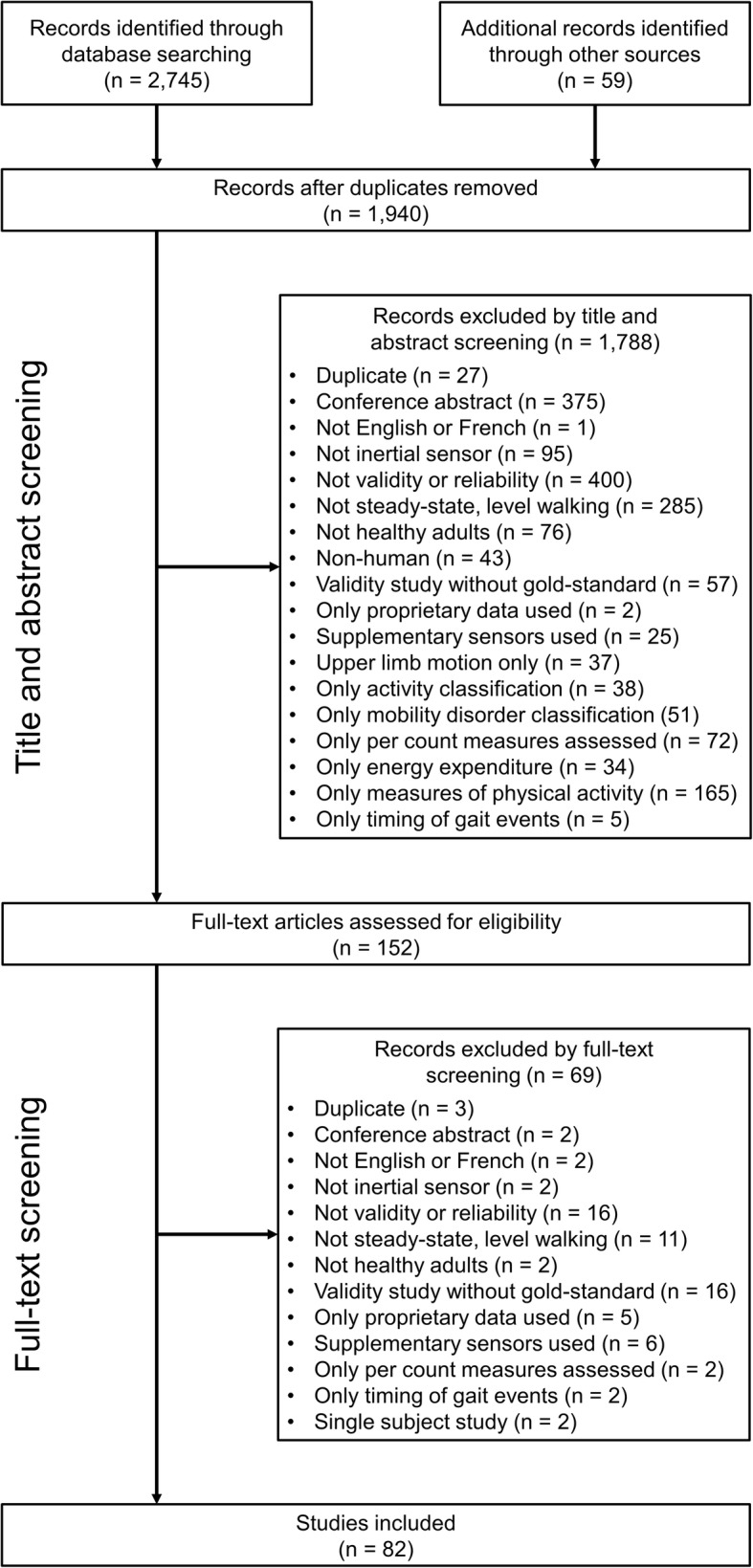
Five electronic databases were searched for journal articles assessing the validity or reliability of IMUs during healthy adult walking. Two reviewers screened titles, abstracts, and full texts for studies to be included, before two reviewers examined the methodological quality of all included studies. When sufficient data were present for a given biomechanical outcome, data were meta-analyzed on Pearson correlation coefficients (r) or intraclass correlation coefficients (ICC) for validity and reliability, respectively. Alternatively, qualitative summaries of outcomes were conducted on those that could not be meta-analyzed.
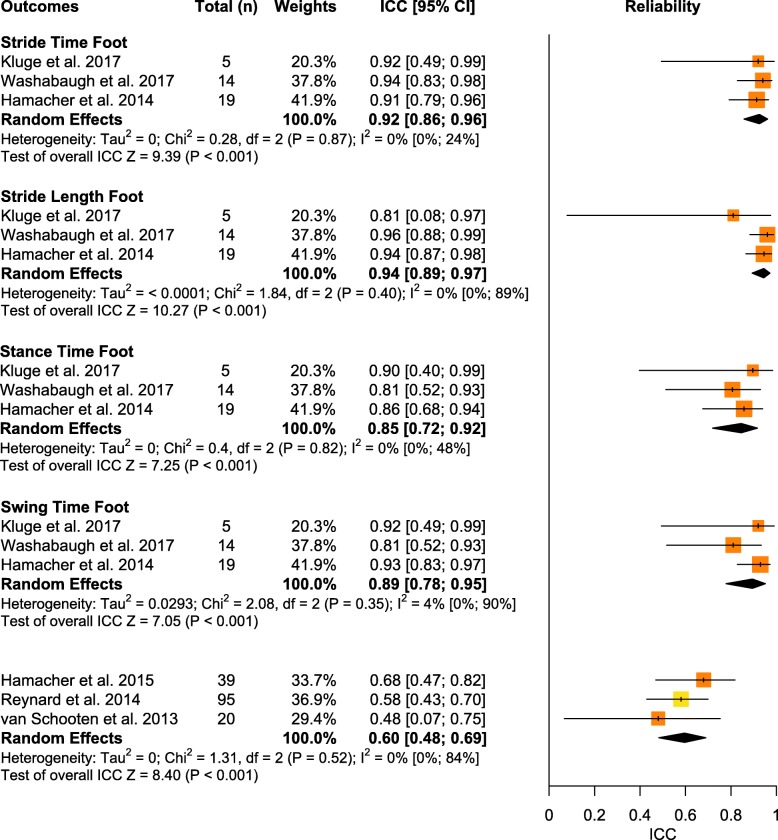
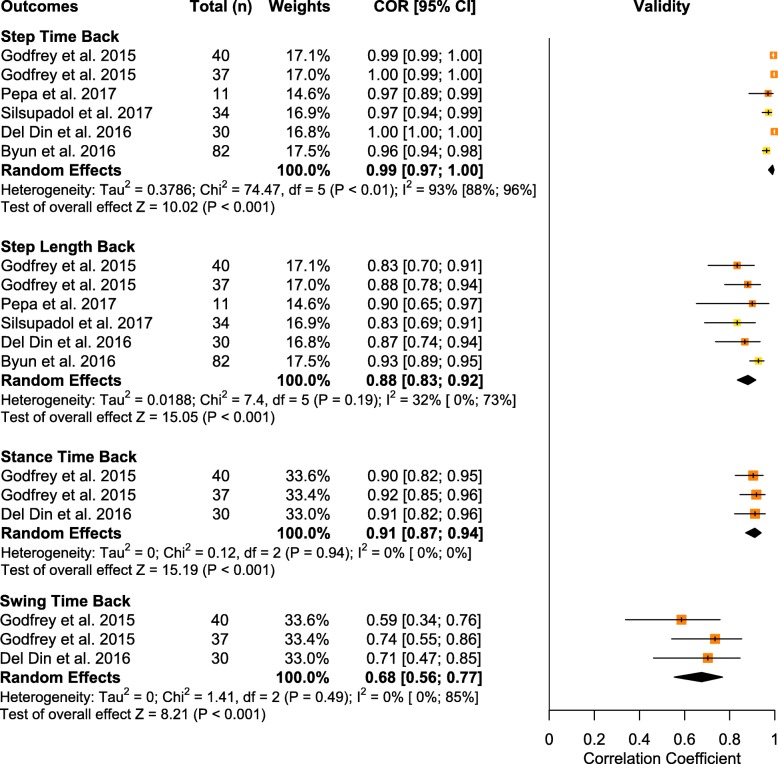
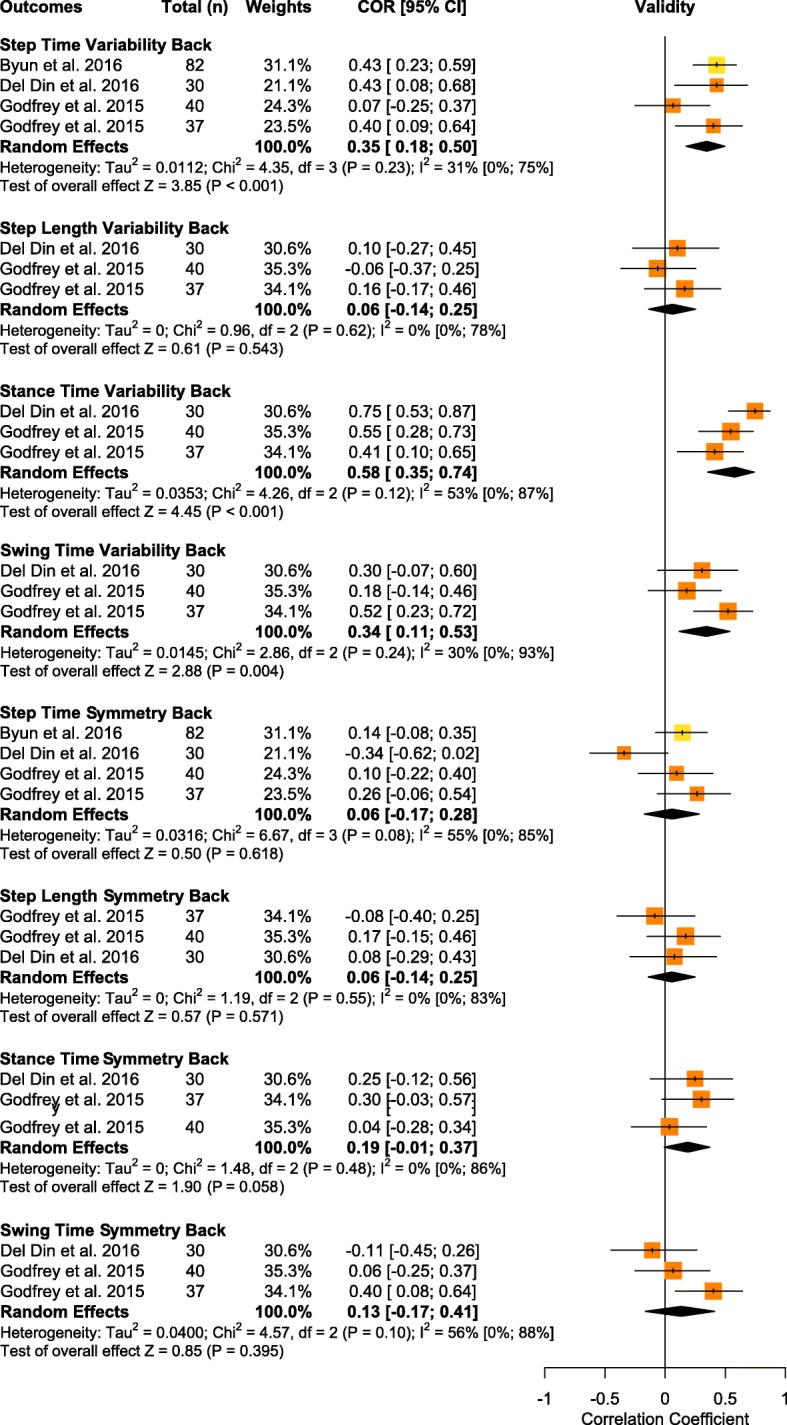
A total of 82 articles, assessing the validity or reliability of over 100 outcomes, were included in this review. Seventeen biomechanical outcomes, primarily spatiotemporal parameters, were meta-analyzed. The validity and reliability of step and stride times were found to be excellent. Similarly, the validity and reliability of step and stride length, as well as swing and stance time, were found to be good to excellent. Alternatively, spatiotemporal parameter variability and symmetry displayed poor to moderate validity and reliability. IMUs were also found to display moderate reliability for the assessment of local dynamic stability during walking. The remaining biomechanical outcomes were qualitatively summarized to provide a variety of recommendations for future IMU research.
The findings of this review demonstrate the excellent validity and reliability of IMUs for mean spatiotemporal parameters during walking, but caution the use of spatiotemporal variability and symmetry metrics without strict protocol. Further, this work tentatively supports the use of IMUs for joint angle measurement and other biomechanical outcomes such as stability, regularity, and segmental accelerations. Unfortunately, the strength of these recommendations are limited based on the lack of high-quality studies for each outcome, with underpowered and/or unjustified sample sizes (sample size median 12; range: 2-95) being the primary limitation.
惯性测量单元 (IMU) 通过各种生物力学结果(例如时空、运动学等)提供了测量步行步态的能力。尽管许多研究已经评估了它们的有效性和可靠性,但仍然没有对这大量文献的定量总结。因此,我们旨在进行系统评价和荟萃分析,以确定 i)IMU 在测量健康成年人水平行走时生物力学步态结果的同时有效性和 ii)测试-重测信度。
检索了五个电子数据库,以评估 IMU 在健康成年人行走期间的有效性或可靠性的期刊文章。两名审查员筛选了标题、摘要和全文以确定要纳入的研究,然后两名审查员检查了所有纳入研究的方法学质量。当存在给定生物力学结果的足够数据时,对有效性和可靠性分别进行基于 Pearson 相关系数 (r) 或组内相关系数 (ICC) 的荟萃分析。否则,对于无法进行荟萃分析的结果进行定性总结。
共有 82 篇文章评估了 100 多个结果的有效性或可靠性,被纳入了本综述。17 项生物力学结果,主要是时空参数,进行了荟萃分析。步长和步幅时间的有效性和可靠性被发现是极好的。同样,步长和步幅长度以及摆动和站立时间的有效性和可靠性被发现是好到极好的。相反,时空参数变异性和对称性的有效性和可靠性较差。IMU 还被发现对评估行走时的局部动态稳定性具有中等可靠性。其余的生物力学结果被定性总结,为未来的 IMU 研究提供了各种建议。
本综述的结果表明,IMU 在步行时平均时空参数的有效性和可靠性非常好,但要注意在没有严格方案的情况下使用时空变异性和对称性指标。此外,这项工作初步支持使用 IMU 测量关节角度和其他生物力学结果,例如稳定性、规律性和节段加速度。不幸的是,由于每个结果的高质量研究缺乏,这些建议的强度受到限制,主要限制因素是功率不足和/或不合理的样本量(样本量中位数为 12;范围:2-95)。