Division of Gastroenterology, Department of Medicine, Massachusetts General Hospital, Harvard Medical School, Boston, MA 02114.
Clinical and Translational Unit, Department of Medicine, Massachusetts General Hospital, Harvard Medical School, Boston, MA 02114.
Proc Natl Acad Sci U S A. 2020 May 26;117(21):11667-11673. doi: 10.1073/pnas.1911870117. Epub 2020 May 11.
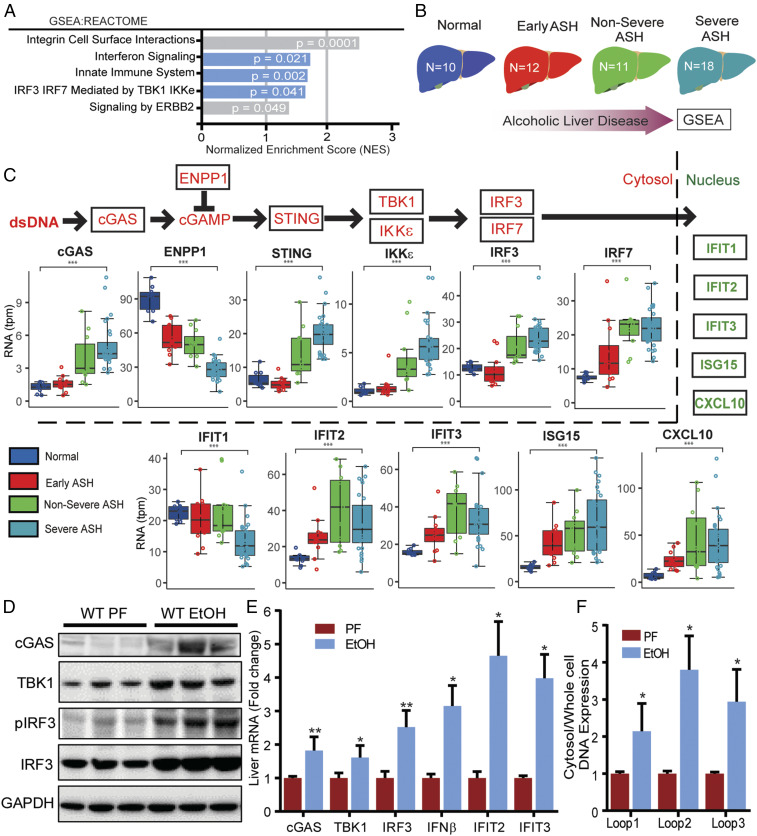
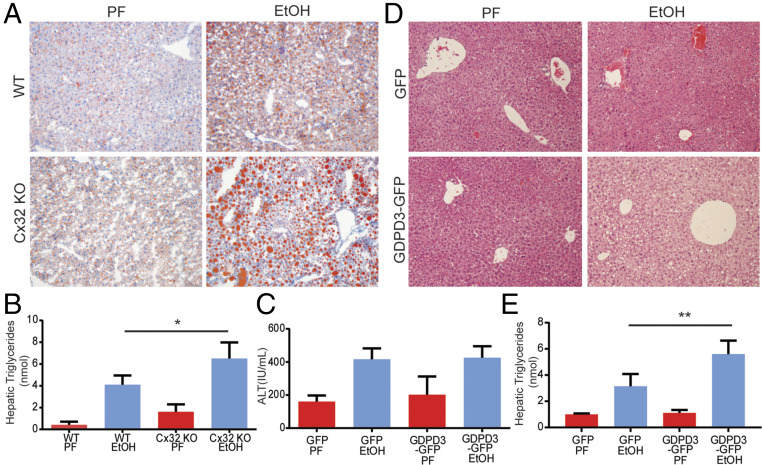
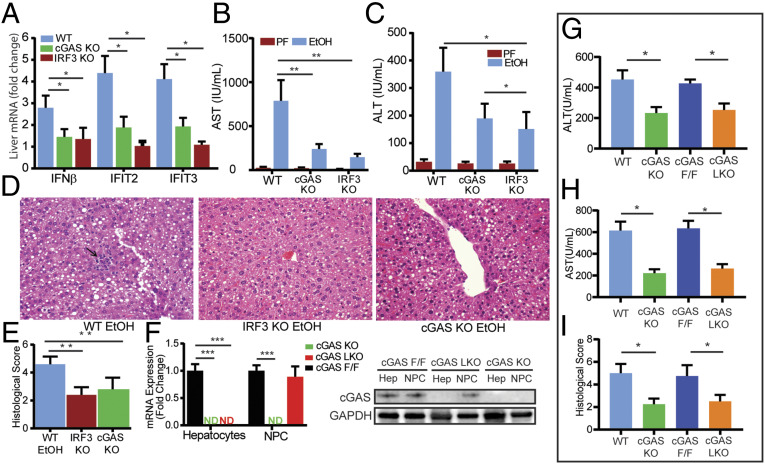
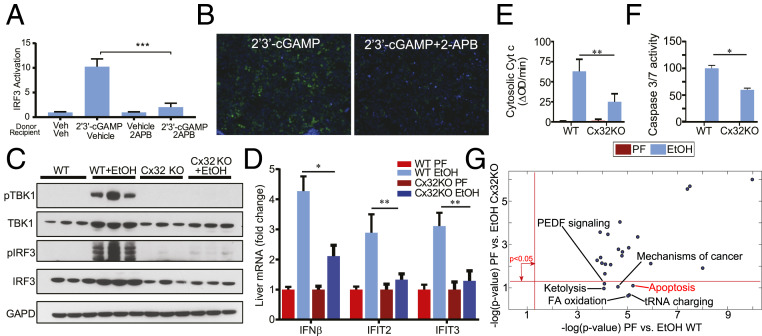
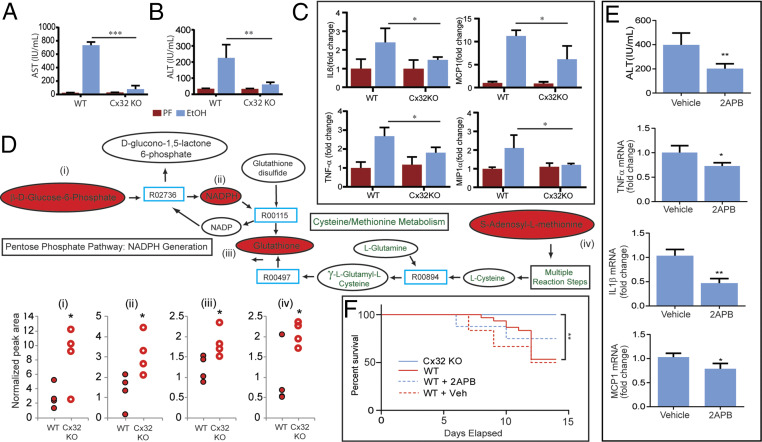
Alcohol-related liver disease (ALD) accounts for the majority of cirrhosis and liver-related deaths worldwide. Activation of IFN-regulatory factor (IRF3) initiates alcohol-induced hepatocyte apoptosis, which fuels a robust secondary inflammatory response that drives ALD. The dominant molecular mechanism by which alcohol activates IRF3 and the pathways that amplify inflammatory signals in ALD remains unknown. Here we show that cytoplasmic sensor cyclic guanosine monophosphate-adenosine monophosphate (AMP) synthase (cGAS) drives IRF3 activation in both alcohol-injured hepatocytes and the neighboring parenchyma via a gap junction intercellular communication pathway. Hepatic RNA-seq analysis of patients with a wide spectrum of ALD revealed that expression of the cGAS-IRF3 pathway correlated positively with disease severity. Alcohol-fed mice demonstrated increased hepatic expression of the cGAS-IRF3 pathway. Mice genetically deficient in cGAS and IRF3 were protected against ALD. Ablation of cGAS in hepatocytes only phenocopied this hepatoprotection, highlighting the critical role of hepatocytes in fueling the cGAS-IRF3 response to alcohol. We identified connexin 32 (Cx32), the predominant hepatic gap junction, as a critical regulator of spreading cGAS-driven IRF3 activation through the liver parenchyma. Disruption of Cx32 in ALD impaired IRF3-stimulated gene expression, resulting in decreased hepatic injury despite an increase in hepatic steatosis. Taken together, these results identify cGAS and Cx32 as key factors in ALD pathogenesis and as potential therapeutic targets for hepatoprotection.
酒精相关性肝病(ALD)占全球肝硬化和肝脏相关死亡的大多数。IFN 调节因子(IRF3)的激活引发酒精诱导的肝细胞凋亡,这引发了强烈的继发性炎症反应,从而导致 ALD。酒精激活 IRF3 的主要分子机制以及在 ALD 中放大炎症信号的途径仍不清楚。在这里,我们表明细胞质传感器环鸟苷酸-腺苷酸(cGAS)通过缝隙连接细胞间通讯途径在酒精损伤的肝细胞及其相邻实质中驱动 IRF3 的激活。对具有广泛 ALD 谱的患者的肝 RNA 测序分析表明,cGAS-IRF3 途径的表达与疾病严重程度呈正相关。酒精喂养的小鼠表现出肝内 cGAS-IRF3 途径表达增加。cGAS 和 IRF3 基因缺失的小鼠对 ALD 有保护作用。仅在肝细胞中敲除 cGAS 仅模拟了这种肝保护作用,突出了肝细胞在为酒精引起的 cGAS-IRF3 反应提供燃料方面的关键作用。我们确定间隙连接蛋白 32(Cx32),即主要的肝间隙连接,作为通过肝实质传播 cGAS 驱动的 IRF3 激活的关键调节剂。在 ALD 中破坏 Cx32 会损害 IRF3 刺激的基因表达,尽管肝脂肪变性增加,但导致肝损伤减少。总之,这些结果表明 cGAS 和 Cx32 是 ALD 发病机制的关键因素,并可能成为肝保护的潜在治疗靶点。