1Schistosomiasis Consortium for Operational Research and Evaluation (SCORE), Center for Tropical and Emerging Global Diseases, University of Georgia, Athens, Georgia.
2Department of Microbiology, University of Georgia, Athens, Georgia.
Am J Trop Med Hyg. 2020 Jul;103(1_Suppl):125-134. doi: 10.4269/ajtmh.19-0787.
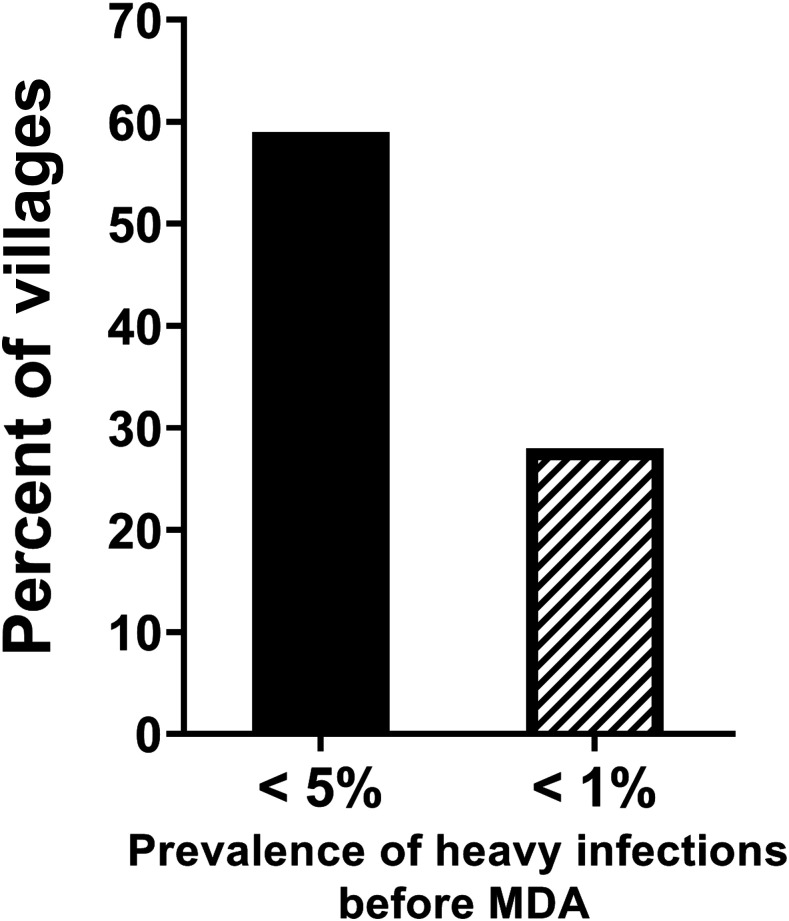
Herein, we summarize what we consider are major contributions resulting from the Schistosomiasis Consortium for Operational Research and Evaluation (SCORE) program, including its key findings and key messages from those findings. Briefly, SCORE's key findings are as follows: i) biennial mass drug administration (MDA) with praziquantel can control schistosomiasis to moderate levels of prevalence; ii) MDA alone will not achieve elimination; iii) to attain and sustain control throughout endemic areas, persistent hotspots need to be identified following a minimal number of years of annual MDA and controlled through adaptive strategies; iv) annual MDA is more effective than biennial MDA in high-prevalence areas; v) the current World Health Organization thresholds for decision-making based on the prevalence of heavy infections should be redefined; and vi) point-of-care circulating cathodic antigen urine assays are useful for mapping in low-to-moderate prevalence areas. The data and specimens collected and curated through SCORE efforts will continue to be critical resource for future research. Besides providing useful information for program managers and revision of guidelines for schistosomiasis control and elimination, SCORE research and outcomes have identified additional questions that need to be answered as the schistosomiasis community continues to implement effective, evidence-based programs. An overarching contribution of SCORE has been increased cohesiveness within the schistosomiasis field-oriented community, thereby fostering new and productive collaborations. Based on SCORE's findings and experiences, we propose new approaches, thresholds, targets, and goals for control and elimination of schistosomiasis, and recommend research and evaluation activities to achieve these targets and goals.
在此,我们总结了 Schistosomiasis Consortium for Operational Research and Evaluation (SCORE) 计划的主要贡献,包括其关键发现及其对这些发现的关键信息。简而言之,SCORE 的主要发现如下:i)每两年进行一次吡喹酮大规模药物治疗(MDA)可以将血吸虫病控制在中等流行水平;ii)单独进行 MDA 不会实现消除;iii)为了在整个流行地区实现和维持控制,需要在进行数年的年度 MDA 后确定持续存在的热点,并通过适应性策略进行控制;iv)在高流行地区,年度 MDA 比两年 MDA 更有效;v)当前世界卫生组织基于重度感染流行率的决策阈值应重新定义;vi)基于即时检测的循环阴极抗原尿液检测在低至中度流行地区进行绘图是有用的。通过 SCORE 努力收集和维护的数据和样本将继续成为未来研究的关键资源。除了为规划人员提供有用的信息以及修订血吸虫病控制和消除的准则外,SCORE 研究和结果还确定了需要在血吸虫病社区继续实施有效、基于证据的计划时回答的其他问题。SCORE 的一个主要贡献是增加了面向血吸虫病领域的社区内的凝聚力,从而促进了新的富有成效的合作。基于 SCORE 的发现和经验,我们提出了新的方法、阈值、目标和血吸虫病控制和消除的目标,并建议开展研究和评估活动以实现这些目标。