Département de biochimie, de microbiologie et de bio-informatique, Université Laval, Quebec City, Quebec, Canada.
Center for Northern Studies (CEN), Université Laval, Quebec City, Quebec, Canada.
mSphere. 2020 May 13;5(3):e00334-20. doi: 10.1128/mSphere.00334-20.
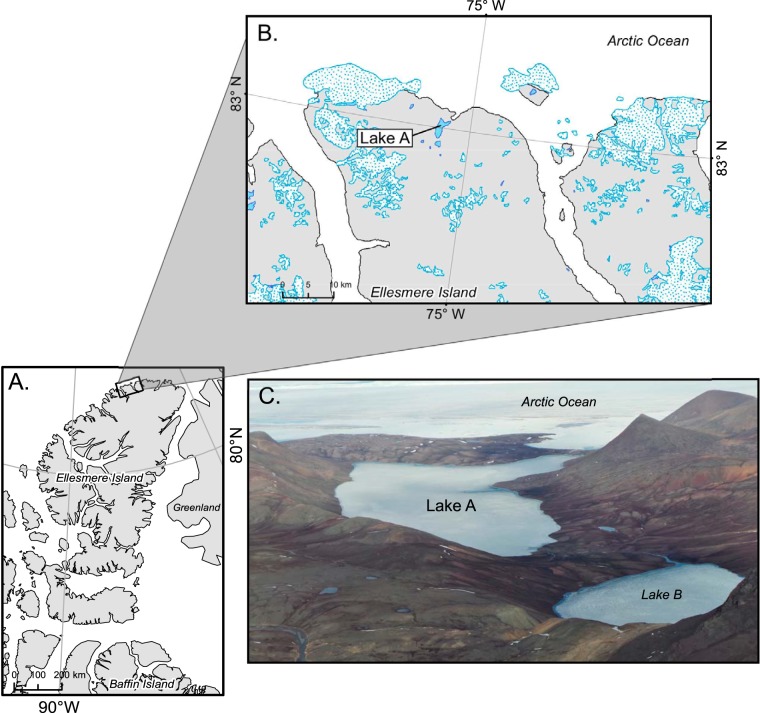
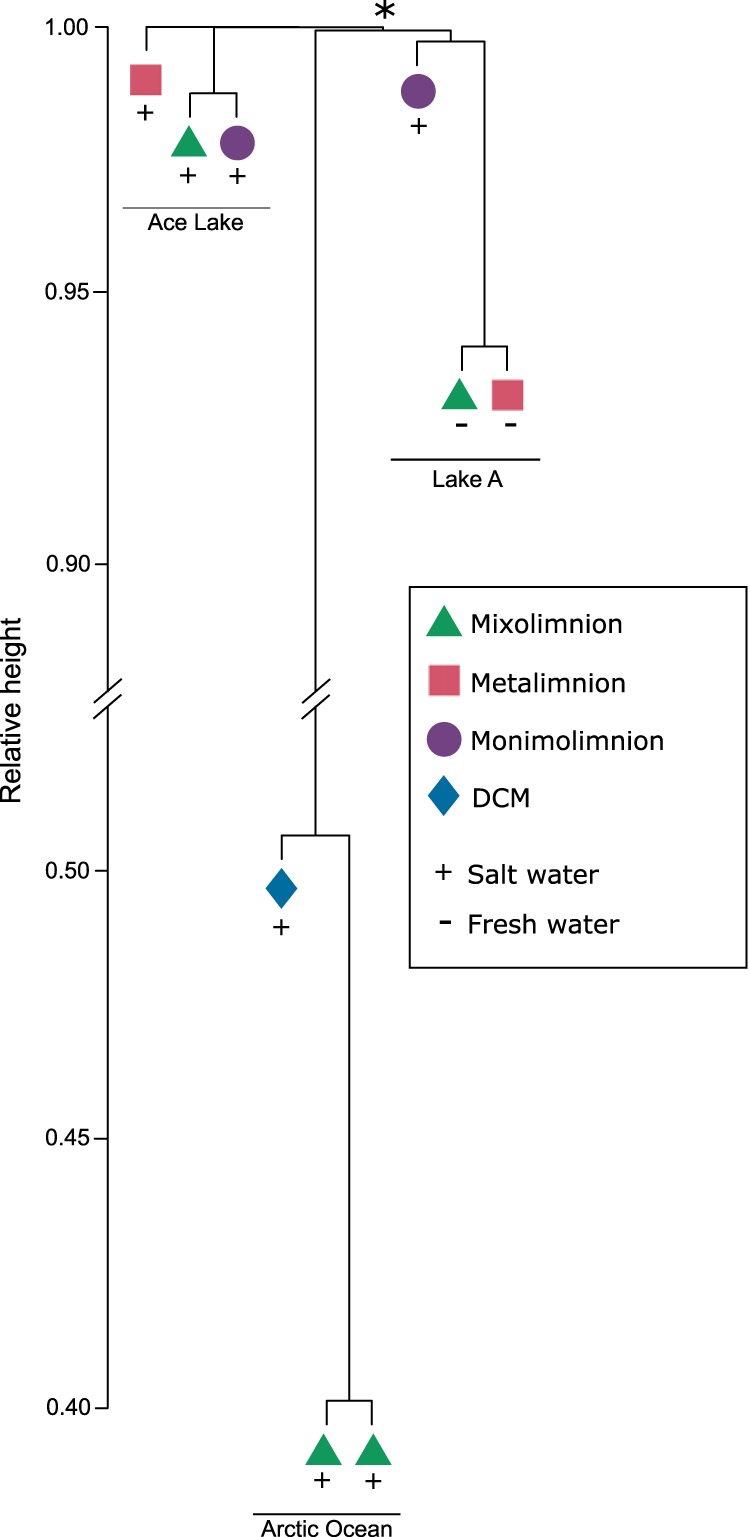
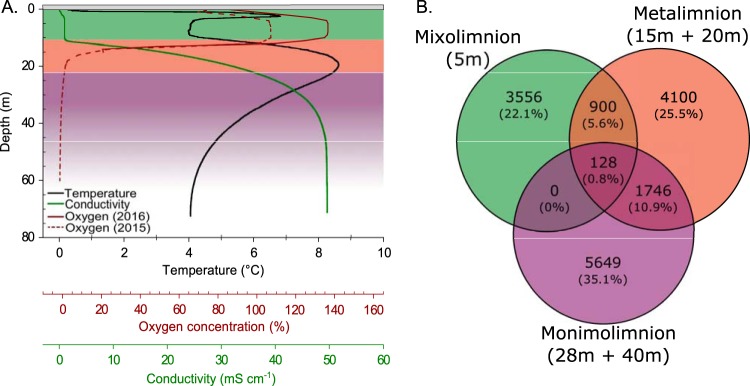
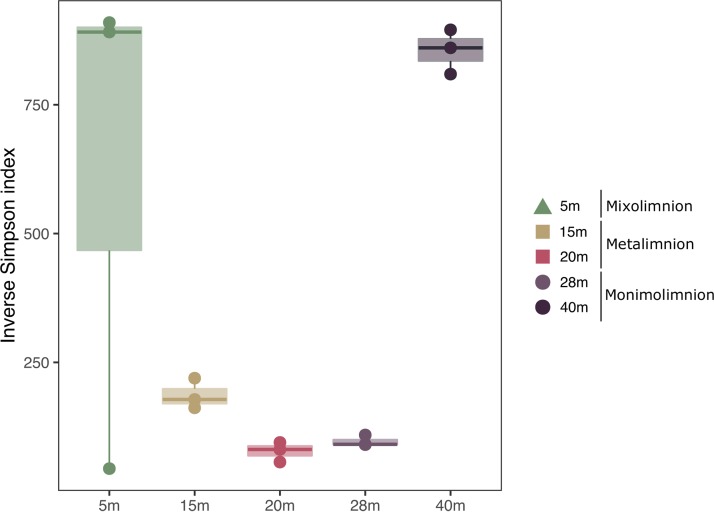
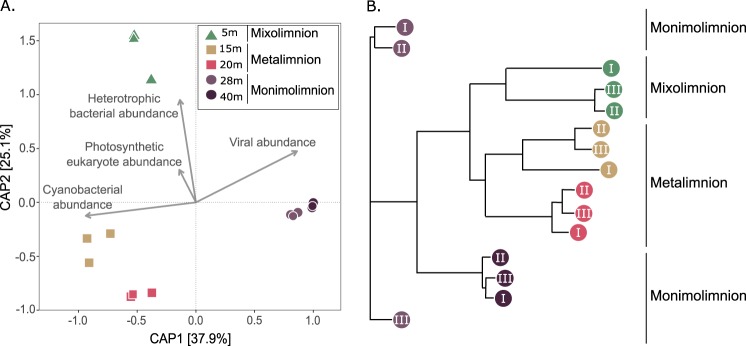
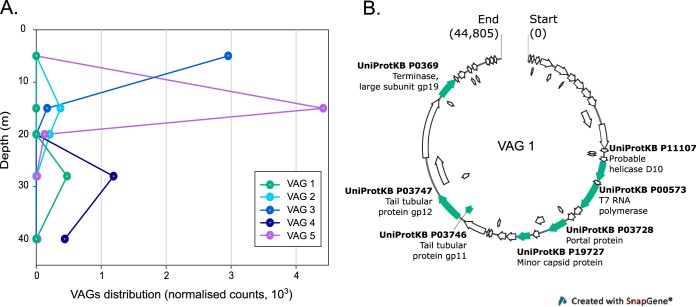
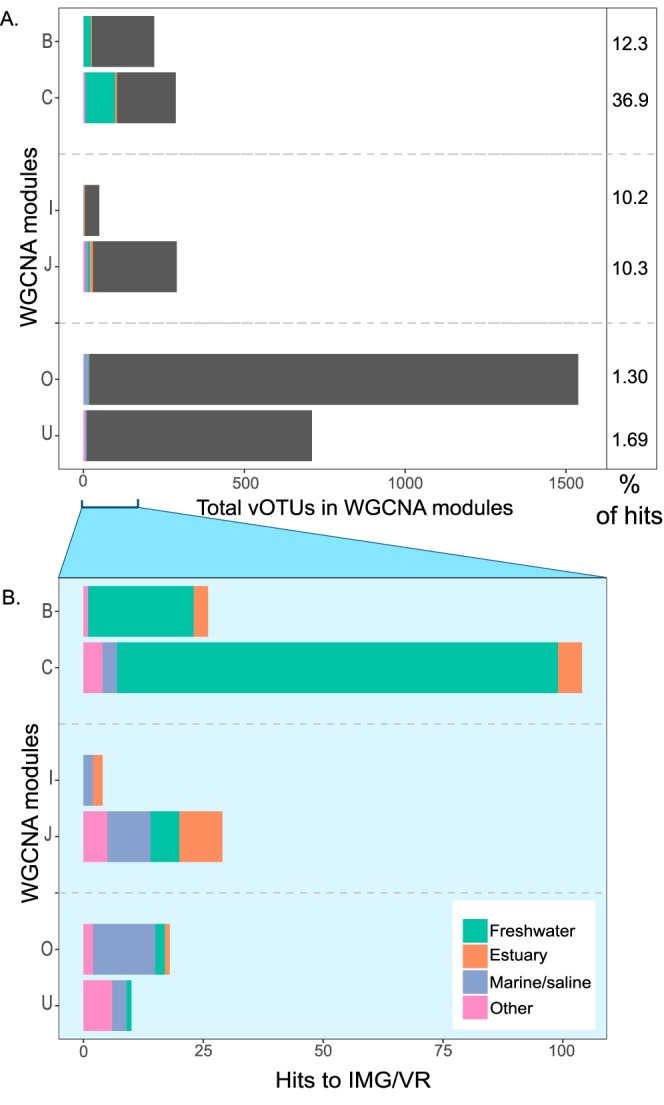
High-latitude, perennially stratified (meromictic) lakes are likely to be especially vulnerable to climate warming because of the importance of ice in maintaining their water column structure and associated distribution of microbial communities. This study aimed to characterize viral abundance, diversity, and distribution in a meromictic lake of marine origin on the far northern coast of Ellesmere Island, in the Canadian High Arctic. We collected triplicate samples for double-stranded DNA (dsDNA) viromics from five depths that encompassed the major features of the lake, as determined by limnological profiling of the water column. Viral abundance and virus-to-prokaryote ratios were highest at greater depths, while bacterial and cyanobacterial counts were greatest in the surface waters. The viral communities from each zone of the lake defined by salinity, temperature, and dissolved oxygen concentrations were markedly distinct, suggesting that there was little exchange of viral types among lake strata. Ten viral assembled genomes were obtained from our libraries, and these also segregated with depth. This well-defined structure of viral communities was consistent with that of potential hosts. Viruses from the monimolimnion, a deep layer of ancient Arctic Ocean seawater, were more diverse and relatively abundant, with few similarities to available viral sequences. The Lake A viral communities also differed from published records from the Arctic Ocean and meromictic Ace Lake in Antarctica. This first characterization of viral diversity from this sentinel environment underscores the microbial richness and complexity of an ecosystem type that is increasingly exposed to major perturbations in the fast-changing Arctic. The Arctic is warming at an accelerating pace, and the rise in temperature has increasing impacts on the Arctic biome. Lakes are integrators of their surroundings and thus excellent sentinels of environmental change. Despite their importance in the regulation of key microbial processes, viruses remain largely uncharacterized in Arctic lacustrine environments. We sampled a highly stratified meromictic lake near the northern limit of the Canadian High Arctic, a region in rapid transition due to climate change. We found that the different layers of the lake harbored viral communities that were strikingly dissimilar and highly divergent from known viruses. Viruses were more abundant in the deepest part of the lake containing ancient Arctic Ocean seawater that was trapped during glacial retreat and were genomically unlike any viruses previously described. This research demonstrates the complexity and novelty of viral communities in an environment that is vulnerable to ongoing perturbation.
高纬度、常年分层(混态)的湖泊由于冰在维持其水柱结构和相关微生物群落分布方面的重要性,可能特别容易受到气候变暖的影响。本研究旨在描述加拿大北极埃尔斯米尔岛最北部沿海一个海洋起源的分层湖中病毒的丰度、多样性和分布。我们从 5 个深度采集了三倍的双链 DNA(dsDNA)病毒组学样本,这些深度涵盖了水柱湖泊学剖面所确定的湖泊主要特征。病毒丰度和病毒与原核生物的比值在较深的地方最高,而细菌和蓝细菌的数量在表层水中最高。根据盐度、温度和溶解氧浓度划分的湖泊各区域的病毒群落明显不同,表明湖泊各层之间很少有病毒类型的交换。从我们的文库中获得了 10 个病毒组装基因组,这些基因组也随深度而分离。这种病毒群落的明确结构与潜在宿主的结构一致。来自 monimolimnion 的病毒(古老的北冰洋海水的深层)多样性更高且相对丰富,与可用的病毒序列几乎没有相似之处。来自 Lake A 的病毒群落也与来自北极海洋和南极洲混态 Ace 湖的已发表记录不同。这是首次对来自这种警戒环境的病毒多样性进行的描述,突显了一个生态系统类型的微生物丰富度和复杂性,该生态系统类型越来越受到快速变化的北极地区的主要干扰。北极地区正在加速变暖,气温上升对北极生物群落的影响越来越大。湖泊是周围环境的综合体现,因此是环境变化的绝佳预警。尽管它们在调节关键微生物过程中很重要,但在北极湖泊环境中,病毒仍然在很大程度上没有得到描述。我们在加拿大北极高纬度地区附近的一个高度分层的混态湖中进行了采样,该地区由于气候变化正在迅速转变。我们发现,湖泊的不同层中栖息着截然不同且与已知病毒高度不同的病毒群落。在含有古老北冰洋海水的湖泊最深处,病毒更为丰富,这些海水是在冰川退缩期间被捕获的,并且在基因组上与以前描述的任何病毒都不相似。这项研究展示了在一个容易受到持续干扰的环境中病毒群落的复杂性和新颖性。