Animal Welfare Program, Faculty of Land and Food Systems, University of British Columbia, Vancouver, B.C., Canada.
PLoS One. 2020 May 14;15(5):e0232897. doi: 10.1371/journal.pone.0232897. eCollection 2020.
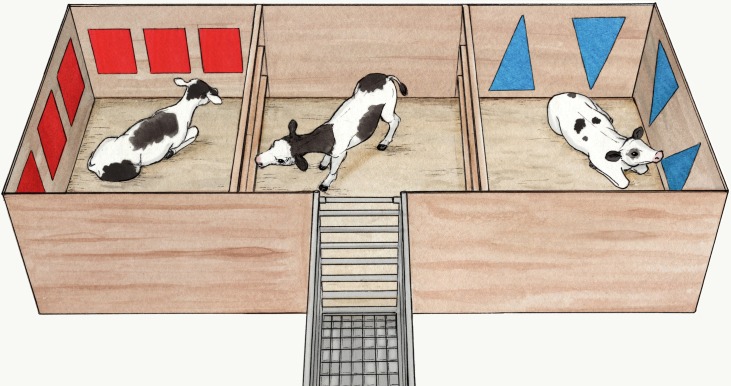
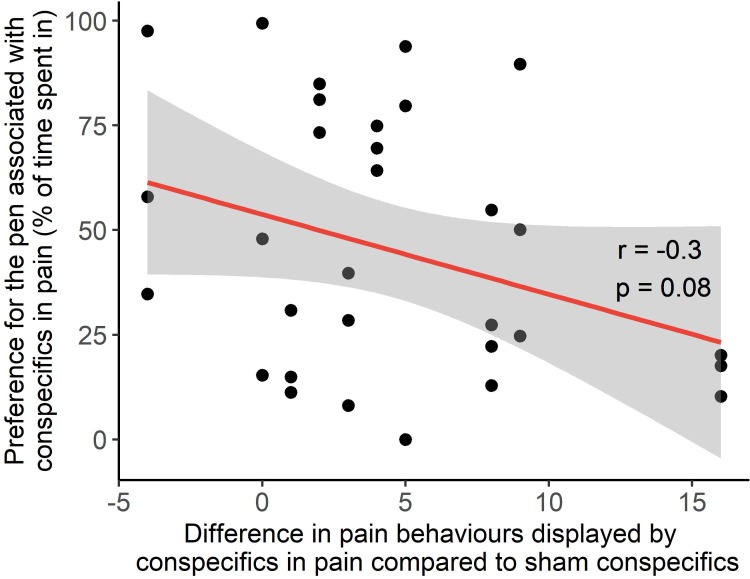
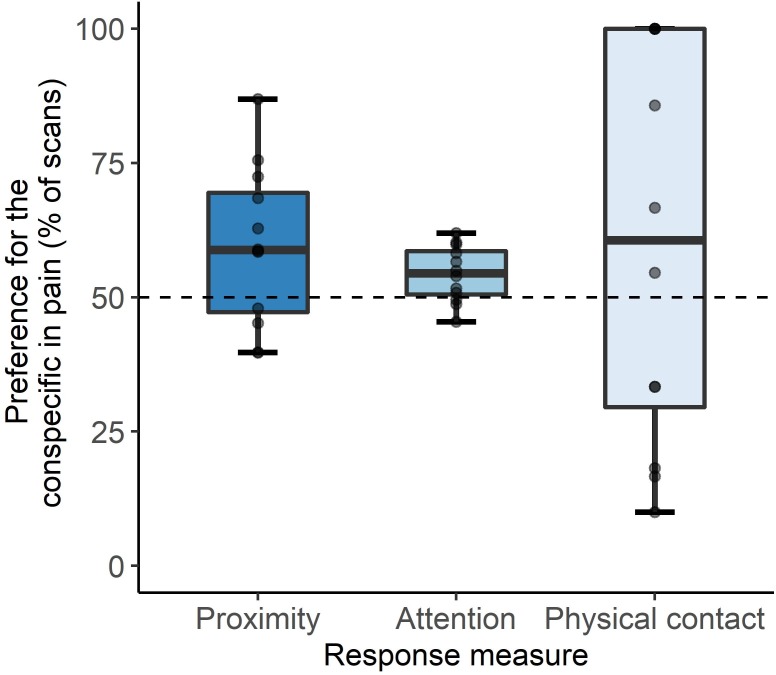
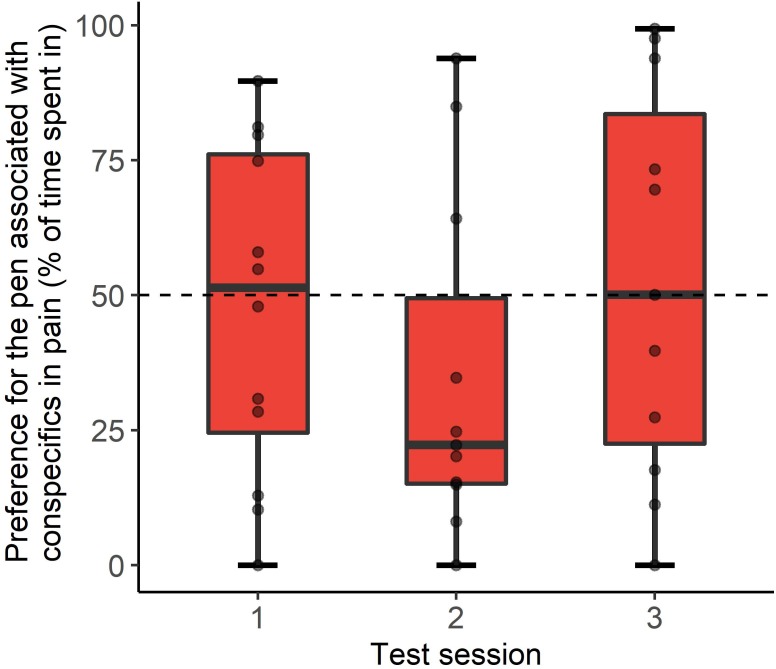
Despite scientific interest in animal empathy, and growing public concern for farm animal welfare, the empathic abilities of farm animals remain under researched. In this study, we investigated empathic responses of young Holstein dairy calves to conspecifics recovering from hot-iron disbudding, a painful procedure common on dairy farms. A combination of social approach and place conditioning was used. First, 'observer' calves witnessed two 'demonstrator' calves recover from either a painful procedure (hot-iron disbudding and sedation) or a sham procedure (sedation alone) in distinct pens. Observer calves spent more time in proximity and paid more attention to calves recovering from the painful procedure compared to sham calves (proximity: 59.6 ± 4.3%; attention: 54.3 ± 1.5%). Observers were then tested for conditioned place aversion (in the absence of demonstrators) at 48h, 72h and 96h after the second demonstration; observers tended to avoid the pen associated with conspecific pain during the second of the three tests, spending 34.8 ± 9.6% of their time in this pen. No strong evidence of pain empathy was found, but our tentative results encourage further research on empathy in animals.
尽管科学界对动物同理心很感兴趣,公众也越来越关注农场动物的福利,但农场动物的同理心能力仍未得到充分研究。在这项研究中,我们调查了幼期荷斯坦奶牛对从热铁去角中恢复的同群动物的同理心反应,热铁去角是奶牛场常见的一种痛苦程序。我们采用了社交接近和位置条件作用的组合方法。首先,“观察者”小牛在不同的围栏中观察到两只“演示者”小牛从痛苦的程序(热铁去角和镇静)或假程序(仅镇静)中恢复。与假小牛相比,观察者小牛在附近停留的时间更长,对从痛苦程序中恢复的小牛的关注更多(接近:59.6 ± 4.3%;注意:54.3 ± 1.5%)。然后,在第二次演示后 48h、72h 和 96h,对观察者进行了条件性位置厌恶测试(在没有演示者的情况下);在这三次测试中的第二次中,观察者倾向于避开与同群动物疼痛相关的围栏,在该围栏中花费了 34.8 ± 9.6%的时间。没有发现明显的疼痛同理心证据,但我们的初步结果鼓励进一步研究动物的同理心。