Institute of Science and Technology for Brain-Inspired Intelligence, MOE Key Laboratory of Computational Neuroscience and Brain-Inspired Intelligence, Fudan University, Shanghai, China; Shanghai Research Center for Brain Science and Brain-Inspired Intelligence, Institute of Brain-Intelligence Technology, Zhangjiang Laboratory, Shanghai, China.
Institute of Science and Technology for Brain-Inspired Intelligence, MOE Key Laboratory of Computational Neuroscience and Brain-Inspired Intelligence, Fudan University, Shanghai, China; State Key Laboratory of Medical Neurobiology and MOE Frontiers Center for Brain Science, Institutes of Brain Science and Human Phenome Institute, Fudan University, Shanghai, China; Behavioural and Clinical Neuroscience Institute, Department of Psychology, University of Cambridge, Cambridge, United Kingdom; Shanghai Research Center for Brain Science and Brain-Inspired Intelligence, Institute of Brain-Intelligence Technology, Zhangjiang Laboratory, Shanghai, China.
Biol Psychiatry. 2020 Sep 15;88(6):459-469. doi: 10.1016/j.biopsych.2020.03.010. Epub 2020 Mar 31.
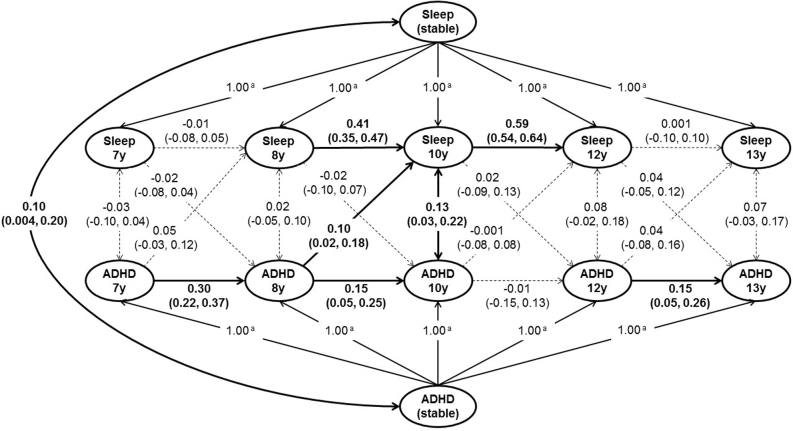
Attention-deficit/hyperactivity disorder (ADHD) comorbid with sleep disturbances can produce profound disruption in daily life and negatively impact quality of life of both the child and the family. However, the temporal relationship between ADHD and sleep impairment is unclear, as are underlying common brain mechanisms.
This study used data from the Quebec Longitudinal Study of Child Development (n = 1601, 52% female) and the Adolescent Brain Cognitive Development Study (n = 3515, 48% female). Longitudinal relationships between symptoms were examined using cross-lagged panel models. Gray matter volume neural correlates were identified using linear regression. The transcriptomic signature of the identified brain-ADHD-sleep relationship was characterized by gene enrichment analysis. Confounding factors, such as stimulant drugs for ADHD and socioeconomic status, were controlled for.
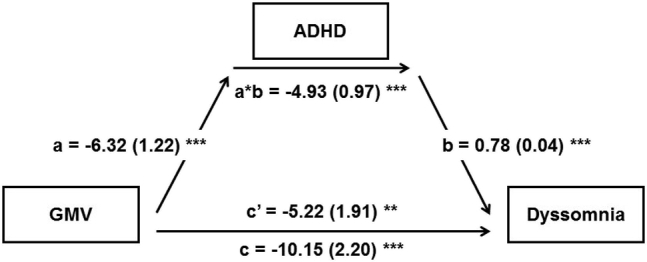
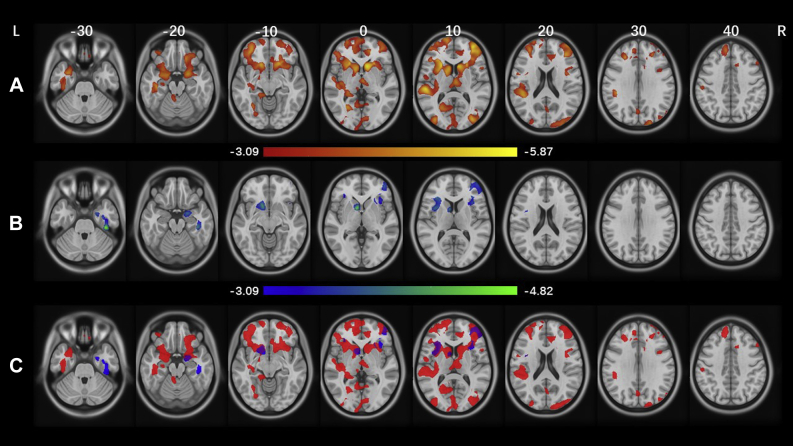
ADHD symptoms contributed to sleep disturbances at one or more subsequent time points in both cohorts. Lower gray matter volumes in the middle frontal gyrus and inferior frontal gyrus, amygdala, striatum, and insula were associated with both ADHD symptoms and sleep disturbances. ADHD symptoms significantly mediated the link between these structural brain abnormalities and sleep dysregulation, and genes were differentially expressed in the implicated brain regions, including those involved in neurotransmission and circadian entrainment.
This study indicates that ADHD symptoms and sleep disturbances have common neural correlates, including structural changes of the ventral attention system and frontostriatal circuitry. Leveraging data from large datasets, these results offer new mechanistic insights into this clinically important relationship between ADHD and sleep impairment, with potential implications for neurobiological models and future therapeutic directions.
注意力缺陷多动障碍(ADHD)合并睡眠障碍会对日常生活产生深远影响,并对儿童和家庭的生活质量产生负面影响。然而,ADHD 和睡眠障碍之间的时间关系尚不清楚,潜在的共同大脑机制也是如此。
本研究使用了魁北克儿童发展纵向研究(n=1601,52%为女性)和青少年大脑认知发展研究(n=3515,48%为女性)的数据。使用交叉滞后面板模型检查症状之间的纵向关系。使用线性回归确定灰质体积神经相关性。通过基因富集分析描述确定的大脑-ADHD-睡眠关系的转录组特征。控制了 ADHD 的兴奋剂药物和社会经济地位等混杂因素。
ADHD 症状在两个队列中的一个或多个后续时间点导致睡眠障碍。中额回和下额回、杏仁核、纹状体和脑岛的灰质体积较低与 ADHD 症状和睡眠障碍均有关。ADHD 症状显著介导了这些结构脑异常与睡眠失调之间的联系,并且在涉及神经递质传递和昼夜节律同步的受影响的脑区中,基因表达存在差异。
本研究表明,ADHD 症状和睡眠障碍具有共同的神经相关性,包括腹侧注意系统和额-纹状体回路的结构变化。利用大型数据集的数据,这些结果为 ADHD 和睡眠障碍之间这种重要的临床关系提供了新的机制见解,对神经生物学模型和未来的治疗方向具有潜在意义。