Totsika Vasiliki, Hastings Richard P, Dutton Yoko, Worsley Alison, Melvin Glenn, Gray Kylie, Tonge Bruce, Heyne David
University College London, UK.
University of Warwick, UK.
Autism. 2020 Oct;24(7):1639-1649. doi: 10.1177/1362361320916967. Epub 2020 May 18.
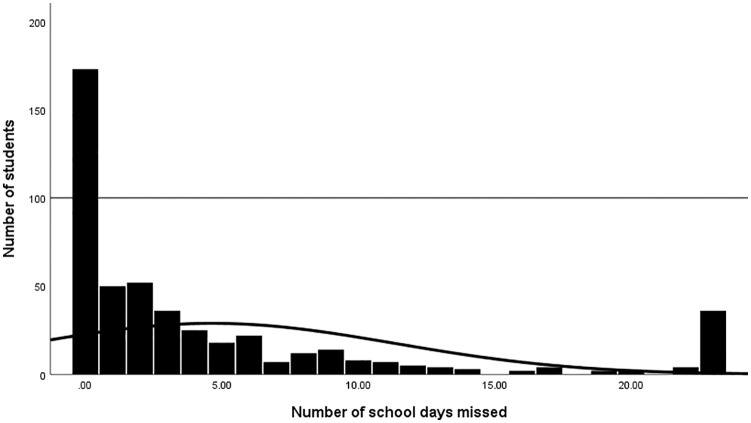
Our study aimed to describe school non-attendance in students with autism. We conducted an online survey. Parents of 486 students (mean age: 11 years) indicated which days their child had missed school (over a period of 1 month). If the child had missed a day, the parent was asked to select a reason from a list of 15 possible reasons (this is a measure of types of school non-attendance called SNACK (School Non-Attendance ChecKlist; Heyne et al., 2019)). On average, students missed 5 days of school of a possible 23 days. Missing over 10% of school is known as persistent absence, and in our study, 43% of students experienced persistent absence. Older students, who attended mainstream schools, who did not live in a two-parent household and whose caregiver was unemployed were more likely to miss school. Looking at the reasons for absence, school refusal was the most frequent reason, accounting for 43% of absences. Nine percent of absence was due to school exclusion. Nine percent of absence was due to school withdrawal. Truancy was almost non-existent. A final reason describes non-problematic absence that is mostly due to medical appointments and illness. This type of absence accounted for 32% of absences in our study, and it was more likely in student with intellectual disability. School refusal was more likely among older students. School exclusion was more likely among students from single-parent, unemployed and well-educated households. Findings from this study help us to understand better the difficulties students with autism experience attending school.
我们的研究旨在描述自闭症学生的缺课情况。我们开展了一项在线调查。486名学生(平均年龄:11岁)的家长指出他们的孩子在哪个日期缺课(为期1个月)。如果孩子缺课一天,家长会被要求从15个可能的原因列表中选择一个原因(这是一种衡量缺课类型的方法,称为SNACK(学校缺课检查表;海涅等人,2019年))。在可能的23天里,学生平均缺课5天。缺课超过10%被称为持续缺勤,在我们的研究中,43%的学生经历了持续缺勤。年龄较大的学生、就读于主流学校的学生、不住在双亲家庭的学生以及照顾者失业的学生更有可能缺课。从缺课原因来看,拒学是最常见的原因,占缺课的43%。9%的缺课是由于被学校开除。9%的缺课是由于退学。逃学几乎不存在。最后一个原因描述的是无问题缺勤,主要是由于医疗预约和疾病。在我们的研究中,这类缺勤占缺课的32%,在智障学生中更常见。拒学在年龄较大的学生中更常见。被学校开除在单亲、失业和受过良好教育家庭的学生中更常见。这项研究的结果有助于我们更好地理解自闭症学生在上学过程中所经历的困难。