Reyes Catherine G, Lagerwall Jan P F
Department of Physics and Materials Science, University of Luxembourg, Luxembourg L-1511, Luxembourg.
ACS Appl Mater Interfaces. 2020 Jun 10;12(23):26566-26576. doi: 10.1021/acsami.0c03338. Epub 2020 Jun 2.
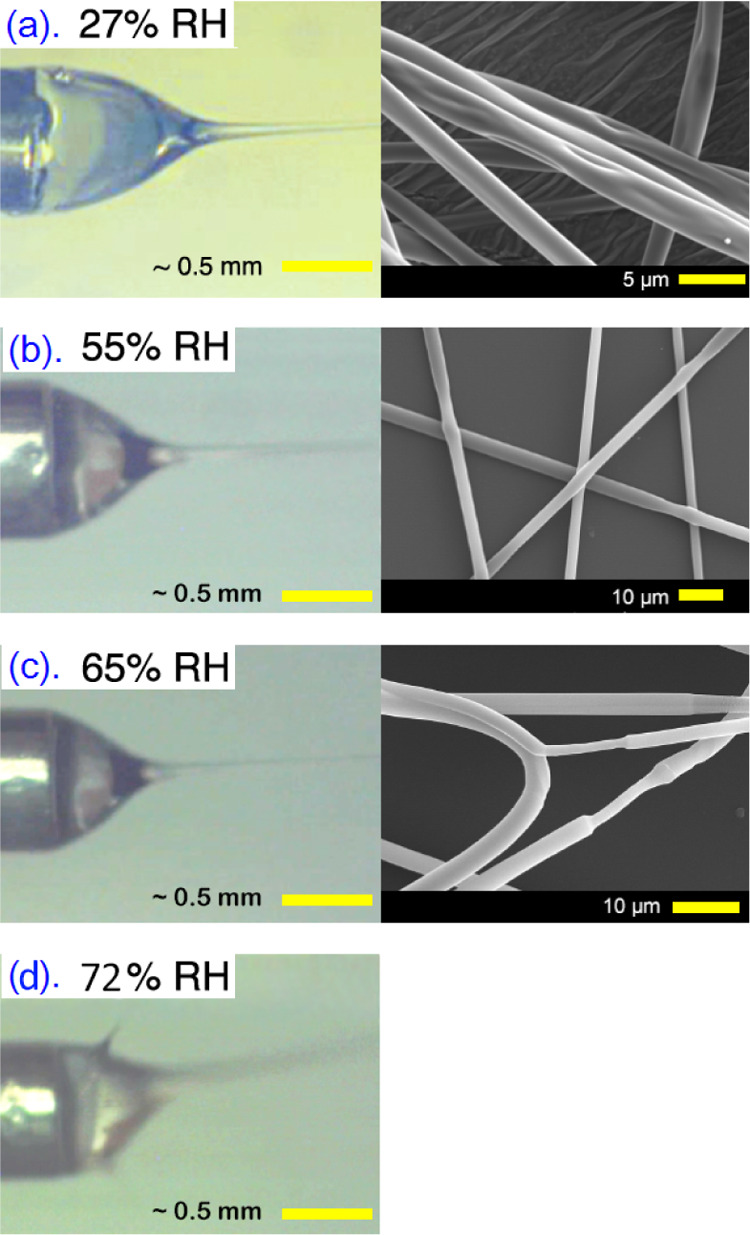
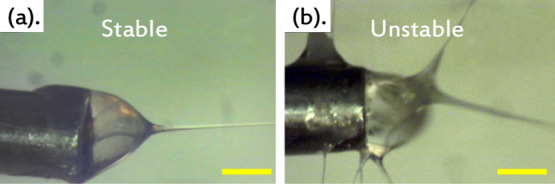
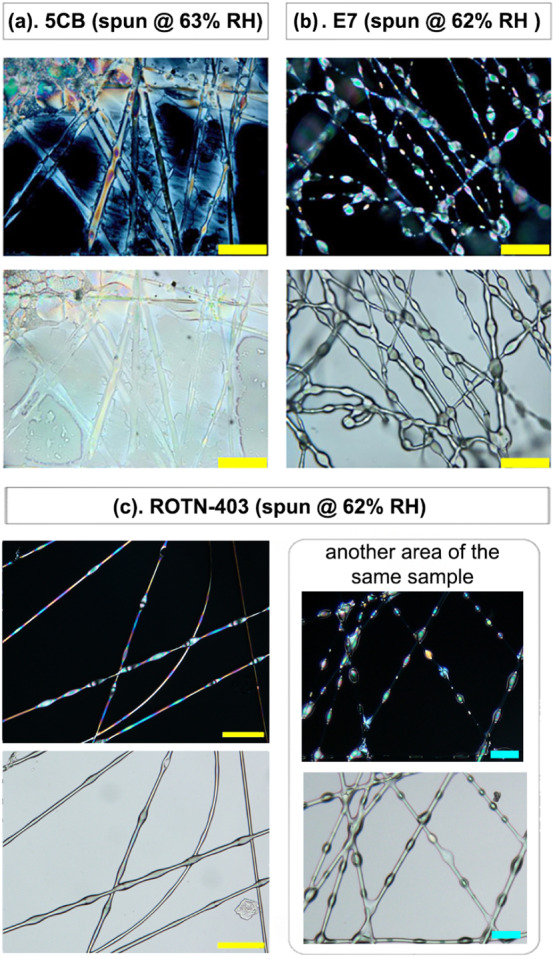
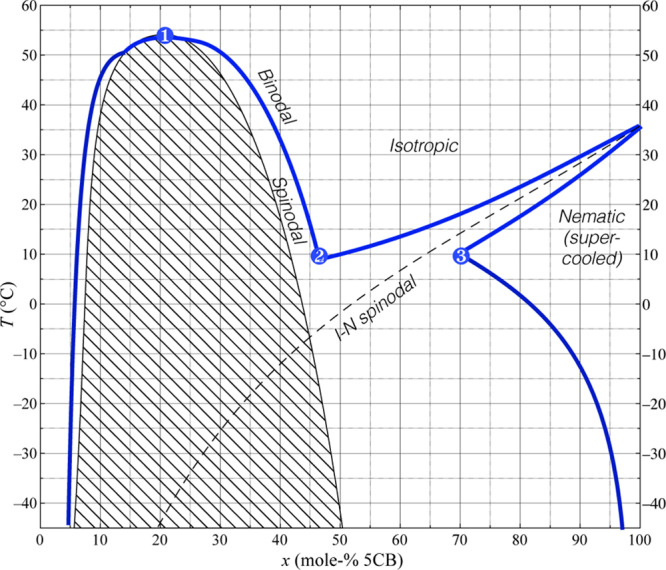
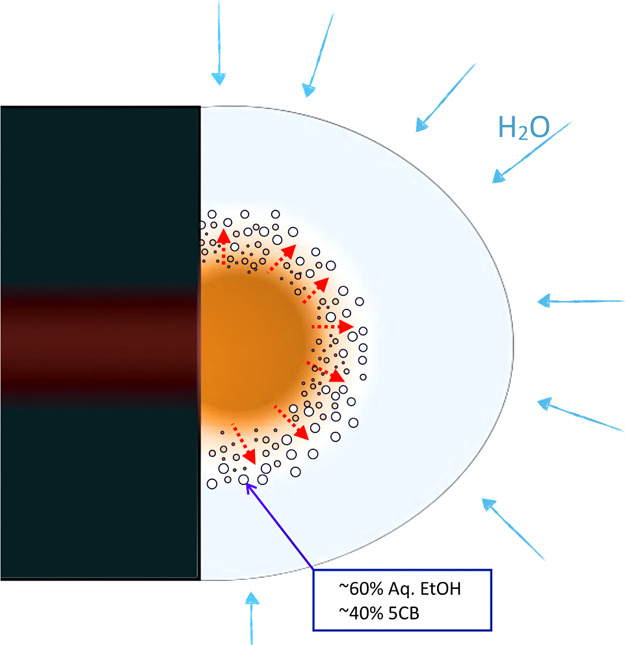
The well-known problems of electrospinning hygroscopic polymer fibers in humid air are usually attributed to water condensing onto the jet mid-flight: water enters the jet as an additional solvent, hindering solidification into well-defined fibers. Here, we show that fiber fusion and shape loss seen at the end of the process may actually stem from water already condensing into the Taylor cone from where the jet ejects, if the solvent is volatile and miscible with water, for example, ethanol. The addition of water can radically change the solvent character from good to poor, even if water on its own is an acceptable solvent. Moreover, and counterintuitively, the water condensation promotes solvent evaporation because of the release of heat through the phase transition as well as from the exothermic mixing process. The overall result is that the polymer solution develops a gel-like skin around the Taylor cone. The situation is significantly aggravated in the case of coaxial electrospinning to make functional composite fibers if the injected core fluid forms a complex phase diagram with miscibility gaps together with the polymer sheath solvent and the water condensing from the air. The resulting phase separation coagulates the polymer throughout the Taylor cone, as liquid droplets with different compositions nucleate and spread, setting up strong internal flows and concentration gradients. We demonstrate that these cases of uncontrolled polymer coagulation cause rapid Taylor cone deformation, multiple jet ejection, and the inability to spin coaxial fiber mats, illustrated by the example of coaxial electrospinning of an ethanolic polyvinylpyrrolidone solution with a thermotropic liquid crystal core, at varying humidities.
在潮湿空气中静电纺丝吸湿聚合物纤维时,众所周知的问题通常归因于水在射流飞行过程中凝结:水作为额外的溶剂进入射流,阻碍其固化成轮廓清晰的纤维。在此,我们表明,如果溶剂易挥发且与水互溶,例如乙醇,那么在过程结束时看到的纤维融合和形状丧失实际上可能源于已经从射流喷出的泰勒锥中凝结的水。即使水本身是一种可接受的溶剂,加入水也会从根本上改变溶剂性质,从良溶剂变为不良溶剂。此外,与直觉相反的是,水的凝结促进了溶剂的蒸发,这是由于相变以及放热混合过程中释放的热量。总体结果是聚合物溶液在泰勒锥周围形成了类似凝胶的表皮。如果注入的芯流体与聚合物鞘层溶剂以及从空气中凝结的水形成具有互溶间隙的复杂相图,那么在制备功能性复合纤维的同轴静电纺丝情况下,这种情况会显著加剧。随着具有不同组成的液滴成核并扩散,由此产生的相分离使整个泰勒锥中的聚合物凝固,形成强烈的内部流动和浓度梯度。我们通过在不同湿度下对含有热致液晶芯的乙醇基聚乙烯吡咯烷酮溶液进行同轴静电纺丝的例子表明,这些聚合物不受控制的凝固情况会导致泰勒锥快速变形、多股射流喷出以及无法纺出同轴纤维毡。