Li Wen, Jia Ming Xi, Deng Jing, Wang Jian Hui, Zuberi Zavuga, Yang Sheng, Ba Jie, Chen Zhu
National Engineering Laboratory for Deep Process of Rice and Byproducts, College of Food Science and Engineering, Hunan Province Key Laboratory of Edible forestry Resources Safety and Processing Utilization, Central South University of Forestry and Technology, Changsha 410004, Hunan, China.
Key Laboratory of Biological Nanomaterials and Devices, College of Packaging and Material Engineering, College of Life Sciences and Chemistry, Hunan University of Technology, Zhuzhou 412007, Hunan, China.
Cancers (Basel). 2020 May 14;12(5):1236. doi: 10.3390/cancers12051236.
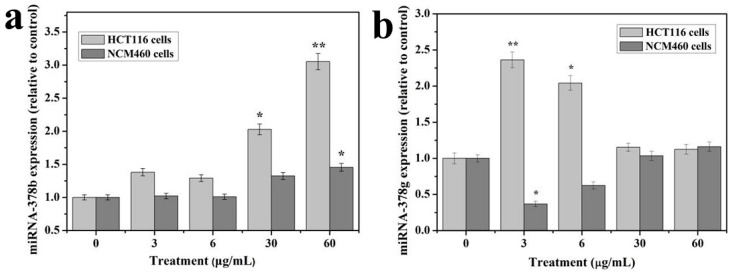
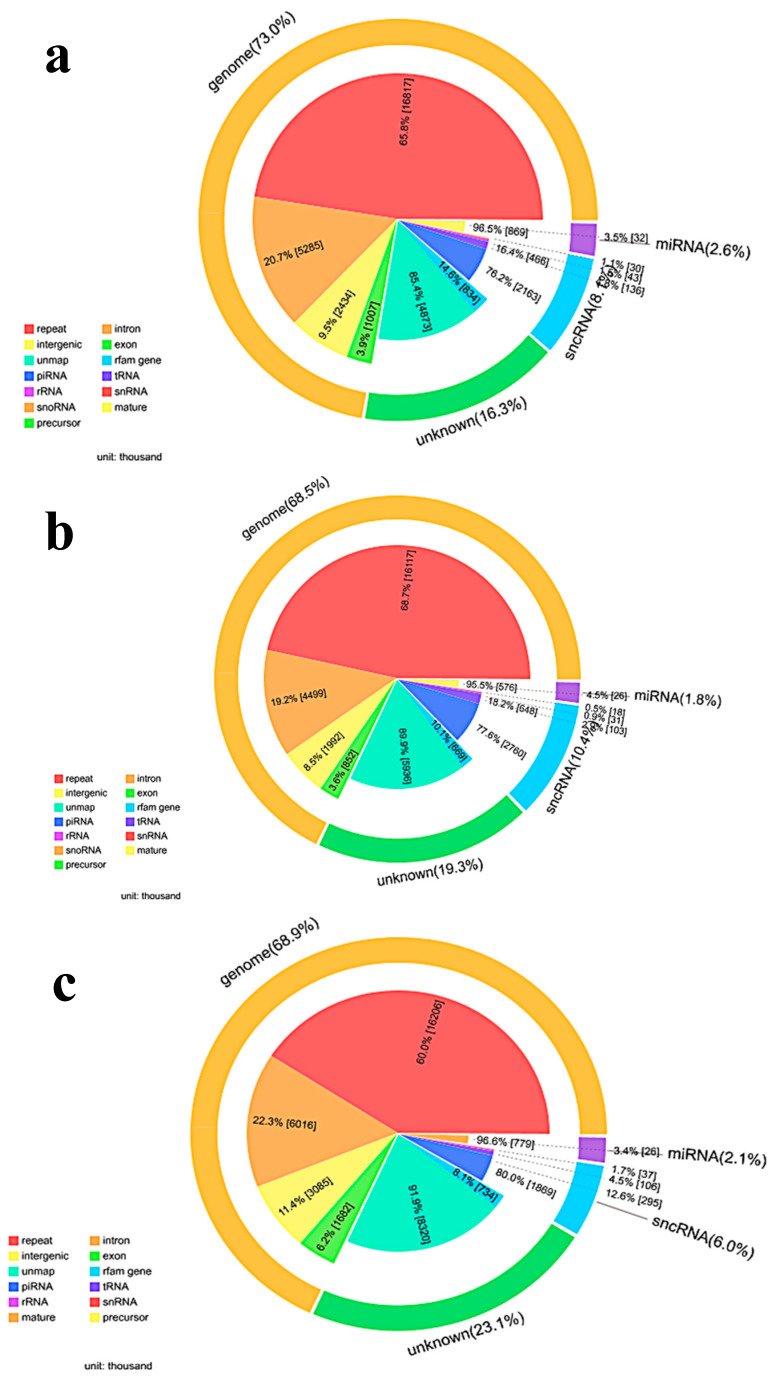
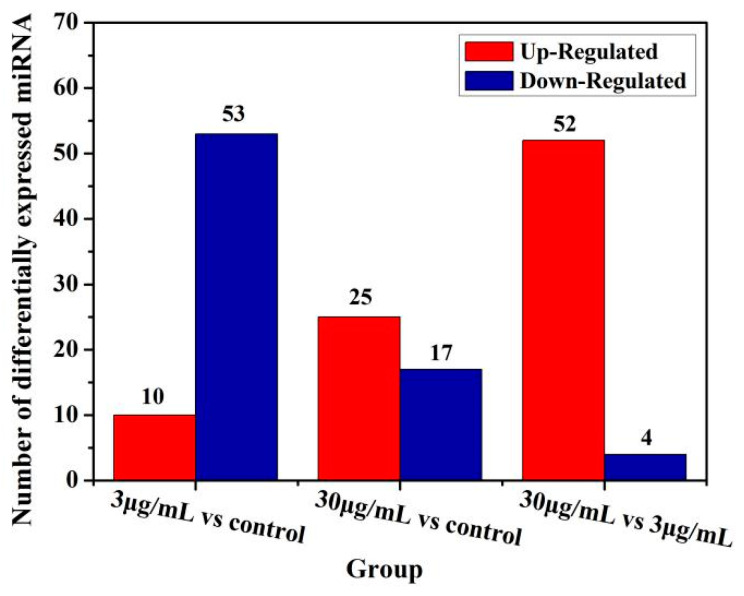
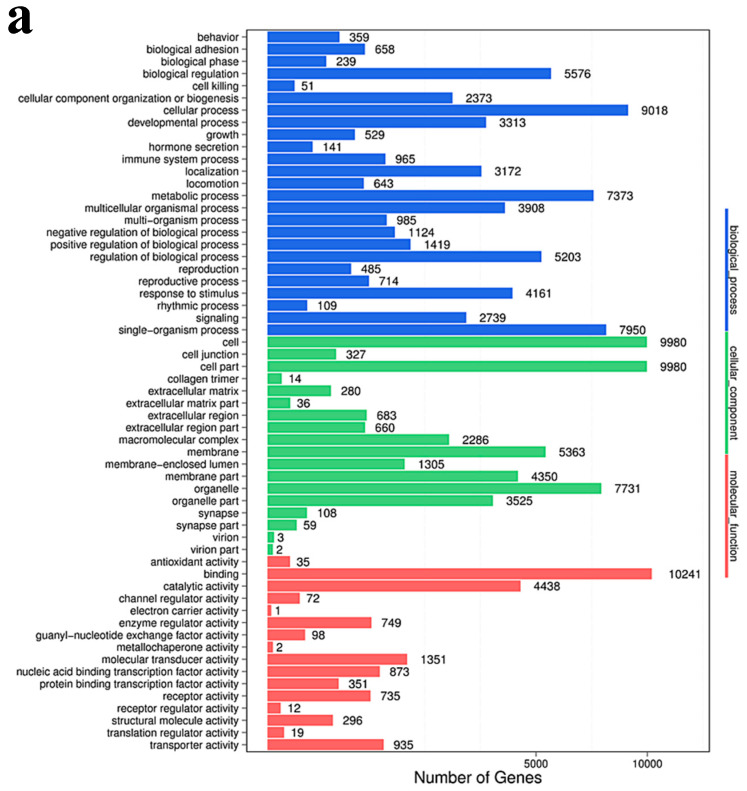
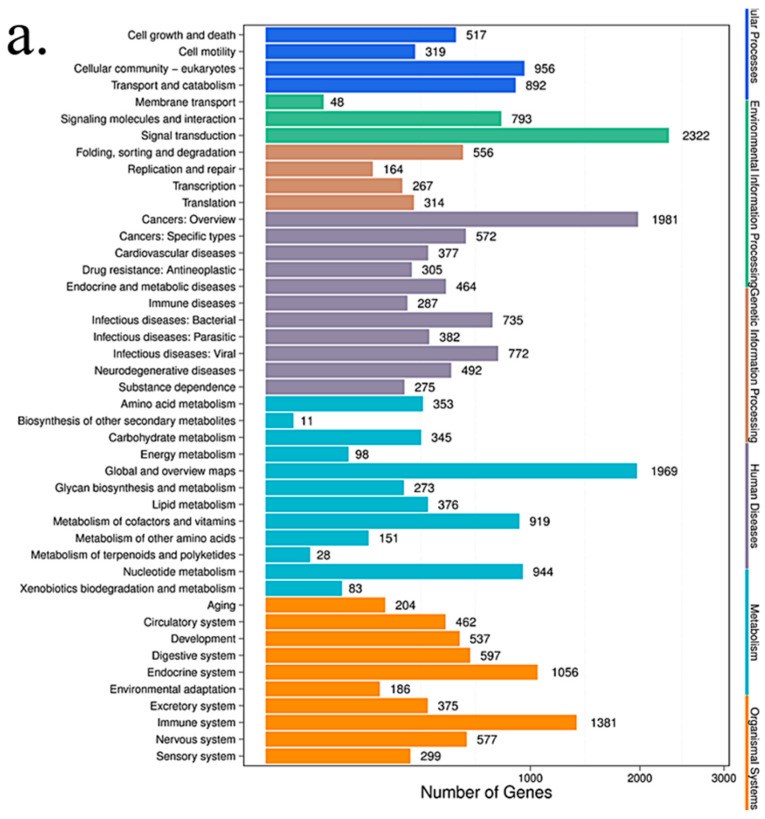
Titanium dioxide nanoparticles (TiO-NPs) are widely used for biomedical and food applications, the toxicity of TiO-NPs in vivo and in vitro has been elucidated, but the underlying cytotoxicity of TiO-NPs against microRNA remains largely unknown. The purpose of this study was to analyze microRNA profiling induced by TiO-NPs against NCM460 and HCT116 cell lines. Comparative analysis identified 34 and 24 microRNAs were significantly altered in the TiO-NPs treated cells at concentrations of 3 and 30 μg/mL, respectively. Functional classification demonstrated that a large proportion of genes involved in metabolism, human disease, and environmental information process were significantly upregulated by TiO-NPs. Bioinformatics analysis suggested that microRNA 378 might be an early indicator of cellular response to exogenous stimuli with apoptotic signals. Furthermore, TiO-NPs significantly altered the expression of microRNA 378b and 378g in HCT116 and NCM460 cell lines at different concentrations from 3 to 6 μg/mL. These concentrations elicit high-sensitivity of stimuli response in colon cancer cells when exposed to the slight doses of TiO-NPs. Our study indicated that microRNAs 378b and 378g may play an important role in TiO-NPs-mediated colonic cytotoxicity, which may provide a valuable insight into the molecular mechanisms of potential risks in colitis and colon cancer.
二氧化钛纳米颗粒(TiO-NPs)被广泛用于生物医学和食品应用中,其体内和体外的毒性已得到阐明,但TiO-NPs对微小RNA的潜在细胞毒性在很大程度上仍不清楚。本研究的目的是分析TiO-NPs对NCM460和HCT116细胞系诱导的微小RNA谱。比较分析确定,在浓度为3和30μg/mL的TiO-NPs处理细胞中,分别有34个和24个微小RNA发生了显著变化。功能分类表明,TiO-NPs显著上调了大量参与代谢、人类疾病和环境信息过程的基因。生物信息学分析表明,微小RNA 378可能是细胞对外源刺激与凋亡信号反应的早期指标。此外,在3至6μg/mL的不同浓度下,TiO-NPs显著改变了HCT116和NCM460细胞系中微小RNA 378b和378g的表达。当暴露于低剂量的TiO-NPs时,这些浓度在结肠癌细胞中引发了高敏感性的刺激反应。我们的研究表明,微小RNA 378b和378g可能在TiO-NPs介导的结肠细胞毒性中发挥重要作用,这可能为结肠炎和结肠癌潜在风险的分子机制提供有价值的见解。