Bettencourt Ana, Gonçalves Lídia M, Gramacho Ana C, Vieira Adriana, Rolo Dora, Martins Carla, Assunção Ricardo, Alvito Paula, Silva Maria João, Louro Henriqueta
Research Institute for Medicines (iMed.ULisboa), Faculty of Pharmacy, Universidade de Lisboa, 1649-003 Lisboa, Portugal.
Department of Human Genetics, National Institute of Health Dr. Ricardo Jorge (INSA), Avenida Padre Cruz, 1649-016 Lisboa, Portugal.
Nanomaterials (Basel). 2020 Aug 2;10(8):1516. doi: 10.3390/nano10081516.
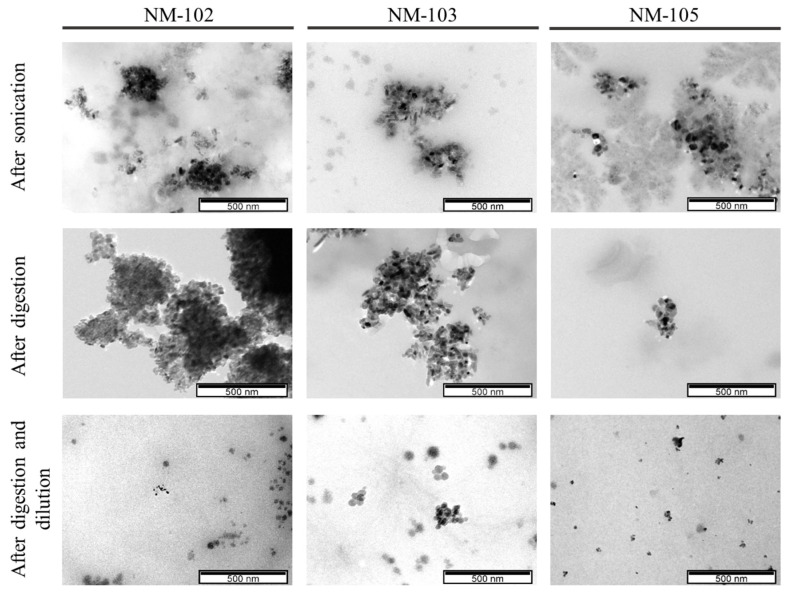
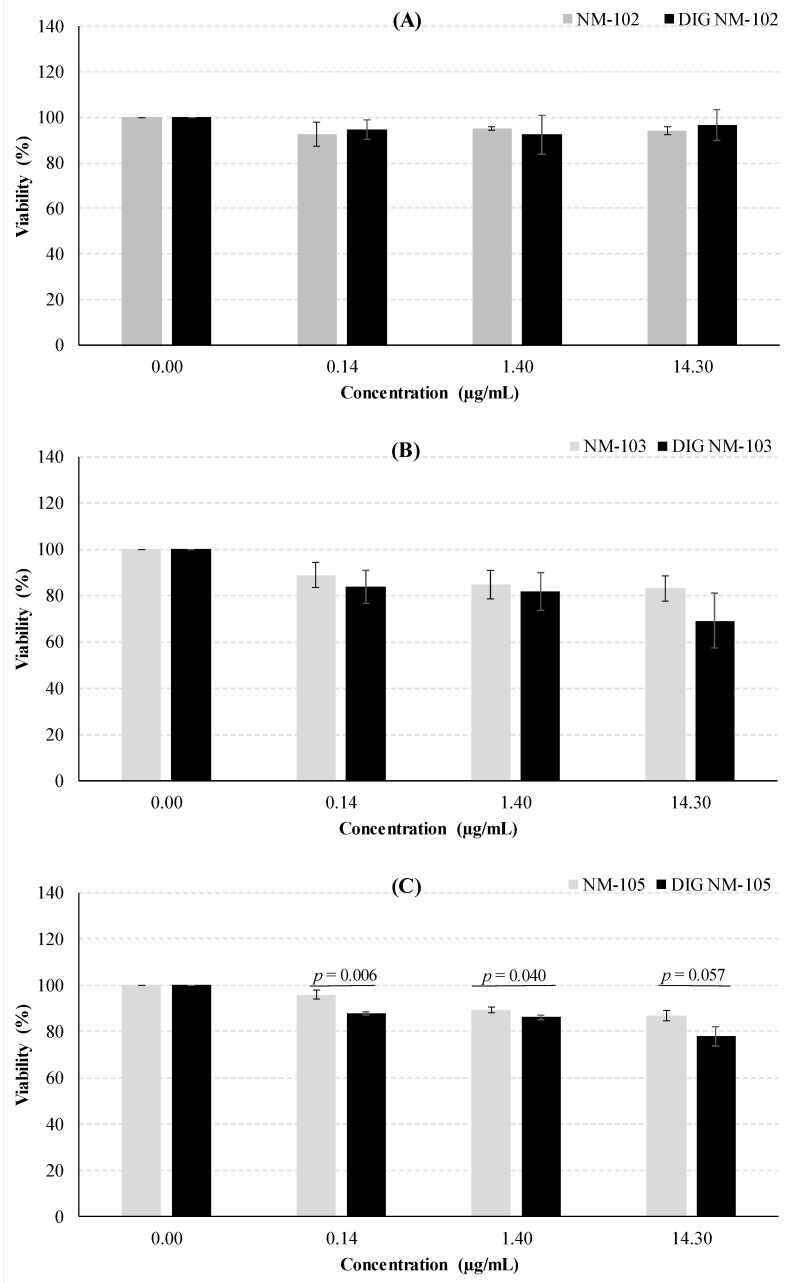
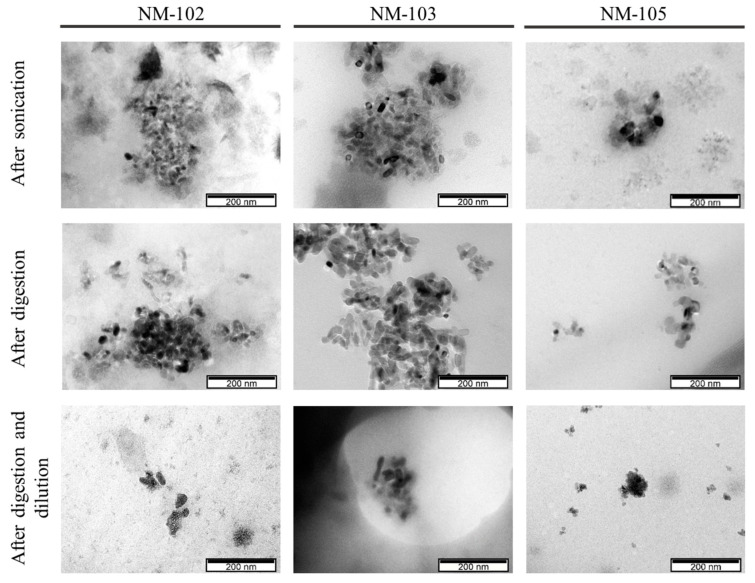
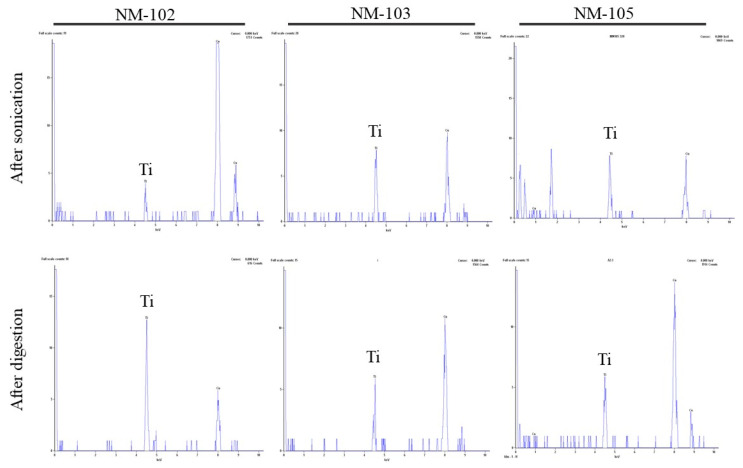
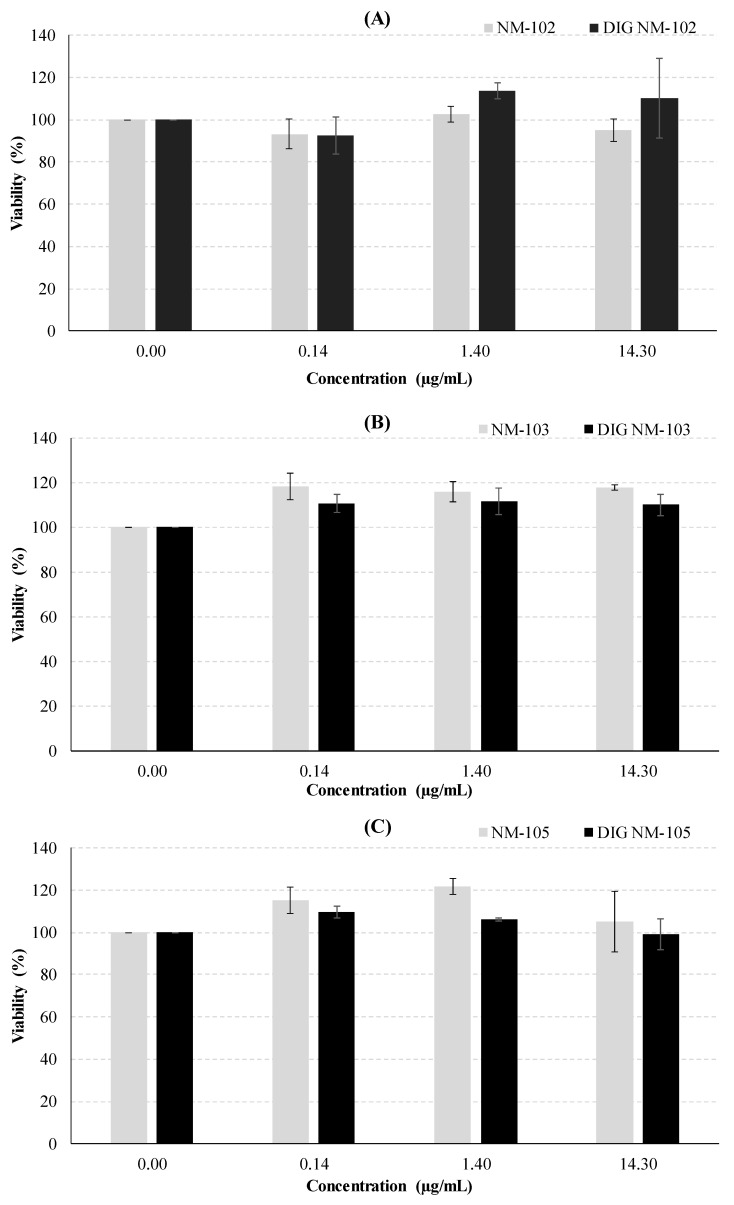
Several metallic nanomaterials (NMs), such as titanium dioxide nanomaterials (TiO), present beneficial properties with a broad range of innovative applications. The human population is exposed to TiO, particularly by ingestion, due to its increasing use as a food additive and inclusion in dietary supplements and food packaging materials. Whether this oral exposure may lead to adverse local or systemic outcomes has been the subject of research, but studies have generated contradictory results, reflecting differences in the physicochemical properties of the TiO studied, effects of the surrounding matrix, and modifications during digestion. This work aimed to investigate the toxic effects of three different TiO NMs (NM-103, NM-103 and NM-105) on the gastrointestinal tract cells, Caco-2 and HT29-MTX-E12, after the use of the standardized static INFOGEST 2.0 in vitro digestion method to mimic human digestion of TiO, contributing to hazard assessment. The results show that, for one of the digested TiO NMs studied (NM-105), a more pronounced toxicity occurs after exposure of HT29-MTX-E12 intestinal cells, as compared to undigested NM, concomitantly with subtle changes in characteristics of the NM. Thus, the inclusion of the digestion simulation in the safety evaluation of ingested NMs through in vitro bioassays can better integrate the modifications that NMs suffer in the organism. It is expected that such an approach will reduce uncertainties in the hazard assessment of ingested NMs for human health.
几种金属纳米材料(NMs),如二氧化钛纳米材料(TiO),具有多种有益特性,有着广泛的创新应用。由于二氧化钛作为食品添加剂以及在膳食补充剂和食品包装材料中的使用日益增加,人类会接触到二氧化钛,尤其是通过摄入途径。这种经口接触是否会导致不良的局部或全身后果一直是研究的主题,但研究结果相互矛盾,这反映了所研究的二氧化钛的物理化学性质差异、周围基质的影响以及消化过程中的变化。这项工作旨在通过使用标准化的静态INFOGEST 2.0体外消化方法模拟二氧化钛的人体消化过程,研究三种不同的二氧化钛纳米材料(NM - 103、NM - 104和NM - 105)对胃肠道细胞Caco - 2和HT29 - MTX - E12的毒性作用,以有助于进行危害评估。结果表明,对于所研究的一种消化后的二氧化钛纳米材料(NM - 105),与未消化的纳米材料相比,HT29 - MTX - E12肠道细胞暴露后会出现更明显的毒性,同时纳米材料的特性也会发生细微变化。因此,通过体外生物测定法将消化模拟纳入摄入纳米材料的安全性评估中,可以更好地整合纳米材料在生物体内所经历的变化。预计这种方法将减少对摄入纳米材料对人类健康危害评估中的不确定性。