Institute of Chemistry and Biotechnology, Zurich University of Applied Sciences, Campus Grüental, CH-8820, Wädenswil, Switzerland.
Department of Genetics and Microbiology, Faculty of Science, Charles University in Prague, Viničná 5, 12840, Prague, Czech Republic.
Appl Microbiol Biotechnol. 2020 Jul;104(13):5787-5800. doi: 10.1007/s00253-020-10669-x. Epub 2020 May 18.
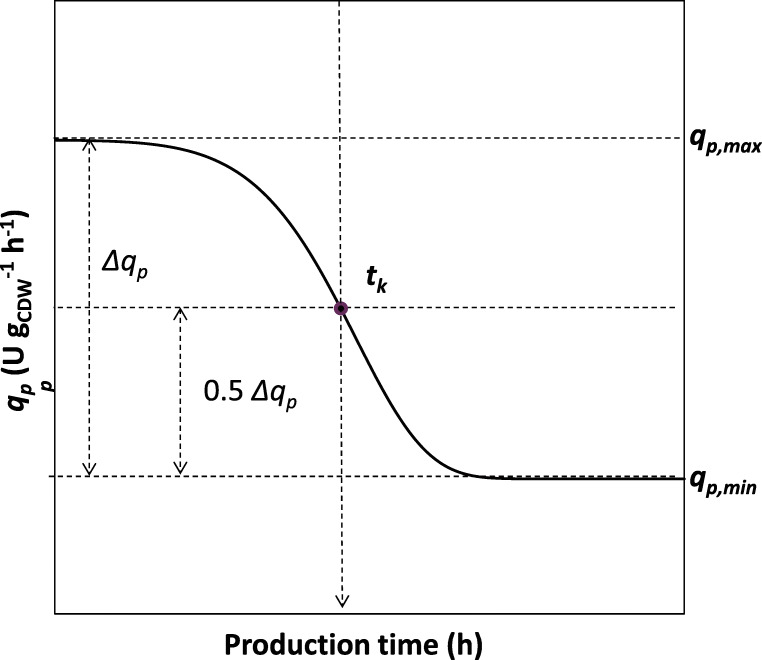
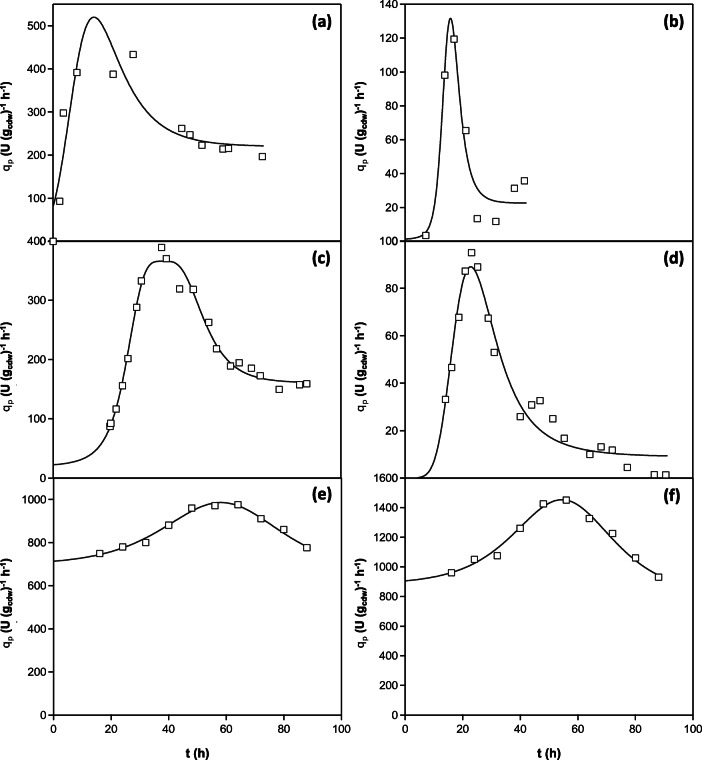
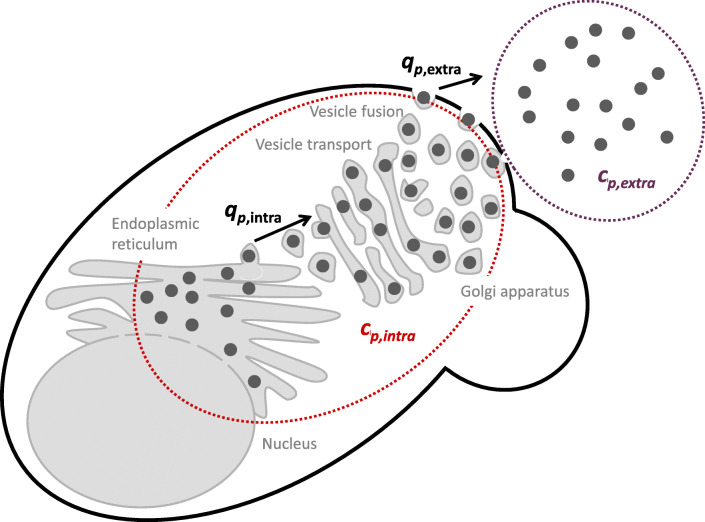
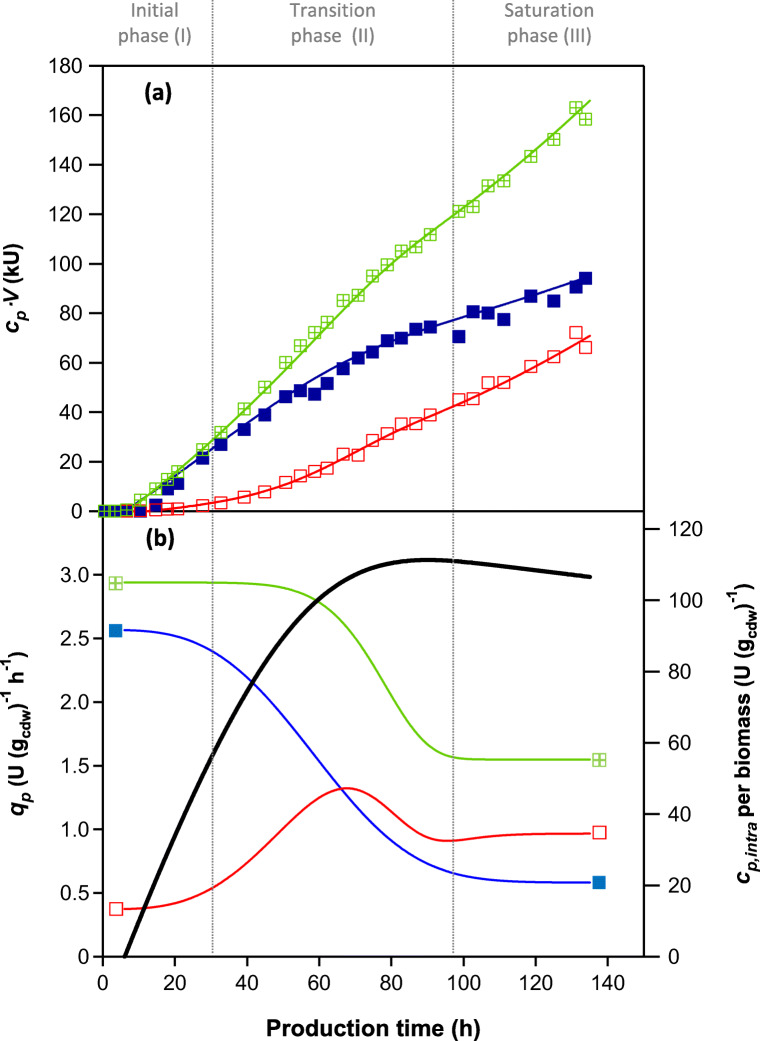
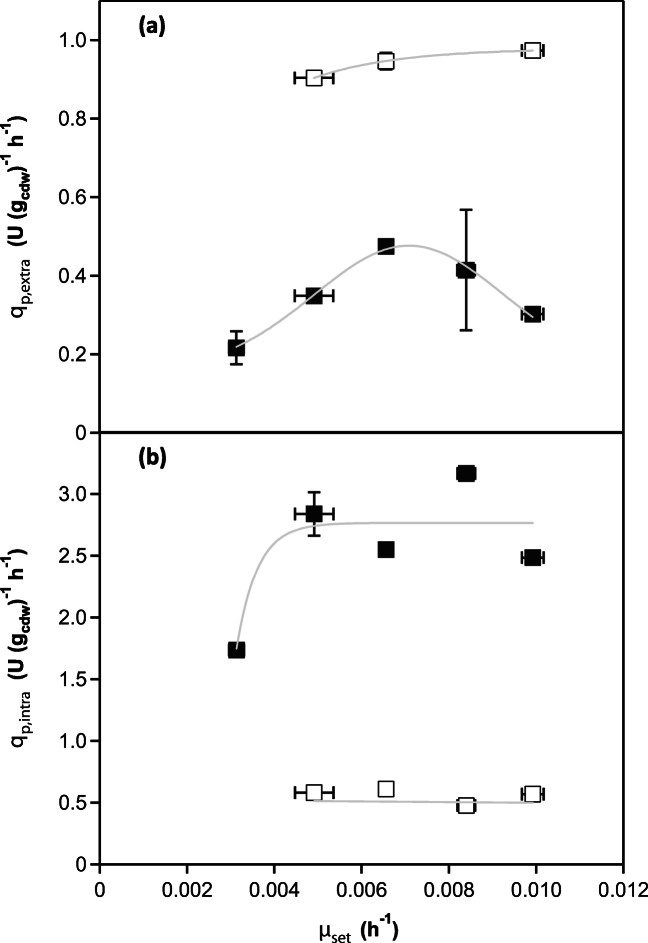
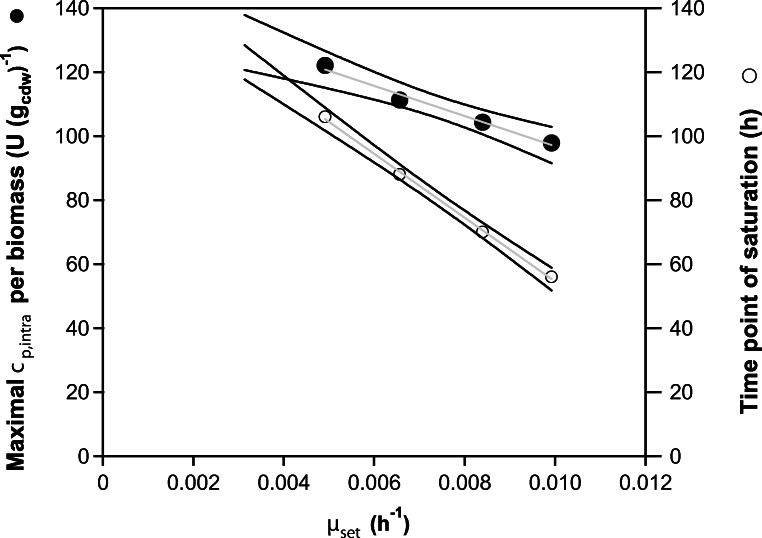
To take full advantage of recombinant Pichia pastoris (Komagataella phaffii) as a production system for heterologous proteins, the complex protein secretory process should be understood and optimised by circumventing bottlenecks. Typically, little or no attention has been paid to the fate of newly synthesised protein inside the cell, or its passage through the secretory pathway, and only the secreted product is measured. However, the system's productivity (i.e. specific production rate q), includes productivity of secreted (q) plus intracellularly accumulated (q) protein. In bioreactor cultivations with P. pastoris producing penicillin G acylase, we studied the dynamics of product formation, i.e. both the specific product secretion (q) and product retention (q) as functions of time, as well as the kinetics, i.e. productivity in relation to specific growth rate (μ). Within the time course, we distinguished (I) an initial phase with constant productivities, where the majority of product accumulated inside the cells, and q, which depended on μ in a bell-shaped manner; (II) a transition phase, in which intracellular product accumulation reached a maximum and productivities (intracellular, extracellular, overall) were changing; (III) a new phase with constant productivities, where secretion prevailed over intracellular accumulation, q was linearly related to μ and was up to three times higher than in initial phase (I), while q decreased 4-6-fold. We show that stress caused by heterologous protein production induces cellular imbalance leading to a secretory bottleneck that ultimately reaches equilibrium. This understanding may help to develop cultivation strategies for improving protein secretion from P. pastoris.Key Points• A novel concept for industrial bioprocess development.• A Relationship between biomass growth and product formation in P. pastoris.• A Three (3) phases of protein production/secretion controlled by the AOX1-promoter.• A Proof of concept in production of industrially relevant penicillin G acylase.
为了充分利用重组毕赤酵母(Komagataella phaffii)作为异源蛋白的生产系统,应通过规避瓶颈来理解和优化复杂的蛋白质分泌过程。通常,人们很少关注细胞内新合成蛋白质的命运或其穿过分泌途径的过程,而只测量分泌的产物。然而,该系统的生产力(即比生产速率 q)包括分泌(q)和细胞内积累(q)的蛋白质的生产力。在使用毕赤酵母生产青霉素 G 酰化酶的生物反应器培养中,我们研究了产物形成的动力学,即特定产物分泌(q)和产物保留(q)随时间的变化,以及动力学,即与比生长速率(μ)相关的生产力。在时间过程中,我们区分了(I)一个具有恒定生产力的初始阶段,其中大部分产物积累在细胞内,q 依赖于 μ 的钟形方式;(II)一个过渡阶段,其中细胞内产物积累达到最大值,并且生产力(细胞内、细胞外、总体)正在发生变化;(III)一个具有恒定生产力的新阶段,其中分泌超过细胞内积累,q 与 μ 呈线性关系,比初始阶段(I)高 3 倍,而 q 下降 4-6 倍。我们表明,异源蛋白生产引起的应激导致细胞失衡,导致分泌瓶颈,最终达到平衡。这种理解可能有助于开发改善毕赤酵母蛋白分泌的培养策略。
关键点
• 工业生物工艺开发的新概念。
• 毕赤酵母中生物量生长和产物形成之间的关系。
• 由 AOX1 启动子控制的蛋白质生产/分泌的三个(3)阶段。
• 生产工业相关青霉素 G 酰化酶的概念验证。