• 文献检索
  • 文档翻译
  • 深度研究
  • 学术资讯
  • Suppr Zotero 插件Zotero 插件
  • 邀请有礼
  • 套餐&价格
  • 历史记录
应用&插件
Suppr Zotero 插件Zotero 插件浏览器插件Mac 客户端Windows 客户端微信小程序
定价
高级版会员购买积分包购买API积分包
服务
文献检索文档翻译深度研究API 文档MCP 服务
关于我们
关于 Suppr公司介绍联系我们用户协议隐私条款
关注我们

Suppr 超能文献

核心技术专利:CN118964589B侵权必究
粤ICP备2023148730 号-1Suppr @ 2026

文献检索

告别复杂PubMed语法,用中文像聊天一样搜索,搜遍4000万医学文献。AI智能推荐,让科研检索更轻松。

立即免费搜索

文件翻译

保留排版,准确专业,支持PDF/Word/PPT等文件格式,支持 12+语言互译。

免费翻译文档

深度研究

AI帮你快速写综述,25分钟生成高质量综述,智能提取关键信息,辅助科研写作。

立即免费体验

心脏骤停后体感诱发电位幅度的相关性

Relevance of Somatosensory Evoked Potential Amplitude After Cardiac Arrest.

作者信息

Glimmerveen Astrid B, Keijzer Hanneke M, Ruijter Barry J, Tjepkema-Cloostermans Marleen C, van Putten Michel J A M, Hofmeijer Jeannette

机构信息

Department of Neurology, Rijnstate Hospital, Arnhem, Netherlands.

Department of Intensive Care Medicine and Neurology, Donders Institute for Brain Cognition, and Behaviour, Radboud University Medical Center, Nijmegen, Netherlands.

出版信息

Front Neurol. 2020 Apr 28;11:335. doi: 10.3389/fneur.2020.00335. eCollection 2020.

DOI:10.3389/fneur.2020.00335
PMID:32425878
原文链接:https://pmc.ncbi.nlm.nih.gov/articles/PMC7212397/
Abstract

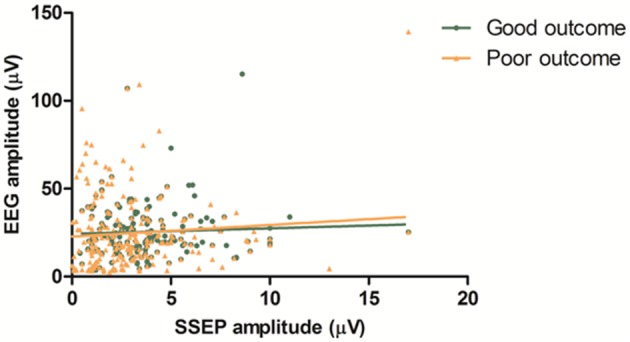
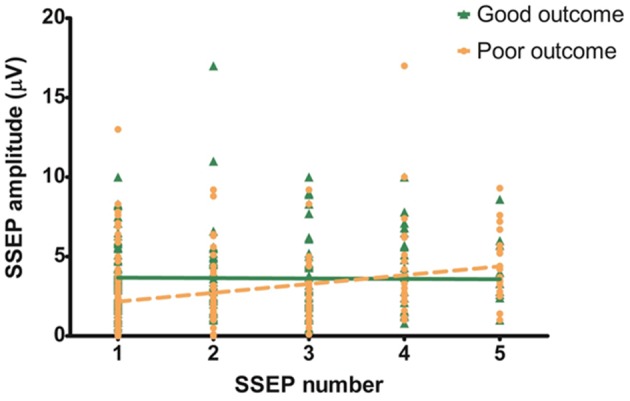
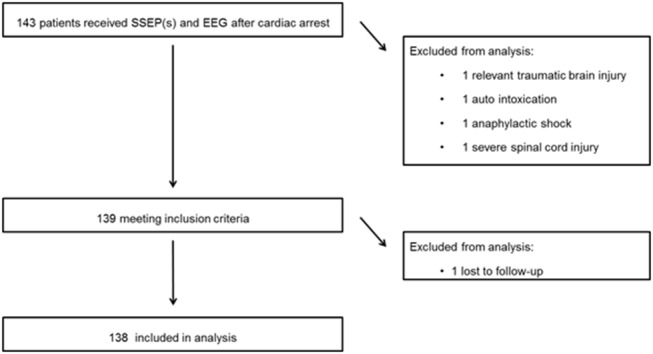
We present relations of SSEP amplitude with neurological outcome and of SSEP amplitude with EEG amplitude in comatose patients after cardiac arrest. This is a analysis of a prospective cohort study in comatose patients after cardiac arrest. Amplitude of SSEP recordings obtained within 48-72 h, and EEG patterns obtained at 12 and 24h after cardiac arrest were related to good (CPC 1-2) or poor (CPC 3-5) outcome at 6 months. In 39% of the study population multiple SSEP measurements were performed. Additionally, SSEP amplitude was related to mean EEG amplitude. We included 138 patients (77% poor outcome). Absent SSEP responses, a N20 amplitude <0.4 μV within 48-72 h, and suppressed or synchronous EEG with suppressed background at 12 or 24 h after cardiac arrest were invariably associated with a poor outcome. Combined, these tests reached a sensitivity for prediction of poor outcome up to 58 at 100% specificity. N20 amplitude increased with a mean of 0.55 μV per day in patients with a poor outcome, and remained stable with a good outcome. There was no statistically significant correlation between SSEP and EEG amplitudes in 182 combined SSEP and EEG measurements ( < 0.01). N20 amplitude <0.4 μV is invariably associated with poor outcome. There is no correlation between SSEP and EEG amplitude. SSEP amplitude analysis may contribute to outcome prediction after cardiac arrest.

摘要

我们呈现了心脏骤停后昏迷患者中体感诱发电位(SSEP)波幅与神经功能预后的关系,以及SSEP波幅与脑电图(EEG)波幅的关系。这是一项对心脏骤停后昏迷患者的前瞻性队列研究的分析。心脏骤停后48 - 72小时内获得的SSEP记录波幅,以及心脏骤停后12小时和24小时获得的EEG模式与6个月时良好(脑功能分级[CPC] 1 - 2级)或不良(CPC 3 - 5级)预后相关。在39%的研究人群中进行了多次SSEP测量。此外,SSEP波幅与平均EEG波幅相关。我们纳入了138例患者(77%预后不良)。SSEP反应缺失、48 - 72小时内N20波幅<0.4 μV,以及心脏骤停后12小时或24小时脑电图抑制或背景抑制的同步脑电图均与不良预后始终相关。综合起来,这些测试在100%特异性时对不良预后的预测敏感性高达58%。预后不良的患者N20波幅平均每天增加0.55 μV,而预后良好的患者则保持稳定。在182次SSEP和EEG联合测量中,SSEP与EEG波幅之间无统计学显著相关性(P < 0.01)。N20波幅<0.4 μV始终与不良预后相关。SSEP与EEG波幅之间无相关性。SSEP波幅分析可能有助于心脏骤停后的预后预测。
https://cdn.ncbi.nlm.nih.gov/pmc/blobs/7087/7212397/9d6dd52fb693/fneur-11-00335-g0003.jpg
https://cdn.ncbi.nlm.nih.gov/pmc/blobs/7087/7212397/f6bc09cc195e/fneur-11-00335-g0001.jpg
https://cdn.ncbi.nlm.nih.gov/pmc/blobs/7087/7212397/9487a8fab8c2/fneur-11-00335-g0002.jpg
https://cdn.ncbi.nlm.nih.gov/pmc/blobs/7087/7212397/9d6dd52fb693/fneur-11-00335-g0003.jpg
https://cdn.ncbi.nlm.nih.gov/pmc/blobs/7087/7212397/f6bc09cc195e/fneur-11-00335-g0001.jpg
https://cdn.ncbi.nlm.nih.gov/pmc/blobs/7087/7212397/9487a8fab8c2/fneur-11-00335-g0002.jpg
https://cdn.ncbi.nlm.nih.gov/pmc/blobs/7087/7212397/9d6dd52fb693/fneur-11-00335-g0003.jpg

相似文献

1
Relevance of Somatosensory Evoked Potential Amplitude After Cardiac Arrest.心脏骤停后体感诱发电位幅度的相关性
Front Neurol. 2020 Apr 28;11:335. doi: 10.3389/fneur.2020.00335. eCollection 2020.
2
Association between somatosensory evoked potentials and EEG in comatose patients after cardiac arrest.心脏骤停后昏迷患者体感诱发电位与脑电图的相关性。
Clin Neurophysiol. 2019 Nov;130(11):2026-2031. doi: 10.1016/j.clinph.2019.08.022. Epub 2019 Aug 31.
3
SSEP N20 and P25 amplitudes predict poor and good neurologic outcomes after cardiac arrest.体感诱发电位N20和P25波幅可预测心脏骤停后神经功能预后不良和良好。
Ann Intensive Care. 2022 Mar 15;12(1):25. doi: 10.1186/s13613-022-00999-6.
4
SSEP amplitudes add information for prognostication in postanoxic coma.体感诱发电位振幅为缺氧性昏迷患者的预后提供了更多信息。
Resuscitation. 2021 Jun;163:172-175. doi: 10.1016/j.resuscitation.2021.03.033. Epub 2021 Apr 10.
5
SSEP amplitude accurately predicts both good and poor neurological outcome early after cardiac arrest; a post-hoc analysis of the ProNeCA multicentre study.SSEP 振幅能准确预测心脏骤停后早期的良好和不良神经结局;ProNeCA 多中心研究的事后分析。
Resuscitation. 2021 Jun;163:162-171. doi: 10.1016/j.resuscitation.2021.03.028. Epub 2021 Apr 2.
6
Stratifying comatose postanoxic patients for somatosensory evoked potentials using routine EEG.采用常规脑电图对缺氧后昏迷患者进行体感诱发电位分层。
Resuscitation. 2019 Oct;143:17-21. doi: 10.1016/j.resuscitation.2019.07.027. Epub 2019 Aug 5.
7
Beyond dichotomy: patterns and amplitudes of SSEPs and neurological outcomes after cardiac arrest.超越二分法:心脏骤停后 SSEP 模式和幅度与神经结局的关系。
Crit Care. 2019 Jun 18;23(1):224. doi: 10.1186/s13054-019-2510-x.
8
Added value of somato-sensory evoked potentials amplitude for prognostication after cardiac arrest.心脏骤停后体感诱发电位振幅对预后评估的附加价值。
Resuscitation. 2020 Apr;149:17-23. doi: 10.1016/j.resuscitation.2020.01.025. Epub 2020 Feb 7.
9
Amplitudes of SSEP and outcome in cardiac arrest survivors: A prospective cohort study.心脏骤停幸存者的体感诱发电位幅度与预后:一项前瞻性队列研究。
Neurology. 2015 Nov 17;85(20):1752-60. doi: 10.1212/WNL.0000000000002123. Epub 2015 Oct 21.
10
Cortical somatosensory evoked potential amplitudes and clinical outcome after cardiac arrest: a retrospective multicenter study.心脏骤停后皮质体感诱发电位幅度与临床转归的关系:一项回顾性多中心研究。
J Neurol. 2023 Dec;270(12):5999-6009. doi: 10.1007/s00415-023-11951-4. Epub 2023 Aug 28.

引用本文的文献

1
Beyond Seizures: A Comprehensive Review of Giant Somatosensory Evoked Potentials.癫痫之外:对巨大体感诱发电位的全面综述
J Clin Med. 2025 Aug 14;14(16):5755. doi: 10.3390/jcm14165755.
2
N20-P25 Amplitude can Predict Awakening from Coma.N20-P25波幅可预测昏迷苏醒。
Neurocrit Care. 2025 Aug 11. doi: 10.1007/s12028-025-02335-9.
3
Multimodal assessment of favorable neurological outcome using NSE levels and kinetics, EEG and SSEP in comatose patients after cardiac arrest.使用NSE水平和动力学、脑电图和体感诱发电位对心脏骤停后昏迷患者的良好神经功能结局进行多模态评估。

本文引用的文献

1
Neurophysiology for predicting good and poor neurological outcome at 12 and 72 h after cardiac arrest: The ProNeCA multicentre prospective study.心肺复苏后 12 小时和 72 小时的神经生理学预测良好和不良神经结局:ProNeCA 多中心前瞻性研究。
Resuscitation. 2020 Feb 1;147:95-103. doi: 10.1016/j.resuscitation.2019.11.014. Epub 2019 Nov 29.
2
Association between somatosensory evoked potentials and EEG in comatose patients after cardiac arrest.心脏骤停后昏迷患者体感诱发电位与脑电图的相关性。
Clin Neurophysiol. 2019 Nov;130(11):2026-2031. doi: 10.1016/j.clinph.2019.08.022. Epub 2019 Aug 31.
3
Early electroencephalography for outcome prediction of postanoxic coma: A prospective cohort study.
Crit Care. 2025 Apr 11;29(1):149. doi: 10.1186/s13054-025-05378-8.
4
2023 International Consensus on Cardiopulmonary Resuscitation and Emergency Cardiovascular Care Science With Treatment Recommendations: Summary From the Basic Life Support; Advanced Life Support; Pediatric Life Support; Neonatal Life Support; Education, Implementation, and Teams; and First Aid Task Forces.2023 年国际心肺复苏和紧急心血管护理科学共识及治疗推荐:基础生命支持、高级生命支持、儿科生命支持、新生儿生命支持、教育、实施和团队以及急救任务组的总结。
Circulation. 2023 Dec 12;148(24):e187-e280. doi: 10.1161/CIR.0000000000001179. Epub 2023 Nov 9.
5
Cortical somatosensory evoked potential amplitudes and clinical outcome after cardiac arrest: a retrospective multicenter study.心脏骤停后皮质体感诱发电位幅度与临床转归的关系:一项回顾性多中心研究。
J Neurol. 2023 Dec;270(12):5999-6009. doi: 10.1007/s00415-023-11951-4. Epub 2023 Aug 28.
6
The development and validation of a nomogram to determine neurological outcomes in cardiac arrest patients.开发和验证一种列线图,以确定心脏骤停患者的神经学结局。
BMC Anesthesiol. 2023 Aug 24;23(1):289. doi: 10.1186/s12871-023-02251-5.
7
Guidelines for Neuroprognostication in Comatose Adult Survivors of Cardiac Arrest.昏迷的心脏骤停后成年幸存者神经预后指南。
Neurocrit Care. 2023 Jun;38(3):533-563. doi: 10.1007/s12028-023-01688-3. Epub 2023 Mar 22.
8
Prognostication after cardiac arrest: how EEG and evoked potentials may improve the challenge.心脏骤停后的预后评估:脑电图和诱发电位如何助力应对挑战。
Ann Intensive Care. 2022 Dec 8;12(1):111. doi: 10.1186/s13613-022-01083-9.
9
Influence of High-Frequency Repetitive Transcranial Magnetic Stimulation on Neurobehavioral and Electrophysiology in Patients with Disorders of Consciousness.高频重复经颅磁刺激对意识障碍患者神经行为和电生理学的影响。
Neural Plast. 2022 Nov 16;2022:7195699. doi: 10.1155/2022/7195699. eCollection 2022.
10
SSEP N20 and P25 amplitudes predict poor and good neurologic outcomes after cardiac arrest.体感诱发电位N20和P25波幅可预测心脏骤停后神经功能预后不良和良好。
Ann Intensive Care. 2022 Mar 15;12(1):25. doi: 10.1186/s13613-022-00999-6.
早期脑电图对缺氧后昏迷患者预后的预测:一项前瞻性队列研究。
Ann Neurol. 2019 Aug;86(2):203-214. doi: 10.1002/ana.25518. Epub 2019 Jun 24.
4
Estimating the False Positive Rate of Absent Somatosensory Evoked Potentials in Cardiac Arrest Prognostication.估算心脏骤停预后中缺失体感诱发电位的假阳性率。
Crit Care Med. 2018 Dec;46(12):e1213-e1221. doi: 10.1097/CCM.0000000000003436.
5
Early-SEPs' amplitude reduction is reliable for poor-outcome prediction after cardiac arrest?早期体感诱发电位(SEP)振幅降低对心脏骤停后不良预后的预测是否可靠?
Acta Neurol Scand. 2019 Feb;139(2):158-165. doi: 10.1111/ane.13030. Epub 2018 Oct 7.
6
Early EEG for outcome prediction of postanoxic coma: prospective cohort study with cost-minimization analysis.早期脑电图对缺氧性昏迷患者预后的预测作用:一项前瞻性队列研究并进行成本最小化分析。
Crit Care. 2017 May 15;21(1):111. doi: 10.1186/s13054-017-1693-2.
7
Single electroencephalographic patterns as specific and time-dependent indicators of good and poor outcome after cardiac arrest.单一脑电图模式作为心脏骤停后预后良好和不良的特异性及时间依赖性指标。
Clin Neurophysiol. 2016 Jul;127(7):2610-7. doi: 10.1016/j.clinph.2016.04.008. Epub 2016 Apr 21.
8
Standardized EEG interpretation accurately predicts prognosis after cardiac arrest.标准化脑电图解读能准确预测心脏骤停后的预后。
Neurology. 2016 Apr 19;86(16):1482-90. doi: 10.1212/WNL.0000000000002462. Epub 2016 Feb 10.
9
Amplitudes of SSEP and outcome in cardiac arrest survivors: A prospective cohort study.心脏骤停幸存者的体感诱发电位幅度与预后:一项前瞻性队列研究。
Neurology. 2015 Nov 17;85(20):1752-60. doi: 10.1212/WNL.0000000000002123. Epub 2015 Oct 21.
10
European Resuscitation Council and European Society of Intensive Care Medicine 2015 guidelines for post-resuscitation care.欧洲复苏理事会和欧洲危重病医学会 2015 年后复苏护理指南。
Intensive Care Med. 2015 Dec;41(12):2039-56. doi: 10.1007/s00134-015-4051-3.