Dean Scott N, Rimmer Mary Ashley, Turner Kendrick B, Phillips Daniel A, Caruana Julie C, Hervey William Judson, Leary Dagmar H, Walper Scott A
National Research Council Associate, Washington, DC, United States.
US Naval Research Laboratory, Center for Bio/Molecular Science & Engineering (Code 6900), Washington, DC, United States.
Front Microbiol. 2020 Apr 30;11:710. doi: 10.3389/fmicb.2020.00710. eCollection 2020.
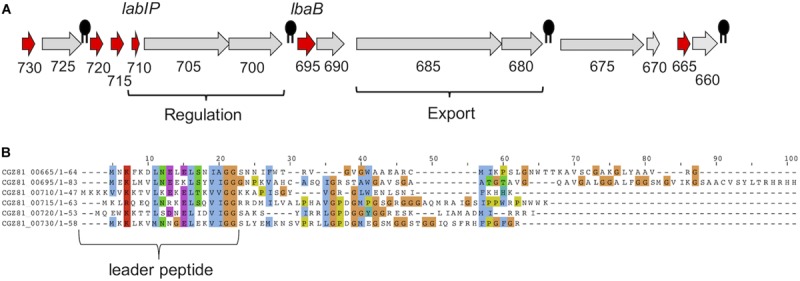
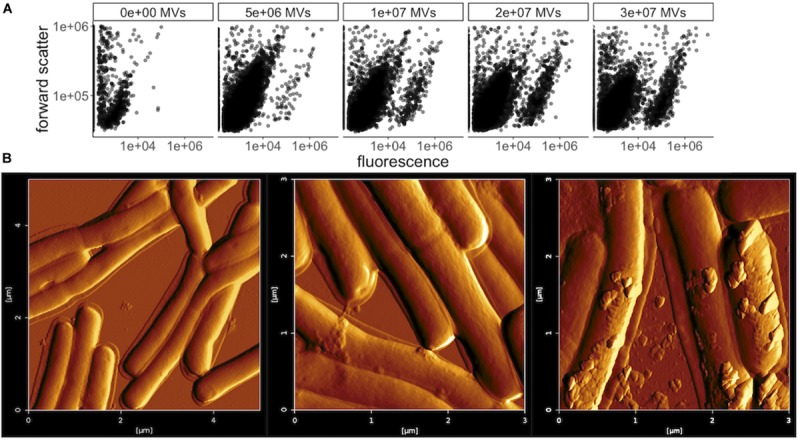
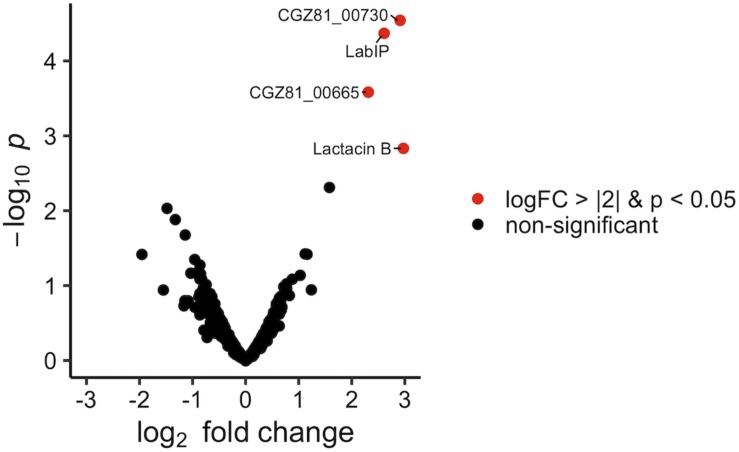
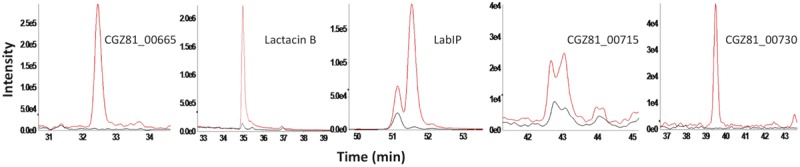
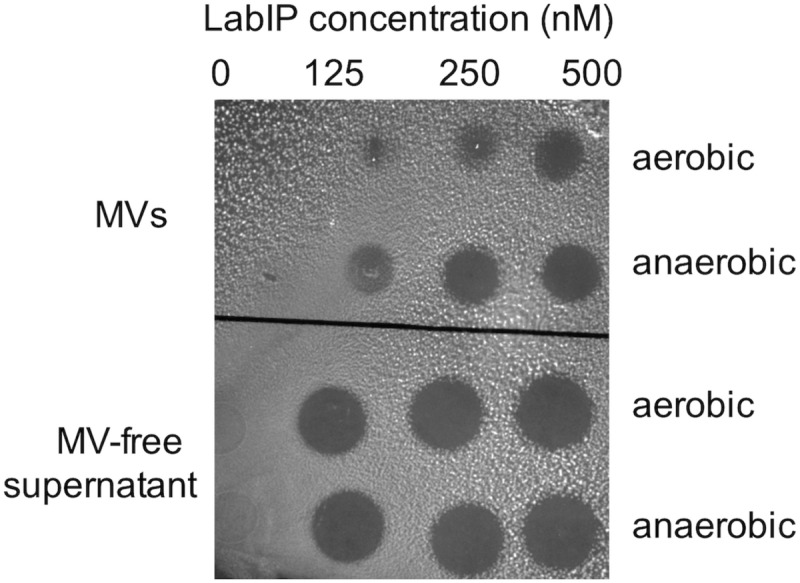
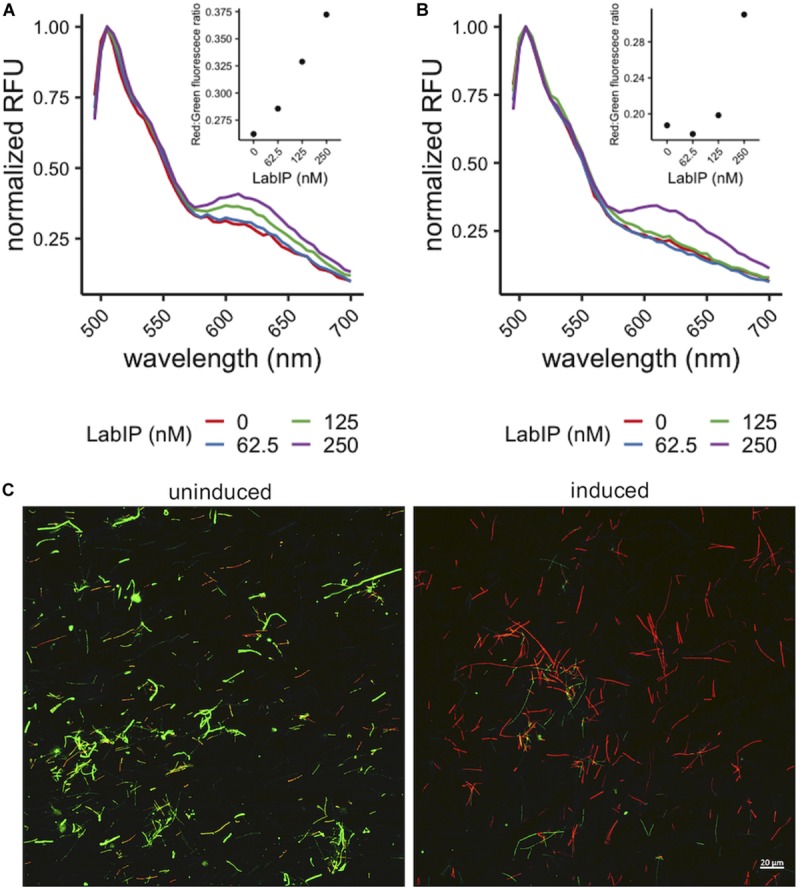
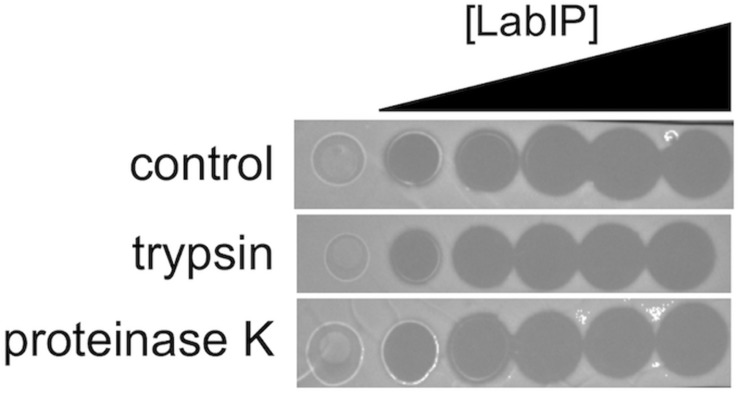
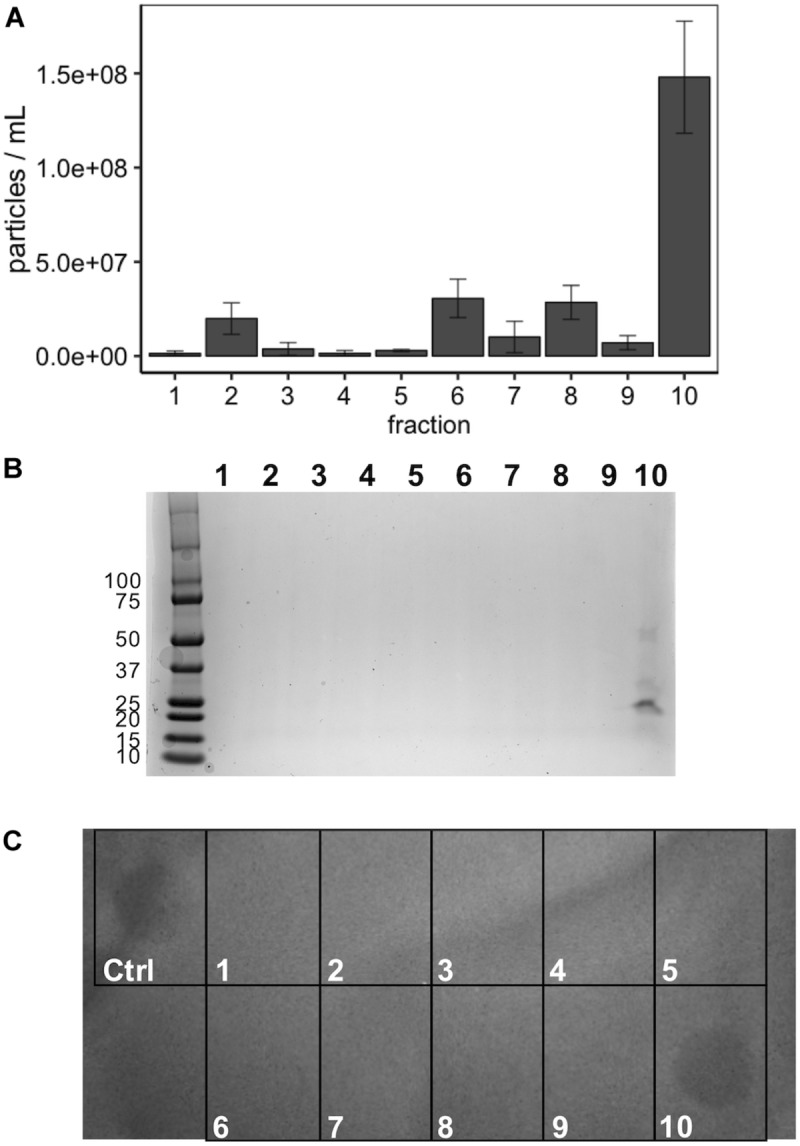
Recent reports have shown that Gram-positive bacteria actively secrete spherical nanometer-sized proteoliposome membrane vesicles (MVs) into their surroundings. Though MVs are implicated in a broad range of biological functions, few studies have been conducted to examine their potential as delivery vehicles of antimicrobials. Here, we investigate the natural ability of MVs to carry and deliver bacteriocin peptides to the opportunistic pathogen, . We demonstrate that upon treatment with lactacin B-inducing peptide, the proteome of the secreted MVs is enriched in putative bacteriocins encoded by the operon. Further, we show that purified MVs inhibit growth and compromise membrane integrity in , which is confirmed by confocal microscopy imaging and spectrophotometry. These results show that MVs serve as conduits for antimicrobials to competing cells in the environment, suggesting a potential role for MVs in complex communities such as the gut microbiome. With the potential for controlling their payload through microbial engineering, MVs produced by may be an interesting platform for effecting change in complex microbial communities or aiding in the development of new biomedical therapeutics.
最近的报告显示,革兰氏阳性菌会主动向其周围环境分泌球形纳米级的蛋白脂质体膜泡(MVs)。尽管MVs涉及广泛的生物学功能,但很少有研究探讨它们作为抗菌剂递送载体的潜力。在此,我们研究了MVs携带并向机会致病菌递送细菌素肽的天然能力。我们证明,在用乳酸链球菌素B诱导肽处理后,分泌的MVs的蛋白质组富含由操纵子编码的假定细菌素。此外,我们表明纯化的MVs会抑制其生长并损害其膜完整性,共聚焦显微镜成像和分光光度法证实了这一点。这些结果表明,MVs可作为抗菌剂传递给环境中竞争细胞的管道,这表明MVs在诸如肠道微生物群等复杂群落中可能发挥潜在作用。由于有可能通过微生物工程控制其载荷,由[具体菌种]产生的MVs可能是一个有趣的平台,可用于改变复杂的微生物群落或辅助开发新的生物医学疗法。