Milessi Thais S, Perez Caroline L, Zangirolami Teresa C, Corradini Felipe A S, Sandri Juliana P, Foulquié-Moreno Maria R, Giordano Roberto C, Thevelein Johan M, Giordano Raquel L C
1Department of Chemical Engineering, Federal University of São Carlos, Rodovia Washington Luís, km 235, 13565-905 São Carlos, SP Brazil.
2Institute of Natural Resources, Federal University of Itajubá, Av. Benedito Pereira dos Santos, 1303, 37500-903 Itajubá, MG Brazil.
Biotechnol Biofuels. 2020 May 11;13:85. doi: 10.1186/s13068-020-01722-y. eCollection 2020.
The search for sustainable energy sources has become a worldwide issue, making the development of efficient biofuel production processes a priority. Immobilization of second-generation (2G) xylose-fermenting strains is a promising approach to achieve economic viability of 2G bioethanol production from undetoxified hydrolysates through operation at high cell load and mitigation of inhibitor toxicity. In addition, the use of a fixed-bed reactor can contribute to establish an efficient process because of its distinct advantages, such as high conversion rate per weight of biocatalyst and reuse of biocatalyst.
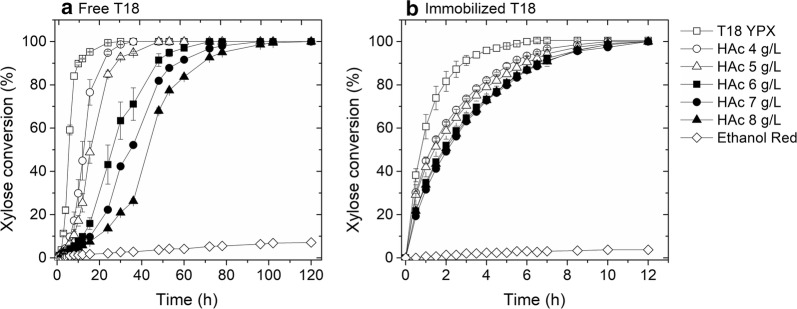
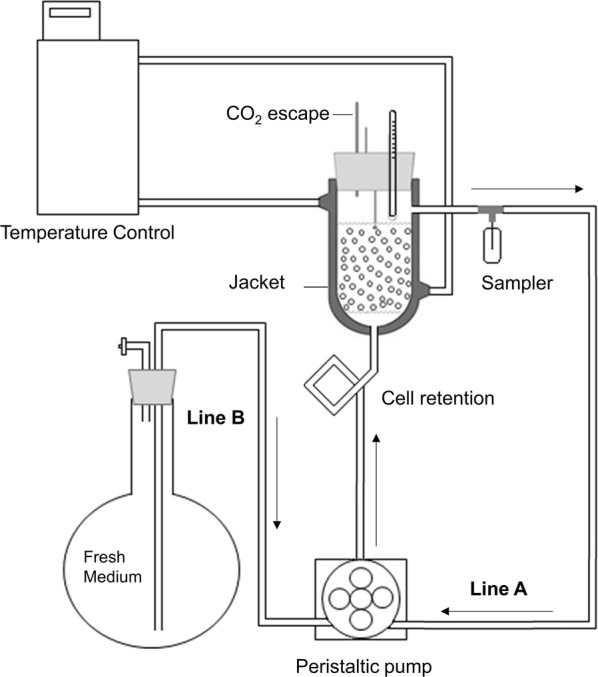
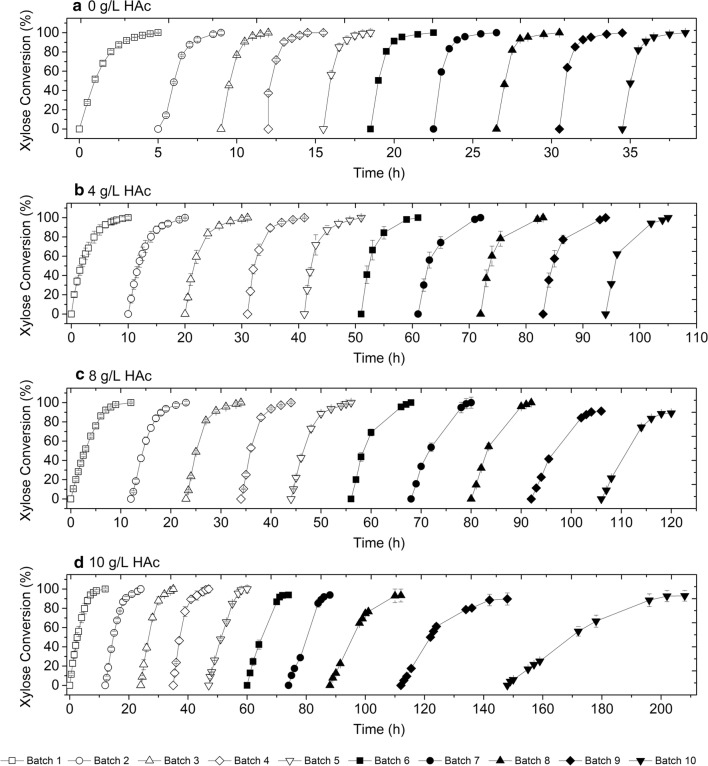
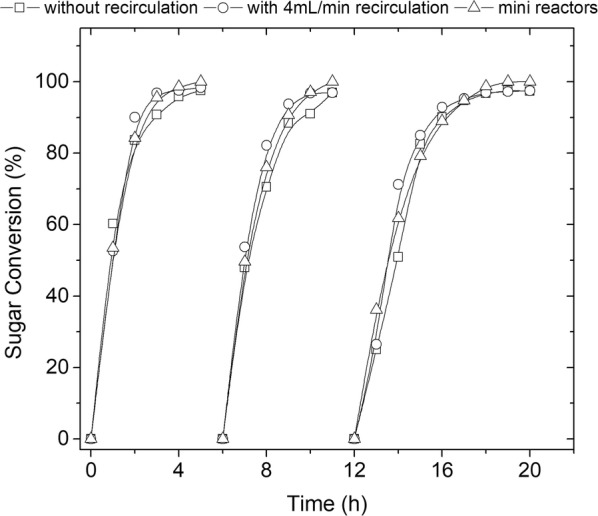
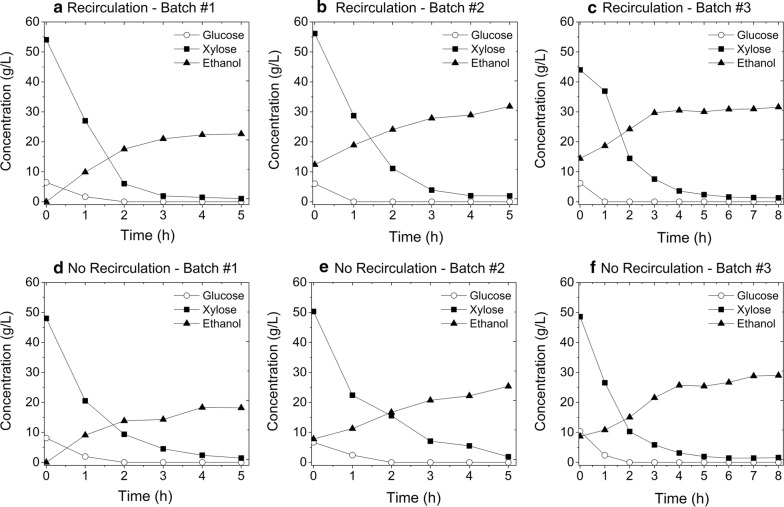
This work assessed the influence of alginate entrapment on the tolerance of recombinant to acetic acid. Encapsulated GSE16-T18SI.1 (T18) yeast showed an outstanding performance in repeated batch fermentations with cell recycling in YPX medium supplemented with 8 g/L acetic acid (pH 5.2), achieving 10 cycles without significant loss of productivity. In the fixed-bed bioreactor, a high xylose fermentation rate with ethanol yield and productivity values of 0.38 g/g and 5.7 g/L/h, respectively were achieved in fermentations using undetoxified sugarcane bagasse hemicellulose hydrolysate, with and without medium recirculation.
The performance of recombinant strains developed for 2G ethanol production can be boosted strongly by cell immobilization in alginate gels. Yeast encapsulation allows conducting fermentations in repeated batch mode in fixed-bed bioreactors with high xylose assimilation rate and high ethanol productivity using undetoxified hemicellulose hydrolysate.
寻找可持续能源已成为一个全球性问题,这使得开发高效生物燃料生产工艺成为当务之急。固定化第二代(2G)木糖发酵菌株是一种很有前景的方法,可通过在高细胞负载下运行以及减轻抑制剂毒性,实现从未解毒水解物中生产2G生物乙醇的经济可行性。此外,由于固定床反应器具有独特优势,如每单位重量生物催化剂的转化率高以及生物催化剂可重复使用,因此使用固定床反应器有助于建立高效工艺。
本研究评估了海藻酸钠包埋对重组体耐乙酸性的影响。包埋的GSE16-T18SI.1(T18)酵母在补充有8 g/L乙酸(pH 5.2)的YPX培养基中进行细胞循环的重复分批发酵中表现出色,实现了10个循环且生产率无显著损失。在固定床生物反应器中,使用未解毒的甘蔗渣半纤维素水解物进行发酵时,无论是否进行培养基再循环,木糖发酵速率都很高,乙醇产率和生产率分别达到0.38 g/g和5.7 g/L/h。
通过将细胞固定在海藻酸钠凝胶中,可显著提高为2G乙醇生产而开发的重组菌株的性能。酵母包埋允许在固定床生物反应器中以重复分批模式进行发酵,使用未解毒的半纤维素水解物时具有高木糖同化率和高乙醇生产率。