Department of Pigmentation Research and Therapeutics, Graduate School of Medicine, Osaka City University, Osaka 545-0041, Japan.
Department of Dermatology, Course of Integrated Medicine, Graduate School of Medicine, Osaka University, Osaka 565-0871, Japan.
Int J Mol Sci. 2020 May 16;21(10):3537. doi: 10.3390/ijms21103537.
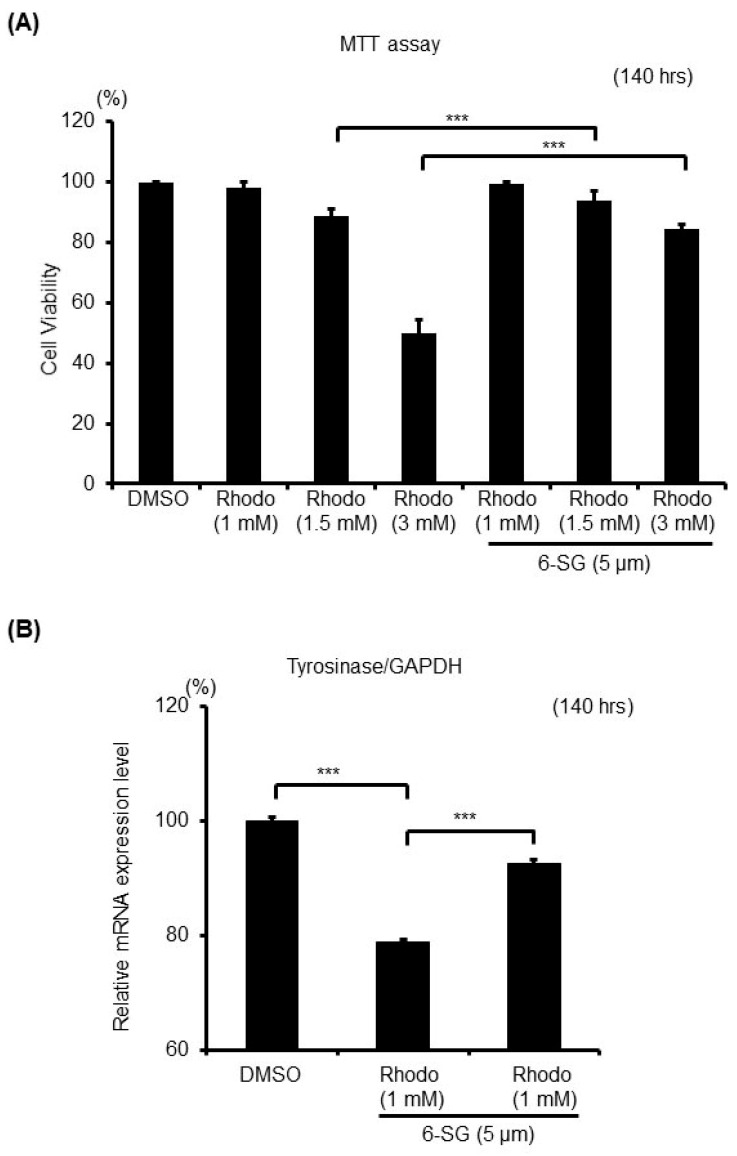
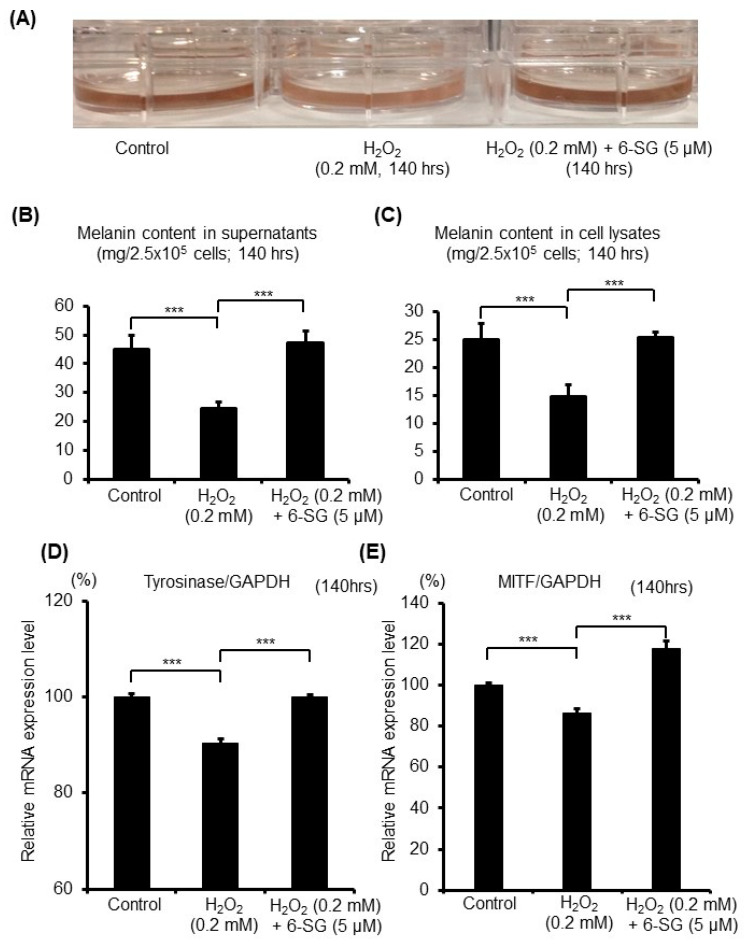
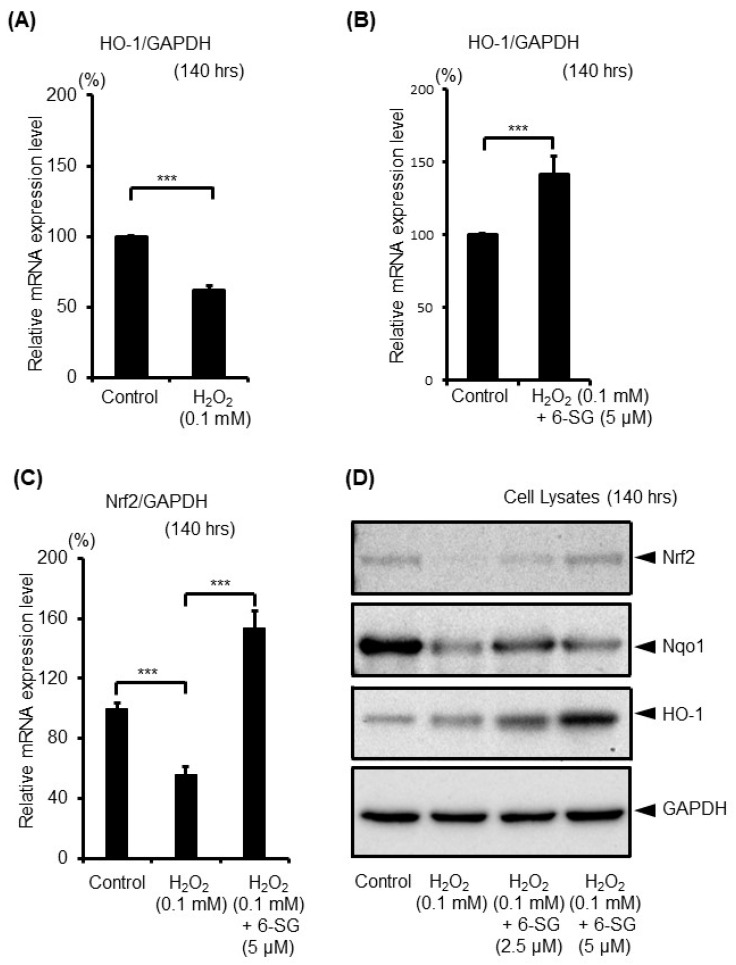
Skin is a major target of oxidative stress. Increasing evidence suggests that oxidative stress is the cause of melanocyte disappearance in vitiligo, which is an acquired pigmentary skin disorder characterized by patches of skin that have lost pigmentation. New herbal extracts with antioxidant activity are therefore being studied. 6-Shogaol (6-SG), an active compound from ginger, is capable of attenuating oxidative stress-induced ageing and neurotoxicity. Subsequently, to investigate whether 6-SG could protect melanocytes from oxidative stress, cultured human primary epidermal melanocytes (HEMn-MPs) were treated with hydrogen peroxide (HO) in the presence or absence of 6-SG. The 6-SG exhibited protective effects against HO-induced cell death by reducing oxidative stress. In addition, the 6-SG treatment activated the Nrf2-antioxidant response element signaling pathway by upregulating the mRNA expression of the antioxidant enzyme heme oxygenase 1 (HO-1), and protein expression of Nrf2, NAD(P)H: quinine oxidoreductase 1 (Nqo1), and HO-1. Furthermore, the 6-SG also displayed protective effects on melanocytes against Rhododendrol-induced oxidative stress. We concluded that 6-SG protects melanocytes against oxidative stress in vitro, and its protective effect is associated with the activation of the Nrf2-antioxidant response element signaling pathway. 6-SG, therefore, has potential for use in the prevention of melanocyte loss in the early stages of vitiligo or other pigmentary disorders.
皮肤是氧化应激的主要靶标。越来越多的证据表明,氧化应激是白癜风中黑素细胞消失的原因,白癜风是一种获得性色素皮肤疾病,其特征是皮肤出现失去色素沉着的斑块。因此,正在研究具有抗氧化活性的新草药提取物。6-姜酚(6-SG)是生姜中的一种活性化合物,能够减轻氧化应激诱导的衰老和神经毒性。随后,为了研究 6-SG 是否可以保护黑素细胞免受氧化应激,用过氧化氢(HO)处理培养的人原代表皮黑素细胞(HEMn-MPs),并在存在或不存在 6-SG 的情况下处理。6-SG 通过减少氧化应激对 HO 诱导的细胞死亡表现出保护作用。此外,6-SG 通过上调抗氧化酶血红素加氧酶 1(HO-1)的 mRNA 表达和核因子红细胞 2(Nrf2)、NAD(P)H:醌氧化还原酶 1(Nqo1)和 HO-1 的蛋白表达,激活了 Nrf2-抗氧化反应元件信号通路。此外,6-SG 对杜鹃醇诱导的氧化应激下的黑素细胞也具有保护作用。我们得出结论,6-SG 在体外保护黑素细胞免受氧化应激,其保护作用与 Nrf2-抗氧化反应元件信号通路的激活有关。因此,6-SG 有可能用于预防白癜风或其他色素紊乱的早期阶段黑素细胞丢失。