University of Applied Sciences and Arts Northwestern Switzerland, School of Life Sciences, Institute for Chemistry and Bioanalytics, 4132, Muttenz, Switzerland.
Department for Chemistry and Biotechnology, Tissue Engineering, Zurich University of Applied Sciences, 8820, Wädenswil, Switzerland.
BMC Oral Health. 2020 May 19;20(1):148. doi: 10.1186/s12903-020-01124-4.
Periodontitis is a chronic inflammation of the tooth supporting structures that finally can lead to tooth loss. As chronic periodontitis is associated with systemic diseases multiple approaches have been followed to support regeneration of the destructed tissue. But very few materials are actually used in the clinic. A new and promising group of biomaterials with advantageous biomechanical properties that have the ability to support periodontal regeneration are self-assembling peptides (SAP). However, there is still a lack of 3D periodontal models that can evaluate the migration potential of such novel materials.
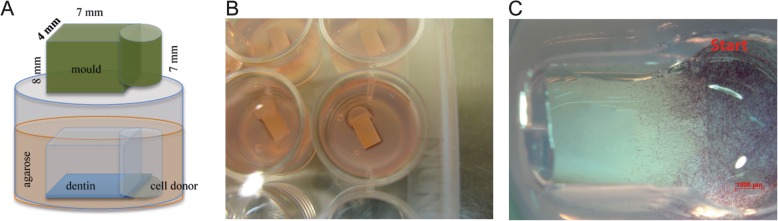
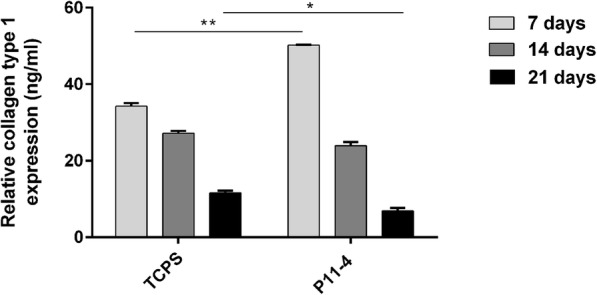
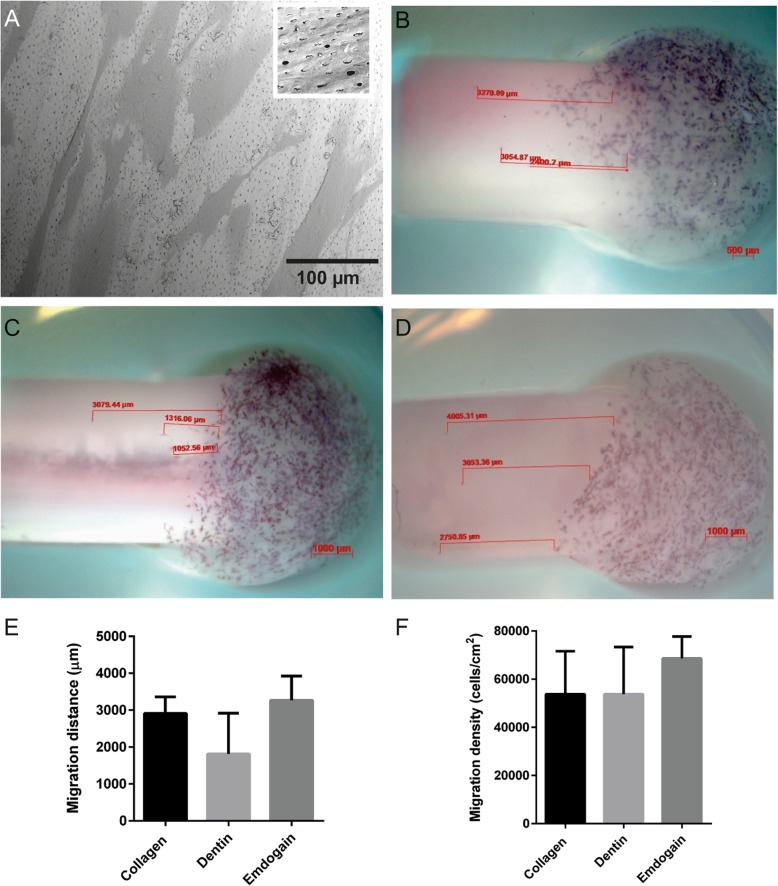
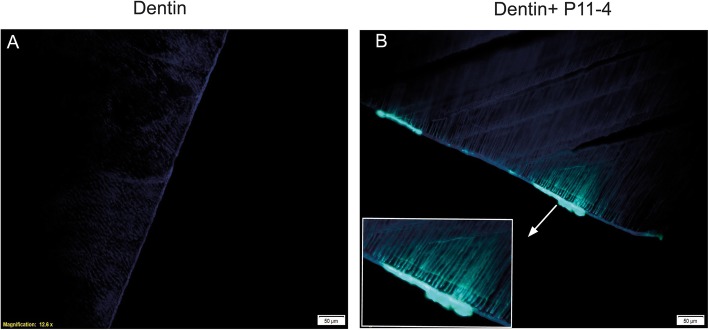
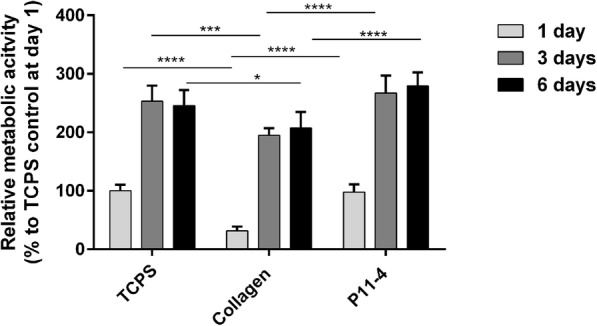
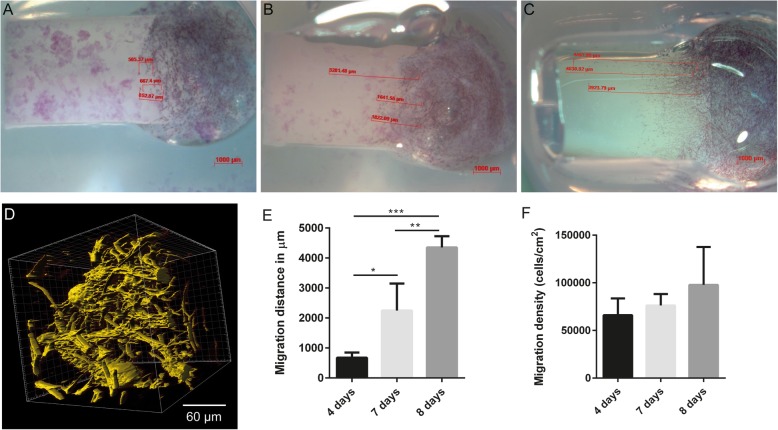
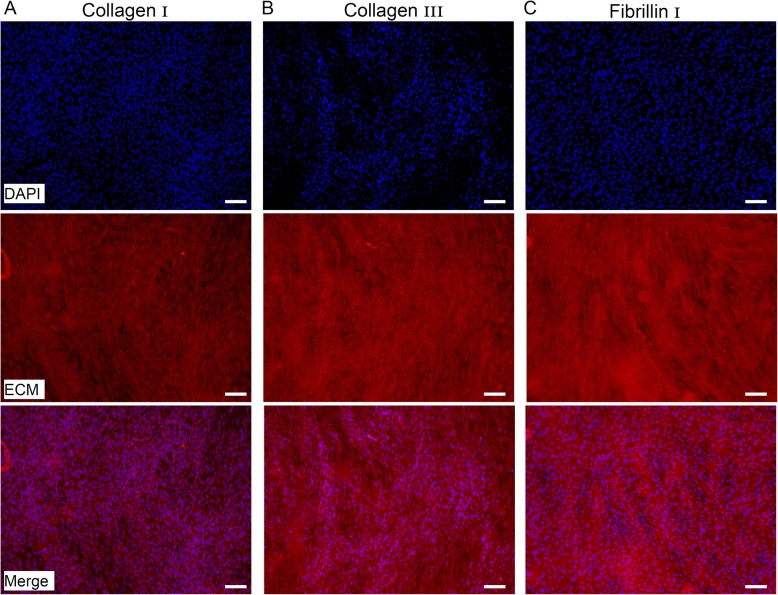
All experiments were performed with primary human periodontal ligament fibroblasts (HPLF). Migration capacity was assessed in a three-dimensional model of the human periodontal ligament by measuring the migration distance of viable cells on coated (Enamel Matrix Protein (EMP), P11-4, collagen I) or uncoated human dentin. Cellular metabolic activity on P11-4 hydrogels was assessed by a metabolic activity assay. Deposition of ECM molecules in a P11-4 hydrogel was visualized by immunostaining of collagen I and III and fibrillin I.
The 3D periodontal model was feasible to show the positive effect of EMP for periodontal regeneration. Subsequently, self-assembling peptide P11-4 was used to evaluate its capacity to support regenerative processes in the 3D periodontal model. HPLF coverage of the dentin surface coated with P11-4 increased significantly over time, even though delayed compared to EMP. Cell viability increased and inclusion of ECM proteins into the biomaterial was shown.
The presented results indicate that the 3D periodontal model is feasible to assess periodontal defect coverage and that P11-4 serves as an efficient supporter of regenerative processes in the periodontal ligament.
The establishment of building-block synthetic polymers offers new opportunities for clinical application in dentistry. Self-assembling peptides represent a new generation of biomaterials as they are able to respond dynamically to the changing environment of the biological surrounding. Especially in the context of peri-implant disease prevention and treatment they enable the implementation of new concepts.
牙周炎是一种牙齿支持结构的慢性炎症,最终可能导致牙齿脱落。由于慢性牙周炎与系统性疾病有关,因此已经采用了多种方法来支持受损组织的再生。但是,实际上在临床上仅使用很少的材料。具有有利生物力学性能并能够支持牙周再生的新型生物材料是自组装肽(SAP)。但是,仍然缺乏可以评估此类新型材料迁移潜力的 3D 牙周模型。
所有实验均使用原代人牙周韧带成纤维细胞(HPLF)进行。通过测量涂覆(釉基质蛋白(EMP),P11-4,胶原 I)或未涂覆的人牙本质上存活细胞的迁移距离,在人牙周韧带的 3D 模型中评估迁移能力。通过代谢活性测定评估 P11-4 水凝胶上的细胞代谢活性。通过免疫染色胶原 I、III 和原纤维 I 来可视化 P11-4 水凝胶中 ECM 分子的沉积。
3D 牙周模型能够显示 EMP 对牙周再生的积极作用。随后,使用自组装肽 P11-4 来评估其在 3D 牙周模型中支持再生过程的能力。尽管与 EMP 相比,P11-4 涂覆的牙本质表面上 HPLF 的覆盖度随时间增加,但仍呈增加趋势。细胞活力增加,并显示出将 ECM 蛋白纳入生物材料中。
所呈现的结果表明,3D 牙周模型能够评估牙周缺损的覆盖范围,并且 P11-4 可作为牙周韧带再生过程的有效支撑物。
构建块合成聚合物的建立为牙科的临床应用提供了新的机会。自组装肽代表了新一代的生物材料,因为它们能够对生物环境的不断变化做出动态响应。特别是在预防和治疗种植体周围疾病方面,它们能够实现新的概念。