Program in Cell and Molecular Biology, University of Arkansas, Fayetteville, AR, 72701, USA.
Department of Biological Sciences, University of Arkansas, Fayetteville, AR, 72701, USA.
BMC Genet. 2020 May 20;21(1):54. doi: 10.1186/s12863-020-00859-x.
Ascites syndrome is a hypertensive, multifactorial, multigene trait affecting meat-type chickens imposing significant economic losses on the broiler industry. A region containing the CPQ gene has been previously identified as significantly affecting ascites phenotype. The region was discovered through whole genome resequencing focused on chicken chromosome 2. The association was confirmed through further genotyping in multiple broiler populations.
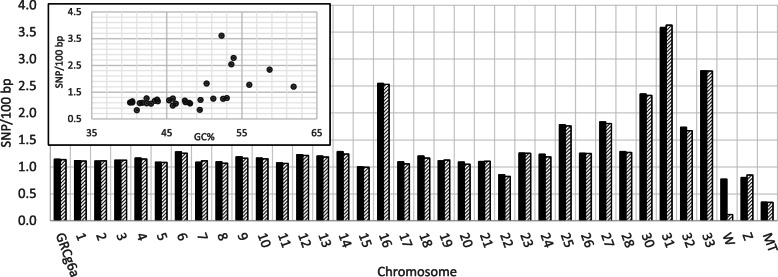
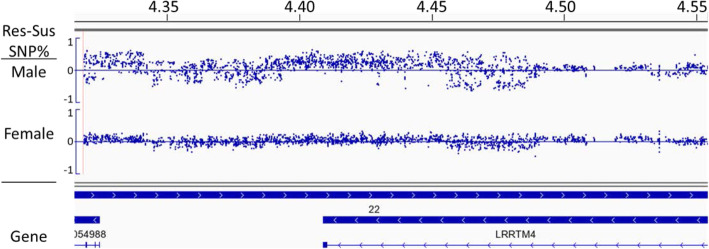
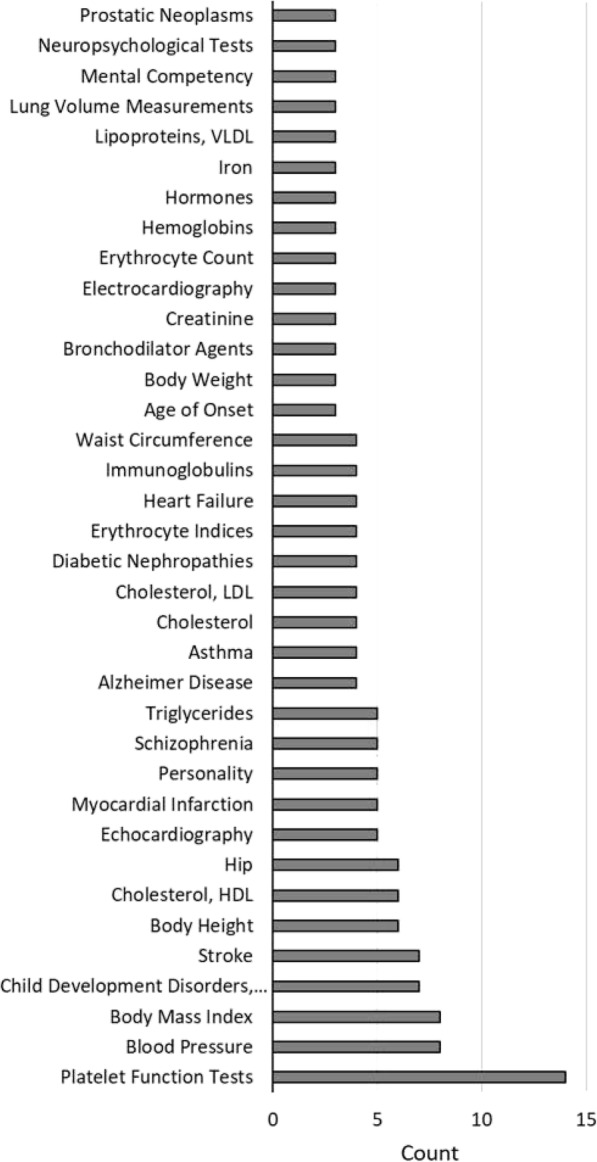
The whole genome resequencing analyses have now been extended to the current chicken genome assembly. DNA samples were pooled according to gender and phenotype and the pools subjected to next generation sequencing. Loci were identified as clusters of single nucleotide polymorphisms where frequencies of the polymorphisms differed between resistant and susceptible chickens. The chickens are an unselected line descended from a commercial elite broiler line. Regions identified were specific to one or both genders. The data identify a total of 28 regions as potential quantitative trait loci for ascites. The genes from these regions have been associated with hypertensive-related traits in human association studies. One region on chicken chromosome 28 contains the LRRTM4 gene. Additional genotyping for the LRRTM4 region demonstrates an epistatic interaction with the CPQ region for ascites phenotype.
The 28 regions identified were not previously identified in a multi-generational genome wide association study using 60k Single Nucleotide Polymorphism panels. This work demonstrates the utility of whole genome resequencing as a cost effective, direct, and efficient method for identifying specific gene regions affecting complex traits. The approach is applicable to any organism with a genome assembly and requires no a priori assumptions.
腹水综合征是一种高血压、多因素、多基因性状,影响肉用型鸡,给肉鸡产业造成重大经济损失。先前已经确定了一个包含 CPQ 基因的区域,该区域对腹水表型有显著影响。该区域是通过全基因组重测序发现的,重测序的重点是鸡的 2 号染色体。通过在多个肉鸡群体中进一步基因分型,确认了这种关联。
全基因组重测序分析现已扩展到当前的鸡基因组组装。根据性别和表型将 DNA 样本混合,并对混合样本进行下一代测序。在对具有不同频率多态性的抗性和易感鸡进行分析后,鉴定出了位于单核苷酸多态性聚类的基因座。这些鸡是从商业优质肉鸡品系中选育出来的未选择的品系。鉴定出的区域是特定于一种或两种性别的。这些数据确定了总共 28 个区域可能是腹水的数量性状基因座。这些区域的基因与人类关联研究中的高血压相关性状有关。鸡 28 号染色体上的一个区域包含 LRRTM4 基因。对 LRRTM4 区域的进一步基因分型表明,它与 CPQ 区域对腹水表型存在上位性相互作用。
这 28 个区域在使用 60k 单核苷酸多态性面板进行的多代全基因组关联研究中没有被发现。这项工作证明了全基因组重测序作为一种经济高效、直接有效的方法,用于识别影响复杂性状的特定基因区域的效用。该方法适用于任何具有基因组组装的生物体,并且不需要先验假设。