Department of Veterinary Pathobiology, College of Veterinary Medicine, Texas A&M University, College Station, Texas, USA.
Department of Veterinary Pathology & Poultry Diseases, College of Veterinary Medicine, University of Baghdad, Baghdad, Iraq.
mSphere. 2020 May 20;5(3):e00172-20. doi: 10.1128/mSphere.00172-20.
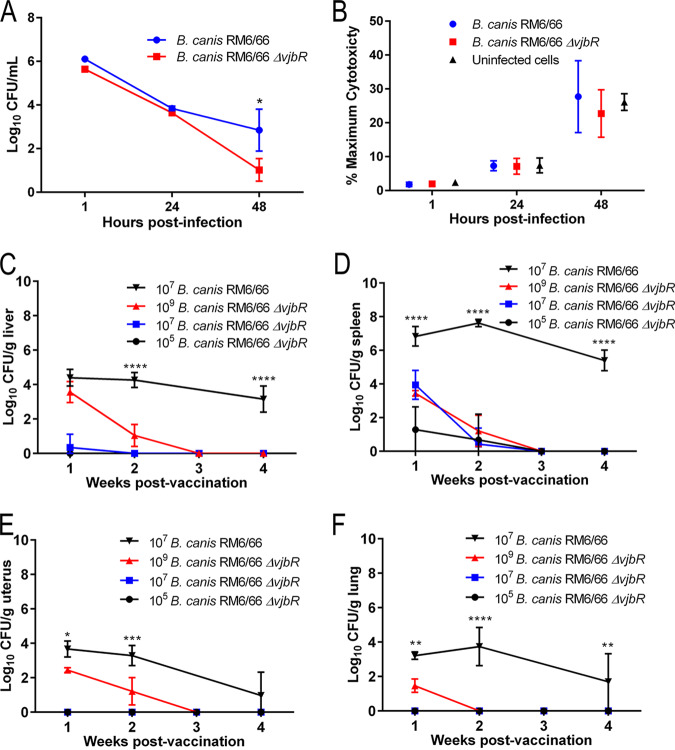
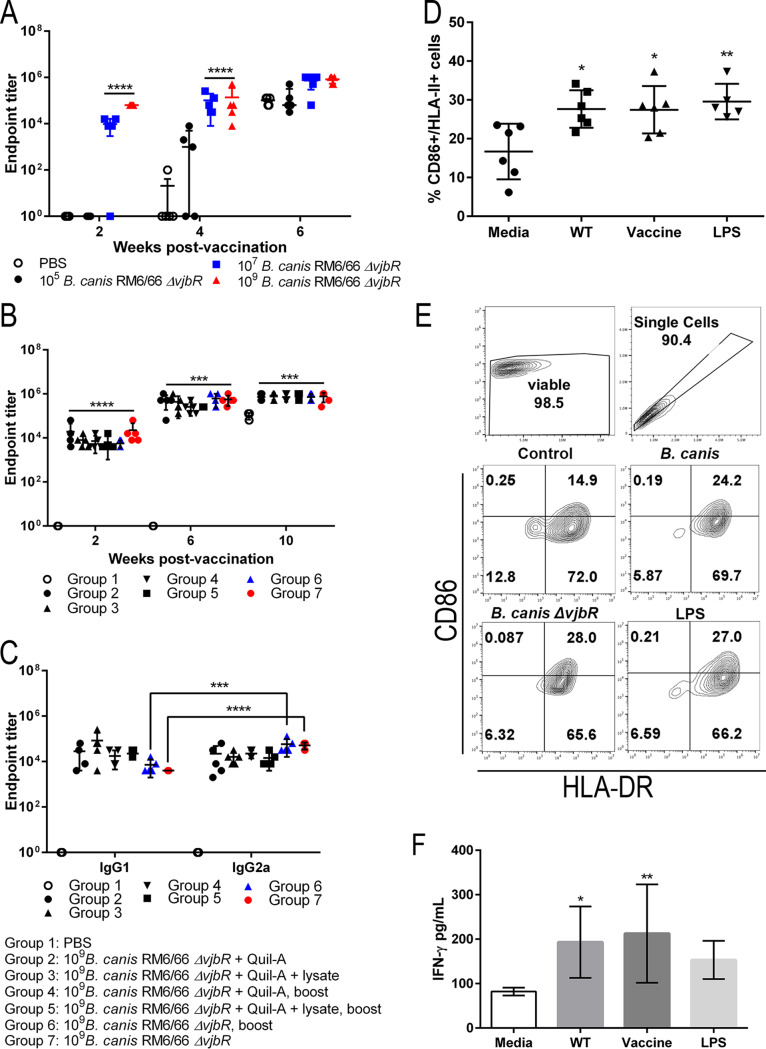
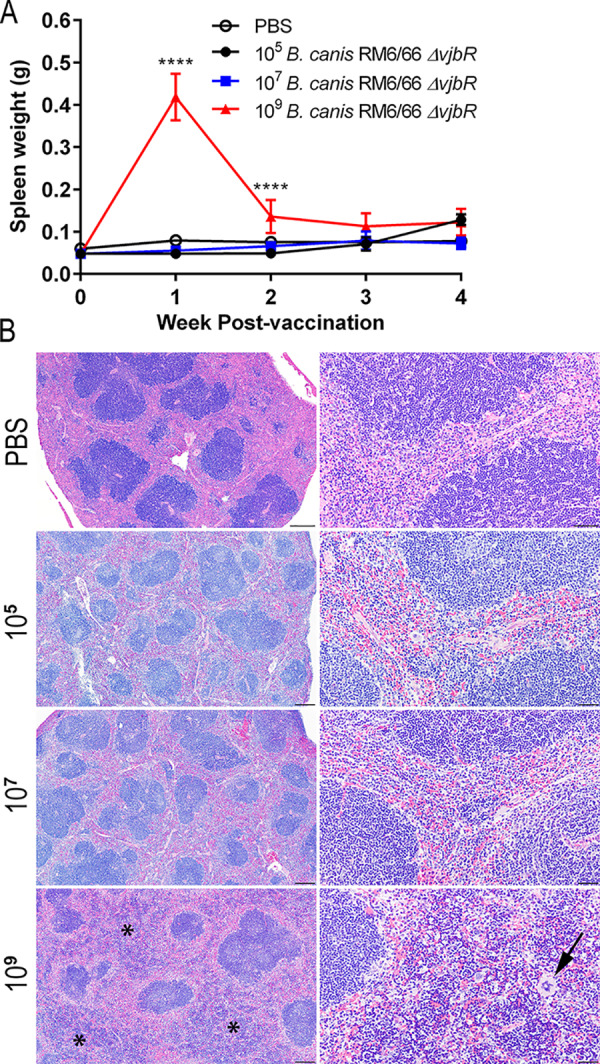
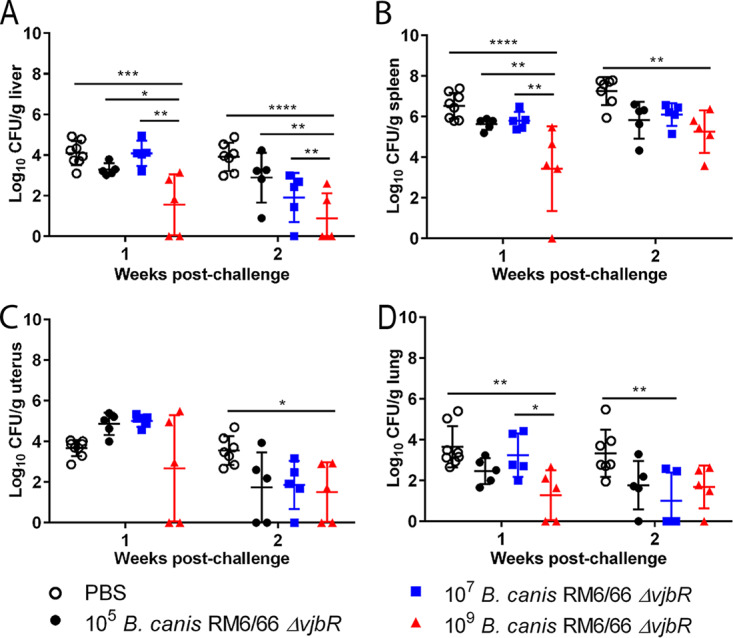
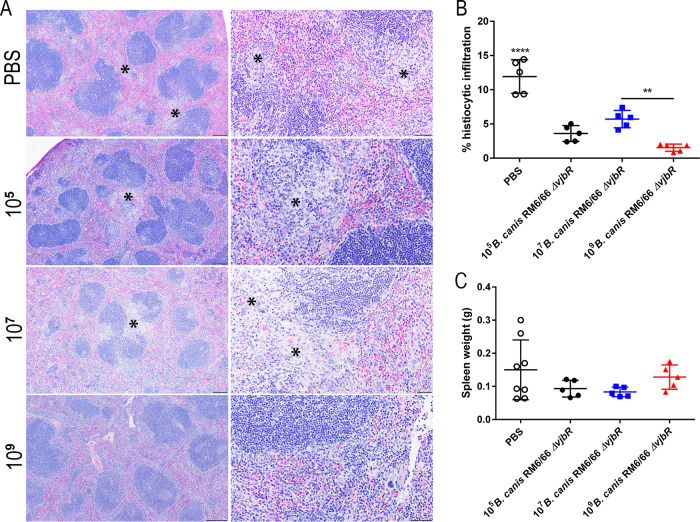
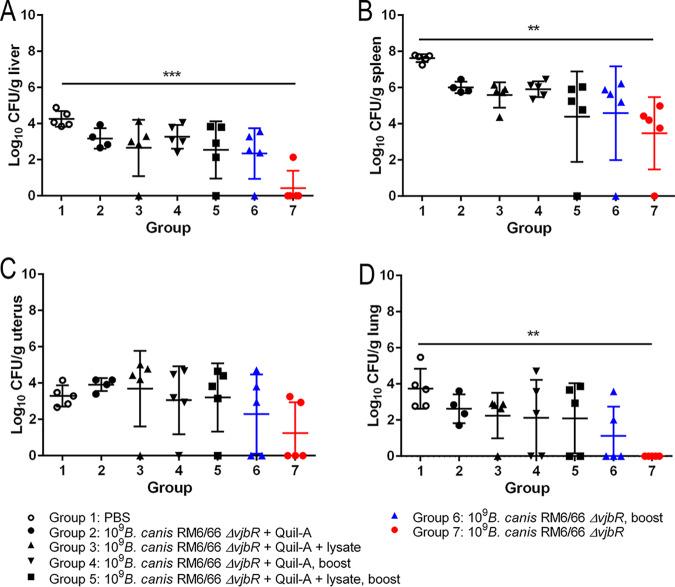
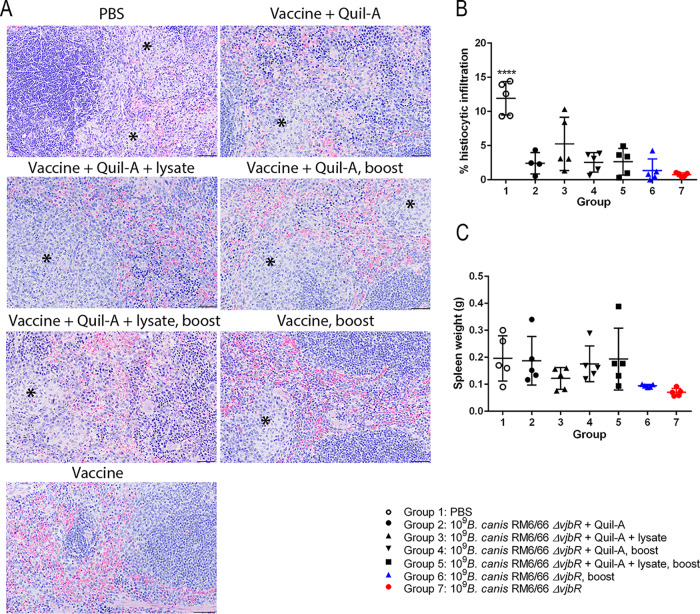
is a Gram-negative, facultative intracellular bacterium and the causative agent of canine brucellosis, a highly contagious disease of dogs that can be transmitted to humans. Unfortunately, no vaccine is available to prevent infection. We recently characterized the kinetics of infection in the mouse model, establishing the required dose necessary to achieve systemic infection. The objective of this study was to investigate the utility of the mouse model in assessing canine brucellosis vaccine candidates and to subsequently investigate the safety and efficacy of a live attenuated vaccine, the RM6/66 Δ strain. Mice vaccinated with a dose of 10 CFU of the vaccine strain by both intraperitoneal and subcutaneous routes were afforded significant protection against organ colonization and development of histopathologic lesions following intraperitoneal challenge. Addition of an adjuvant or a booster dose 2 weeks following initial vaccination did not alter protection levels. Vaccination also resulted in a robust humoral immune response in mice, and RM6/66 Δ was capable of activating canine dendritic cells These data demonstrate that the RM6/66 Δ strain shows promise as a vaccine for canine brucellosis and validates the mouse model for future vaccine efficacy studies. Canine brucellosis, caused by , is the primary cause of reproductive failure in dogs and represents a public health concern due to its zoonotic nature. Cases in dogs in the United States have been increasing due to the persistent nature of the bacterium, deficiencies in current diagnostic testing, and, most importantly, the lack of a protective vaccine. Current estimates place the seroprevalence of in the southern United States at 7% to 8%, but with the unprecedented rates of animals moving across state and international borders and the lack of federal regulations in regard to testing, the true seroprevalence of in the United States may very well be higher. Vaccination represents the most effective method of brucellosis control and, in response to the demand for a vaccine against , we have developed the live attenuated RM6/66 Δ vaccine strain capable of protecting mice against challenge.
是一种革兰氏阴性、兼性细胞内细菌,也是犬布鲁氏菌病的病原体,这是一种高度传染性的犬病,可传染给人类。不幸的是,目前尚无预防感染的疫苗。我们最近在小鼠模型中对 感染的动力学进行了描述,确定了实现系统感染所需的剂量。本研究的目的是调查小鼠模型在评估犬布鲁氏菌病候选疫苗中的效用,随后研究一种减毒活疫苗,即 RM6/66 Δ 株的安全性和有效性。通过腹腔内和皮下途径接种 10 CFU 疫苗株的小鼠,在腹腔内攻毒后,其器官定植和组织病理学病变的发展得到了显著保护。在初次接种后 2 周添加佐剂或加强剂量不会改变保护水平。疫苗接种还导致小鼠产生了强大的体液免疫反应, RM6/66 Δ 能够激活犬树突状细胞。这些数据表明, RM6/66 Δ 株有希望成为犬布鲁氏菌病的疫苗,并验证了小鼠模型用于未来疫苗功效研究。由 引起的犬布鲁氏菌病是犬只生殖失败的主要原因,由于其人畜共患病的性质,对公共卫生构成了威胁。由于细菌的持续存在、当前诊断检测的缺陷,以及最重要的是缺乏保护性疫苗,美国犬布鲁氏菌病病例一直在增加。目前,美国南部的 血清阳性率估计为 7%至 8%,但由于动物跨越州际和国际边界的前所未有的速度以及缺乏关于检测的联邦法规, 在全美国的真实血清阳性率很可能更高。疫苗接种是布鲁氏菌病控制的最有效方法,为了应对对抗 的疫苗需求,我们开发了能够保护小鼠免受攻击的减毒活 RM6/66 Δ 疫苗株。