Darcy Andrew Waleluma, Kanda Seiji, Dalipanda Tenneth, Joshua Cynthia, Shimono Takaki, Lamaningao Pheophet, Mishima Nobuyuki, Nishiyama Toshimasa
1Department of Hygiene and Public Health, Kansai Medical University, Hirakata, Japan.
Ministry of Health & Medical Services, Honiara, Solomon Islands.
Trop Med Health. 2020 May 15;48:33. doi: 10.1186/s41182-020-00217-8. eCollection 2020.
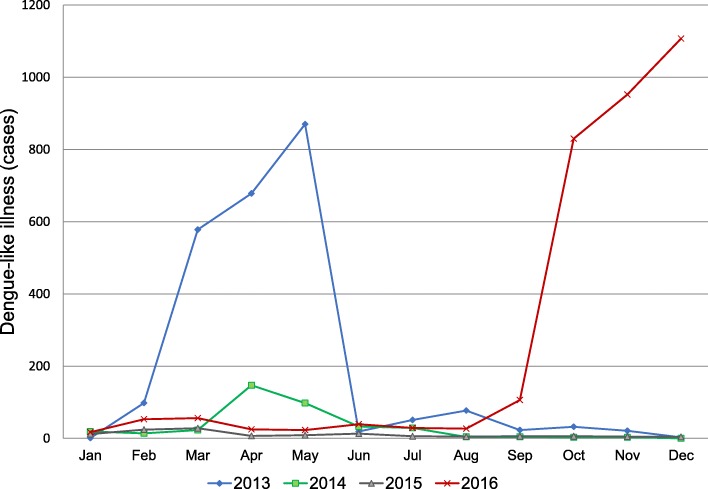
Solomon Islands, a country made up of tropical islands, has suffered cyclic dengue fever (DF) outbreaks in the past three decades. An outbreak of dengue-like illness (DLI) that occurred in April 2016 prompted this study, which aimed to determine the population's immunity status and identify the arboviruses circulating in the country.
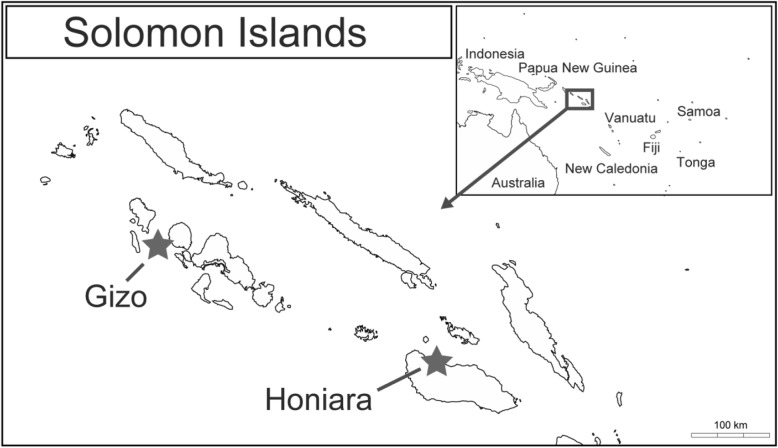
A household survey, involving 188 participants in two urban areas (Honiara and Gizo), and a parallel hospital-based clinical survey were conducted in April 2016. The latter was repeated in December after a surge in DLI cases. Arbovirus IgG ELISA were performed on the household blood samples to determine the prevalence of arboviruses in the community, while qPCR testing of the clinical samples was used to identify the circulating arboviruses. Dengue virus (DENV)-positive samples were further characterized by amplifying and sequencing the envelope gene.
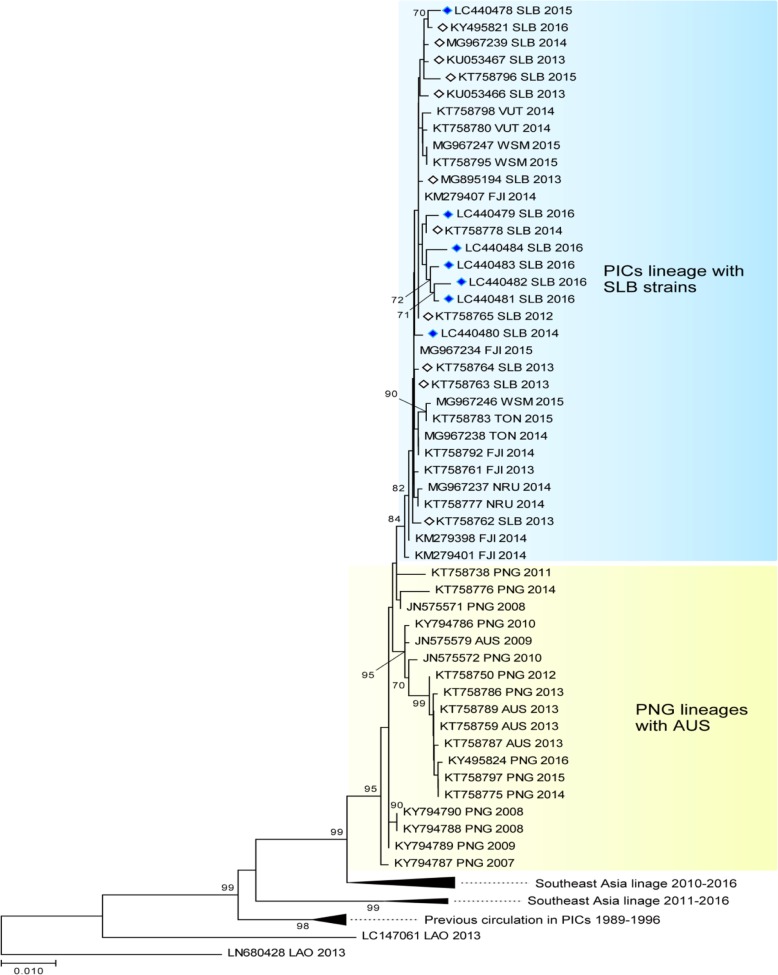
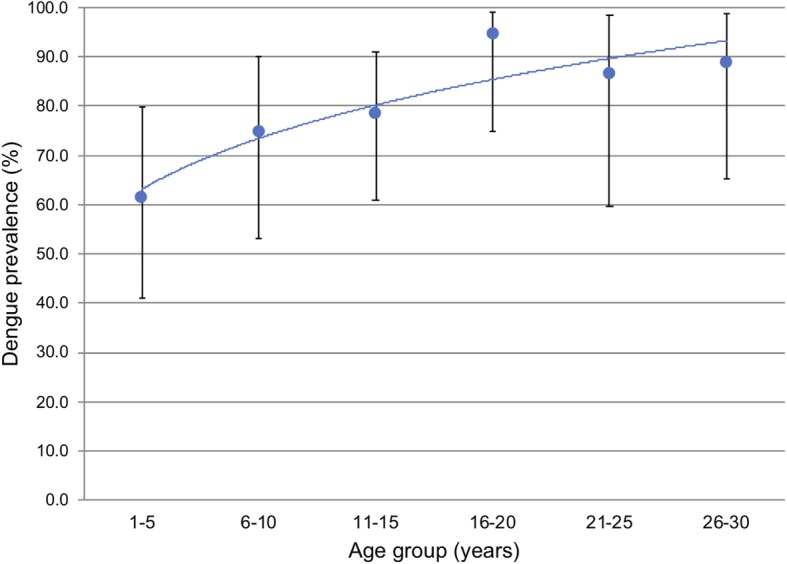
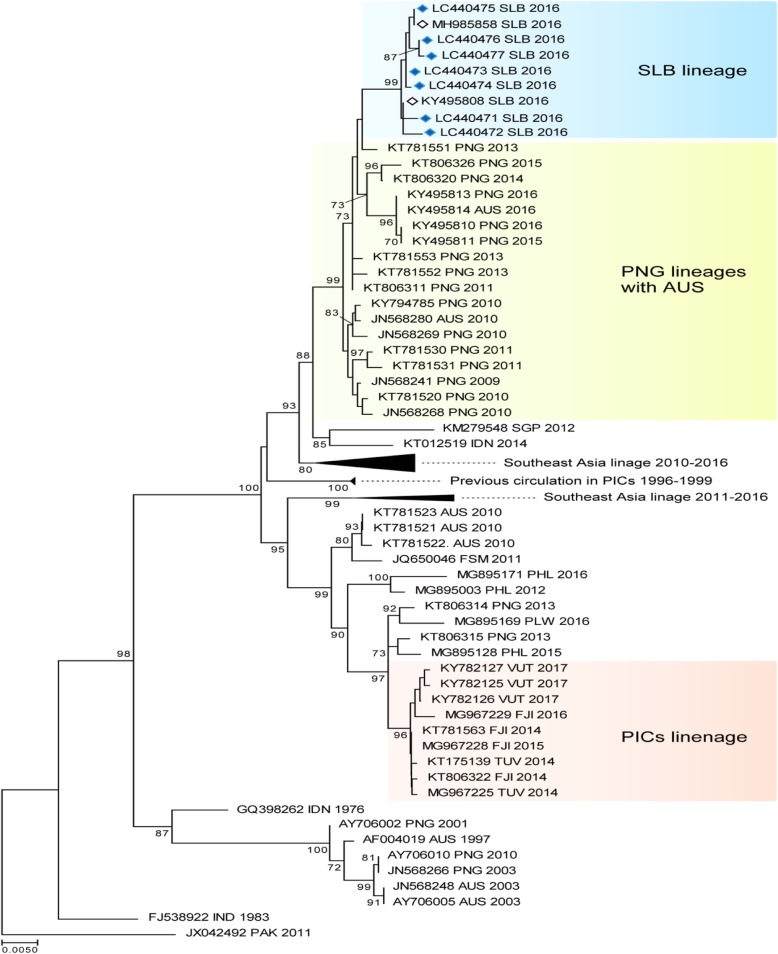
The overall prevalence rates of DENV, Zika virus, and chikungunya virus were 83.4%, 7.6%, and 0.9%, respectively. The qPCR positivity rates of the clinical samples collected in April 2016 were as follows: DENV 39.6%, Zika virus 16.7%, and chikungunya virus 6.3%, which increased to 74%, 48%, and 20% respectively in December 2016. The displacement of the circulating serotype-3, genotype-1, with DENV serotype 2, genotype cosmopolitan was responsible for the outbreak in 2016.
A DENV outbreak in Solomon Islands was caused by the introduction of a single serotype. The high prevalence of DENV provided transient cross-protection, which prevented the introduction of a new serotype from the hyperendemic region for at least 3 years. The severe outcomes seen in the recent outbreak probably resulted from changes in the causative viruses and the effects of population immunity and changes in the outbreak pattern. Solomon Islands needs to step up surveillance to include molecular tools, increase regional communication, and perform timely interventions.
所罗门群岛是一个由热带岛屿组成的国家,在过去三十年中遭受了周期性登革热(DF)疫情的侵袭。2016年4月发生的一次登革热样疾病(DLI)疫情促使了本研究的开展,该研究旨在确定人群的免疫状态,并识别该国正在传播的虫媒病毒。
2016年4月,在两个城市地区(霍尼亚拉和吉佐)对188名参与者进行了家庭调查,并同时开展了一项基于医院的临床调查。在DLI病例激增后的12月重复了后者。对家庭血液样本进行虫媒病毒IgG ELISA检测,以确定社区中虫媒病毒的流行情况,而对临床样本进行qPCR检测以识别正在传播的虫媒病毒。对登革热病毒(DENV)阳性样本通过扩增包膜基因并进行测序进一步进行特征分析。
DENV、寨卡病毒和基孔肯雅病毒的总体流行率分别为83.4%、7.6%和0.9%。2016年4月收集的临床样本的qPCR阳性率如下:DENV为39.6%,寨卡病毒为16.7%,基孔肯雅病毒为6.3%,2016年12月分别增至74%、48%和20%。循环中的血清型3、基因型1被DENV血清型2、基因型泛在型所取代,这是2016年疫情爆发的原因。
所罗门群岛的一次DENV疫情是由单一血清型的引入引起的。DENV的高流行率提供了短暂的交叉保护,这至少在3年内阻止了来自高度流行地区的新血清型的引入。近期疫情中出现的严重后果可能是由致病病毒的变化、人群免疫的影响以及疫情模式的改变导致的。所罗门群岛需要加强监测,包括采用分子工具,加强区域间沟通,并及时进行干预。