Bigaeva Emilia, Puerta Cavanzo Nataly, Stribos Elisabeth G D, de Jong Amos J, Biel Carin, Mutsaers Henricus A M, Jensen Michael S, Nørregaard Rikke, Leliveld Anna M, de Jong Igle J, Hillebrands Jan-Luuk, van Goor Harry, Boersema Miriam, Bank Ruud A, Olinga Peter
Department of Pharmaceutical Technology and Biopharmacy, University of Groningen, Groningen Research Institute of Pharmacy, 9713 AV Groningen, The Netherlands.
Department of Pathology and Medical Biology, University of Groningen, University Medical Center Groningen, 9713 GZ Groningen, The Netherlands.
Pharmaceutics. 2020 May 18;12(5):459. doi: 10.3390/pharmaceutics12050459.
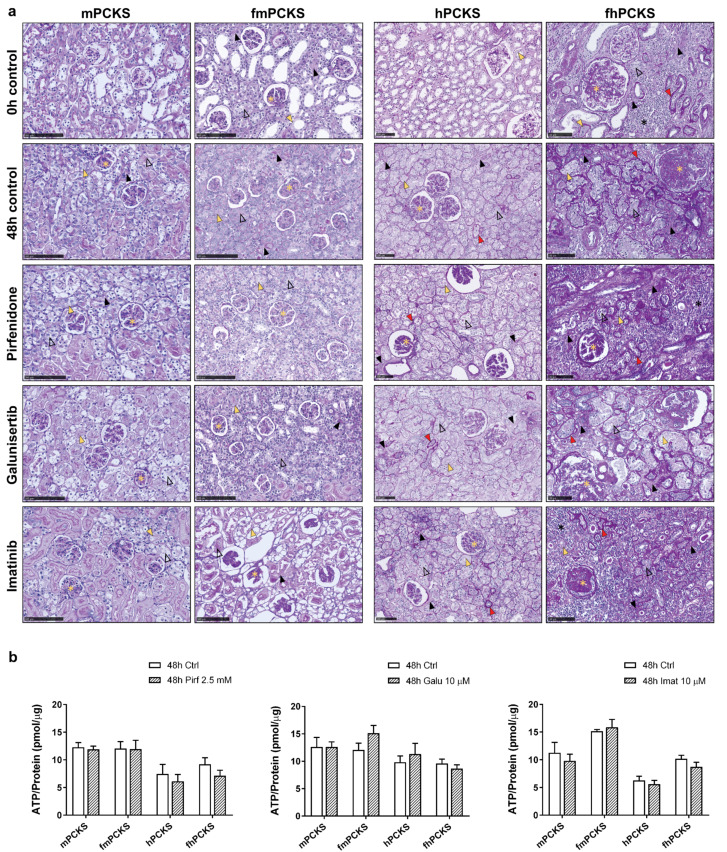
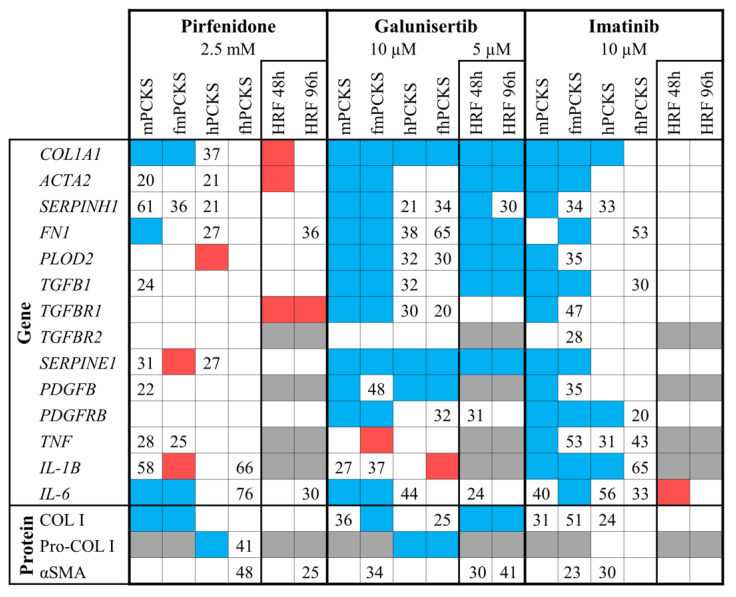
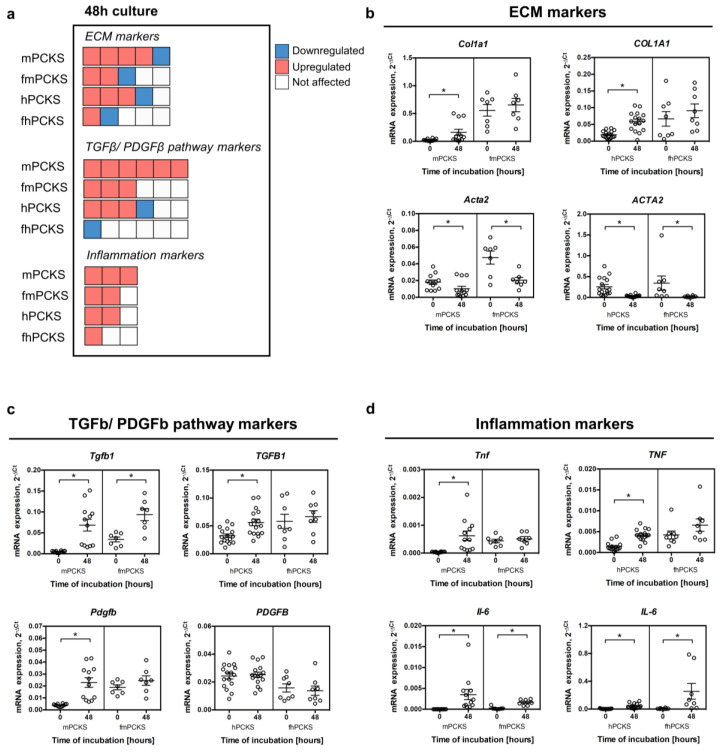
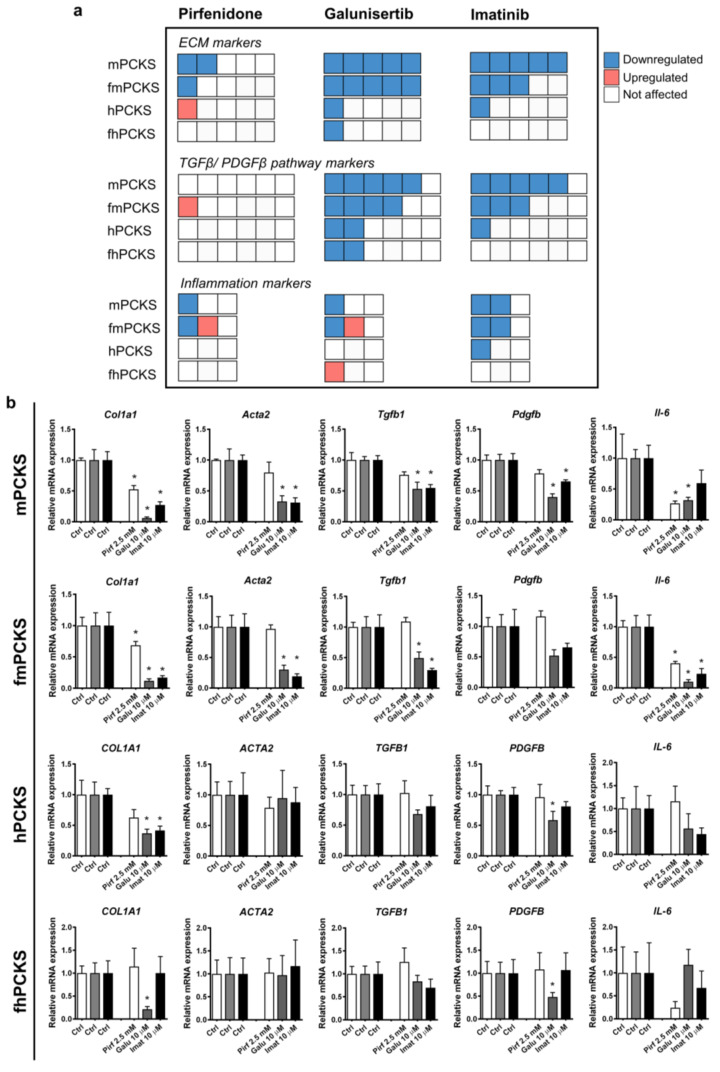
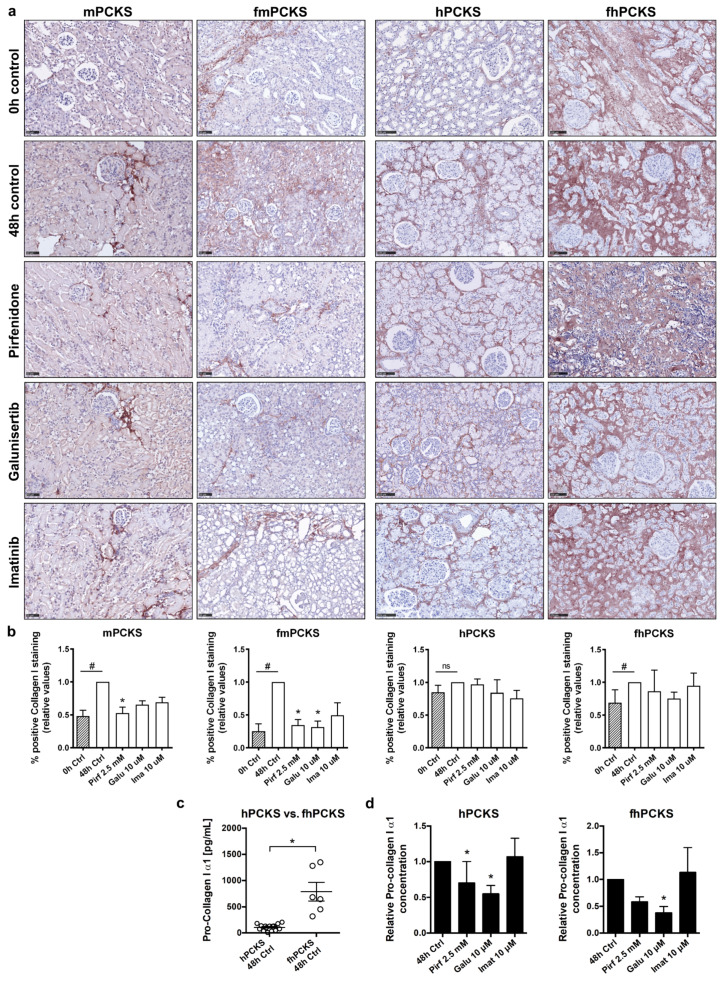
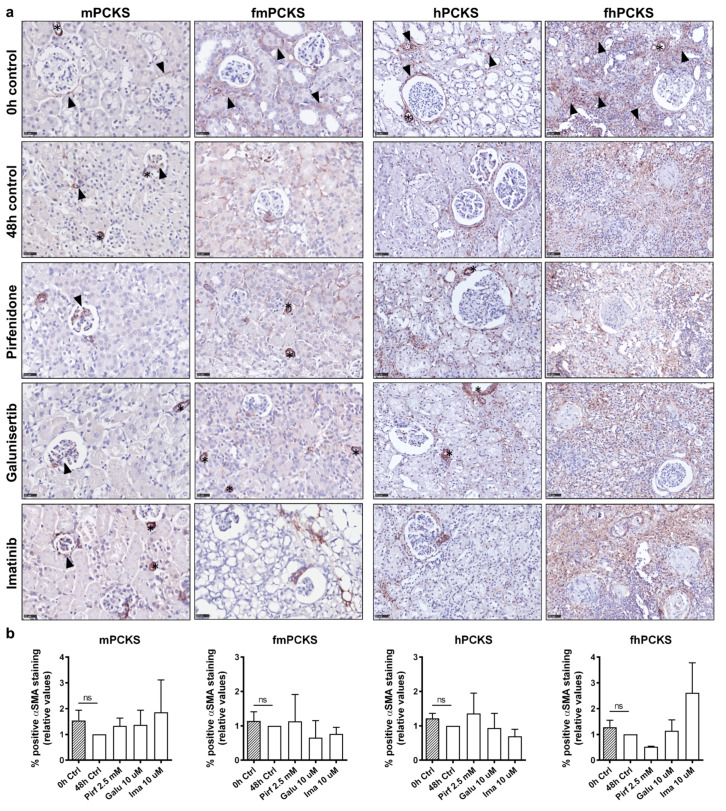
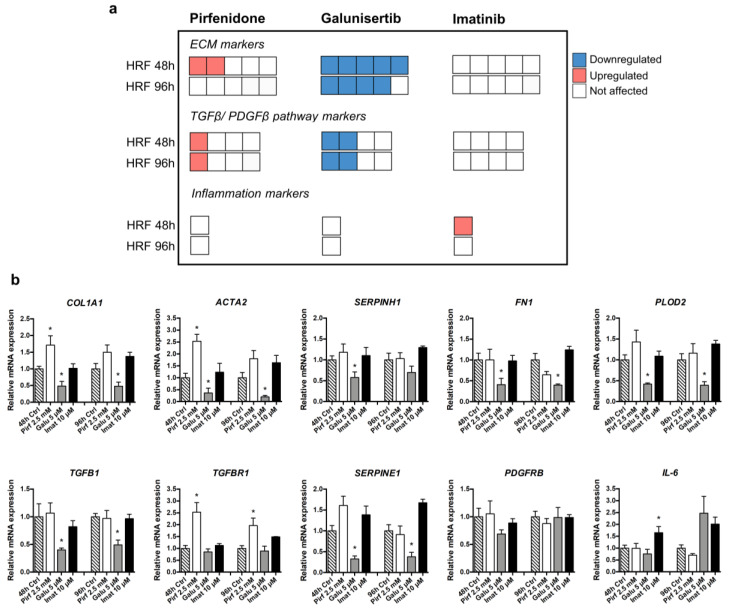
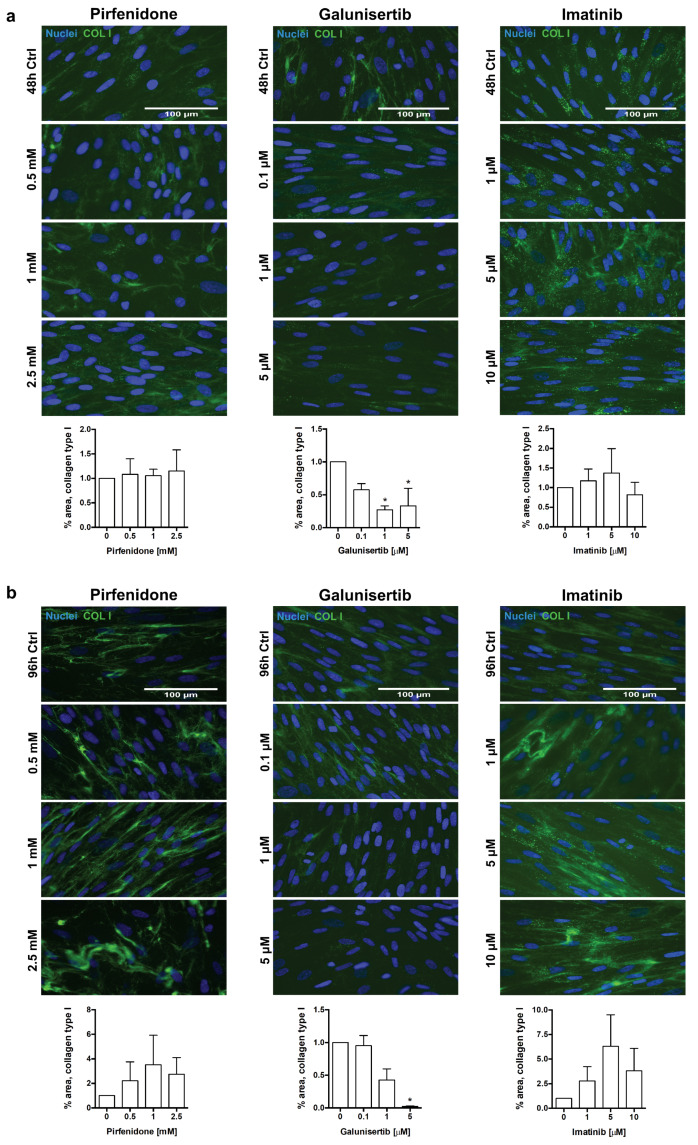
Animal models are a valuable tool in preclinical research. However, limited predictivity of human biological responses in the conventional models has stimulated the search for reliable preclinical tools that show translational robustness. Here, we used precision-cut kidney slices (PCKS) as a model of renal fibrosis and investigated its predictive capacity for screening the effects of anti-fibrotics. Murine and human PCKS were exposed to TGFβ or PDGF pathway inhibitors with established anti-fibrotic efficacy. For each treatment modality, we evaluated whether it affected: (1) culture-induced collagen type I gene expression and interstitial accumulation; (2) expression of markers of TGFβ and PDGF signaling; and (3) expression of inflammatory markers. We summarized the outcomes of published in vivo animal and human studies testing the three inhibitors in renal fibrosis, and drew a parallel to the PCKS data. We showed that the responses of murine PCKS to anti-fibrotics highly corresponded with the known in vivo responses observed in various animal models of renal fibrosis. Moreover, our results suggested that human PCKS can be used to predict drug efficacy in clinical trials. In conclusion, our study demonstrated that the PCKS model is a powerful predictive tool for ex vivo screening of putative drugs for renal fibrosis.
动物模型是临床前研究中的一种宝贵工具。然而,传统模型对人类生物学反应的预测性有限,这促使人们寻找具有可靠转化稳健性的临床前工具。在此,我们使用精密切割肾切片(PCKS)作为肾纤维化模型,并研究其对筛选抗纤维化药物效果的预测能力。将小鼠和人类的PCKS暴露于具有既定抗纤维化功效的TGFβ或PDGF通路抑制剂中。对于每种治疗方式,我们评估其是否影响:(1)培养诱导的I型胶原蛋白基因表达和间质积聚;(2)TGFβ和PDGF信号标志物的表达;以及(3)炎症标志物的表达。我们总结了已发表的在体内动物和人类研究中测试这三种抑制剂对肾纤维化影响的结果,并将其与PCKS数据进行了对比。我们发现,小鼠PCKS对抗纤维化药物的反应与在各种肾纤维化动物模型中观察到的已知体内反应高度一致。此外,我们的结果表明,人类PCKS可用于预测临床试验中的药物疗效。总之,我们的研究表明,PCKS模型是一种强大的预测工具,可用于体外筛选治疗肾纤维化的潜在药物。