Univ. Lille, CNRS, Inserm, CHU Lille, Institut Pasteur de Lille, U1019-UMR 9017-CIIL-Center for Infection and Immunity of Lille, 59000, Lille, France.
Nat Commun. 2020 May 22;11(1):2558. doi: 10.1038/s41467-020-16359-6.
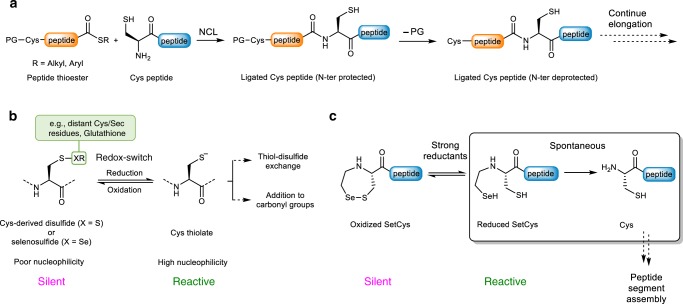
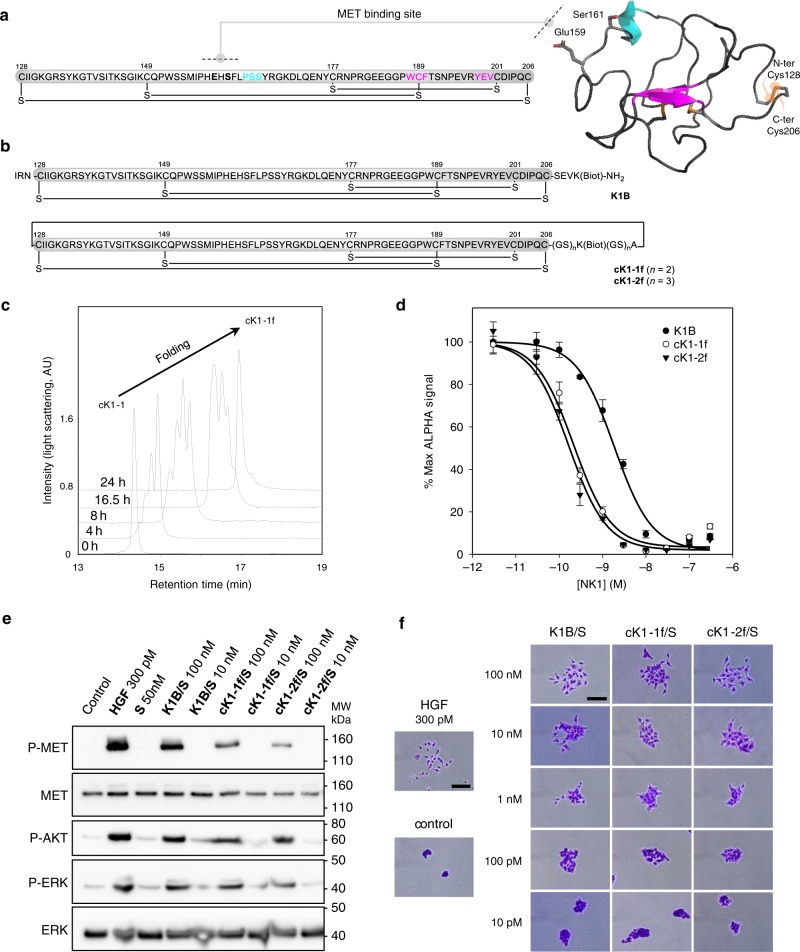
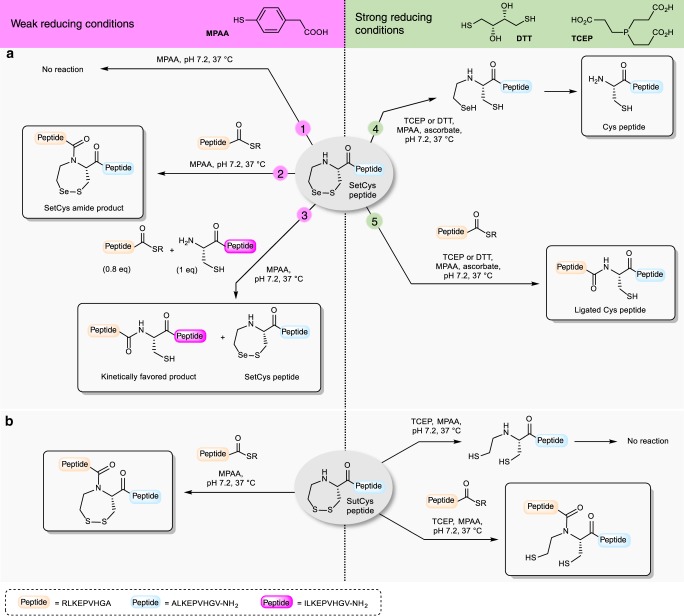
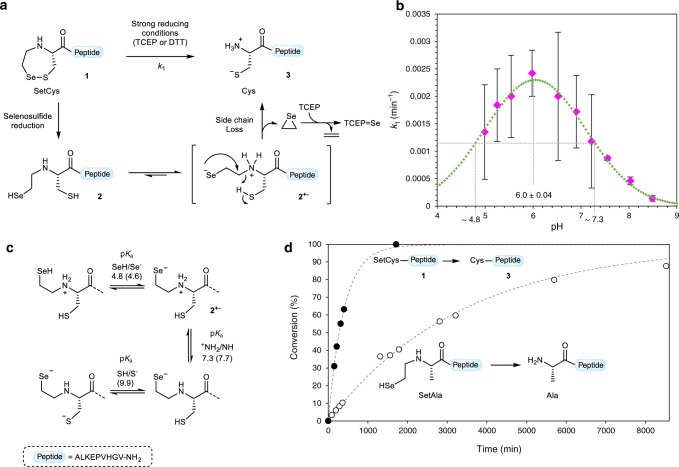
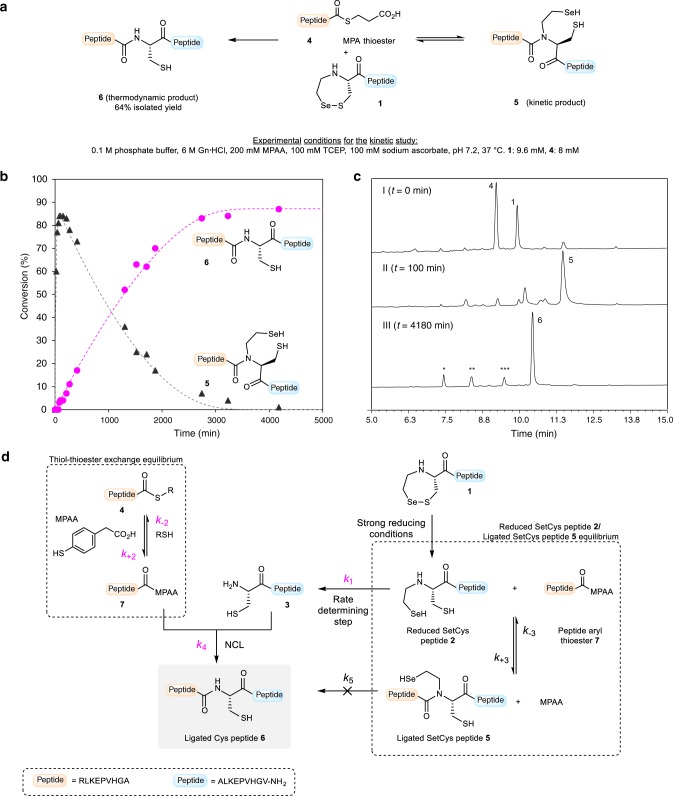
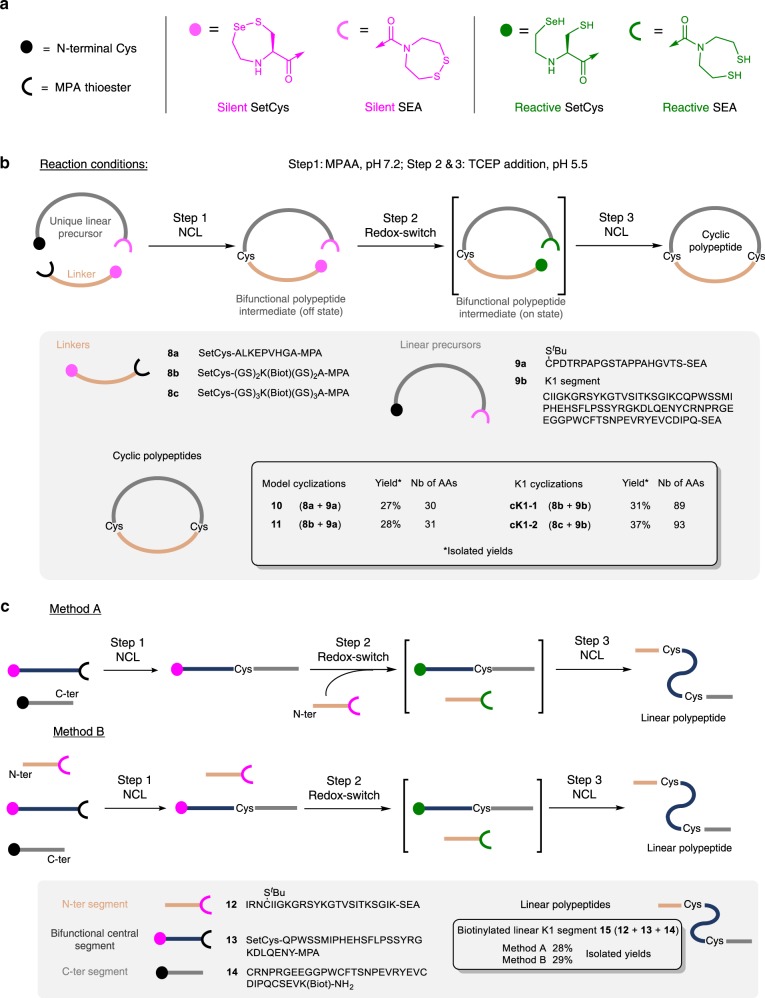
The control of cysteine reactivity is of paramount importance for the synthesis of proteins using the native chemical ligation (NCL) reaction. We report that this goal can be achieved in a traceless manner during ligation by appending a simple N-selenoethyl group to cysteine. While in synthetic organic chemistry the cleavage of carbon-nitrogen bonds is notoriously difficult, we describe that N-selenoethyl cysteine (SetCys) loses its selenoethyl arm in water under mild conditions upon reduction of its selenosulfide bond. Detailed mechanistic investigations show that the cleavage of the selenoethyl arm proceeds through an anionic mechanism with assistance of the cysteine thiol group. The implementation of the SetCys unit in a process enabling the modular and straightforward assembly of linear or backbone cyclized polypeptides is illustrated by the synthesis of biologically active cyclic hepatocyte growth factor variants.
控制半胱氨酸的反应性对于使用天然化学连接(NCL)反应合成蛋白质至关重要。我们报告说,通过在半胱氨酸上附加一个简单的 N-硒乙基基团,可以在无痕迹的方式下在连接过程中实现这一目标。虽然在合成有机化学中,碳-氮键的断裂是众所周知的困难,但我们描述了 N-硒乙基半胱氨酸(SetCys)在温和条件下,其硒代亚砜键还原时,在水中会失去其硒乙基臂。详细的机制研究表明,硒乙基臂的断裂是通过硫醇基团的辅助,通过阴离子机制进行的。通过实施 SetCys 单元,我们可以实现线性或骨干环化多肽的模块化和直接组装,这通过生物活性环状肝细胞生长因子变体的合成得到了说明。