Department of Chemical, Biochemical and Environmental Engineering, University of Maryland Baltimore County, Baltimore, MD, 21250, USA; School of Chemical Engineering, Zhengzhou University, Zhengzhou, Henan, 450001, China; National Engineering Laboratory for Cereal Fermentation Technology, Jiangnan University, Wuxi, Jiangsu, 214122, China.
Department of Chemical, Biochemical and Environmental Engineering, University of Maryland Baltimore County, Baltimore, MD, 21250, USA; National Engineering Laboratory for Cereal Fermentation Technology, Jiangnan University, Wuxi, Jiangsu, 214122, China.
Metab Eng. 2020 Sep;61:79-88. doi: 10.1016/j.ymben.2020.05.005. Epub 2020 May 20.
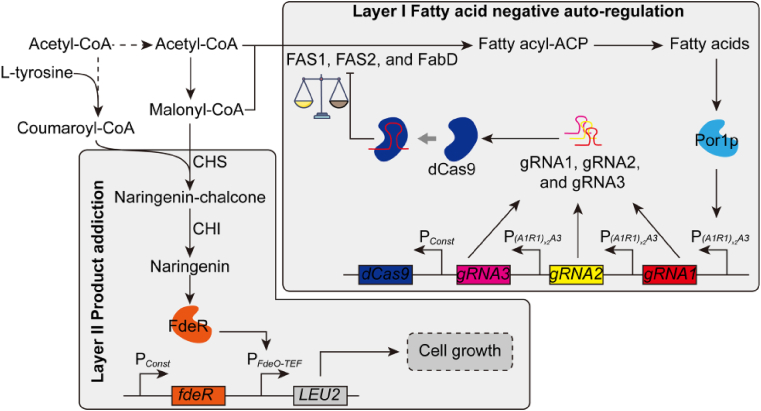
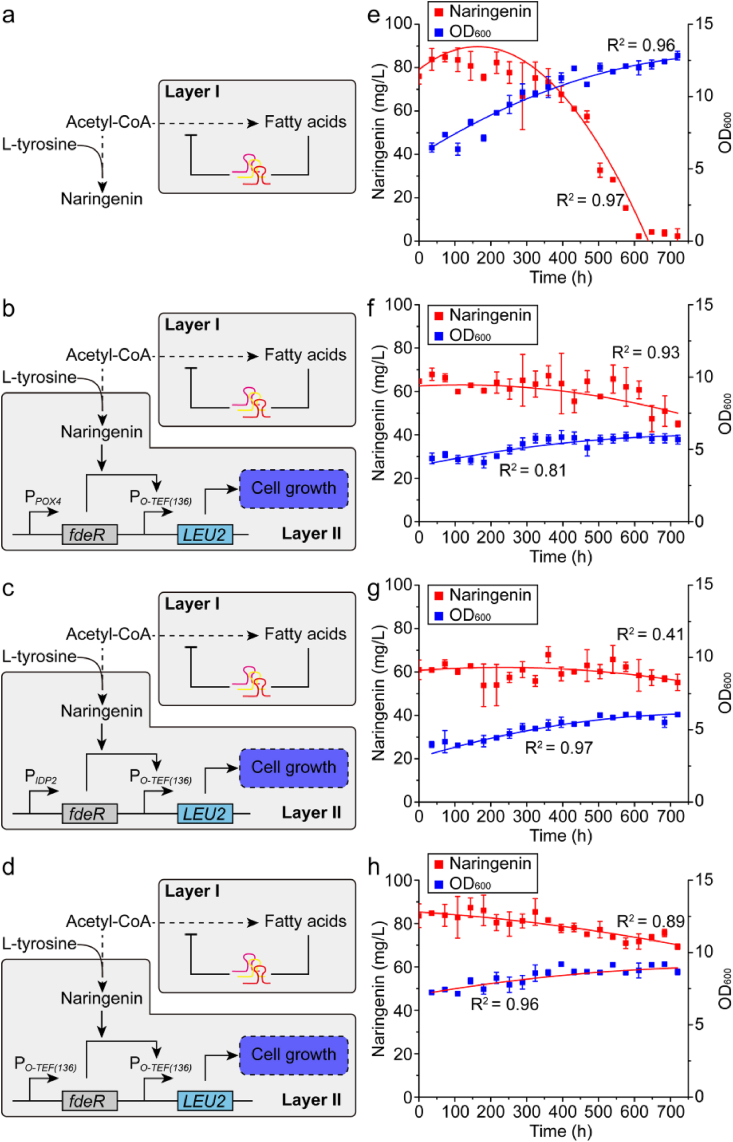
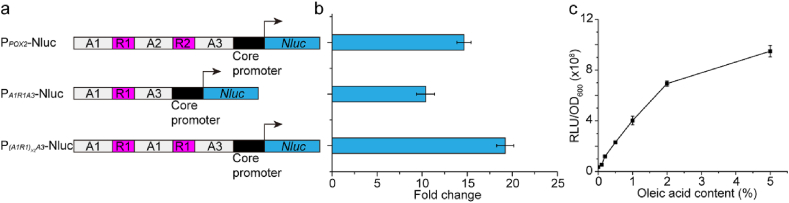
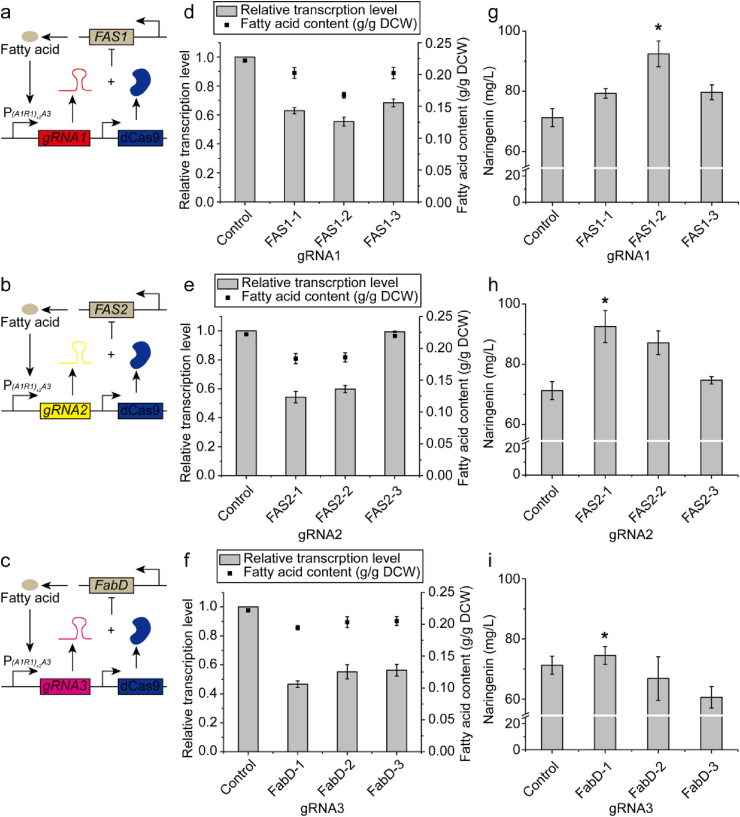
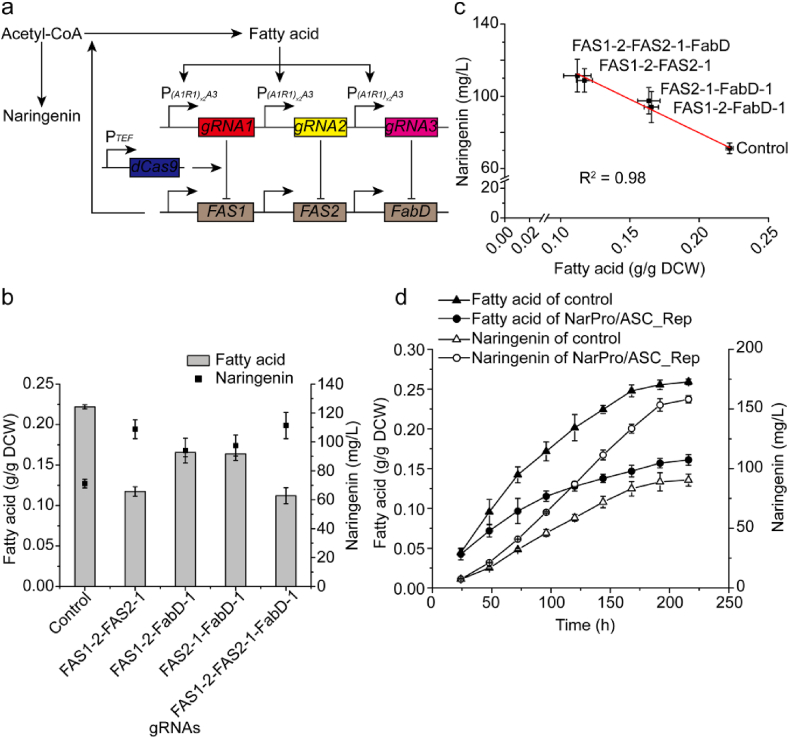
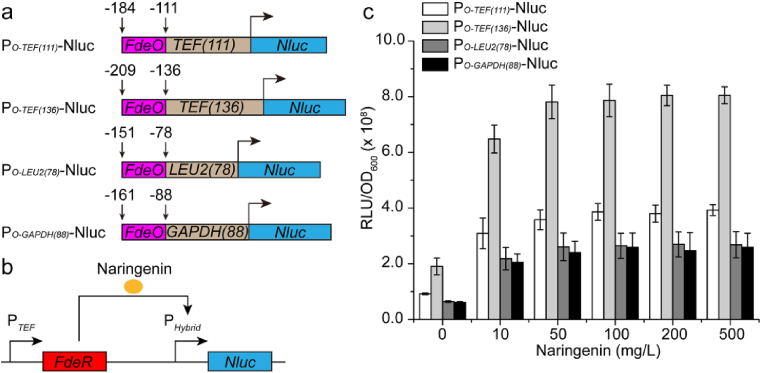
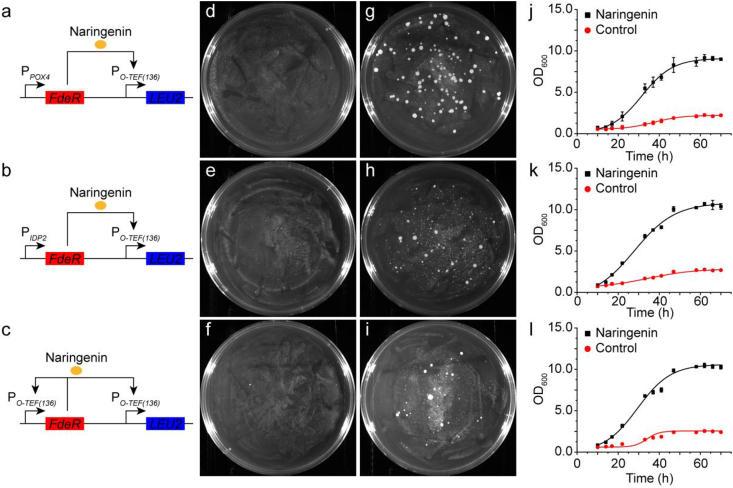
Metabolic addiction, an organism that is metabolically addicted with a compound to maintain its growth fitness, is an underexplored area in metabolic engineering. Microbes with heavily engineered pathways or genetic circuits tend to experience metabolic burden leading to degenerated or abortive production phenotype during long-term cultivation or scale-up. A promising solution to combat metabolic instability is to tie up the end-product with an intermediary metabolite that is essential to the growth of the producing host. Here we present a simple strategy to improve both metabolic stability and pathway yield by coupling chemical addiction with negative autoregulatory genetic circuits. Naringenin and lipids compete for the same precursor malonyl-CoA with inversed pathway yield in oleaginous yeast. Negative autoregulation of the lipogenic pathways, enabled by CRISPRi and fatty acid-inducible promoters, repartitions malonyl-CoA to favor flavonoid synthesis and increased naringenin production by 74.8%. With flavonoid-sensing transcriptional activator FdeR and yeast hybrid promoters to control leucine synthesis and cell grwoth fitness, this amino acid feedforward metabolic circuit confers a flavonoid addiction phenotype that selectively enrich the naringenin-producing pupulation in the leucine auxotrophic yeast. The engineered yeast persisted 90.9% of naringenin titer up to 324 generations. Cells without flavonoid addiction regained growth fitness but lost 94.5% of the naringenin titer after cell passage beyond 300 generations. Metabolic addiction and negative autoregulation may be generalized as basic tools to eliminate metabolic heterogeneity, improve strain stability and pathway yield in long-term and large-scale bioproduction.
代谢成瘾,即一种对化合物代谢成瘾以维持其生长适应性的生物体,是代谢工程中一个尚未得到充分探索的领域。代谢工程途径或遗传回路高度工程化的微生物在长期培养或放大过程中往往会经历代谢负担,导致生产表型退化或流产。解决代谢不稳定性的一个有前途的方法是将终产物与一种对生产宿主生长至关重要的中间代谢物结合。在这里,我们提出了一种通过化学成瘾与负反馈遗传回路相结合来提高代谢稳定性和途径产率的简单策略。柚皮苷和脂类竞争相同的前体丙二酰辅酶 A,在产油酵母中具有相反的途径产率。通过 CRISPRi 和脂肪酸诱导型启动子实现的脂类生物合成途径的负反馈调节,重新分配丙二酰辅酶 A 以有利于类黄酮合成,并使柚皮苷产量增加了 74.8%。通过类黄酮感应转录激活因子 FdeR 和酵母杂交启动子来控制亮氨酸合成和细胞生长适应性,这个氨基酸反馈代谢回路赋予了类黄酮成瘾表型,可选择性地在亮氨酸营养缺陷型酵母中富集柚皮苷产生菌。经过 324 代,工程酵母保留了 90.9%的柚皮苷浓度。没有类黄酮成瘾的细胞在细胞传代超过 300 代后恢复了生长适应性,但失去了 94.5%的柚皮苷浓度。代谢成瘾和负反馈调节可能被概括为基本工具,用于消除代谢异质性,提高长期和大规模生物生产中的菌株稳定性和途径产率。