Nowak Bernadeta, Śróttek Małgorzata, Ciszek-Lenda Marta, Skałkowska Anna, Gamian Andrzej, Górska Sabina, Marcinkiewicz Janusz
Department of Immunology, Jagiellonian University Medical College, Czysta 18, 31-121, Kraków, Poland.
Laboratory of Medical Microbiology, Ludwik Hirszfeld Institute of Immunology and Experimental Therapy, Polish Academy of Sciences, Wrocław, Poland.
Arch Immunol Ther Exp (Warsz). 2020 May 25;68(3):17. doi: 10.1007/s00005-020-00581-7.
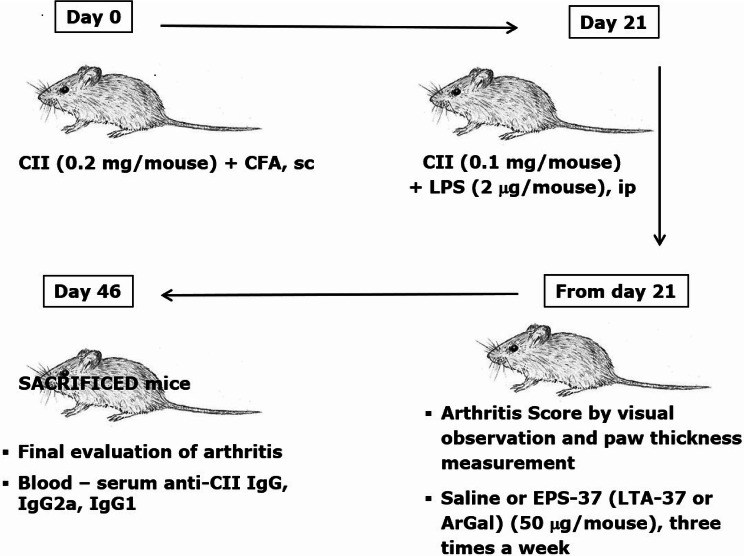
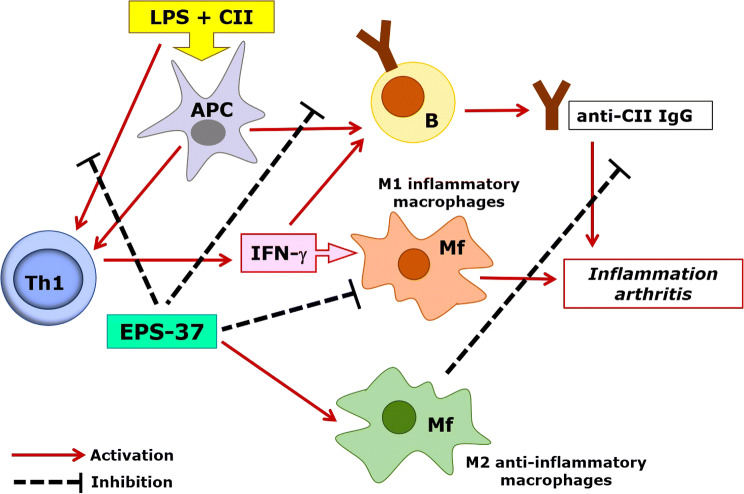
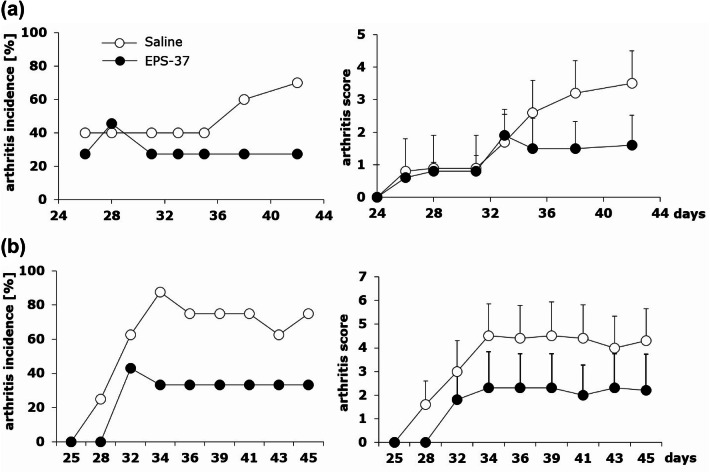
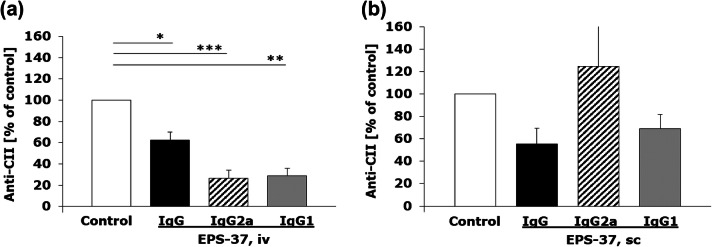
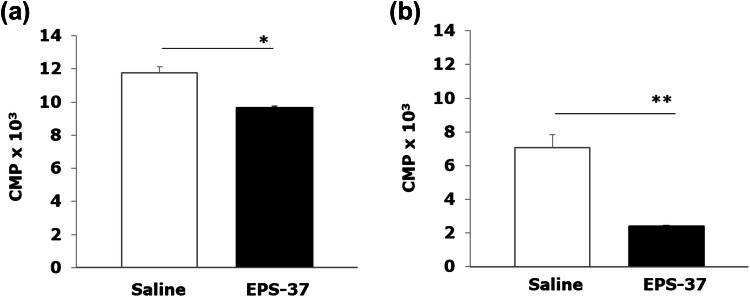
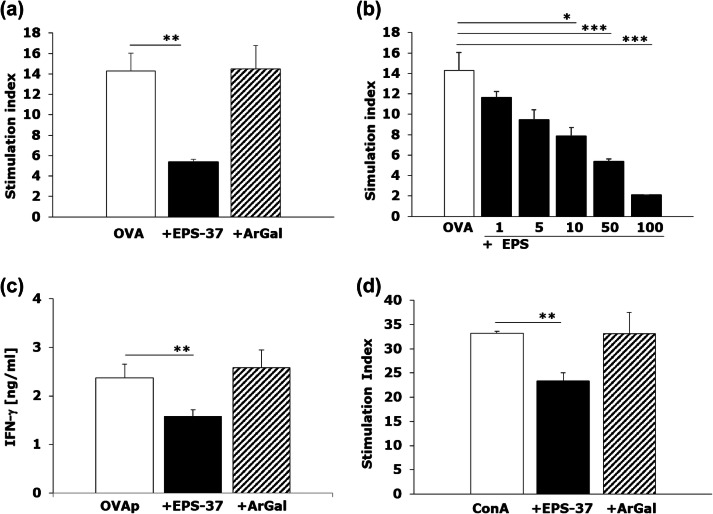
Exopolysaccharides (EPSs), major components of the bacterial biofilm, display strong strain-specific immunomodulatory properties. Previously, we have shown that crude EPS derived from Lactobacillus rhamnosus KL37 depresses the production of arthritogenic anti-collagen IgG and ameliorates collagen-induced arthritis (CIA) in DBA/1 mice, when lipopolysaccharide (LPS) was used as adjuvant. In this study, we used highly purified EPS from L. rhamnosus KL37 (EPS-37) to verify its anti-inflammatory properties and the ability to suppress T cell-dependent humoral response. We have employed the model of active CIA, in which mice immunized with type II collagen (CII) along with LPS were treated with pure EPS-37. Intravenous administration of purified EPS-37 markedly ameliorated arthritis and reduced CII-specific antibody production. EPS-37 injected subcutaneously reduced the clinical symptoms of CIA but without the reduction of arthritogenic antibodies. In addition, the effect of EPS-37 on T-cell functions was tested ex vivo and in vitro. EPS-37 inhibited the in vitro proliferation of T cells activated both in vivo (CII immunization) and in vitro (antigen/mitogen), and markedly reduced the production of interferon (IFN)-γ. These results together with other reports suggest that anti-inflammatory potential of EPS-37 depends on its ability to inhibit either one or the other or both possible inflammatory signaling pathways. Namely, Th1 → IFN-γ → M1 inflammatory macrophages → arthritis and/or Th1 → IFN-γ → B cells → arthritogenic antibodies → arthritis. We suggest that L. rhamnosus KL37 EPS might be utilized to control T cell-dependent immune responses in various inflammatory diseases. However, the most effective route of EPS-37 administration needs to be tailored for a given disorder.
胞外多糖(EPSs)是细菌生物膜的主要成分,具有很强的菌株特异性免疫调节特性。此前,我们已经表明,当使用脂多糖(LPS)作为佐剂时,从鼠李糖乳杆菌KL37中提取的粗制EPS可抑制致关节炎抗胶原蛋白IgG的产生,并改善DBA/1小鼠的胶原诱导性关节炎(CIA)。在本研究中,我们使用了从鼠李糖乳杆菌KL37中高度纯化的EPS(EPS - 37)来验证其抗炎特性以及抑制T细胞依赖性体液反应的能力。我们采用了活性CIA模型,用纯EPS - 37处理用II型胶原(CII)和LPS免疫的小鼠。静脉注射纯化的EPS - 37可显著改善关节炎并减少CII特异性抗体的产生。皮下注射EPS - 37可减轻CIA的临床症状,但不会减少致关节炎抗体。此外,还在体外和体内测试了EPS - 37对T细胞功能的影响。EPS - 37抑制了体内(CII免疫)和体外(抗原/丝裂原)激活的T细胞的体外增殖,并显著降低了干扰素(IFN)-γ的产生。这些结果与其他报告一起表明,EPS - 37的抗炎潜力取决于其抑制一种或另一种或两种可能的炎症信号通路的能力。即,Th1→IFN - γ→M1炎性巨噬细胞→关节炎和/或Th1→IFN - γ→B细胞→致关节炎抗体→关节炎。我们认为鼠李糖乳杆菌KL37 EPS可用于控制各种炎症性疾病中T细胞依赖性免疫反应。然而,EPS - 37的最有效给药途径需要针对特定疾病进行调整。