Department of Mechanical, Industrial and Manufacturing Engineering, University of Toledo, Toledo, OH 43606, USA.
Department of Cariology, Restorative Sciences and Endodontics, School of Dentistry, University of Michigan, Ann Arbor, MI 48109, USA.
Dent Mater. 2020 Jul;36(7):865-883. doi: 10.1016/j.dental.2020.04.008. Epub 2020 May 22.
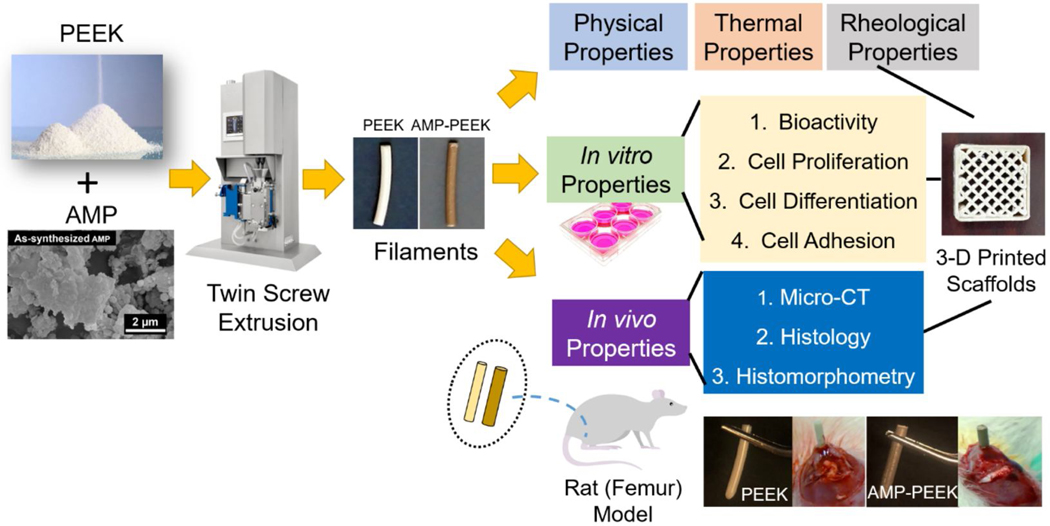
The aim of this study was to develop bioactive and osseointegrable polyetheretherketone (PEEK)-based composite filaments melt-blended with novel amorphous magnesium phosphate (AMP) particles for 3D printing of dental and orthopedic implants.
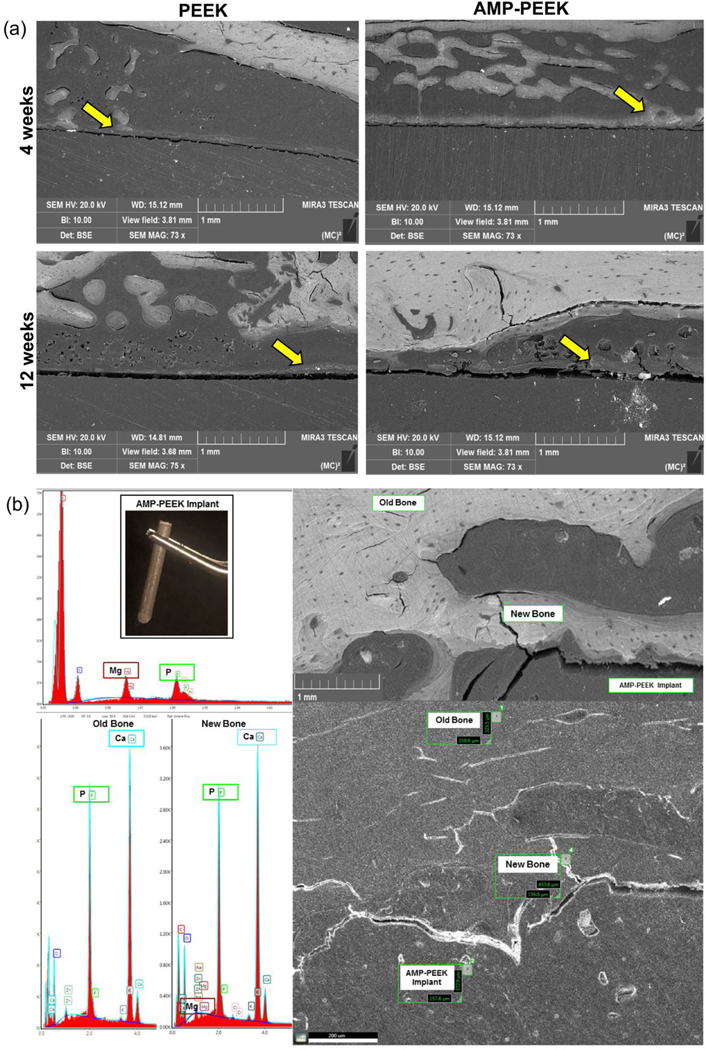
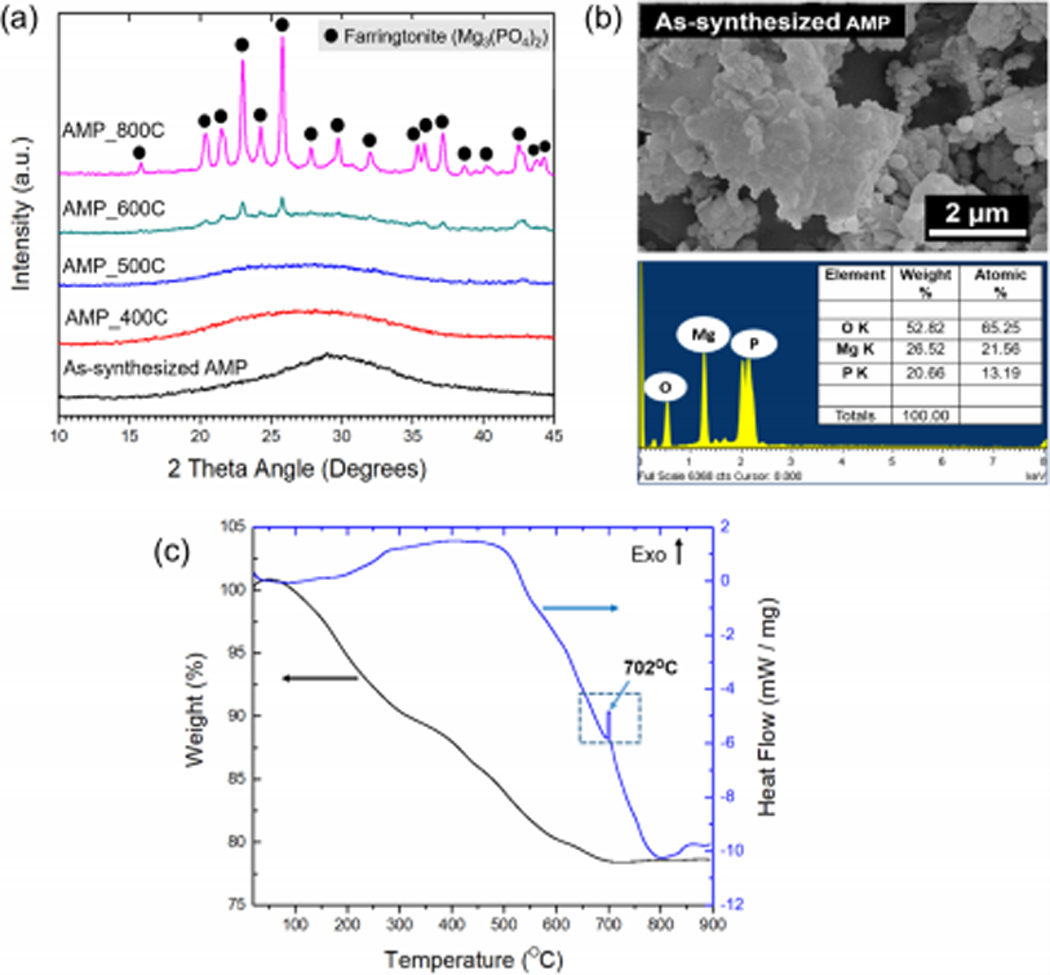
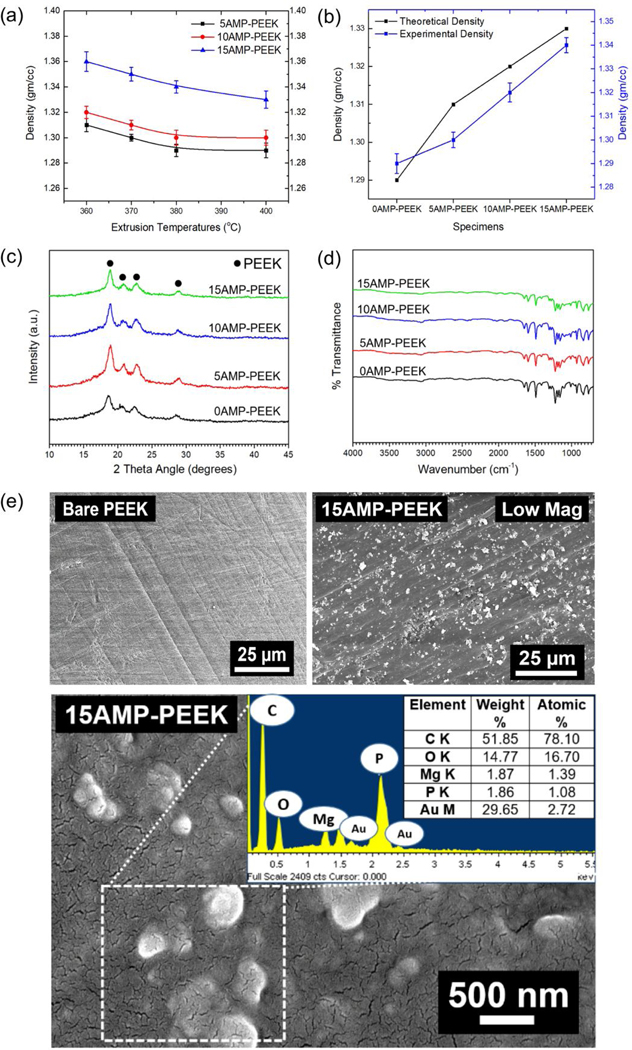
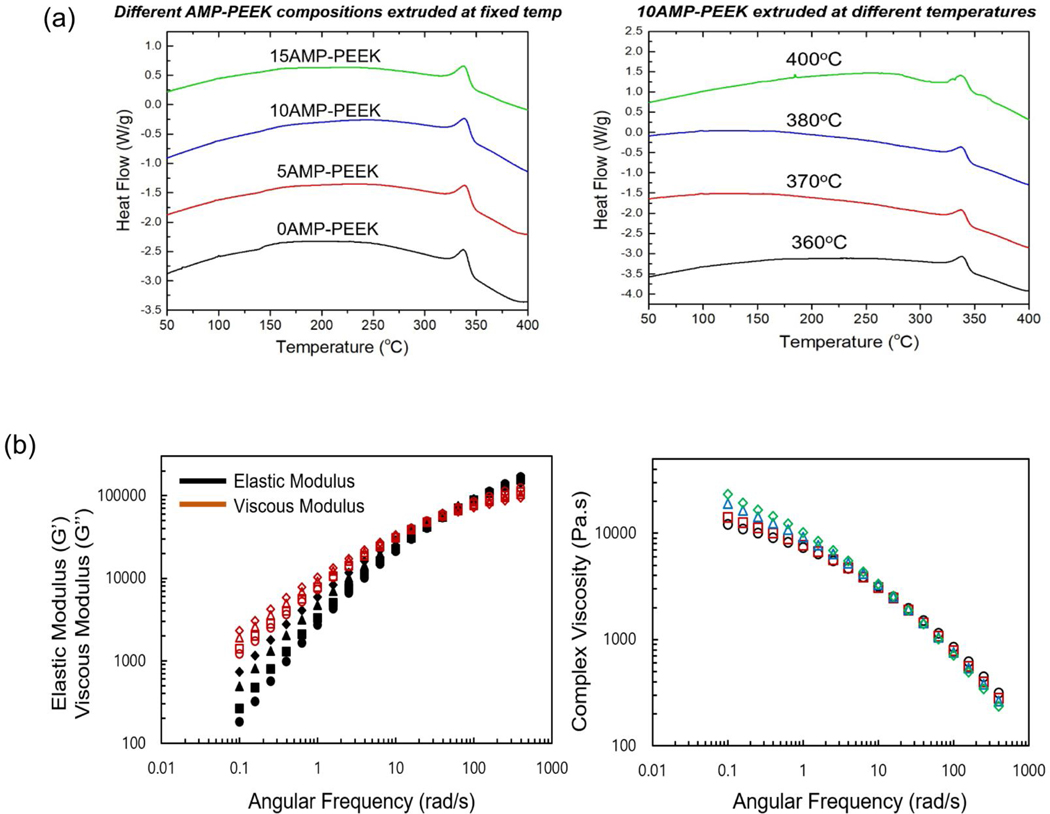
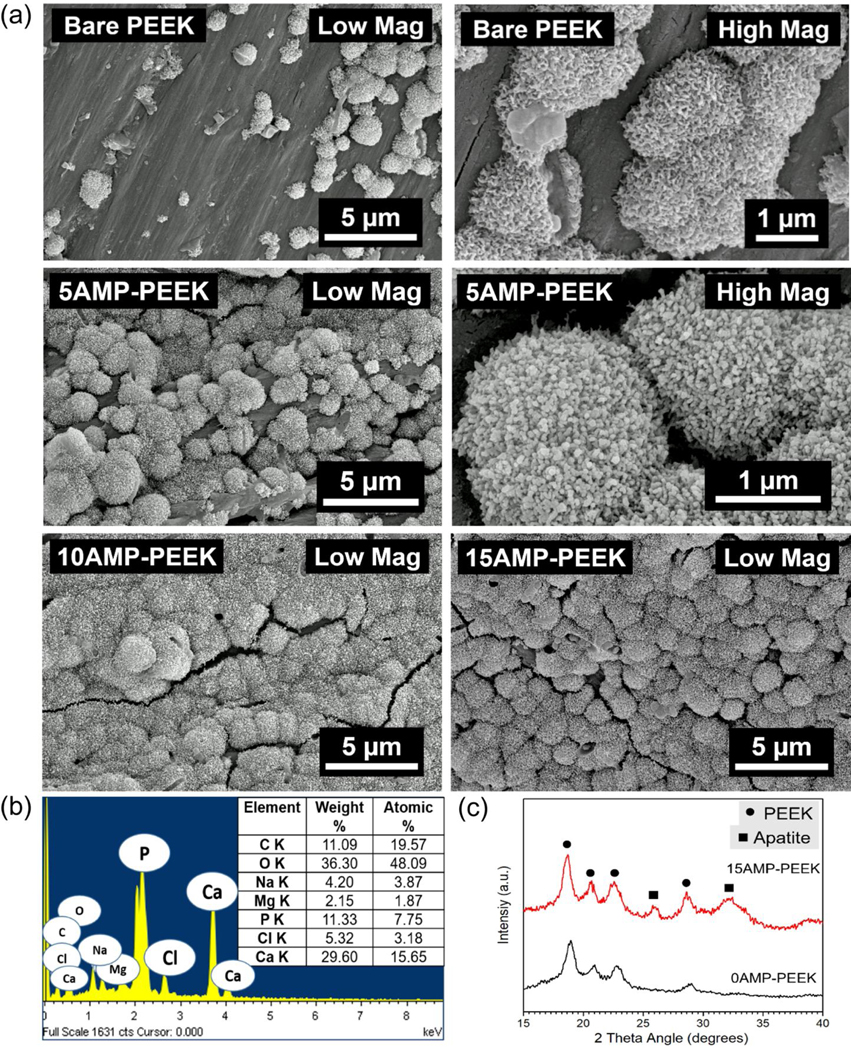
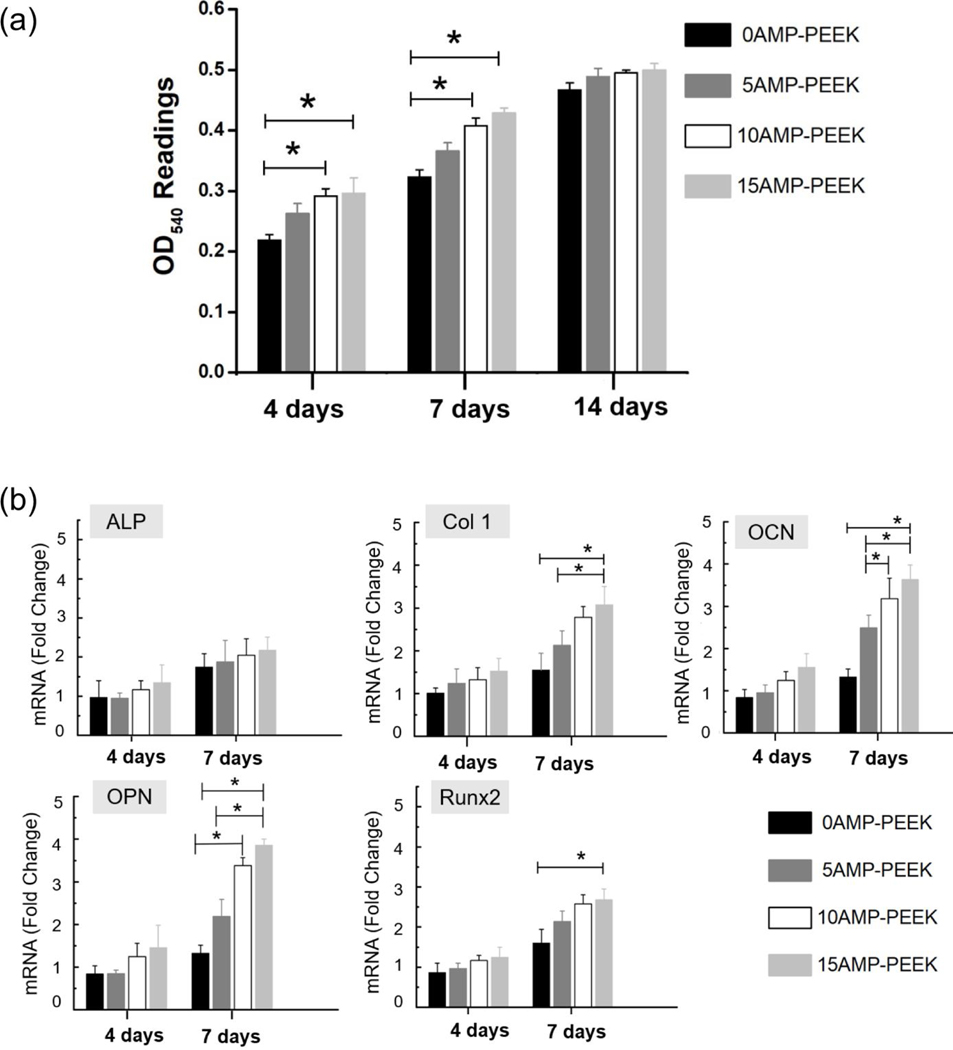
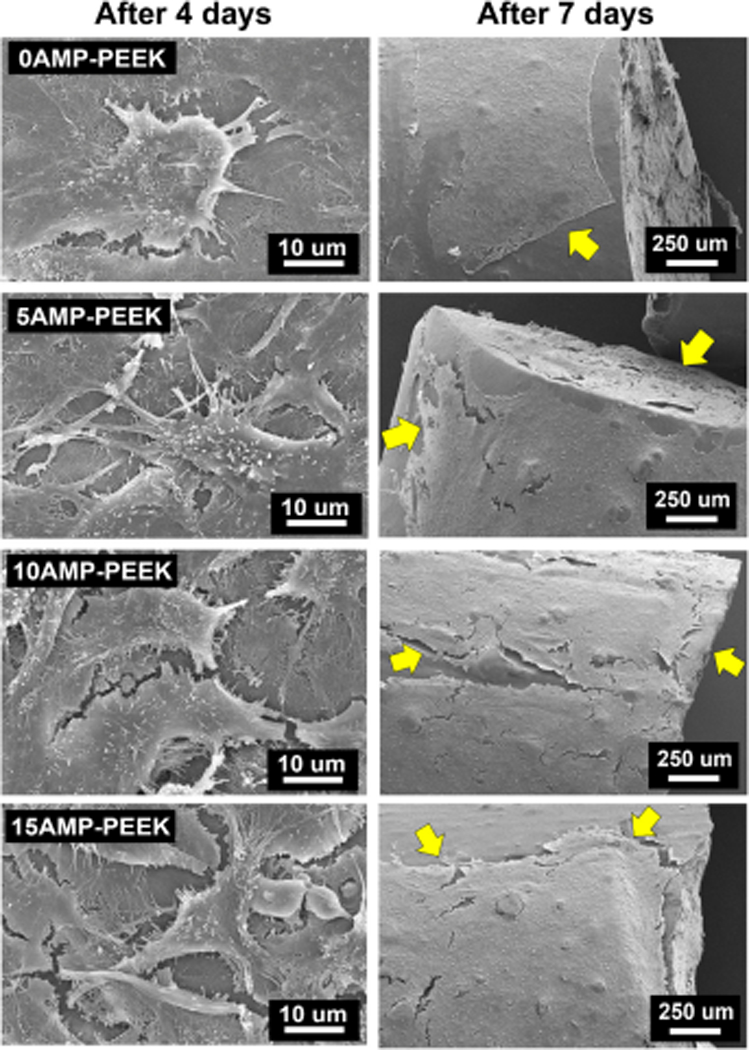
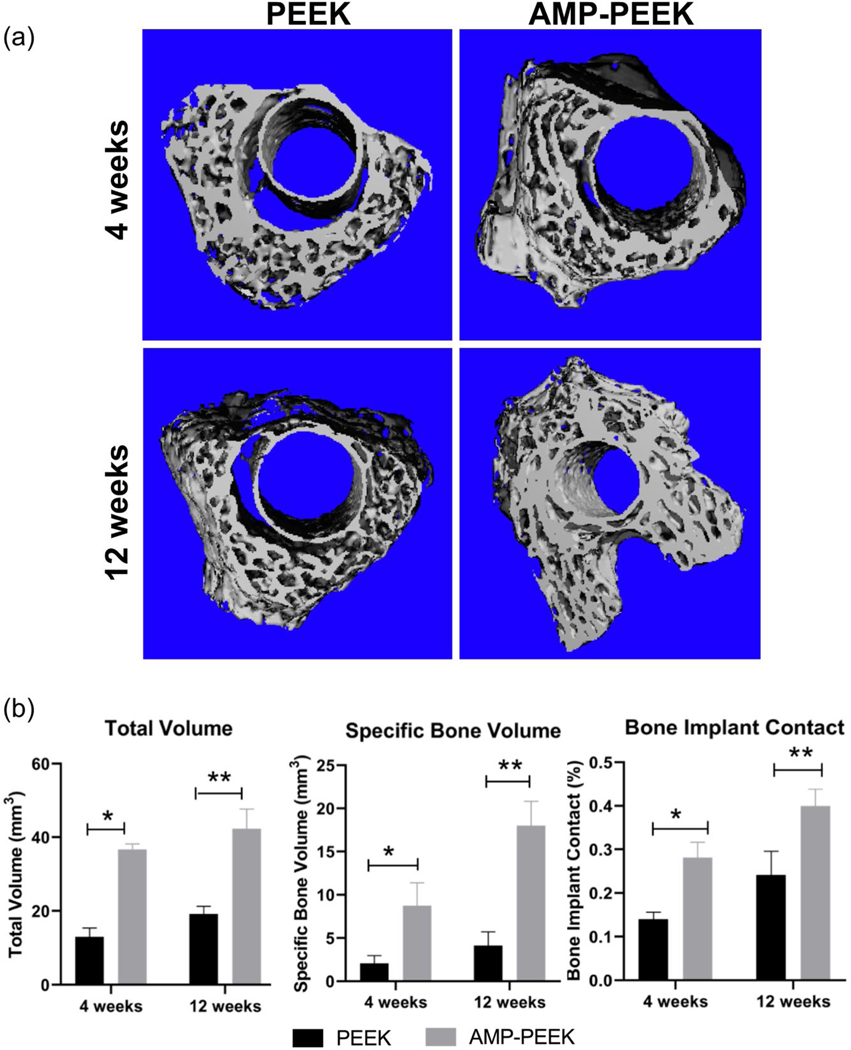
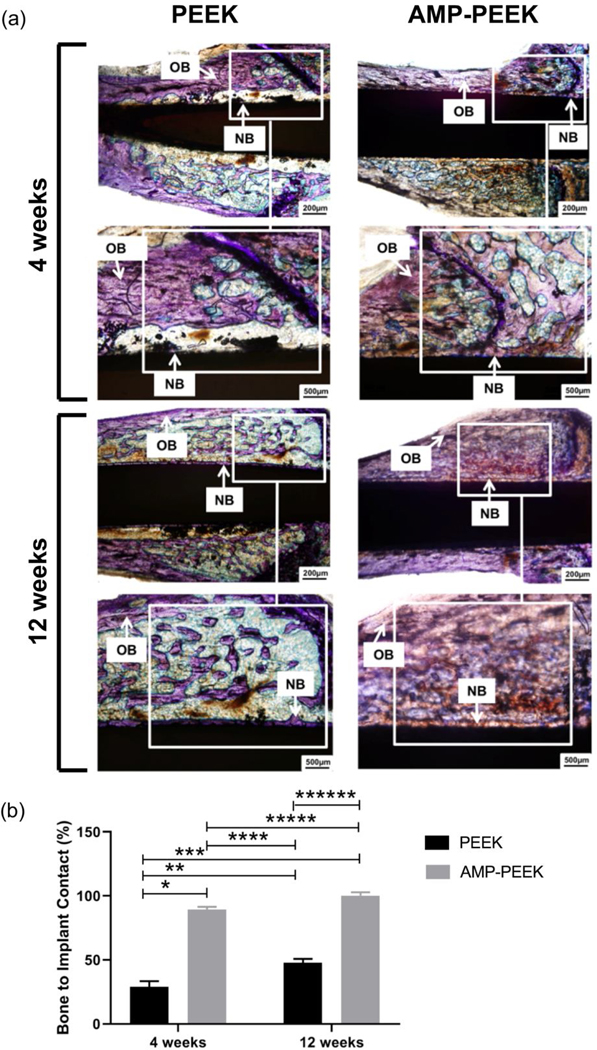
A series of materials and biological analyses of AMP-PEEK were performed. Thermal stability, thermogravimetric and differential scanning calorimetry curves of as-synthesized AMP were measured. Complex viscosity, elastic modulus and viscous modulus were determined using a rotational rheometer. In vitro bioactivity was analyzed using SBF immersion method. SEM, EDS and XRD were used to study the apatite-forming ability of the AMP-PEEK filaments. Mouse pre-osteoblasts (MC3T3-E1) were cultured and analyzed for cell viability, proliferation and gene expression. For in vivo analyses, bare PEEK was used as the control and 15AMP-PEEK was chosen based on its in vitro cell-related results. After 4 or 12 weeks, animals were euthanized, and the femurs were collected for micro-computed tomography (μ-CT) and histology.
The collected findings confirmed the homogeneous dispersion of AMP particles within the PEEK matrix with no phase degradation. Rheological studies demonstrated that AMP-PEEK composites are good candidates for 3D printing by exhibiting high zero-shear and low infinite-shear viscosities. In vitro results revealed enhanced bioactivity and superior pre-osteoblast cell function in the case of AMP-PEEK composites as compared to bare PEEK. In vivo analyses further corroborated the enhanced osseointegration capacity for AMP-PEEK implants.
Collectively, the present investigation demonstrated that AMP-PEEK composite filaments can serve as feedstock for 3D printing of orthopedic and dental implants due to enhanced bioactivity and osseointegration capacity.
本研究旨在开发具有生物活性和骨整合性的聚醚醚酮(PEEK)基复合材料长丝,该长丝通过熔融共混技术与新型无定形磷酸镁(AMP)颗粒混合,用于 3D 打印牙科和骨科植入物。
对 AMP-PEEK 进行了一系列材料和生物学分析。测量了合成 AMP 的热稳定性、热重分析和差示扫描量热曲线。使用旋转流变仪测定了复合体系的复杂粘度、弹性模量和粘性模量。通过 SBF 浸泡法分析了体外生物活性。使用 SEM、EDS 和 XRD 研究了 AMP-PEEK 长丝的成磷灰石能力。培养小鼠前成骨细胞(MC3T3-E1)并分析细胞活力、增殖和基因表达。对于体内分析,以纯 PEEK 作为对照,根据体外细胞相关结果选择 15AMP-PEEK。4 或 12 周后,处死动物,收集股骨进行微计算机断层扫描(μ-CT)和组织学分析。
收集的结果证实了 AMP 颗粒在 PEEK 基体中的均匀分散,没有相降解。流变学研究表明,AMP-PEEK 复合材料通过表现出高零剪切和低无限剪切粘度,是 3D 打印的良好候选材料。体外结果表明,与纯 PEEK 相比,AMP-PEEK 复合材料具有增强的生物活性和更好的前成骨细胞功能。体内分析进一步证实了 AMP-PEEK 植入物增强的骨整合能力。
总的来说,本研究表明,AMP-PEEK 复合长丝可以作为骨科和牙科植入物 3D 打印的原料,因为它具有增强的生物活性和骨整合能力。