Sheraton Mack, Deo Neha, Kashyap Rahul, Surani Salim
Emergency Medicine, Trinity West Medical Center Msopti Em Program, Steubenville, USA.
Miscellaneous, Mayo Clinic Alix School of Medicine, Rochester, USA.
Cureus. 2020 May 18;12(5):e8192. doi: 10.7759/cureus.8192.
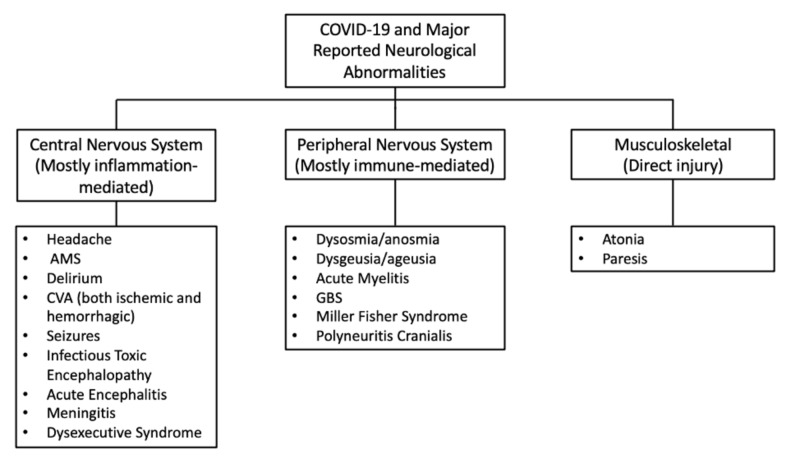
The SARS-CoV-2, a novel virus has shown an association with central nervous system (CNS) symptoms. Initial retrospective studies emerging from China and France, as well as case reports from different parts of the world revealed a spectrum of neurological symptoms ranging from a simple headache to more serious encephalitis and dysexecutive syndromes. Authors have tried to explain this neurotropism of the virus by comparing invasion mechanisms with prior epidemic coronavirus like severe acute respiratory syndrome (SARS) and Middle East respiratory syndrome (MERS). Concrete evidence on those viruses has been limited. This review attempts to discuss various pathophysiological mechanisms as it relates to neurological complications of SARS-CoV-2. We will also discuss the neurological manifestations seen in various retrospective studies, systemic reviews, and case reports.
新型冠状病毒SARS-CoV-2已显示出与中枢神经系统(CNS)症状有关。来自中国和法国的初步回顾性研究以及世界各地的病例报告显示,一系列神经症状从简单的头痛到更严重的脑炎和执行功能障碍综合征不等。作者试图通过将病毒的入侵机制与先前流行的冠状病毒如严重急性呼吸综合征(SARS)和中东呼吸综合征(MERS)进行比较,来解释这种病毒的嗜神经性。关于这些病毒的确切证据有限。本综述试图讨论与SARS-CoV-2神经并发症相关的各种病理生理机制。我们还将讨论在各种回顾性研究、系统评价和病例报告中所见的神经表现。