Anatomical Institute, Christian-Albrechts-University Kiel, Otto-Hahn Platz 8, 24118 Kiel, Germany.
MSH Medical School Hamburg, Am Kaiserkai 1, 20457 Hamburg, Germany.
Cells. 2020 May 24;9(5):1307. doi: 10.3390/cells9051307.
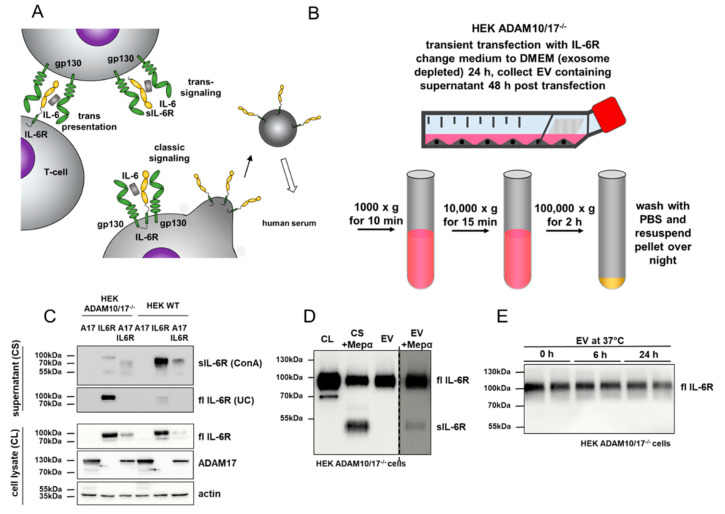
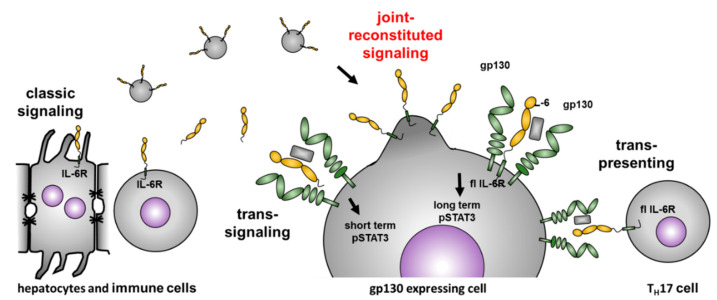
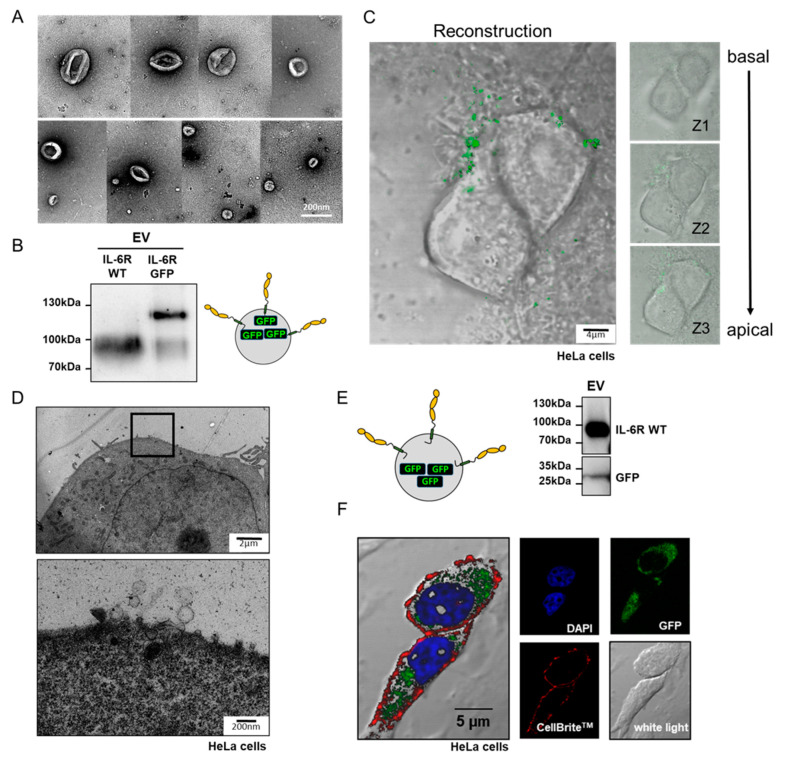
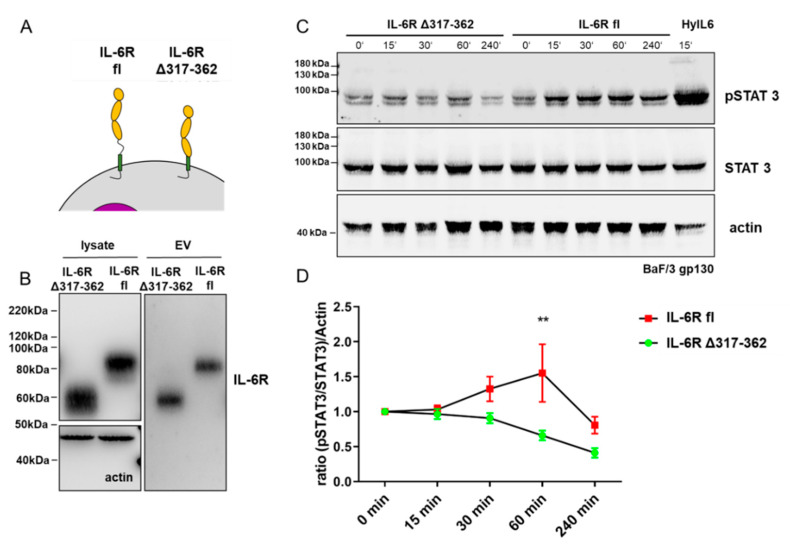
Interleukin-6 (IL-6) signaling is a crucial regulatory event important for many biological functions, such as inflammation and tissue regeneration. Accordingly, several pathological conditions are associated with dysregulated IL-6 activity, making it an attractive therapeutic target. For instance, blockade of IL-6 or its α-receptor (IL-6R) by monoclonal antibodies has been successfully used to treat rheumatoid arthritis. However, based on different signaling modes, IL-6 function varies between pro- and anti-inflammatory activity, which is critical for therapeutic intervention. So far, three modes of IL-6 signaling have been described, the classic anti-inflammatory signaling, as well as pro-inflammatory trans-signaling, and trans-presentation. The IL-6/IL-6R complex requires an additional β-receptor (gp130), which is expressed on almost all cells of the human body, to induce STAT3 (signal transducer and activator of signal transcription 3) phosphorylation and subsequent transcriptional regulation. In contrast, the IL-6R is expressed on a limited number of cells, including hepatocytes and immune cells. However, the proteolytic release of the IL-6R enables trans-signaling on cells expressing gp130 only. Here, we demonstrate a fourth possibility of IL-6 signaling that we termed (JRS). We show that IL-6R on extracellular vesicles (EVs) can also be transported to and fused with other cells that lack the IL-6R on their surface. Importantly, JRS via EVs induces delayed STAT3 phosphorylation compared to the well-established trans-signaling mode. EVs isolated from human serum were already shown to carry the IL-6R, and thus this new signaling mode should be considered with regard to signal intervention.
白细胞介素 6(IL-6)信号是许多生物学功能(如炎症和组织再生)的重要调节事件。因此,几种病理状况与失调的 IL-6 活性有关,使其成为有吸引力的治疗靶点。例如,通过单克隆抗体阻断 IL-6 或其 α 受体(IL-6R)已成功用于治疗类风湿关节炎。然而,根据不同的信号模式,IL-6 的功能在促炎和抗炎活性之间有所不同,这对于治疗干预至关重要。到目前为止,已经描述了三种 IL-6 信号模式,即经典抗炎信号,以及促炎的转信号和转呈递。IL-6/IL-6R 复合物需要另一个 β 受体(gp130),它几乎表达于人体所有细胞上,以诱导 STAT3(信号转导和转录激活因子 3)磷酸化和随后的转录调节。相比之下,IL-6R 仅在少数细胞上表达,包括肝细胞和免疫细胞。然而,IL-6R 的蛋白水解释放使仅表达 gp130 的细胞能够进行转信号。在这里,我们展示了 IL-6 信号的第四种可能性,我们称之为(JRS)。我们表明,细胞外囊泡(EVs)上的 IL-6R 也可以被转运并融合到缺乏表面 IL-6R 的其他细胞上。重要的是,与已建立的转信号模式相比,通过 EV 进行的 JRS 诱导 STAT3 磷酸化延迟。已经表明从人血清中分离的 EV 携带 IL-6R,因此应该考虑这种新的信号干预模式。