Department of Integrated Traditional Chinese and Western Medicine, Union Hospital, Tongji Medical College, Huazhong University of Science and Technology, Wuhan 430022, China.
Department of Neurosurgery, Union Hospital, Tongji Medical College, Huazhong University of Science and Technology, Wuhan 430022, China.
Nutr Metab Cardiovasc Dis. 2020 Jun 25;30(7):1061-1067. doi: 10.1016/j.numecd.2020.04.013. Epub 2020 Apr 18.
A novel coronavirus severe acute respiratory syndrome corona virus 2 (SARS-CoV-2) caused pneumonia, Coronavirus Disease 2019 (COVID-19), broke out in Wuhan, China in December 2019, and spread all over the world. Patients with COVID-19 showed huge differences in the hospital stay, progression, and prognosis. As reported, the comorbidities may play an important role in COVID-19. Here, we aim to address the role of cardiovascular disease (CVD) in the progression and prognosis of COVID-19.
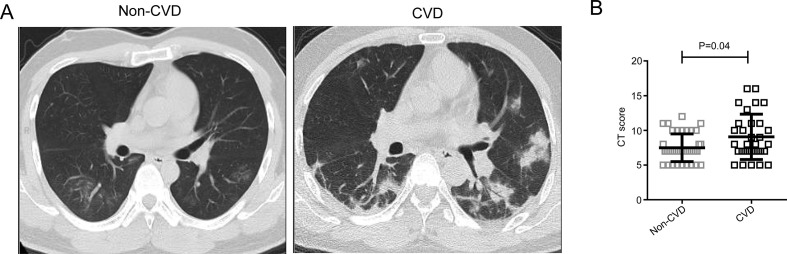
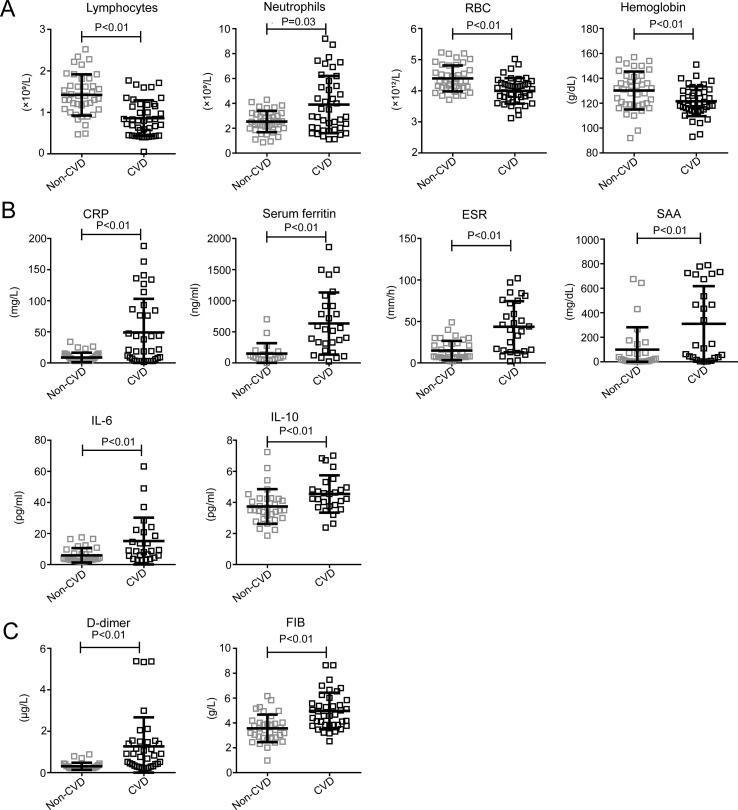
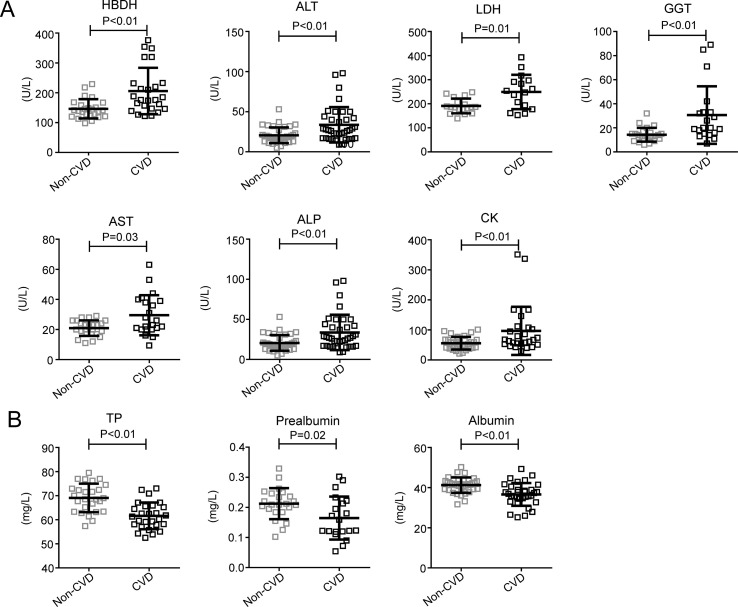
Eighty-three confirmed COVID-19 patients were divided into CVD (n = 42) and non-CVD (n = 41) group according to their medical history. Medical records including demographic data, medical history, clinical characteristics, laboratory examinations, chest computed tomography (CT), and treatment measures were collected, analyzed, and compared between the two groups. COVID-19 patients with CVD showed (1) more severe pathological changes in the lungs, (2) elevated injury-related enzymes including α-hydroxybutyrate dehydrogenase (HDBH), lactic dehydrogenase (LDH), γ-glutamyltransferase (GGT), creatine kinase (CK), and alanine aminotransferase (ALT), (3) significantly increased uncontrolled inflammation related markers, such as c-reactive protein (CRP), interleukin (IL)-6, serum ferritin, erythrocyte sedimentation rate (ESR), and serum amyloid A (SAA), (4) serious hypercoagulable status reflected by increased D-dimer and serum fibrinogen (FIB), and (5) higher mortality, compared to COVID-19 patients without CVD.
Our data indicated that CVD is a strong risk factor for rapid progression and bad prognosis of COVID-19. More intensive medical care should be applied to patients with CVD to prevent rapid deterioration of the disease.
一种新型冠状病毒严重急性呼吸综合征冠状病毒 2(SARS-CoV-2)引起的肺炎,即 2019 年冠状病毒病(COVID-19),于 2019 年 12 月在中国武汉爆发,并在全球范围内蔓延。COVID-19 患者的住院时间、病情进展和预后存在巨大差异。据报道,合并症可能在 COVID-19 中发挥重要作用。在这里,我们旨在探讨心血管疾病(CVD)在 COVID-19 进展和预后中的作用。
根据病史,将 83 例确诊 COVID-19 患者分为 CVD(n=42)和非 CVD(n=41)组。收集、分析和比较两组患者的人口统计学数据、病史、临床特征、实验室检查、胸部计算机断层扫描(CT)和治疗措施。CVD 组 COVID-19 患者(1)肺部病理变化更严重,(2)α-羟丁酸脱氢酶(HBDH)、乳酸脱氢酶(LDH)、γ-谷氨酰转肽酶(GGT)、肌酸激酶(CK)和丙氨酸氨基转移酶(ALT)等损伤相关酶升高,(3)炎症相关标志物如 C 反应蛋白(CRP)、白细胞介素(IL)-6、血清铁蛋白、红细胞沉降率(ESR)和血清淀粉样蛋白 A(SAA)等无控制的炎症明显增加,(4)D-二聚体和血清纤维蛋白原(FIB)升高反映出严重的高凝状态,(5)与非 CVD 组 COVID-19 患者相比,死亡率更高。
我们的数据表明,CVD 是 COVID-19 快速进展和不良预后的强烈危险因素。应向 CVD 患者提供更强化的医疗护理,以防止疾病迅速恶化。