• 文献检索
  • 文档翻译
  • 深度研究
  • 学术资讯
  • Suppr Zotero 插件Zotero 插件
  • 邀请有礼
  • 套餐&价格
  • 历史记录
应用&插件
Suppr Zotero 插件Zotero 插件浏览器插件Mac 客户端Windows 客户端微信小程序
定价
高级版会员购买积分包购买API积分包
服务
文献检索文档翻译深度研究API 文档MCP 服务
关于我们
关于 Suppr公司介绍联系我们用户协议隐私条款
关注我们

Suppr 超能文献

核心技术专利:CN118964589B侵权必究
粤ICP备2023148730 号-1Suppr @ 2026

文献检索

告别复杂PubMed语法,用中文像聊天一样搜索,搜遍4000万医学文献。AI智能推荐,让科研检索更轻松。

立即免费搜索

文件翻译

保留排版,准确专业,支持PDF/Word/PPT等文件格式,支持 12+语言互译。

免费翻译文档

深度研究

AI帮你快速写综述,25分钟生成高质量综述,智能提取关键信息,辅助科研写作。

立即免费体验

通过多组学生物数据网络扩散预测基于 miRNA 的疾病-疾病关系。

Predicting miRNA-based disease-disease relationships through network diffusion on multi-omics biological data.

机构信息

Channing Division of Network Medicine, Department of Medicine, Brigham and Women's Hospital, Harvard Medical School, Boston, MA, USA.

Harvard College, Cambridge, MA, USA.

出版信息

Sci Rep. 2020 May 26;10(1):8705. doi: 10.1038/s41598-020-65633-6.

DOI:10.1038/s41598-020-65633-6
PMID:32457435
原文链接:https://pmc.ncbi.nlm.nih.gov/articles/PMC7251138/
Abstract

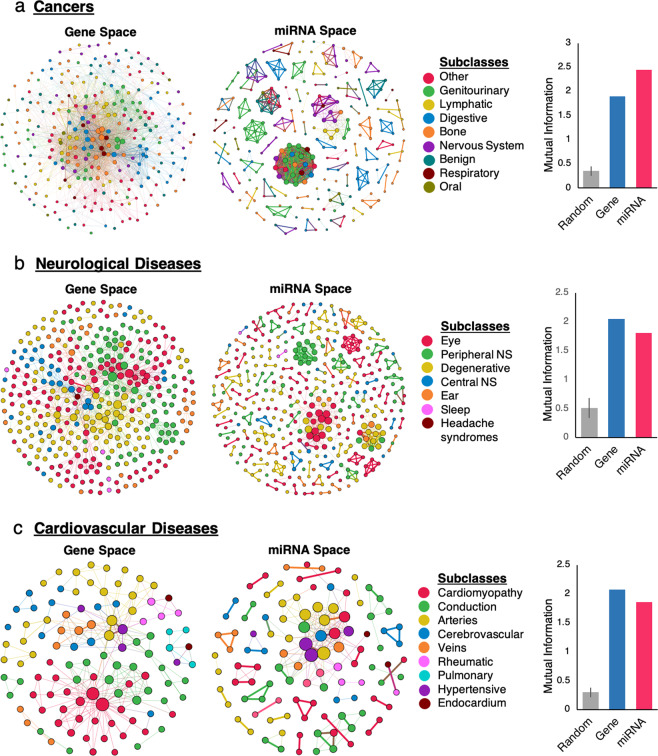
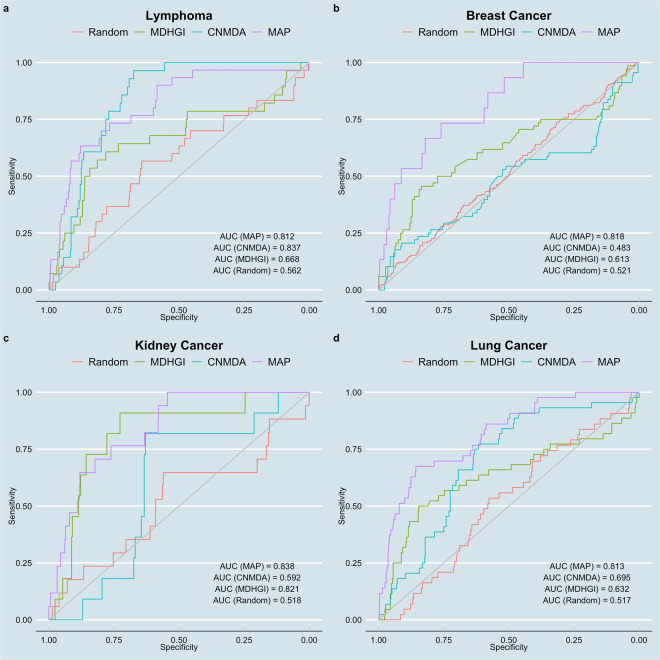
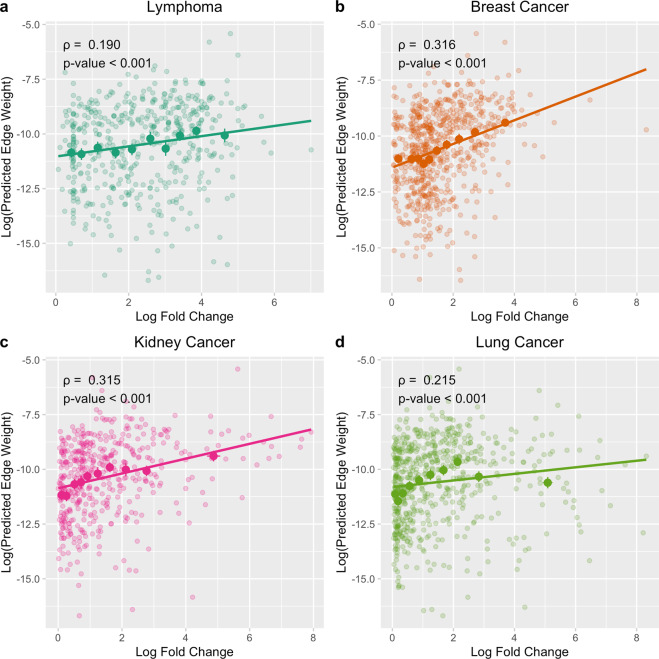
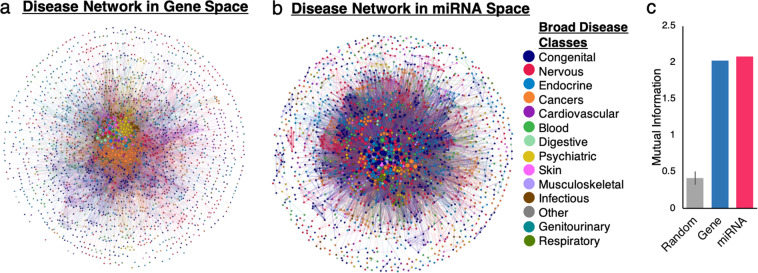
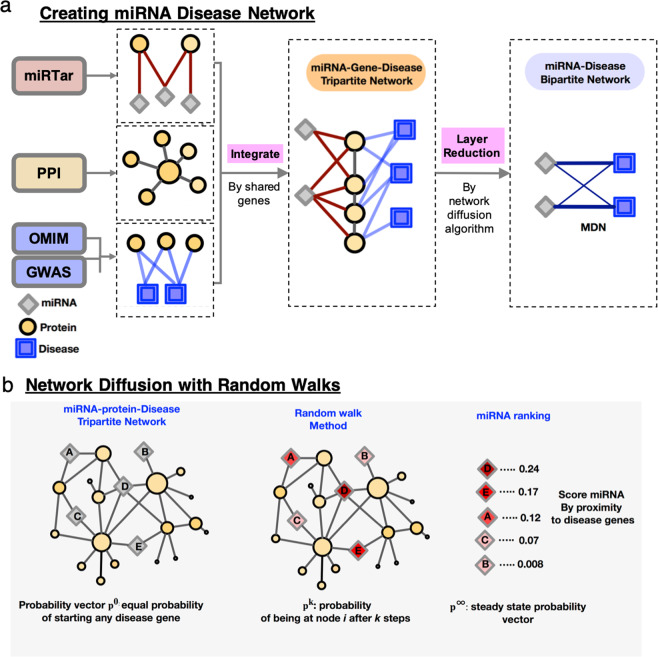
With critical roles in regulating gene expression, miRNAs are strongly implicated in the pathophysiology of many complex diseases. Experimental methods to determine disease related miRNAs are time consuming and costly. Computationally predicting miRNA-disease associations has potential applications in finding miRNA therapeutic pathways and in understanding the role of miRNAs in disease-disease relationships. In this study, we propose the MiRNA-disease Association Prediction (MAP) method, an in-silico method to predict and prioritize miRNA-disease associations. The MAP method applies a network diffusion approach, starting from the known disease genes in a heterogenous network constructed from miRNA-gene associations, protein-protein interactions, and gene-disease associations. Validation using experimental data on miRNA-disease associations demonstrated superior performance to two current state-of-the-art methods, with areas under the ROC curve all over 0.8 for four types of cancer. MAP is successfully applied to predict differential miRNA expression in four cancer types. Most strikingly, disease-disease relationships in terms of shared miRNAs revealed hidden disease subtyping comparable to that of previous work on shared genes between diseases, with applications for multi-omics characterization of disease relationships.

摘要

miRNAs 在调节基因表达方面发挥着关键作用,强烈提示它们与许多复杂疾病的病理生理学有关。用于确定与疾病相关的 miRNAs 的实验方法既耗时又昂贵。计算预测 miRNA 与疾病的关联具有在寻找 miRNA 治疗途径和理解 miRNA 在疾病-疾病关系中的作用方面的潜在应用。在这项研究中,我们提出了 miRNA 疾病关联预测 (MAP) 方法,这是一种用于预测和优先考虑 miRNA 与疾病关联的计算方法。MAP 方法应用网络扩散方法,从从 miRNA-基因关联、蛋白质-蛋白质相互作用和基因-疾病关联构建的异质网络中的已知疾病基因开始。使用 miRNA 与疾病关联的实验数据进行验证表明,该方法的性能优于两种当前最先进的方法,四种类型癌症的 ROC 曲线下面积均超过 0.8。MAP 成功应用于预测四种癌症类型中差异表达的 miRNA。最引人注目的是,根据共享 miRNAs 的疾病-疾病关系揭示了隐藏的疾病亚型,与疾病之间共享基因的先前工作相当,可用于对疾病关系进行多组学特征描述。
https://cdn.ncbi.nlm.nih.gov/pmc/blobs/6281/7251138/bcf10c7a5d62/41598_2020_65633_Fig5_HTML.jpg
https://cdn.ncbi.nlm.nih.gov/pmc/blobs/6281/7251138/67f9b2bdf72c/41598_2020_65633_Fig1_HTML.jpg
https://cdn.ncbi.nlm.nih.gov/pmc/blobs/6281/7251138/51264e79c383/41598_2020_65633_Fig2_HTML.jpg
https://cdn.ncbi.nlm.nih.gov/pmc/blobs/6281/7251138/4f8766cc8df2/41598_2020_65633_Fig3_HTML.jpg
https://cdn.ncbi.nlm.nih.gov/pmc/blobs/6281/7251138/c61e923a1cd0/41598_2020_65633_Fig4_HTML.jpg
https://cdn.ncbi.nlm.nih.gov/pmc/blobs/6281/7251138/bcf10c7a5d62/41598_2020_65633_Fig5_HTML.jpg
https://cdn.ncbi.nlm.nih.gov/pmc/blobs/6281/7251138/67f9b2bdf72c/41598_2020_65633_Fig1_HTML.jpg
https://cdn.ncbi.nlm.nih.gov/pmc/blobs/6281/7251138/51264e79c383/41598_2020_65633_Fig2_HTML.jpg
https://cdn.ncbi.nlm.nih.gov/pmc/blobs/6281/7251138/4f8766cc8df2/41598_2020_65633_Fig3_HTML.jpg
https://cdn.ncbi.nlm.nih.gov/pmc/blobs/6281/7251138/c61e923a1cd0/41598_2020_65633_Fig4_HTML.jpg
https://cdn.ncbi.nlm.nih.gov/pmc/blobs/6281/7251138/bcf10c7a5d62/41598_2020_65633_Fig5_HTML.jpg

相似文献

1
Predicting miRNA-based disease-disease relationships through network diffusion on multi-omics biological data.通过多组学生物数据网络扩散预测基于 miRNA 的疾病-疾病关系。
Sci Rep. 2020 May 26;10(1):8705. doi: 10.1038/s41598-020-65633-6.
2
DNRLMF-MDA:Predicting microRNA-Disease Associations Based on Similarities of microRNAs and Diseases.DNRLMF-MDA:基于 miRNA 和疾病相似性预测 miRNA-疾病关联。
IEEE/ACM Trans Comput Biol Bioinform. 2019 Jan-Feb;16(1):233-243. doi: 10.1109/TCBB.2017.2776101. Epub 2017 Nov 22.
3
NEMPD: a network embedding-based method for predicting miRNA-disease associations by preserving behavior and attribute information.NEMPD:一种基于网络嵌入的方法,通过保留行为和属性信息来预测 miRNA-疾病关联。
BMC Bioinformatics. 2020 Sep 10;21(1):401. doi: 10.1186/s12859-020-03716-x.
4
WBNPMD: weighted bipartite network projection for microRNA-disease association prediction.WBNPMD:用于 miRNA-疾病关联预测的加权二分网络投影。
J Transl Med. 2019 Sep 23;17(1):322. doi: 10.1186/s12967-019-2063-4.
5
An improved random forest-based computational model for predicting novel miRNA-disease associations.基于随机森林的新型 miRNA-疾病关联预测计算模型的改进。
BMC Bioinformatics. 2019 Dec 3;20(1):624. doi: 10.1186/s12859-019-3290-7.
6
Inferring the Disease-Associated miRNAs Based on Network Representation Learning and Convolutional Neural Networks.基于网络表示学习和卷积神经网络的疾病相关 miRNA 推断。
Int J Mol Sci. 2019 Jul 25;20(15):3648. doi: 10.3390/ijms20153648.
7
MCMDA: Matrix completion for MiRNA-disease association prediction.MCMDA:用于miRNA-疾病关联预测的矩阵补全
Oncotarget. 2017 Mar 28;8(13):21187-21199. doi: 10.18632/oncotarget.15061.
8
NDAMDA: Network distance analysis for MiRNA-disease association prediction.NDAMDA:用于 miRNA-疾病关联预测的网络距离分析。
J Cell Mol Med. 2018 May;22(5):2884-2895. doi: 10.1111/jcmm.13583. Epub 2018 Mar 13.
9
A Novel Computational Model for Predicting microRNA-Disease Associations Based on Heterogeneous Graph Convolutional Networks.基于异质图卷积网络的 miRNA-疾病关联预测新型计算模型。
Cells. 2019 Aug 26;8(9):977. doi: 10.3390/cells8090977.
10
Improved Prediction of miRNA-Disease Associations Based on Matrix Completion with Network Regularization.基于矩阵补全和网络正则化的 miRNA-疾病关联预测方法的改进。
Cells. 2020 Apr 3;9(4):881. doi: 10.3390/cells9040881.

引用本文的文献

1
Non-coding RNAs: the architects of placental development and pregnancy success.非编码RNA:胎盘发育与妊娠成功的构建者。
Mol Genet Genomics. 2025 Mar 30;300(1):39. doi: 10.1007/s00438-025-02244-8.
2
Serum and Plasma miRNA Expression Levels in Sudden Sensorineural Hearing Loss.突发性感音神经性听力损失患者血清和血浆中 miRNA 的表达水平
Int J Mol Sci. 2025 Jan 31;26(3):1245. doi: 10.3390/ijms26031245.
3
Non-coding RNAs in exercise immunology: A systematic review.非编码 RNA 在运动免疫学中的作用:系统评价。

本文引用的文献

1
LSGSP: a novel miRNA-disease association prediction model using a Laplacian score of the graphs and space projection federated method.LSGSP:一种使用图的拉普拉斯分数和空间投影联邦方法的新型miRNA-疾病关联预测模型。
RSC Adv. 2019 Sep 20;9(51):29747-29759. doi: 10.1039/c9ra05554a. eCollection 2019 Sep 18.
2
Adaptive multi-source multi-view latent feature learning for inferring potential disease-associated miRNAs.自适应多源多视图潜在特征学习用于推断潜在的疾病相关 miRNA。
Brief Bioinform. 2021 Mar 22;22(2):2043-2057. doi: 10.1093/bib/bbaa028.
3
Neural inductive matrix completion with graph convolutional networks for miRNA-disease association prediction.
J Sport Health Sci. 2024 May;13(3):311-338. doi: 10.1016/j.jshs.2023.11.001. Epub 2023 Nov 3.
4
Modular networks and genomic variation during progression from stable angina pectoris through ischemic cardiomyopathy to chronic heart failure.从稳定性心绞痛经缺血性心肌病进展至慢性心力衰竭过程中模块化网络和基因组变异。
Mol Med. 2022 Nov 26;28(1):140. doi: 10.1186/s10020-022-00569-3.
5
The Mechanistic Roles of Sirtuins in Breast and Prostate Cancer.沉默调节蛋白在乳腺癌和前列腺癌中的作用机制
Cancers (Basel). 2022 Oct 19;14(20):5118. doi: 10.3390/cancers14205118.
6
Analysing miRNA-Target Gene Networks in Inflammatory Bowel Disease and Other Complex Diseases Using Transcriptomic Data.利用转录组数据分析炎症性肠病和其他复杂疾病中的miRNA-靶基因网络
Genes (Basel). 2022 Feb 18;13(2):370. doi: 10.3390/genes13020370.
7
Inferring miRNA-disease associations using collaborative filtering and resource allocation on a tripartite graph.基于三节点图的协同过滤和资源分配推断 miRNA-疾病关联。
BMC Med Genomics. 2021 Nov 17;14(Suppl 3):225. doi: 10.1186/s12920-021-01078-8.
8
Risk Prediction of Cardiovascular Events by Exploration of Molecular Data with Explainable Artificial Intelligence.利用可解释人工智能探索分子数据预测心血管事件风险。
Int J Mol Sci. 2021 Sep 24;22(19):10291. doi: 10.3390/ijms221910291.
9
Efficient framework for predicting MiRNA-disease associations based on improved hybrid collaborative filtering.基于改进的混合协同过滤的 miRNA 疾病关联预测高效框架。
BMC Med Inform Decis Mak. 2021 Aug 30;21(Suppl 1):254. doi: 10.1186/s12911-021-01616-5.
10
Role of Exosomal MicroRNAs and Their Crosstalk with Oxidative Stress in the Pathogenesis of Osteoporosis.外泌体 microRNAs 在骨质疏松症发病机制中的作用及其与氧化应激的相互作用。
Oxid Med Cell Longev. 2021 Jul 19;2021:6301433. doi: 10.1155/2021/6301433. eCollection 2021.
基于图卷积网络的神经归纳矩阵补全在 miRNA-疾病关联预测中的应用。
Bioinformatics. 2020 Apr 15;36(8):2538-2546. doi: 10.1093/bioinformatics/btz965.
4
In silico prediction of potential miRNA-disease association using an integrative bioinformatics approach based on kernel fusion.基于核融合的整合生物信息学方法预测潜在 miRNA 疾病关联的计算方法
J Cell Mol Med. 2020 Jan;24(1):573-587. doi: 10.1111/jcmm.14765. Epub 2019 Nov 20.
5
miRTarBase 2020: updates to the experimentally validated microRNA-target interaction database.miRTarBase 2020:实验验证的 microRNA-靶标相互作用数据库更新。
Nucleic Acids Res. 2020 Jan 8;48(D1):D148-D154. doi: 10.1093/nar/gkz896.
6
Network Diffusion Approach to Predict LncRNA Disease Associations Using Multi-Type Biological Networks: LION.基于多类型生物网络的预测lncRNA与疾病关联的网络扩散方法:LION
Front Physiol. 2019 Jul 16;10:888. doi: 10.3389/fphys.2019.00888. eCollection 2019.
7
Prediction of Potential Disease-Associated MicroRNAs by Using Neural Networks.利用神经网络预测潜在的疾病相关微小RNA
Mol Ther Nucleic Acids. 2019 Jun 7;16:566-575. doi: 10.1016/j.omtn.2019.04.010. Epub 2019 Apr 18.
8
Inferring microRNA-disease association by hybrid recommendation algorithm and unbalanced bi-random walk on heterogeneous network.基于混合推荐算法和非平衡双随机游走的异质网络 miRNA-疾病关联推断。
Sci Rep. 2019 Feb 21;9(1):2474. doi: 10.1038/s41598-019-39226-x.
9
Prediction of potential disease-associated microRNAs by composite network based inference.基于复合网络推断预测潜在疾病相关 microRNAs。
Sci Rep. 2018 Oct 25;8(1):15813. doi: 10.1038/s41598-018-34180-6.
10
Integration of Molecular Interactome and Targeted Interaction Analysis to Identify a COPD Disease Network Module.整合分子互作组和靶向互作分析以识别 COPD 疾病网络模块。
Sci Rep. 2018 Sep 27;8(1):14439. doi: 10.1038/s41598-018-32173-z.