Sorensen Patrick O, Beller Harry R, Bill Markus, Bouskill Nicholas J, Hubbard Susan S, Karaoz Ulas, Polussa Alexander, Steltzer Heidi, Wang Shi, Williams Kenneth H, Wu Yuxin, Brodie Eoin L
Earth and Environmental Sciences, Lawrence Berkeley National Laboratory, Berkeley, CA, United States.
School of Forestry and Environmental Studies, Yale University, New Haven, CT, United States.
Front Microbiol. 2020 May 15;11:871. doi: 10.3389/fmicb.2020.00871. eCollection 2020.
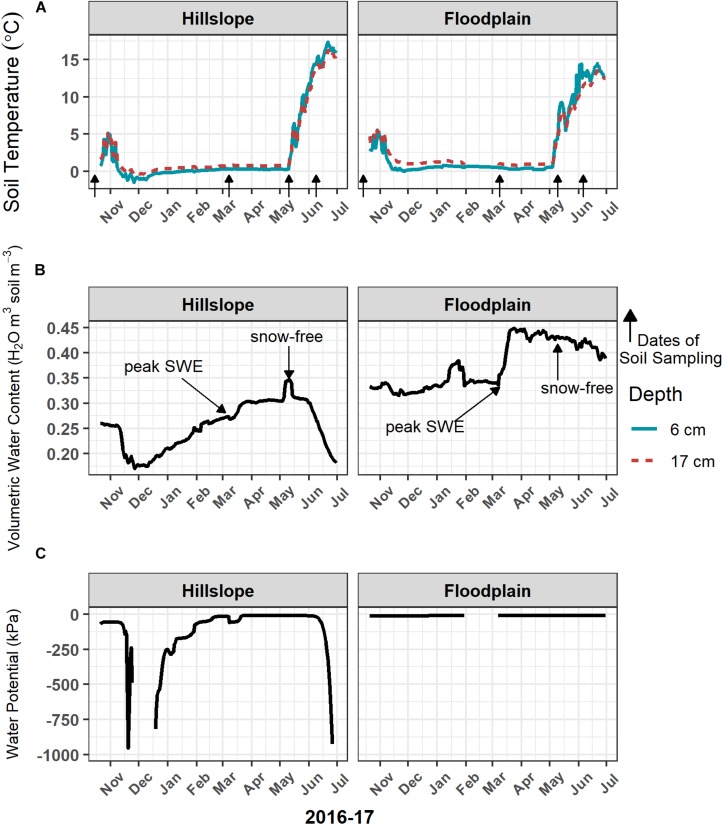
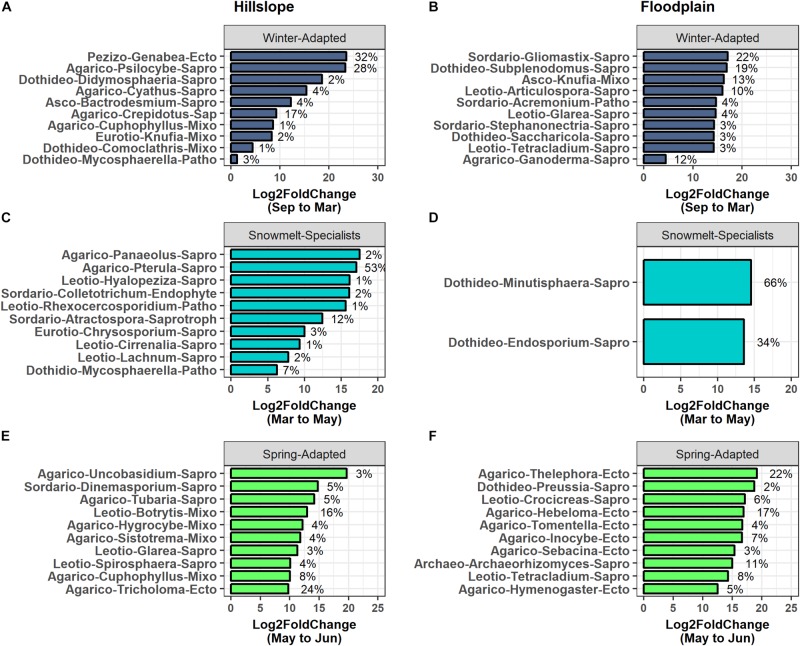
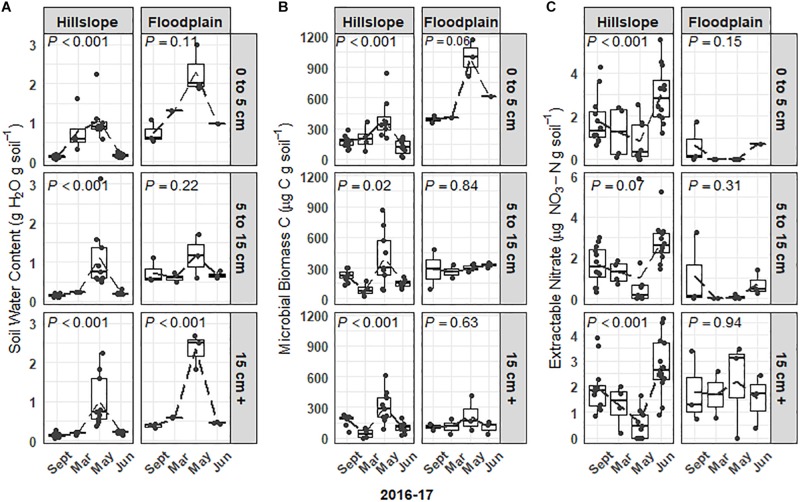
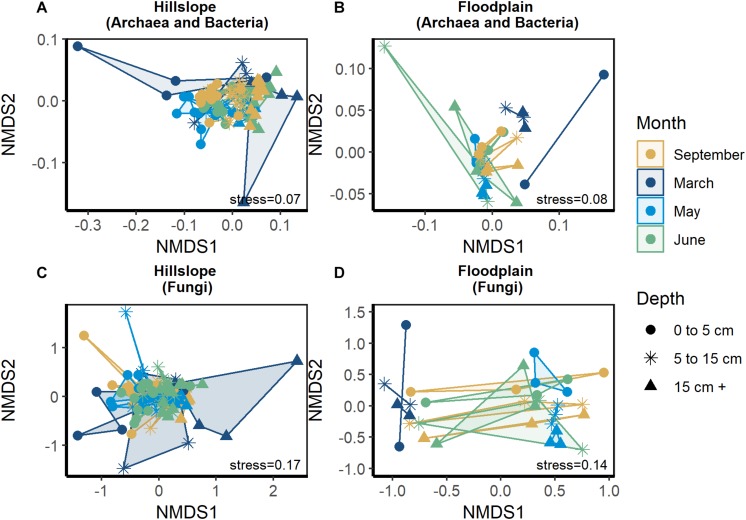
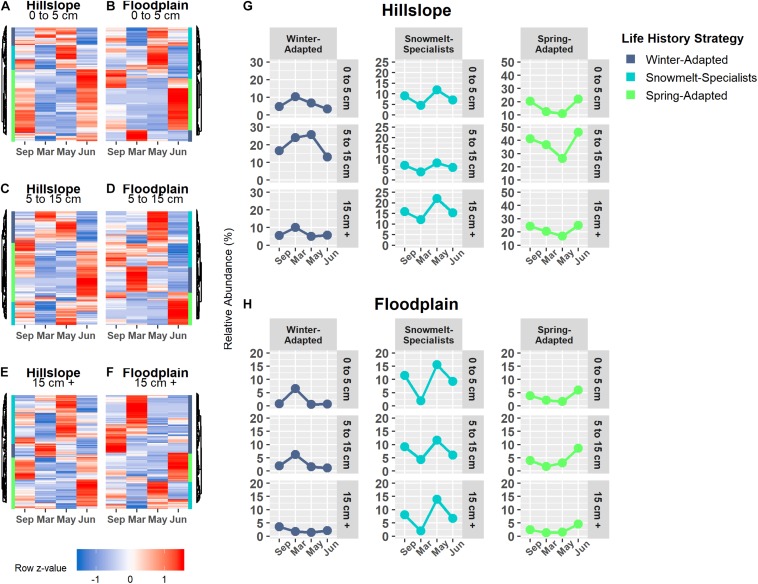
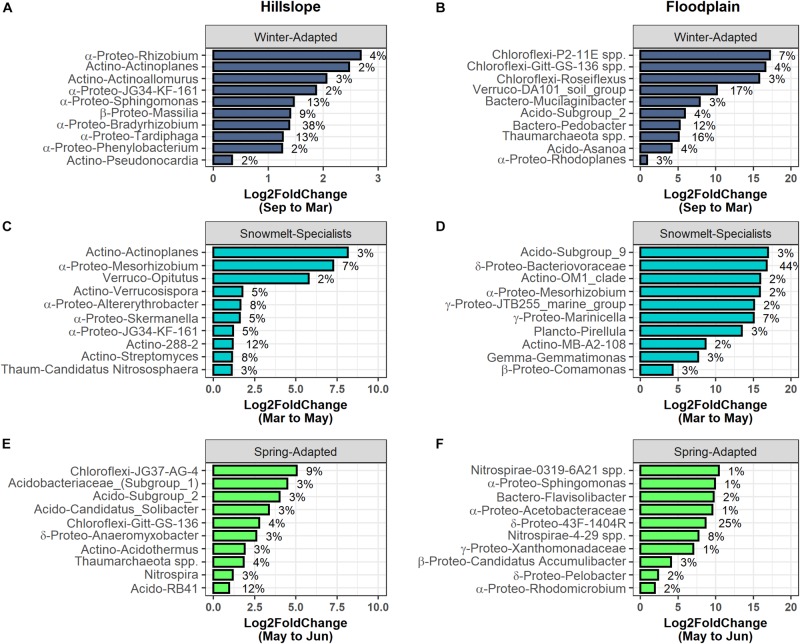
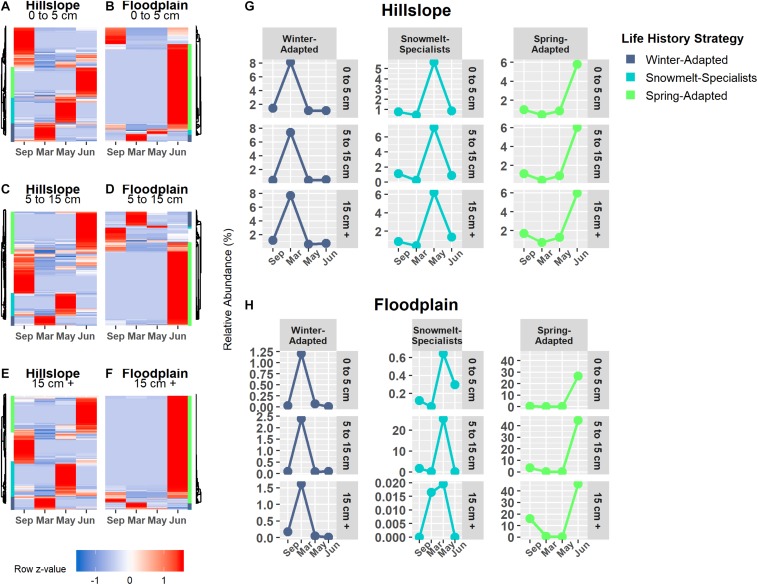
Soil microbial biomass can reach its annual maximum pool size beneath the winter snowpack and is known to decline abruptly following snowmelt in seasonally snow-covered ecosystems. Observed differences in winter versus summer microbial taxonomic composition also suggests that phylogenetically conserved traits may permit winter- versus summer-adapted microorganisms to occupy distinct niches. In this study, we sought to identify archaea, bacteria, and fungi that are associated with the soil microbial bloom overwinter and the subsequent biomass collapse following snowmelt at a high-altitude watershed in central Colorado, United States. Archaea, bacteria, and fungi were categorized into three life strategies (Winter-Adapted, Snowmelt-Specialist, Spring-Adapted) based upon changes in abundance during winter, the snowmelt period, and after snowmelt in spring. We calculated indices of phylogenetic relatedness (archaea and bacteria) or assigned functional attributes (fungi) to organisms within life strategies to infer whether phylogenetically conserved traits differentiate Winter-Adapted, Snowmelt-Specialist, and Spring-Adapted groups. We observed that the soil microbial bloom was correlated in time with a pulse of snowmelt infiltration, which commenced 65 days prior to soils becoming snow-free. A pulse of nitrogen (N, as nitrate) occurred after snowmelt, along with a collapse in the microbial biomass pool size, and an increased abundance of nitrifying archaea and bacteria (e.g., Thaumarchaeota, Nitrospirae). Winter- and Spring-Adapted archaea and bacteria were phylogenetically clustered, suggesting that phylogenetically conserved traits allow Winter- and Spring-Adapted archaea and bacteria to occupy distinct niches. In contrast, Snowmelt-Specialist archaea and bacteria were phylogenetically overdispersed, suggesting that the key mechanism(s) of the microbial biomass crash are likely to be density-dependent (e.g., trophic interactions, competitive exclusion) and affect organisms across a broad phylogenetic spectrum. Saprotrophic fungi were the dominant functional group across fungal life strategies, however, ectomycorrhizal fungi experienced a large increase in abundance in spring. If well-coupled plant-mycorrhizal phenology currently buffers ecosystem N losses in spring, then changes in snowmelt timing may alter ecosystem N retention potential. Overall, we observed that snowmelt separates three distinct soil niches that are occupied by ecologically distinct groups of microorganisms. This ecological differentiation is of biogeochemical importance, particularly with respect to the mobilization of nitrogen during winter, before and after snowmelt.
在季节性积雪生态系统中,土壤微生物生物量在冬季积雪层下可达到年度最大储量,且已知在融雪后会急剧下降。冬季与夏季微生物分类组成的差异也表明,系统发育保守性状可能使适应冬季与夏季的微生物占据不同的生态位。在本研究中,我们试图在美国科罗拉多州中部一个高海拔流域识别与冬季土壤微生物大量繁殖以及随后融雪后生物量崩溃相关的古菌、细菌和真菌。根据冬季、融雪期和春季融雪后丰度的变化,将古菌、细菌和真菌分为三种生活策略(适应冬季、融雪特化、适应春季)。我们计算了系统发育相关性指数(古菌和细菌)或为生活策略中的生物体赋予功能属性(真菌),以推断系统发育保守性状是否能区分适应冬季、融雪特化和适应春季的群体。我们观察到土壤微生物大量繁殖在时间上与融雪入渗脉冲相关,融雪入渗在土壤无雪前65天开始。融雪后出现氮脉冲(以硝酸盐形式的氮),同时微生物生物量储量下降,硝化古菌和细菌(如奇古菌门、硝化螺旋菌门)丰度增加。适应冬季和春季的古菌和细菌在系统发育上聚类,表明系统发育保守性状使适应冬季和春季的古菌和细菌占据不同的生态位。相比之下,融雪特化的古菌和细菌在系统发育上过度分散,表明微生物生物量崩溃的关键机制可能是密度依赖性的(如营养相互作用、竞争排斥),并影响广泛系统发育谱系中的生物体。腐生真菌是真菌生活策略中的主要功能组,然而,外生菌根真菌在春季丰度大幅增加。如果目前良好耦合的植物 - 菌根物候缓冲了春季生态系统的氮损失,那么融雪时间的变化可能会改变生态系统的氮保留潜力。总体而言,我们观察到融雪将三个不同的土壤生态位分隔开,这些生态位由生态上不同的微生物群体占据。这种生态分化具有生物地球化学重要性,特别是在冬季融雪前后氮的迁移方面。