Mateo-Otero Yentel, Sánchez José María, Recuero Sandra, Bagés-Arnal Sandra, McDonald Michael, Kenny David A, Yeste Marc, Lonergan Pat, Fernandez-Fuertes Beatriz
Biotechnology of Animal and Human Reproduction (TechnoSperm), Institute of Food and Agricultural Technology, University of Girona, Girona, Spain.
Unit of Cell Biology, Department of Biology, Faculty of Sciences, University of Girona, Girona, Spain.
Front Cell Dev Biol. 2020 May 12;8:341. doi: 10.3389/fcell.2020.00341. eCollection 2020.
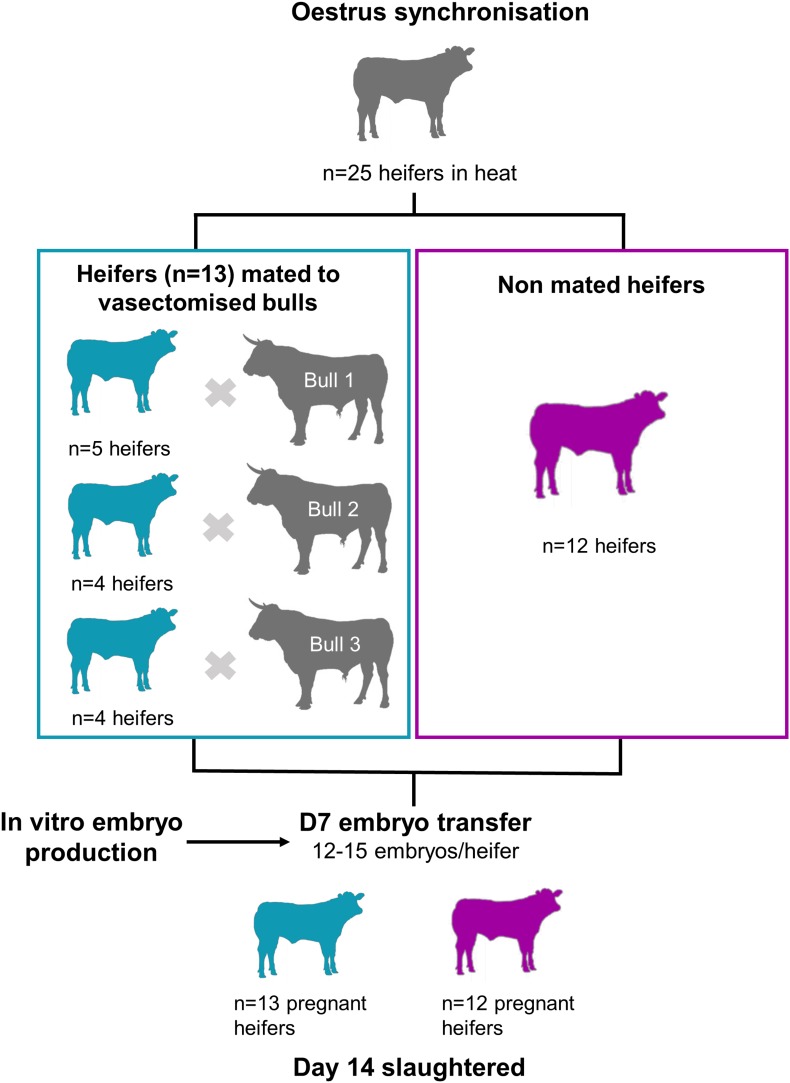
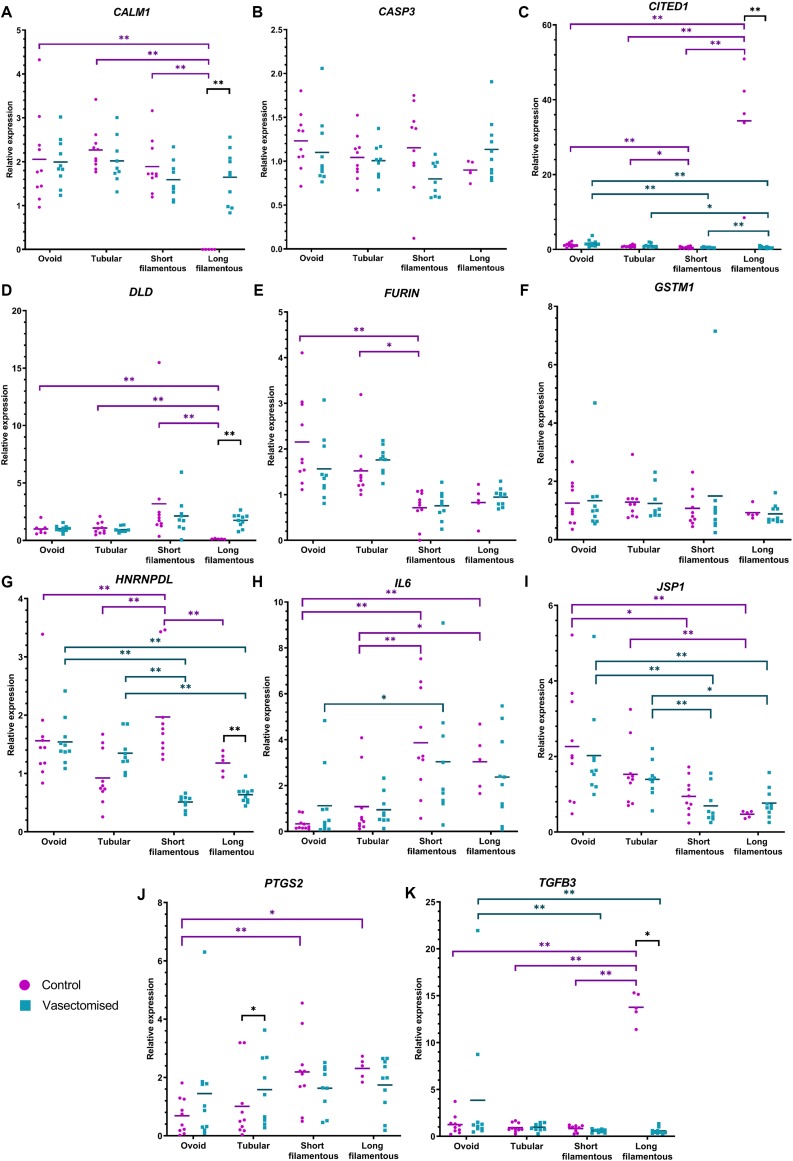
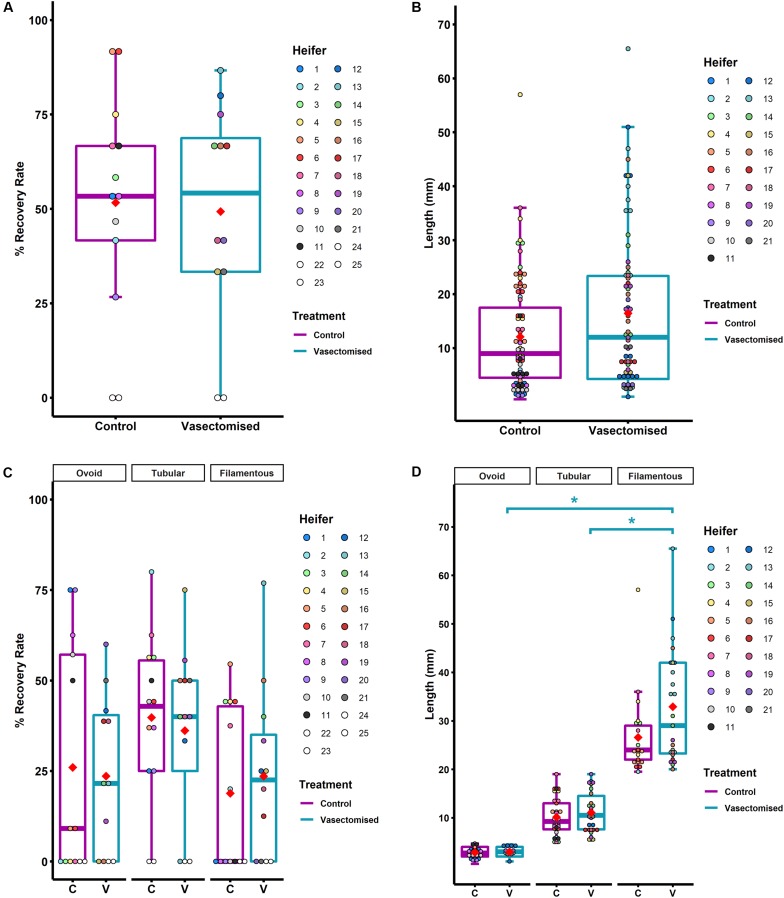
A growing body of evidence suggests that paternal factors have an impact on offspring development. These studies have been mainly carried out in mice, where seminal plasma (SP) has been shown to regulate endometrial gene expression and impact embryo development and subsequent offspring health. In cattle, infusion of SP into the uterus also induces changes in endometrial gene expression, however, evidence for an effect of SP on early embryo development is lacking. In addition, during natural mating, the bull ejaculates in the vagina; hence, it is not clear whether any SP reaches the uterus in this species. Thus, the aim of the present study was to determine whether SP exposure leads to improved early embryo survival and developmental rates in cattle. To this end, Day 7 produced blastocysts were transferred to heifers (12-15 per heifer) previously mated to vasectomized bulls ( = 13 heifers) or left unmated ( = 12 heifers; control). At Day 14, heifers were slaughtered, and conceptuses were recovered to assess size, morphology and expression of candidate genes involved in different developmental pathways. Additionally, CL volume at Day 7, and weight and volume of CL at Day 14 were recorded. No effect of SP on CL volume and weight not on conceptus recovery rate was observed. However, filamentous conceptuses recovered from SP-exposed heifers were longer in comparison to the control group and differed in expression of , , , , , and . In conclusion, data indicate that female exposure to SP during natural mating can affect conceptus development in cattle. This is probably achieved through modulation of the female reproductive environment at the time of mating.
越来越多的证据表明,父系因素会对后代发育产生影响。这些研究主要在小鼠中进行,在小鼠中,精浆(SP)已被证明可调节子宫内膜基因表达,并影响胚胎发育及后续后代健康。在牛中,将SP注入子宫也会诱导子宫内膜基因表达发生变化,然而,缺乏SP对早期胚胎发育有影响的证据。此外,在自然交配过程中,公牛在阴道内射精;因此,尚不清楚在该物种中是否有任何SP能到达子宫。因此,本研究的目的是确定暴露于SP是否能提高牛早期胚胎的存活率和发育率。为此,将第7天产生的囊胚移植到先前与输精管结扎公牛交配过的小母牛(每头小母牛12 - 15个囊胚)( = 13头小母牛)或未交配的小母牛( = 12头小母牛;对照组)体内。在第14天,宰杀小母牛,并回收孕体以评估其大小、形态以及参与不同发育途径的候选基因的表达。此外,记录第7天的黄体体积以及第14天黄体的重量和体积。未观察到SP对黄体体积和重量以及孕体回收率有影响。然而,与对照组相比,从暴露于SP的小母牛体内回收的丝状孕体更长,并且在 、 、 、 、 和 的表达上存在差异。总之,数据表明在自然交配期间雌性暴露于SP会影响牛的孕体发育。这可能是通过在交配时调节雌性生殖环境来实现的。