Hiramoto Masaki, Cline Hollis T
The Dorris Neuroscience Center, Department of Neuroscience, The Scripps Research Institute, 10550 North Torrey Pines Road, La Jolla, CA 92037, USA.
The Dorris Neuroscience Center, Department of Neuroscience, The Scripps Research Institute, 10550 North Torrey Pines Road, La Jolla, CA 92037, USA.
iScience. 2020 Jun 26;23(6):101130. doi: 10.1016/j.isci.2020.101130. Epub 2020 May 1.
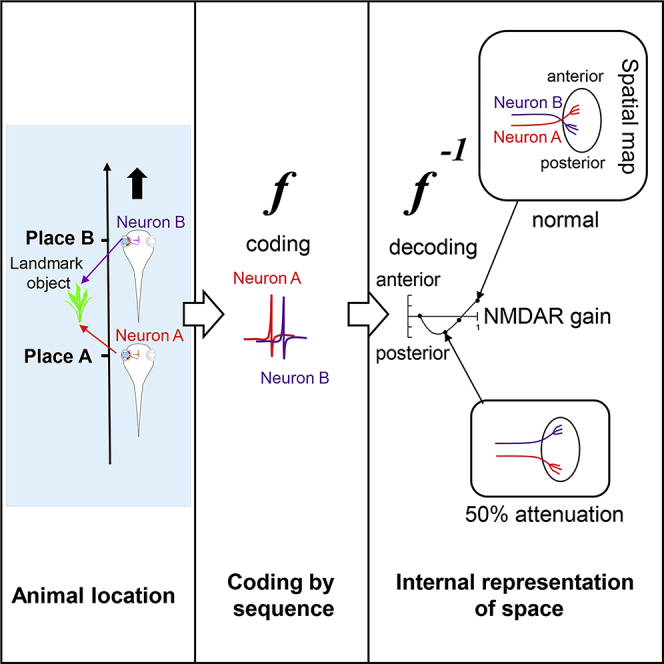
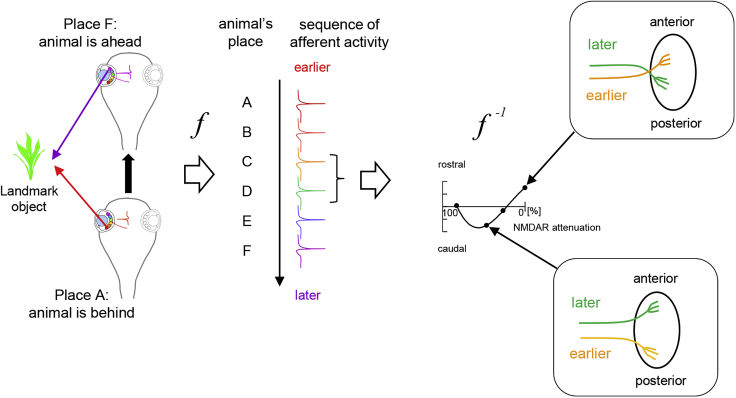
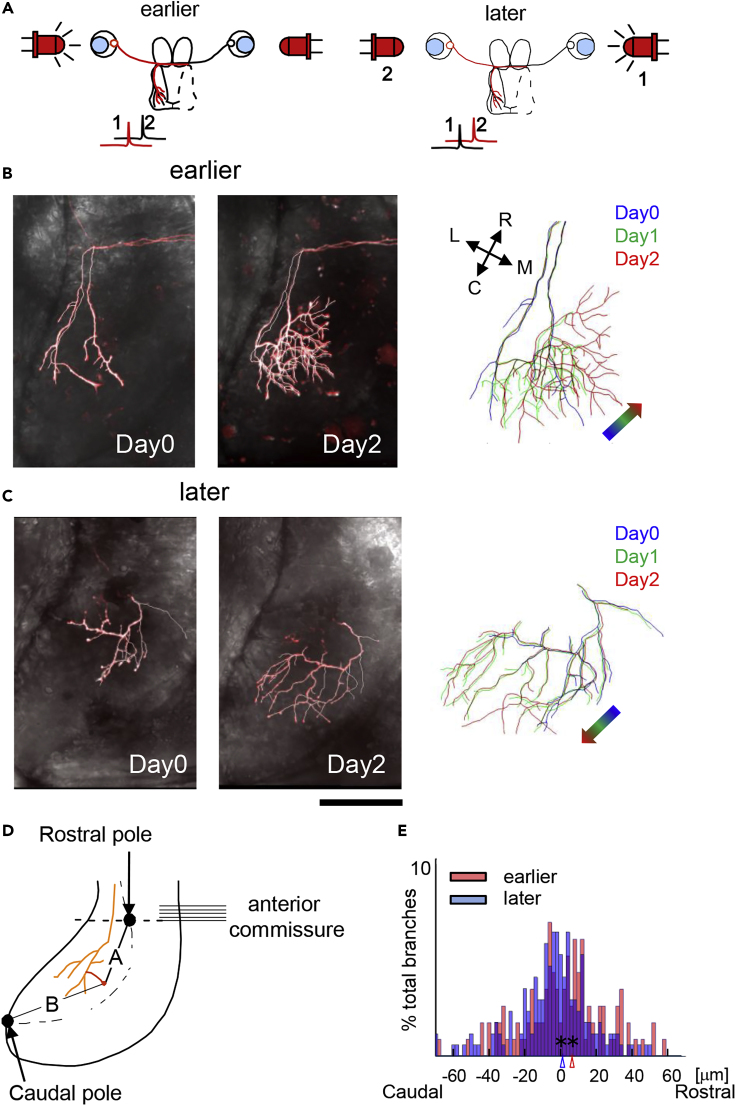
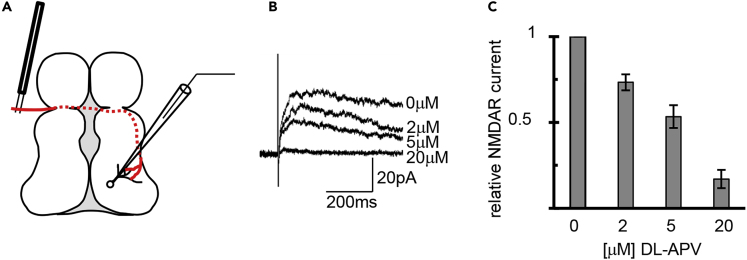
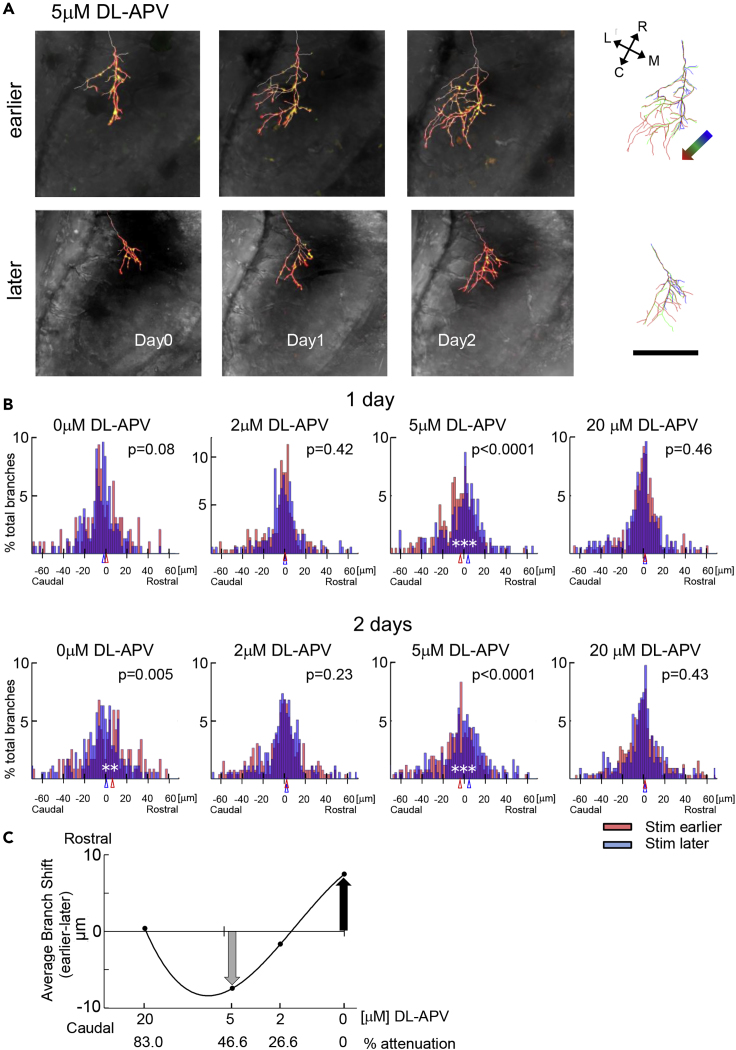
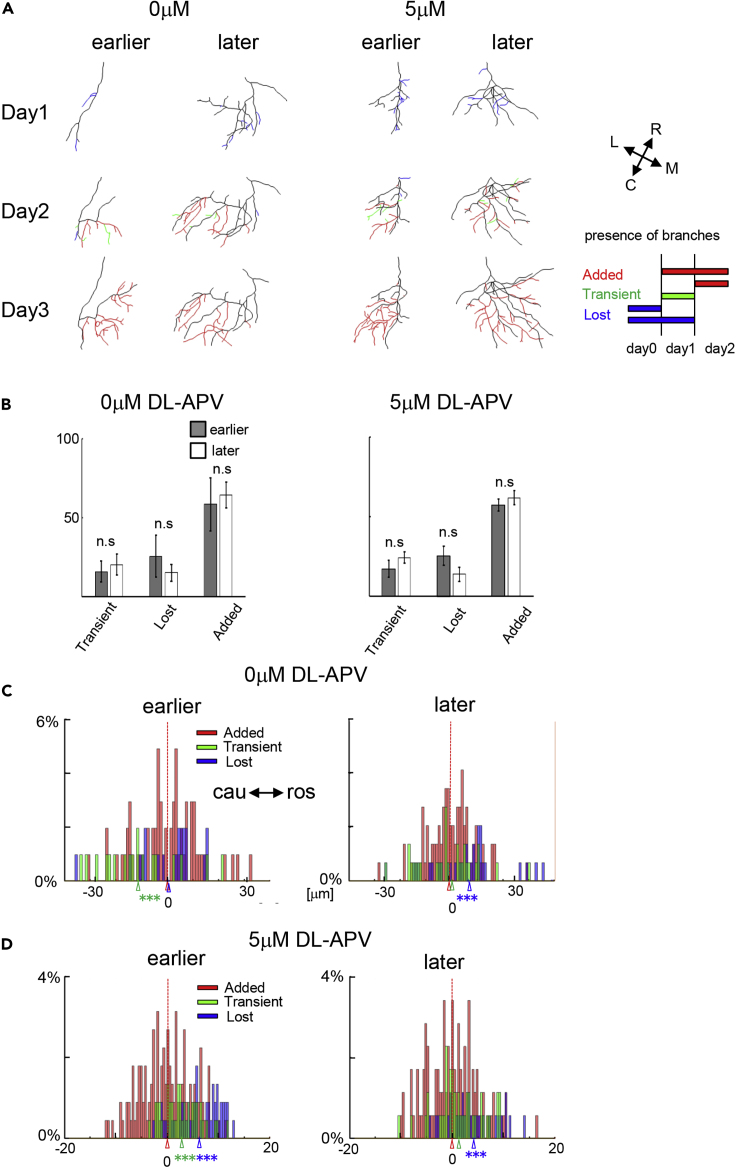
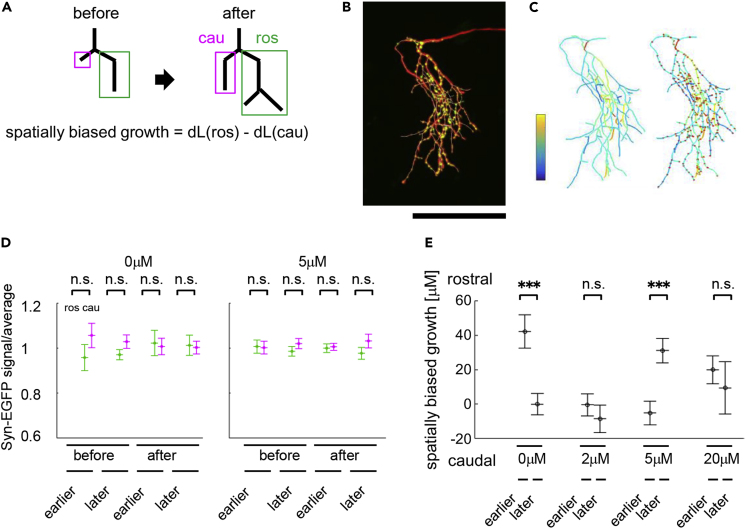
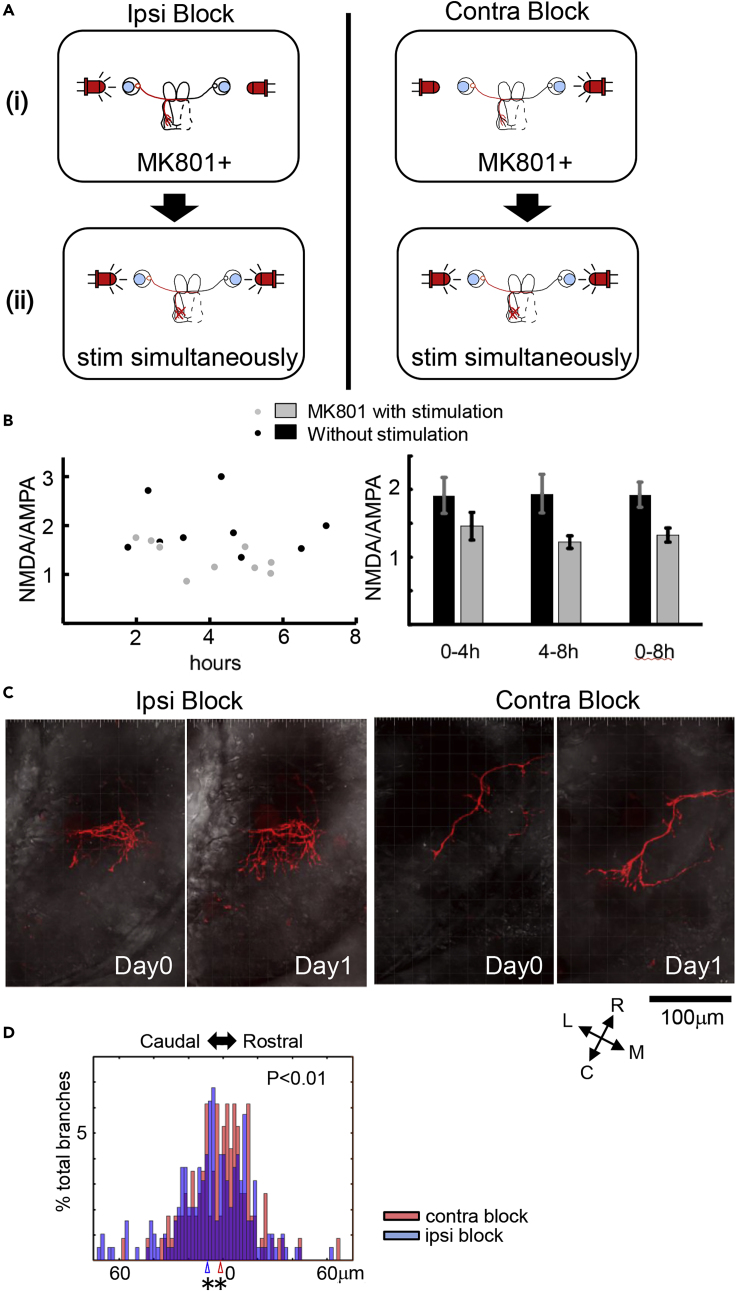
Spatial representations of the sensory world are important for brain function. Timing is an essential component of sensory information. Many brain circuits transform the temporal sequence of input activity into spatial maps; however, the mechanisms underlying this transformation are unclear. Different N-methyl-D-aspartate receptor (NMDAR) response magnitudes result in synaptic potentiation or depression. We asked whether NMDAR response magnitude also affects the transformation of temporal information into directional spatial maps. We quantified retinotectal axon branch dynamics in Xenopus optic tectum in response to temporal sequences of visual stimulation. Reducing NMDAR responses by 50% inverts the spatial distribution of branch dynamics along the rostrocaudal axis in response to temporal patterns of input, suggesting that the magnitude of NMDAR signaling encodes the temporal sequence of inputs and translates the temporal code into a directional spatial map using structural plasticity-based branch dynamics. We discuss how this NMDAR-dependent decoding mechanism retrieves spatial information from sequential afferent activity.
感觉世界的空间表征对大脑功能至关重要。时间是感觉信息的一个基本组成部分。许多脑回路将输入活动的时间序列转化为空间图谱;然而,这种转化背后的机制尚不清楚。不同的N-甲基-D-天冬氨酸受体(NMDAR)反应强度会导致突触增强或抑制。我们研究了NMDAR反应强度是否也会影响时间信息向定向空间图谱的转化。我们量化了非洲爪蟾视顶盖中视网膜顶盖轴突分支动力学对视觉刺激时间序列的反应。将NMDAR反应降低50%会使分支动力学沿前后轴的空间分布反转,以响应输入的时间模式,这表明NMDAR信号的强度对输入的时间序列进行编码,并利用基于结构可塑性的分支动力学将时间编码转化为定向空间图谱。我们讨论了这种依赖NMDAR的解码机制如何从连续的传入活动中检索空间信息。