Chang Chi-Sheng, Yeh Yu-Tsen, Chien Tsair-Wei, Lin Jui-Chung John, Cheng Bor-Wen, Kuo Shu-Chun
Center for Quality Management, Chi Mei Medical Center, Liouying.
Department of Industrial Engineering and Management, National Yunlin University of Science and Technology, Yunlin.
Medicine (Baltimore). 2020 May 22;99(21):e19925. doi: 10.1097/MD.0000000000019925.
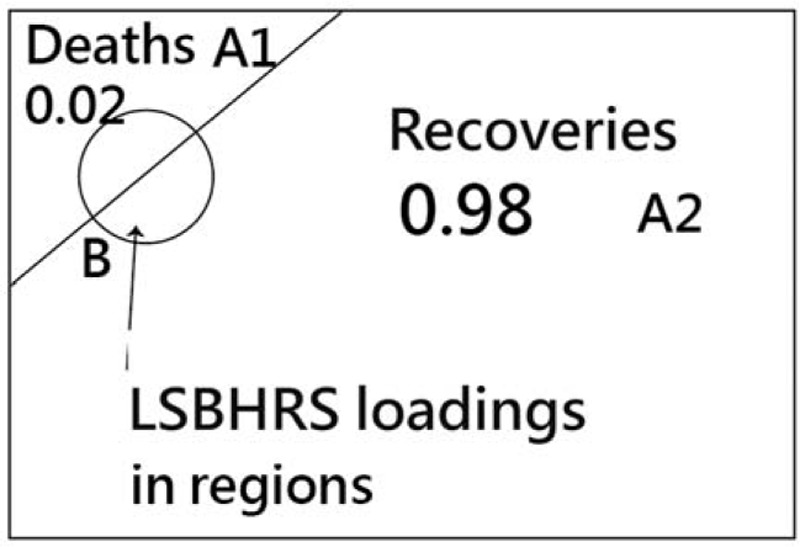
When a new disease such starts to spread, the commonly asked questions are how deadly is it? and how many people are likely to die of this outbreak? The World Health Organization (WHO) announced in a press conference on January 29, 2020 that the death rate of COVID-19 was 2% on the case fatality rate (CFR). It was underestimated assuming no lag days from symptom onset to deaths while many CFR formulas have been proposed, the estimation on Bays theorem is worthy of interpretation. Hence, it is hypothesized that the over-loaded burdens of treating patients and capacities to contain the outbreak (LSBHRS) may increase the CFR.
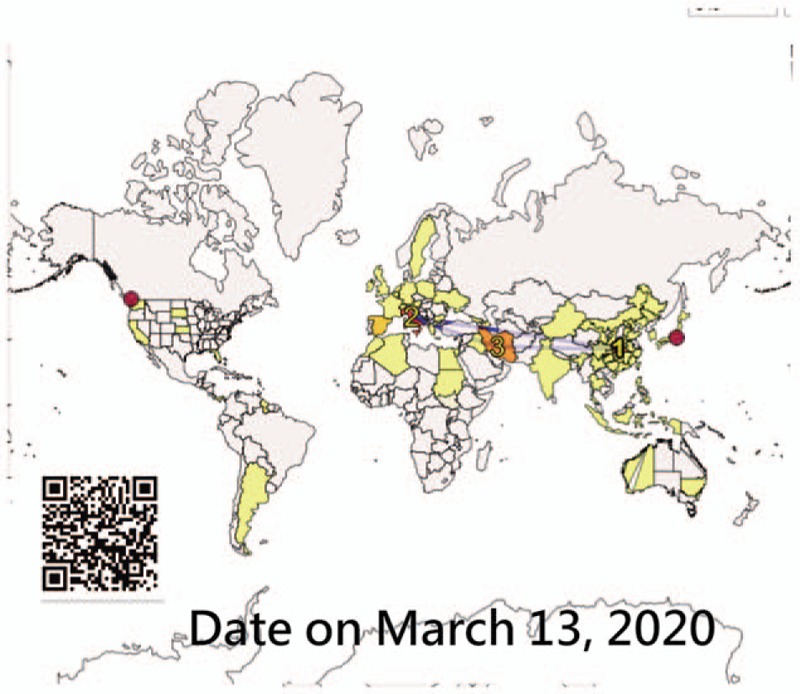
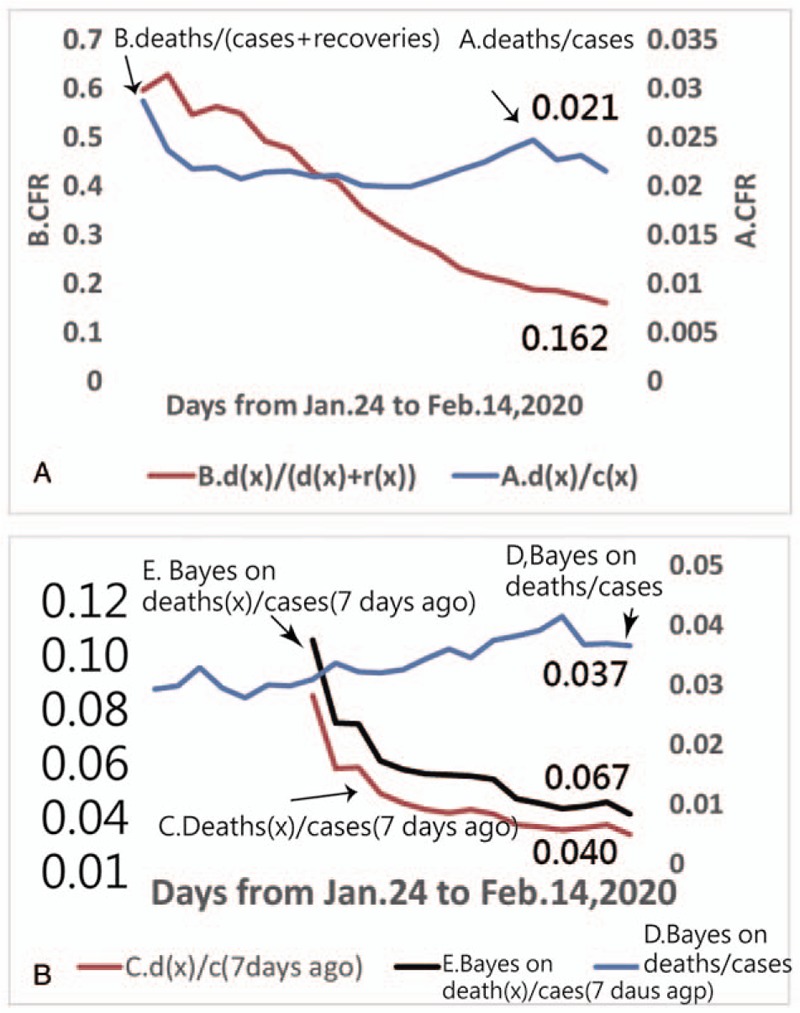
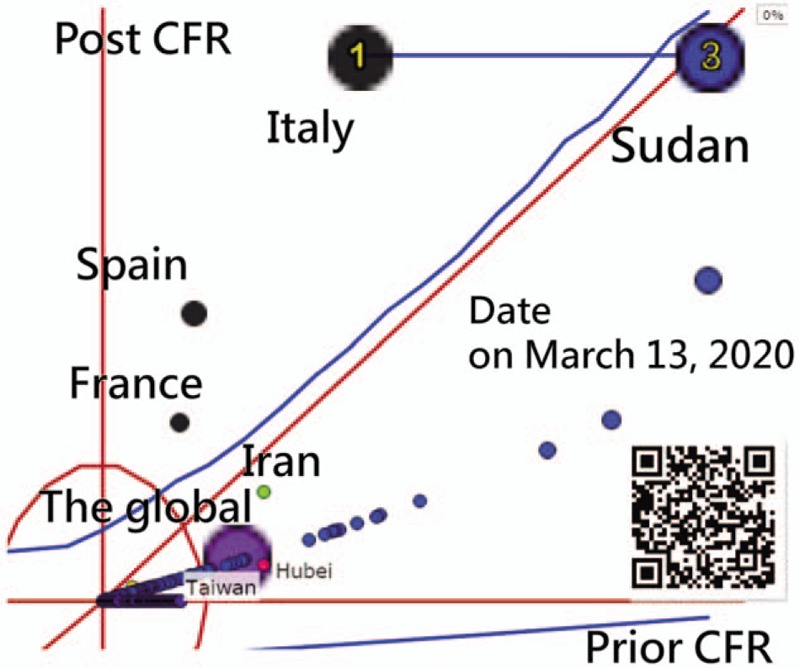
We downloaded COVID-19 outbreak numbers from January 21 to February 14, 2020, in countries/regions on a daily basis from Github that contains information on confirmed cases in >30 Chinese locations and other countries/regions. The pros and cons were compared among the 5 formula of CFR, including [A] deaths/confirmed; [B] deaths/(deaths + recovered); [C] deaths/(cases x days ago); [D] Bayes estimation based on [A] and the outbreak (LSBHRS) in each country/region; and [E] Bayes estimation based on [C] deaths/(cases x days ago). The coefficients of variance (CV = the ratio of the standard deviation to the mean) were applied to measure the relative variability for each CFR. A dashboard was developed for daily display of the CFR across each region.
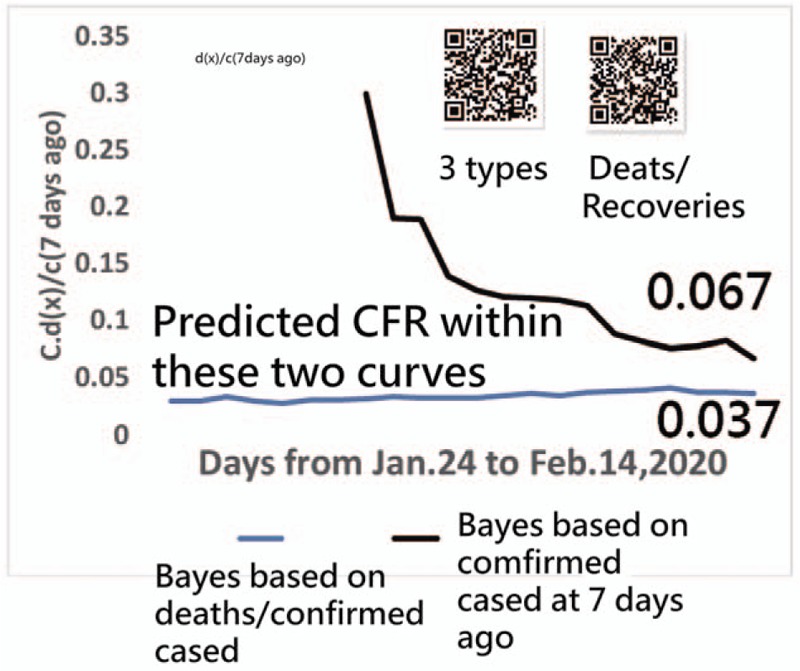
The Bayes based on (A)[D] has the lowest CV (=0.10) followed by the deaths/confirmed (=0.11) [A], deaths/(deaths + recoveries) (=0.42) [B], Bayes based on (C) (=0.49) [E], and deaths/(cases x days ago) (=0.59) [C]. All final CFRs will be equal using the formula (from, A to E). A dashboard was developed for the daily reporting of the CFR. The CFR (3.7%) greater than the prior CFR of 2.2% was evident in LSBHRS, increasing the CFR. A dashboard was created to present the CFRs on COVID-19.
We suggest examining both trends of the Bayes based on both deaths/(cases 7 days ago) and deaths/confirmed cases as a reference to the final CFR. An app developed for displaying the provisional CFR with the 2 CFR trends can improve the underestimated CFR reported by WHO and media.
当一种新疾病开始传播时,常见的问题是它有多致命?以及这次疫情可能导致多少人死亡?世界卫生组织(WHO)在2020年1月29日的新闻发布会上宣布,新冠病毒病的病死率(CFR)为2%。在假设从症状出现到死亡没有延迟天数的情况下,这一数据被低估了。虽然已经提出了许多CFR公式,但基于贝叶斯定理的估计值得解读。因此,假设治疗患者的过重负担和控制疫情的能力(LSBHRS)可能会增加CFR。
我们每天从Github上下载2020年1月21日至2月14日各国/地区的新冠病毒病疫情数据,该数据包含中国30多个地区及其他国家/地区的确诊病例信息。比较了CFR的5种公式的优缺点,包括[A]死亡数/确诊数;[B]死亡数/(死亡数+康复数);[C]死亡数/(病例数×数天前);[D]基于[A]和每个国家/地区疫情(LSBHRS)的贝叶斯估计;以及[E]基于[C]死亡数/(病例数×数天前)的贝叶斯估计。应用方差系数(CV=标准差与均值之比)来衡量每个CFR的相对变异性。开发了一个仪表板用于每日展示各地区的CFR。
基于(A)[D]的贝叶斯估计的CV最低(=0.10),其次是死亡数/确诊数(=0.11)[A]、死亡数/(死亡数+康复数)(=0.42)[B]、基于(C)的贝叶斯估计(=0.49)[E]以及死亡数/(病例数×数天前)(=0.59)[C]。使用公式(从A到E)所有最终的CFR将是相等的。开发了一个仪表板用于每日报告CFR。在LSBHRS中,CFR(3.7%)高于之前的2.2%,这一情况很明显,增加了CFR。创建了一个仪表板来展示新冠病毒病的CFR。
我们建议同时考察基于死亡数/(7天前病例数)和死亡数/确诊病例数的贝叶斯估计趋势,作为最终CFR的参考。开发一个用于显示临时CFR及这两种CFR趋势的应用程序,可以改善WHO和媒体报道中被低估的CFR。