Magny Romain, Regazzetti Anne, Kessal Karima, Genta-Jouve Gregory, Baudouin Christophe, Mélik-Parsadaniantz Stéphane, Brignole-Baudouin Françoise, Laprévote Olivier, Auzeil Nicolas
Sorbonne Université UM80, INSERM UMR 968, CNRS UMR 7210, Institut de la Vision, IHU ForeSight, 75006 Paris, France.
UMR CNRS 8038 CiTCoM, Chimie Toxicologie Analytique et Cellulaire, Université de Paris, Faculté de Pharmacie, 75006 Paris, France.
Metabolites. 2020 May 29;10(6):225. doi: 10.3390/metabo10060225.
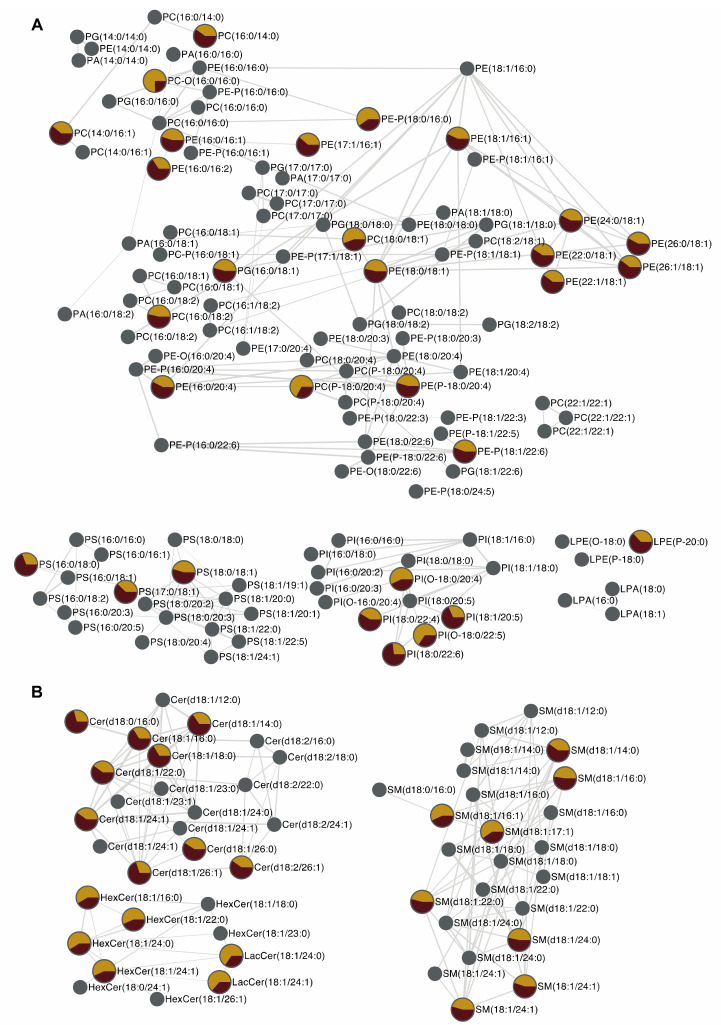
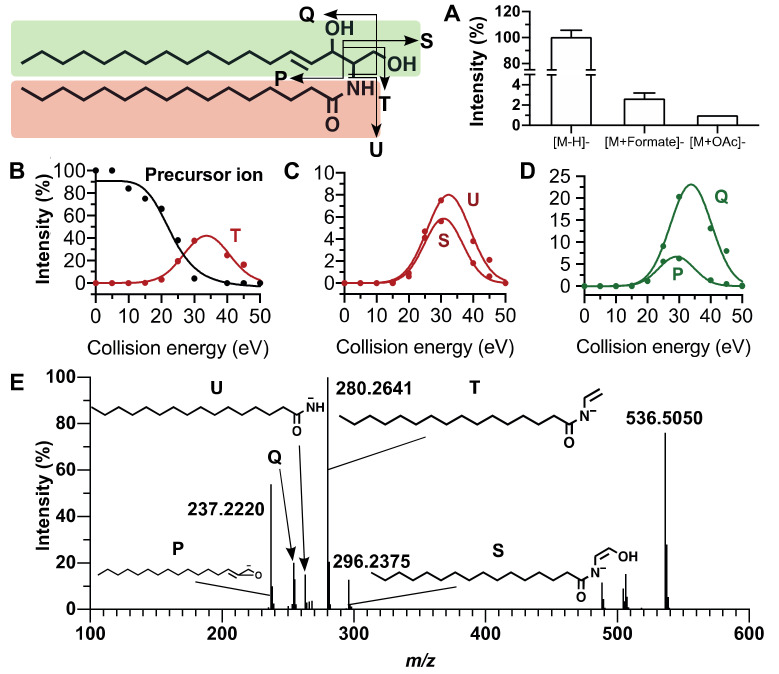
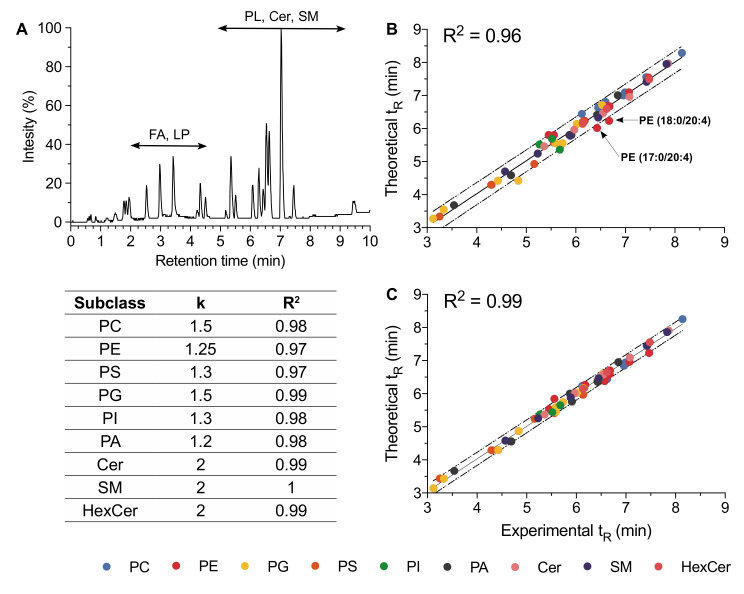
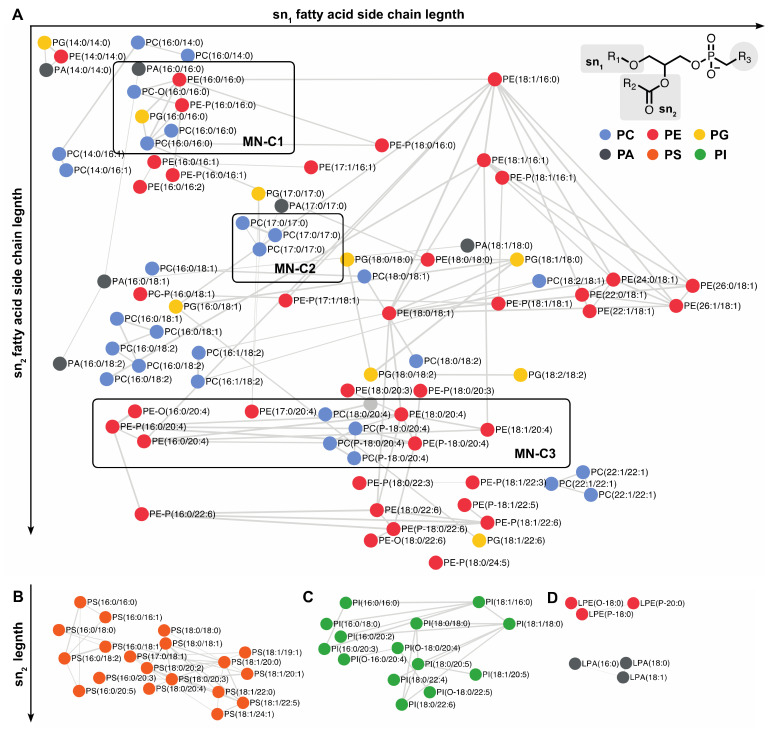
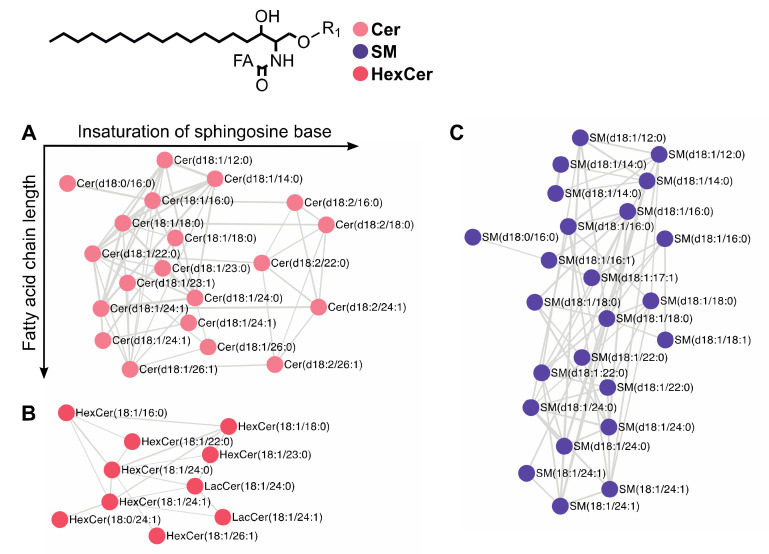
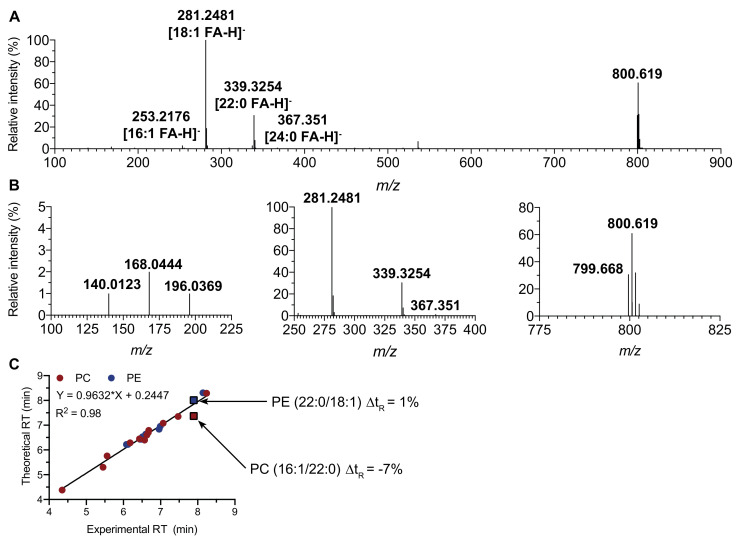
Annotation of lipids in untargeted lipidomic analysis remains challenging and a systematic approach needs to be developed to organize important datasets with the help of bioinformatic tools. For this purpose, we combined tandem mass spectrometry-based molecular networking with retention time (t) prediction to annotate phospholipid and sphingolipid species. Sixty-five standard compounds were used to establish the fragmentation rules of each lipid class studied and to define the parameters governing their chromatographic behavior. Molecular networks (MNs) were generated through the GNPS platform using a lipid standards mixture and applied to lipidomic study of an model of dry eye disease, , human corneal epithelial (HCE) cells exposed to hyperosmolarity (HO). These MNs led to the annotation of more than 150 unique phospholipid and sphingolipid species in the HCE cells. This annotation was reinforced by comparing theoretical to experimental t values. This lipidomic study highlighted changes in 54 lipids following HO exposure of corneal cells, some of them being involved in inflammatory responses. The MN approach coupled to t prediction thus appears as a suitable and robust tool for the discovery of lipids involved in relevant biological processes.
在非靶向脂质组学分析中,脂质注释仍然具有挑战性,需要开发一种系统方法,借助生物信息工具来整理重要数据集。为此,我们将基于串联质谱的分子网络与保留时间(t)预测相结合,以注释磷脂和鞘脂种类。使用65种标准化合物来建立所研究的每种脂质类别的碎裂规则,并定义控制其色谱行为的参数。通过GNPS平台使用脂质标准混合物生成分子网络(MNs),并将其应用于干眼病模型(即暴露于高渗(HO)的人角膜上皮(HCE)细胞)的脂质组学研究。这些MNs导致在HCE细胞中注释了150多种独特的磷脂和鞘脂种类。通过比较理论t值与实验t值,强化了这种注释。这项脂质组学研究突出了角膜细胞暴露于HO后54种脂质的变化,其中一些参与炎症反应。因此,与t预测相结合的MN方法似乎是发现参与相关生物学过程的脂质的合适且强大的工具。