Ali Alharbi Sulaiman
Department of Botany and Microbiology, College of Science, King Saud University, P.O. Box 2455, Riyadh 11451, Saudi Arabia.
Saudi J Biol Sci. 2020 Jun;27(6):1566-1568. doi: 10.1016/j.sjbs.2020.03.012. Epub 2020 Mar 13.
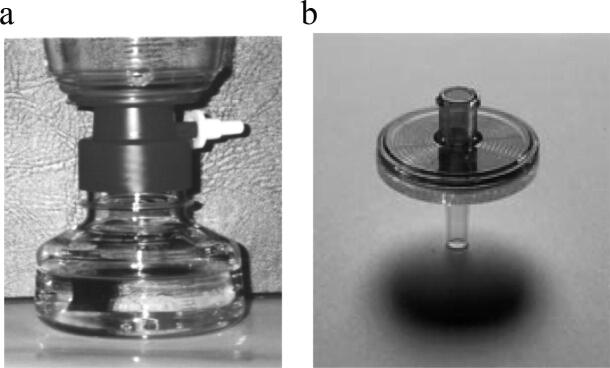
A total of 108 blood samples obtained from 28 male and 80 female patients diagnosed with ME were diluted in sterile, Ringer's Solution and forced (by suction) through 0.2 µm filters. Of the 28 male samples, 4 yielded filterable bacteria and of the 80 female samples, 18 gave filterable bacteria; as a result, of the total of 124 samples, 22 yielded FB. Filterable (0.4 and 0.2, but not 0.1micron filterable) bacteria were also isolated from the nose throat and skin of paediatric patients and from the throat and skin of staff at an emergency paediatric hospital. The highest percentage of bacterial passage occurred through the largest (0.4 µm) pores. The results show that ultrasmall bacteria occur in ME patients and in paediatric patients and nurses. The potential pathogenic role of such filterable bacteria is briefly discussed.
从28名男性和80名被诊断患有肌痛性脑脊髓炎(ME)的女性患者身上采集了总共108份血样,将其在无菌林格氏液中稀释,然后通过吸力使其通过0.2微米的滤器。在28份男性样本中,有4份产生了可滤过细菌;在80份女性样本中,有18份产生了可滤过细菌。因此,在总共124份样本中,有22份产生了可滤过细菌(FB)。还从儿科患者的鼻咽和皮肤以及一家儿科急诊医院工作人员的咽喉和皮肤中分离出了可滤过(0.4和0.2微米,但不是0.1微米可滤过)细菌。细菌通过最大孔径(0.4微米)的滤器时,其通过率最高。结果表明,超小细菌存在于肌痛性脑脊髓炎患者、儿科患者以及护士体内。本文简要讨论了此类可滤过细菌的潜在致病作用。