Department of Cardiology, Cardiovascular Foundation of Colombia, Floridablanca, CO.
LASOCHA, Washington DC, US.
Glob Heart. 2020 Mar 30;15(1):26. doi: 10.5334/gh.484.
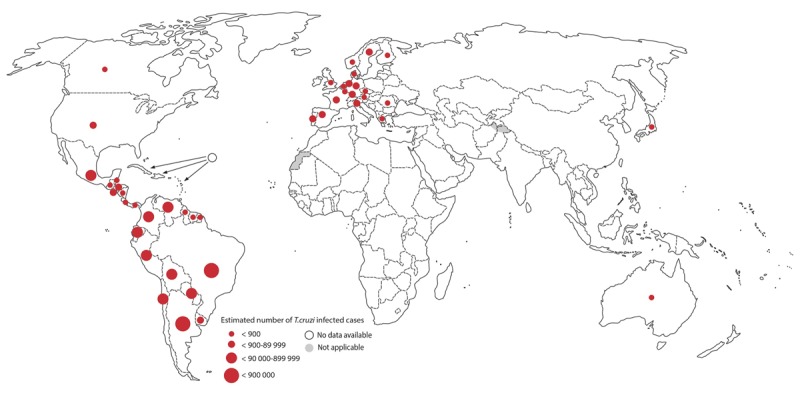
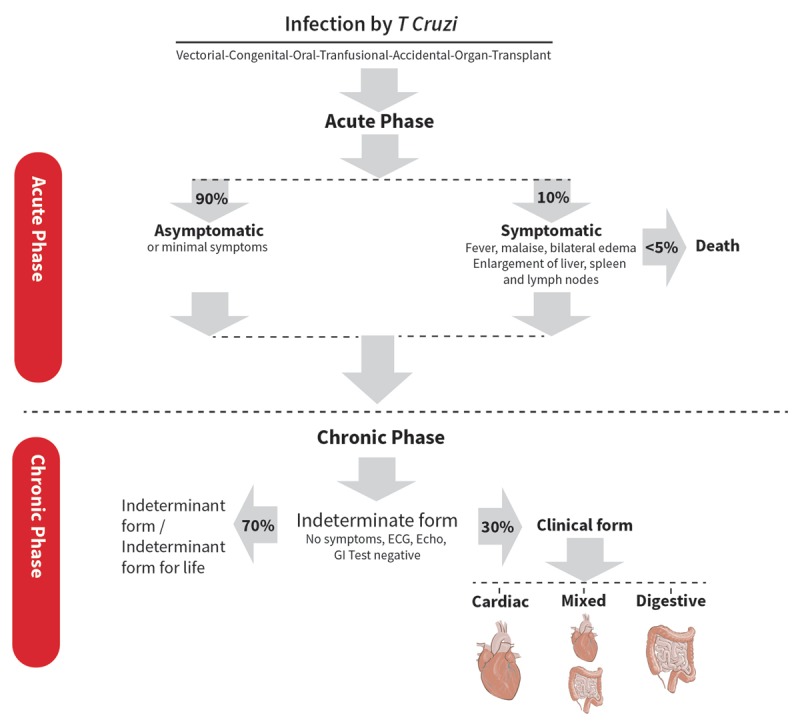
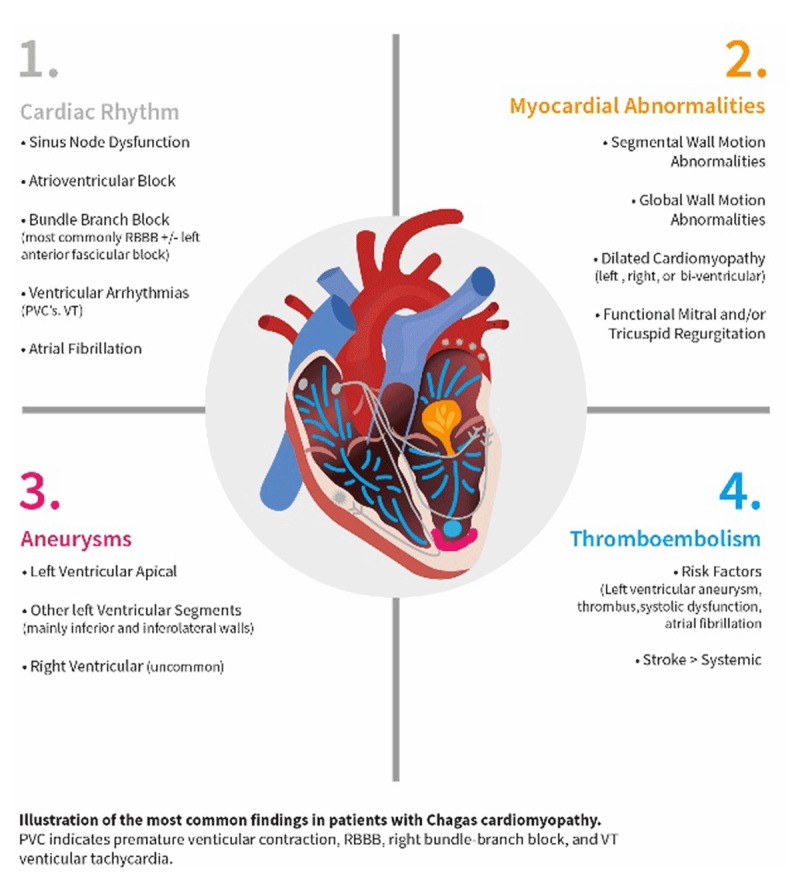
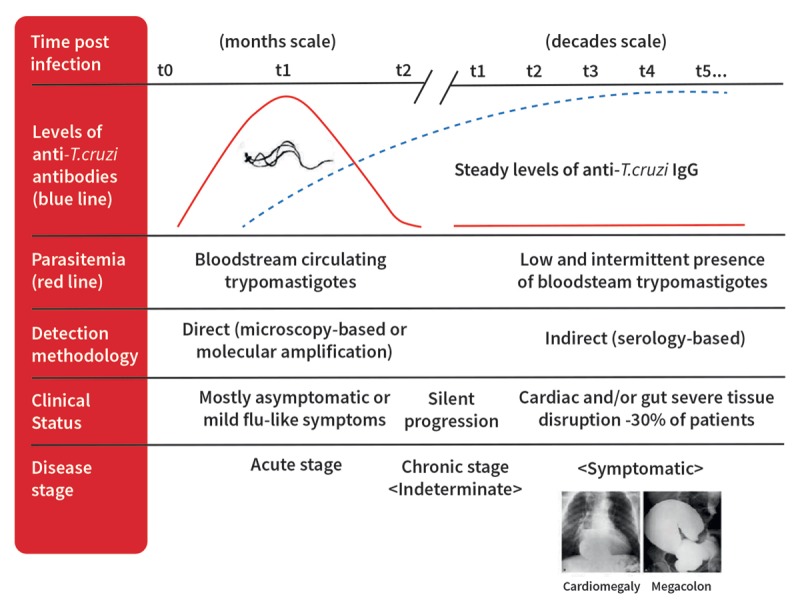
Chagas Disease is a neglected tropical disease caused by the protozoan , with some of the most serious manifestations affecting the cardiovascular system. It is a chronic, stigmatizing condition, closely associated with poverty and affecting close to 6 million people globally. Although historically the disease was limited to endemic areas of Latin America recent years have seen an increasing global spread. In addition to the morbidity and mortality associated with the disease, the social and economic burdens on individuals and society are substantial. Often called the 'silent killer', Chagas disease is characterized by a long, asymptomatic phase in affected individuals. Approximately 30% then go on develop chronic Chagas cardiomyopathy and other serious cardiac complications such as stroke, rhythm disturbances and severe heart failure.
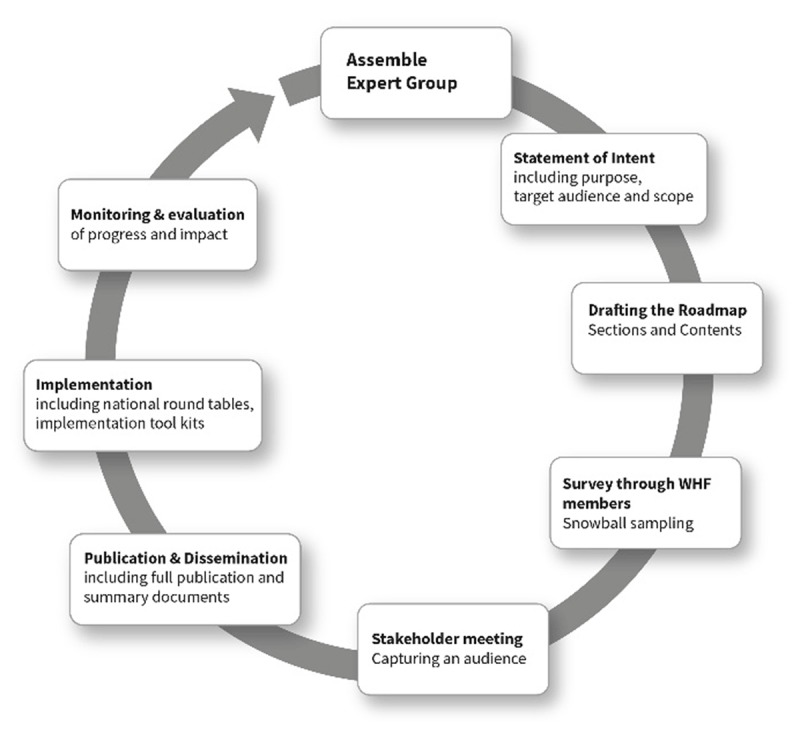
In a collaboration of the World Hearth Federation (WHF) and the Inter-American Society of Cardiology (IASC) a writing group consisting of 20 diverse experts on Chagas disease (CD) was convened. The group provided up to date expert knowledge based on their area of expertise. An extensive review of the literature describing obstacles to diagnosis and treatment of CD along with proposed solutions was conducted. A survey was sent to all WHF Members and, using snowball sampling to widen the consultation, to a variety of health care professionals working in the CD global health community. The results were analyzed, open comments were reviewed and consolidated, and the findings were incorporated into this document, thus ensuring a consensus representation.
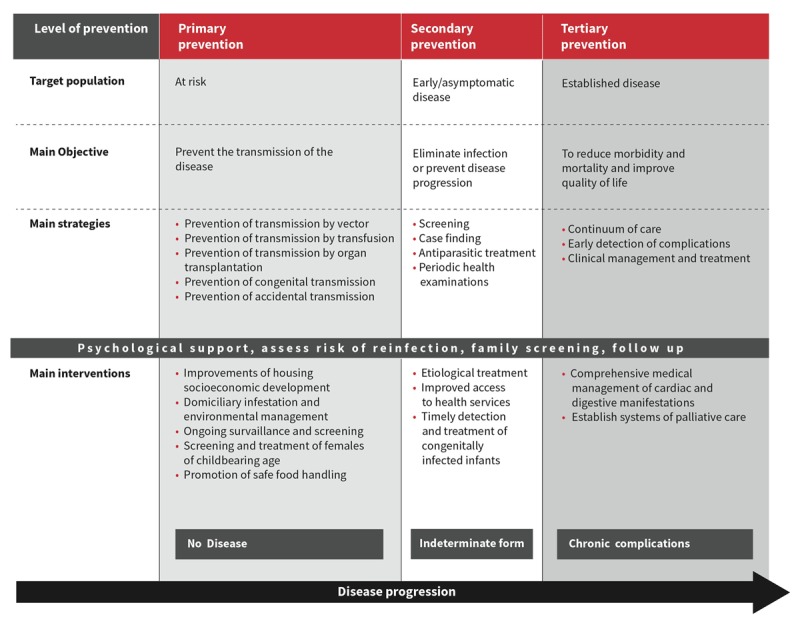
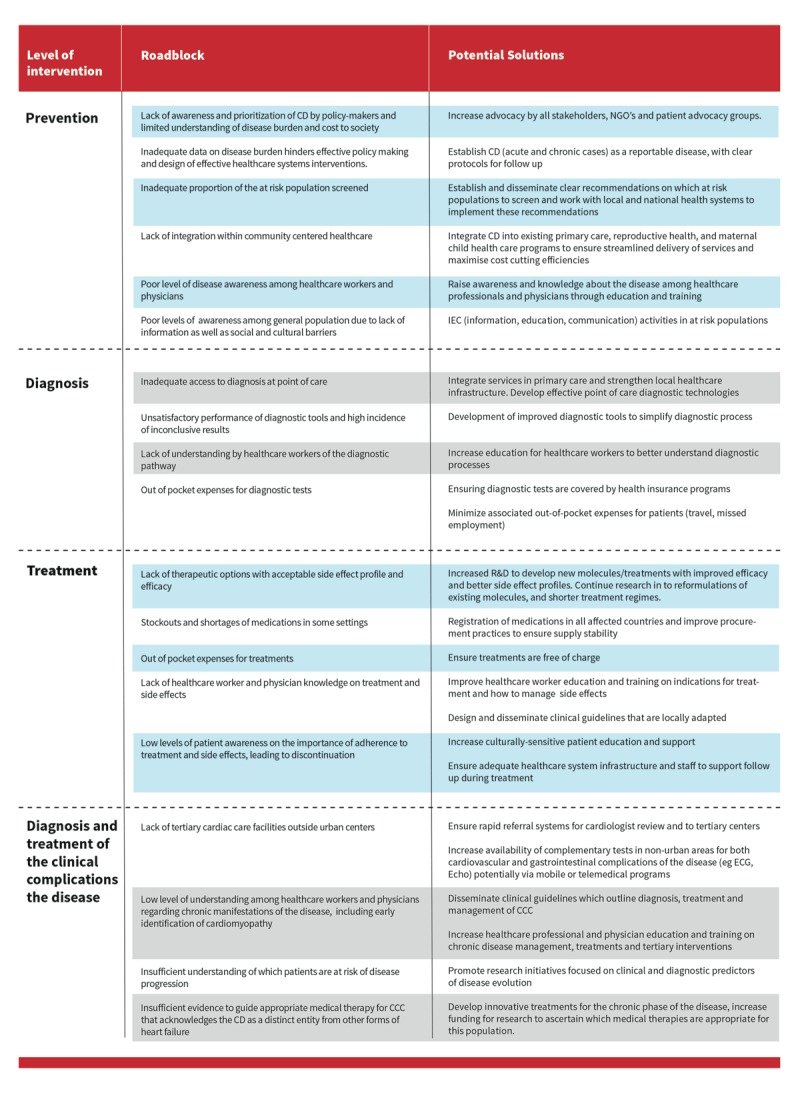
The WHF IASC Roadmap on Chagas Disease offers a comprehensive summary of current knowledge on prevention, diagnosis and management of the disease. In providing an analysis of 'roadblocks' in access to comprehensive care for Chagas disease patients, the document serves as a framework from which strategies for implementation such as national plans can be formulated. Several dimensions are considered in the analysis: healthcare system capabilities, governance, financing, community awareness and advocacy.
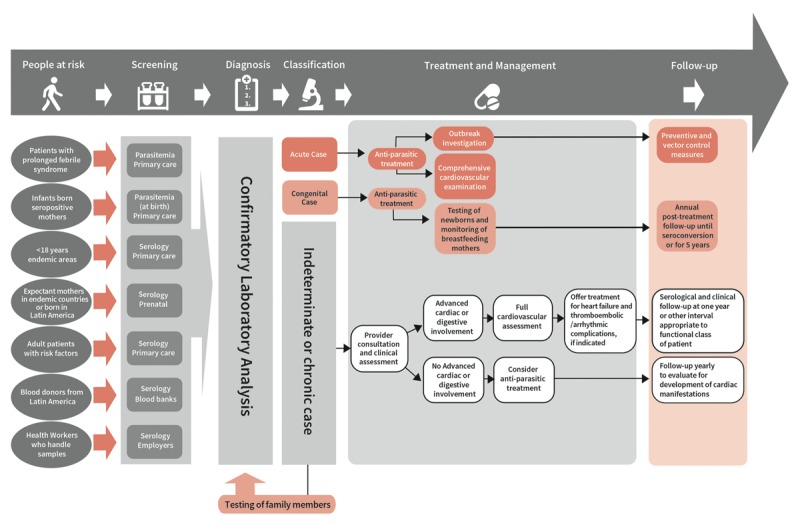
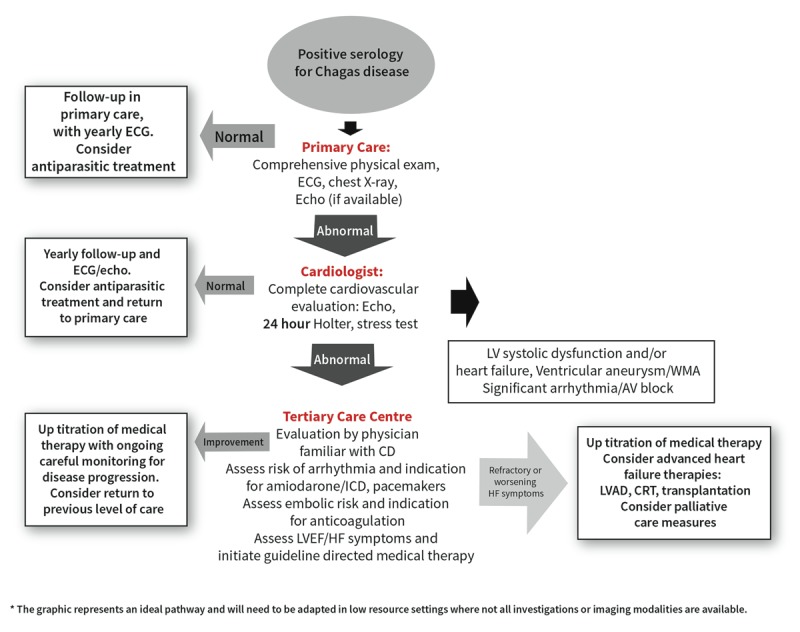
The WHF IASC Roadmap proposes strategies and evidence-based solutions for healthcare professionals, health authorities and governments to help overcome the barriers to comprehensive care for Chagas disease patients. This roadmap describes an ideal patient care pathway, and explores the roadblocks along the way, offering potential solutions based on available research and examples in practice. It represents a call to action to decision-makers and health care professionals to step up efforts to eradicate Chagas disease.
恰加斯病是一种由原生动物引起的被忽视的热带病,其一些最严重的表现影响心血管系统。它是一种慢性、污名化的疾病,与贫困密切相关,影响着全球近 600 万人。尽管该疾病在历史上仅限于拉丁美洲的流行地区,但近年来全球的传播范围不断扩大。除了与该疾病相关的发病率和死亡率外,个人和社会的社会和经济负担也相当沉重。恰加斯病通常被称为“沉默的杀手”,其特点是受影响个体中有一个长期的无症状阶段。大约 30%的人随后会发展为慢性恰加斯心肌病和其他严重的心脏并发症,如中风、节律紊乱和严重心力衰竭。
世界心脏联合会(WHF)和美洲心脏病学会(IASC)合作,召集了一个由 20 名恰加斯病(CD)领域的多元化专家组成的写作小组。该小组根据其专业领域提供最新的专家知识。对描述 CD 诊断和治疗障碍以及提出的解决方案的文献进行了广泛的回顾。向所有 WHF 成员发送了一份调查,并通过滚雪球抽样扩大咨询范围,向全球 CD 卫生保健专业人员发送了调查。对结果进行了分析,审查并整合了公开意见,并将调查结果纳入本文件,从而确保了共识的代表性。
WHF IASC 恰加斯病路线图全面总结了预防、诊断和管理该疾病的现有知识。通过分析获得全面治疗 CD 患者的机会的“障碍”,该文件为制定实施战略(如国家计划)提供了框架。在分析中考虑了几个方面:医疗保健系统能力、治理、融资、社区意识和宣传。
WHF IASC 恰加斯病路线图为医疗保健专业人员、卫生当局和政府提出了战略和基于证据的解决方案,以帮助克服全面治疗 CD 患者的障碍。该路线图描述了理想的患者护理途径,并探讨了沿途的障碍,提供了基于现有研究和实践范例的潜在解决方案。它呼吁决策者和卫生保健专业人员加紧努力消除恰加斯病。