Department of Laboratory Medicine, The First Affiliated Hospital of USTC, Division of Life Sciences and Medicine, University of Science and Technology of China, Hefei, China.
School of Life Science, University of Science and Technology of China, Hefei, China.
Mol Oncol. 2020 Sep;14(9):2313-2331. doi: 10.1002/1878-0261.12737. Epub 2020 Jul 1.
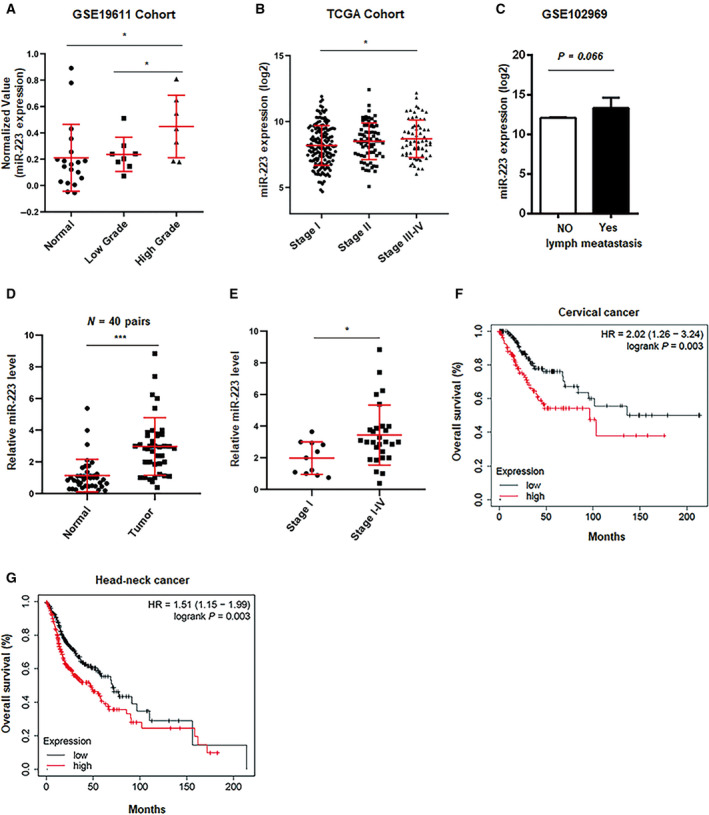
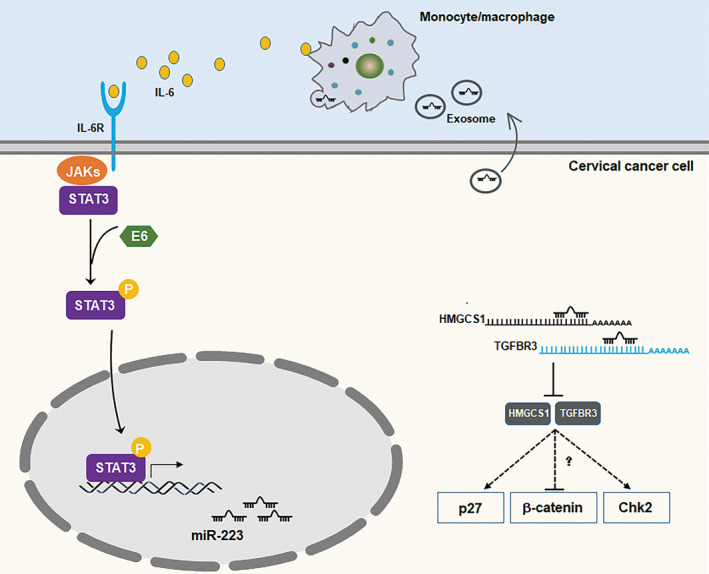
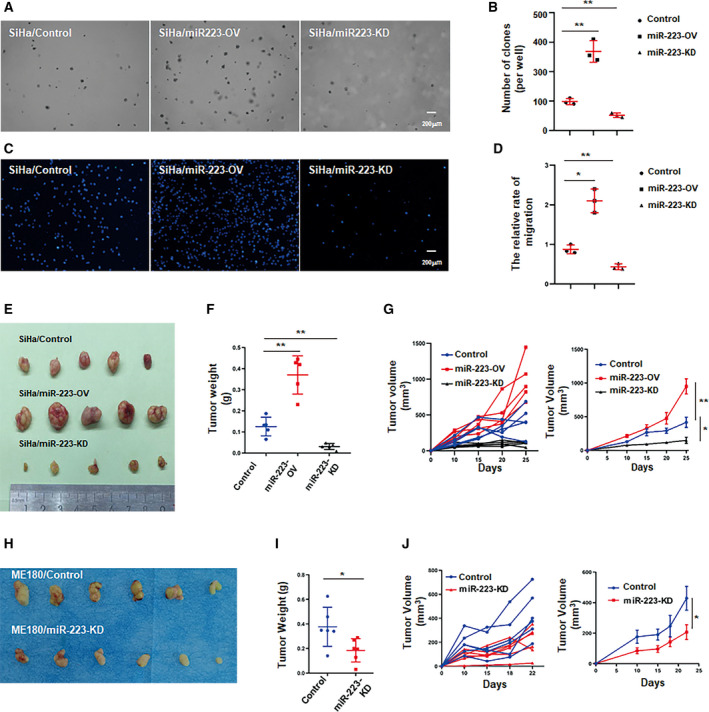
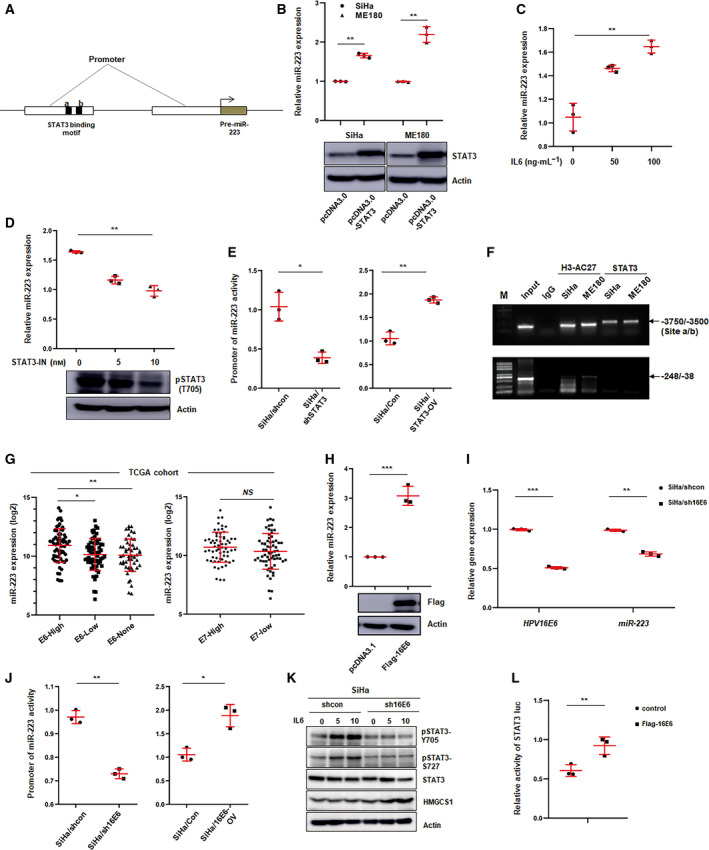
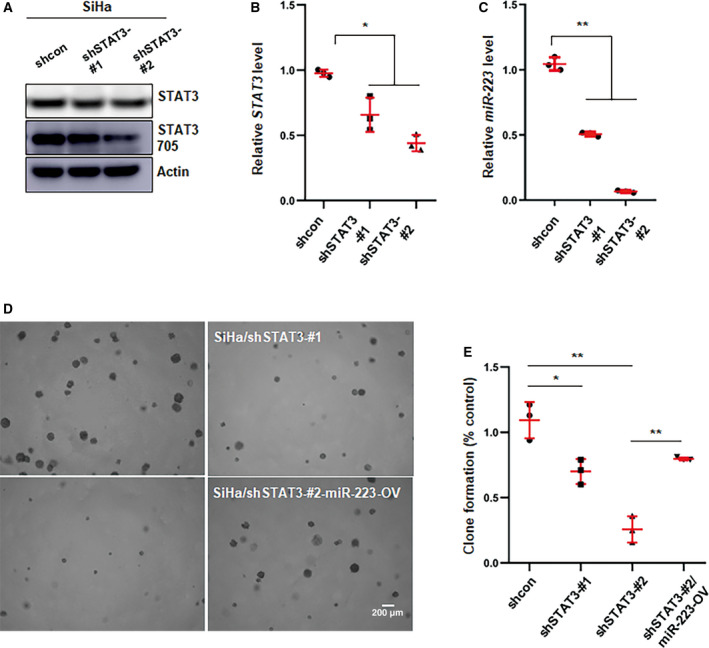
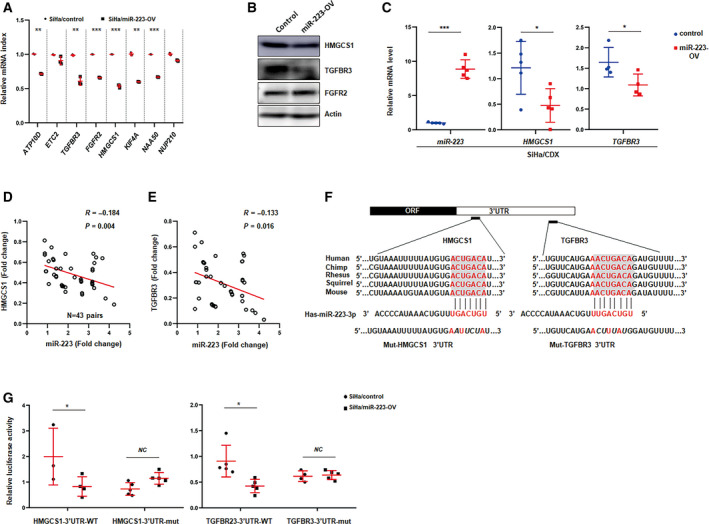
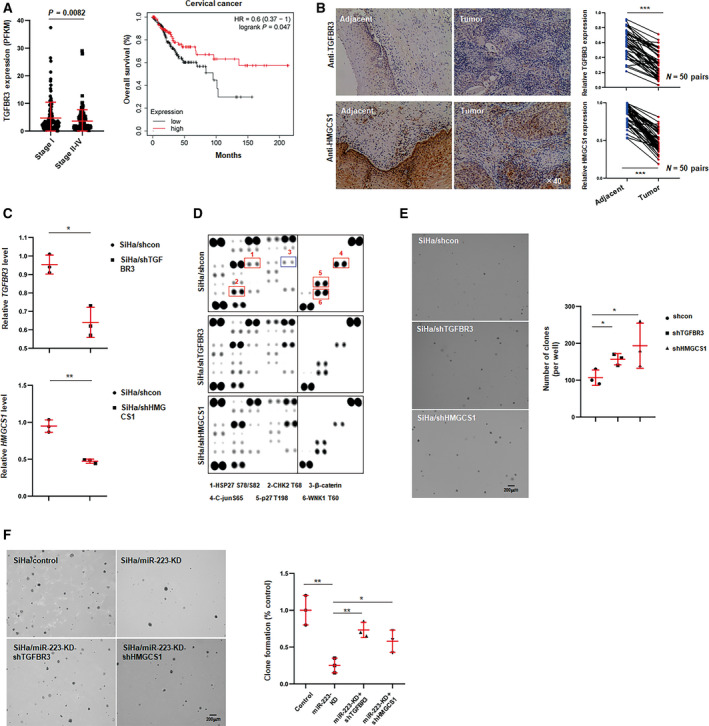
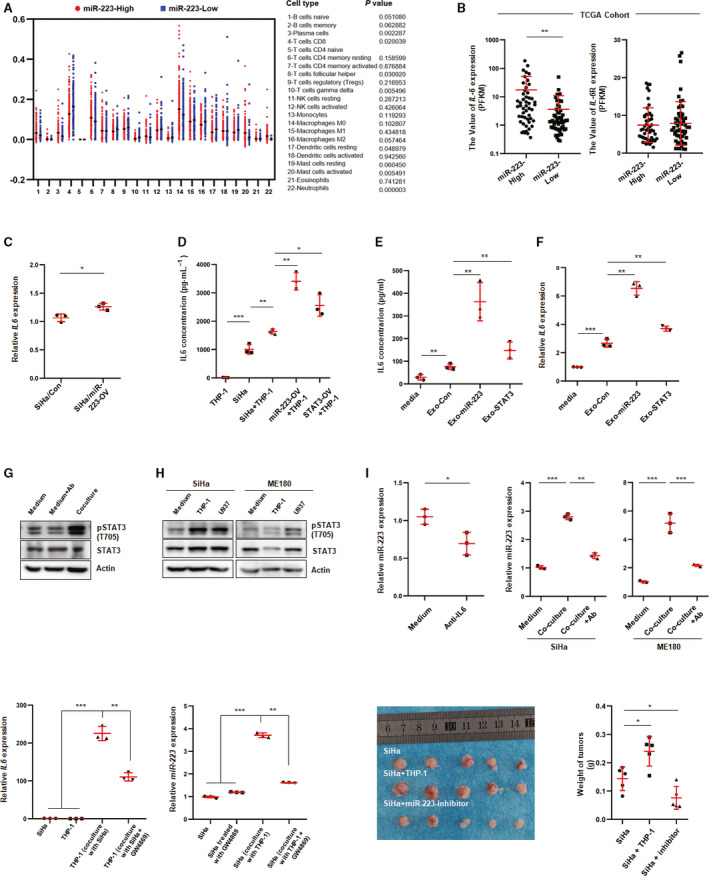
Cervical cancer is induced by persistent infections with high-risk human papillomaviruses (HPVs), which produce the early protein 6 of HPVs (E6)/E7 protein that is involved in cell transformation by interacting with several oncoproteins or tumor suppressors. However, the role of noncoding RNA in mediating the pathogenesis of cervical cancer remains unclear. Here, we report that the novel signal transducer and activator of transcription 3 (STAT3)-microRNA-223-3p (miR-223)-TGFBR3/HMGCS1 axis regulated by the E6 protein controls cervical carcinogenesis. miR-223 was highly expressed in cervical tumor tissues, whereas TGFBR3 or HMGCS1 was significantly downregulated. miR-223 targeted the 3'-UTRs of TGFBR3 and HMGCS1 and suppressed their expression, leading to increased anchorage-independent growth and cervical squamous cell carcinoma (CSCC) tumor growth in vitro and in vivo. The increased expression of miR-223 was mediated by the transcription factor STAT3, whose activity was enhanced by E6 in the context of interleukin (IL)-6 stimulation. In addition, exosomal miR-223 derived from CSCC cells induced IL-6 secretion by monocyte/macrophage in a coculture system in vitro, and IL-6 secretion, in turn, led to enhanced STAT3 activity in CSSC cells, forming a positive feedback loop. Furthermore, modified miR-223 inhibitor effectively suppressed tumor growth in cell line-derived xenograft model, suggesting that miR-223 is a potential promising therapeutic target in CSCC. In conclusion, our results demonstrate that the STAT3-miR-223-HMGCS1/TGFBR3 axis functions as a key signaling pathway in cervical cancer progression and provides a new therapeutic target.
宫颈癌是由高危型人乳头瘤病毒(HPV)持续感染引起的,这些病毒产生早期 HPV 蛋白 6(E6)/E7 蛋白,通过与几种癌蛋白或肿瘤抑制因子相互作用,参与细胞转化。然而,非编码 RNA 在介导宫颈癌发病机制中的作用尚不清楚。在这里,我们报告了新型信号转导子和转录激活因子 3(STAT3)-微小 RNA-223-3p(miR-223)-TGFBR3/HMGCS1 轴由 E6 蛋白调控,控制宫颈癌的发生。miR-223 在宫颈肿瘤组织中高表达,而 TGFBR3 或 HMGCS1 则显著下调。miR-223 靶向 TGFBR3 和 HMGCS1 的 3'-UTRs,并抑制它们的表达,导致体外和体内无锚定依赖性生长和宫颈鳞状细胞癌(CSCC)肿瘤生长增加。miR-223 的表达增加是由转录因子 STAT3 介导的,其活性在白细胞介素(IL)-6 刺激的情况下被 E6 增强。此外,CSCC 细胞来源的外泌体 miR-223 在体外共培养系统中诱导单核细胞/巨噬细胞分泌 IL-6,而 IL-6 分泌反过来又导致 CSSC 细胞中 STAT3 活性增强,形成正反馈环。此外,修饰的 miR-223 抑制剂有效地抑制了细胞系衍生的异种移植模型中的肿瘤生长,表明 miR-223 是 CSCC 的一个有潜力的治疗靶点。总之,我们的研究结果表明,STAT3-miR-223-HMGCS1/TGFBR3 轴在宫颈癌进展中作为关键信号通路发挥作用,并为其提供了一个新的治疗靶点。