Center for Animal Welfare, Department of Animal Science, University of California, Davis, California, United States of America.
Animal Behavior Graduate Group, University of California, Davis, California, United States of America.
PLoS One. 2020 Jun 3;15(6):e0233711. doi: 10.1371/journal.pone.0233711. eCollection 2020.
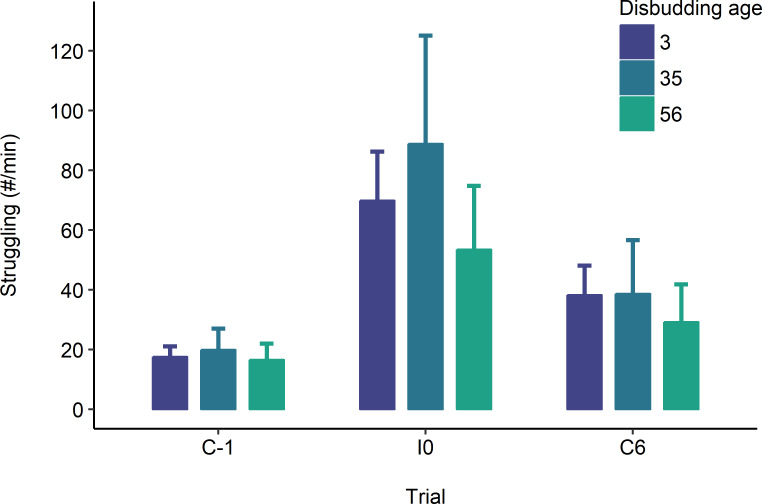
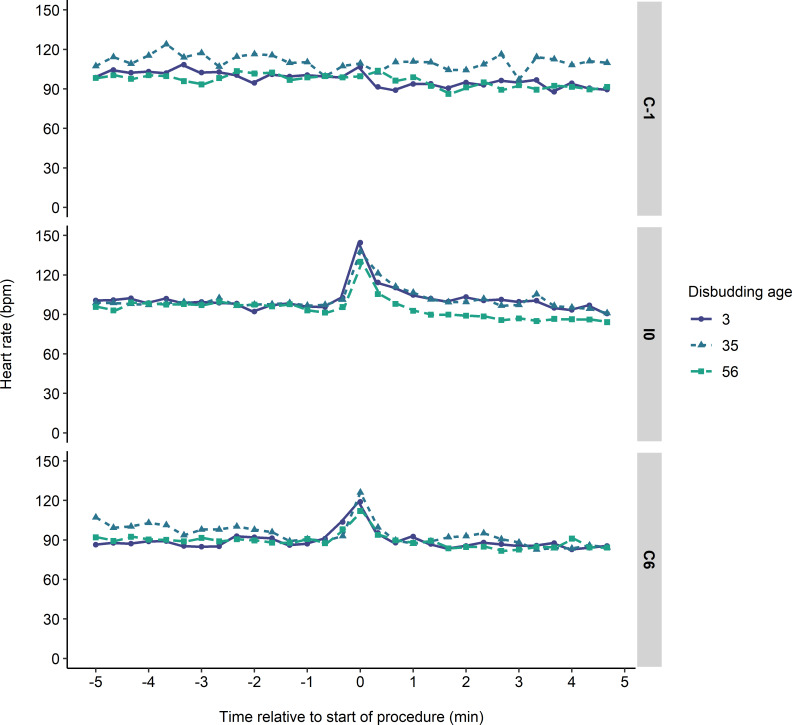
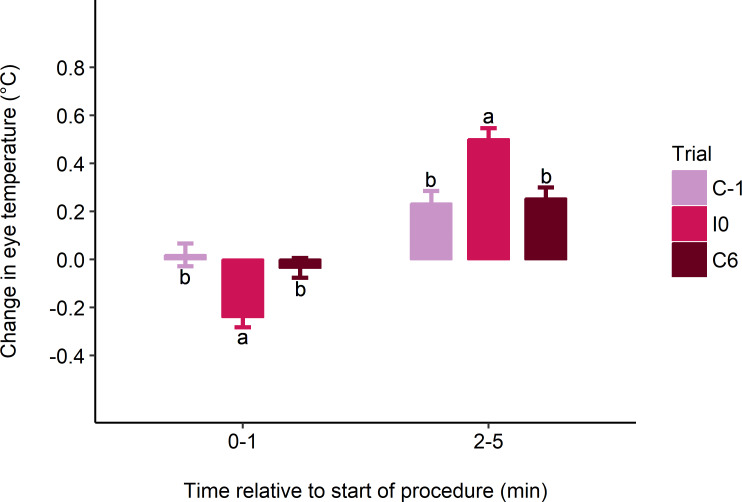
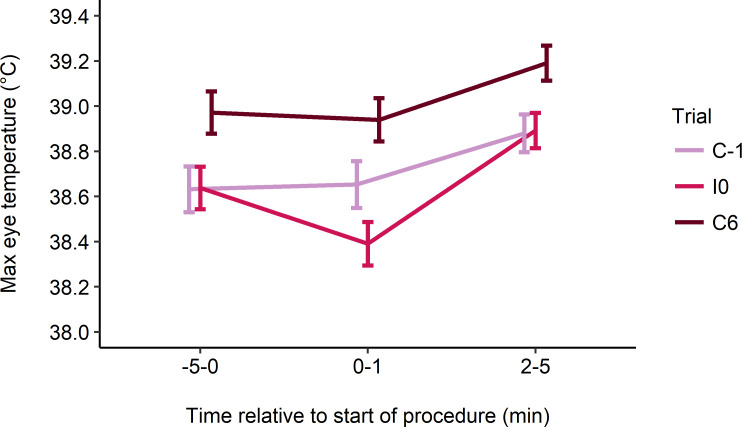
Animals that experience painful procedures as neonates are more sensitive to pain later in life. We evaluated whether disbudding with a heated iron at 3 (n = 12), 35 (n = 9), or 56 (n = 20) d of age affected heifers' pain responses to vaccine injections at 11 mo of age. Heifers responded to the injection procedure with struggling and changes in eye temperature and heart rate variability compared to a sham procedure the day before, and still had a heightened response 6 d later, regardless of disbudding age. However, some heart rate variability indices suggested increased sympathetic dominance in heifers disbudded at 35 d, compared to the other 2 age groups, independent of the injection procedure. We also found that heifers disbudded at 3 or 35 d had a higher mean heart rate after the injection procedure compared to those disbudded at 56 d. We conclude that: (1) heifers find injections aversive; and (2) there is some evidence that disbudding age influences autonomic nervous system activity later in life.
新生动物经历痛苦的程序后,在以后的生活中对疼痛更敏感。我们评估了在 3(n=12)、35(n=9)或 56(n=20)日龄时用加热铁进行去角是否会影响 11 月龄小母牛对疫苗注射的疼痛反应。与前一天的假手术相比,小母牛对注射过程会出现挣扎和眼睛温度以及心率变异性的变化,并且在 6 天后仍有强烈反应,与去角年龄无关。然而,一些心率变异性指数表明,与其他 2 个年龄组相比,在 35 日龄去角的小母牛中,交感神经优势增加,而与注射程序无关。我们还发现,与 56 日龄去角的小母牛相比,3 日龄或 35 日龄去角的小母牛在注射后心率更高。我们得出结论:(1)小母牛认为注射是讨厌的;(2)有证据表明去角年龄会影响以后的自主神经系统活动。