College of Landscape Architecture, Sichuan Agricultural University, Chengdu, China.
Horticultural Biotechnology College, South China Agricultural University, Guangzhou, China.
BMC Genomics. 2020 Jun 3;21(1):383. doi: 10.1186/s12864-020-6750-6.
Lysine succinylation, an important protein posttranslational modification (PTM), is widespread and conservative. The regulatory functions of succinylation in leaf color has been reported. The chimeric leaves of Ananas comosus var. bracteatus are composed of normal green parts and albino white parts. However, the extent and function of lysine succinylation in chimeric leaves of Ananas comosus var. bracteatus has yet to be investigated.
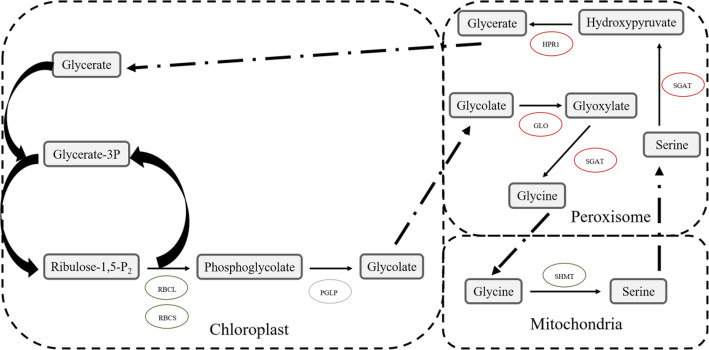
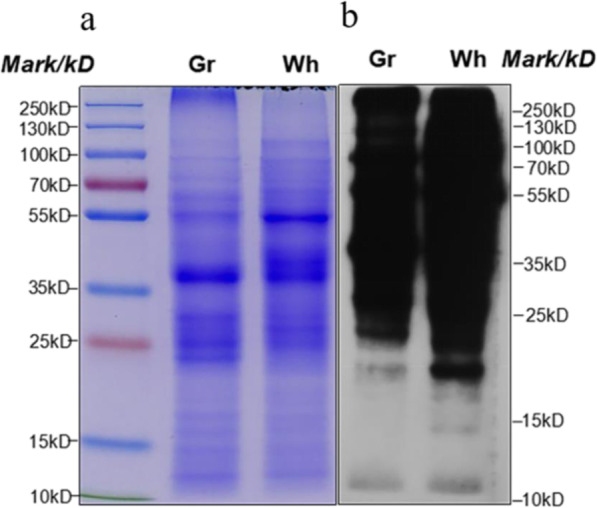
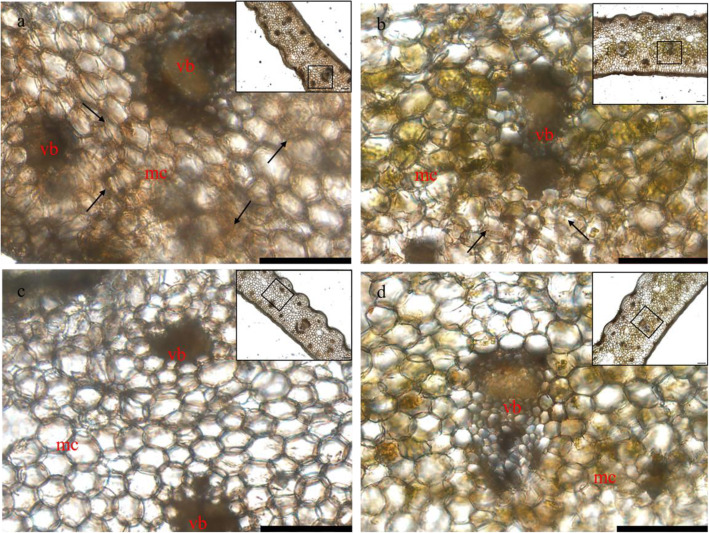
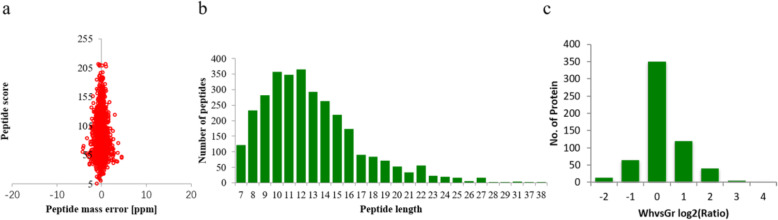
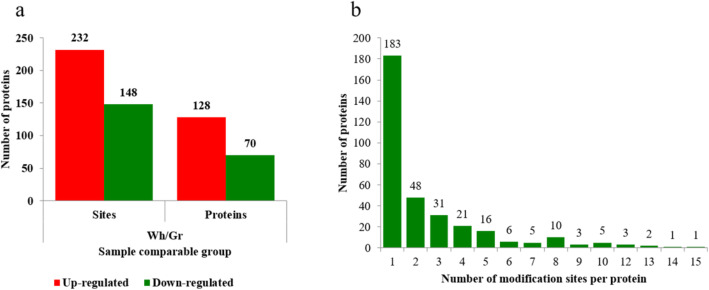
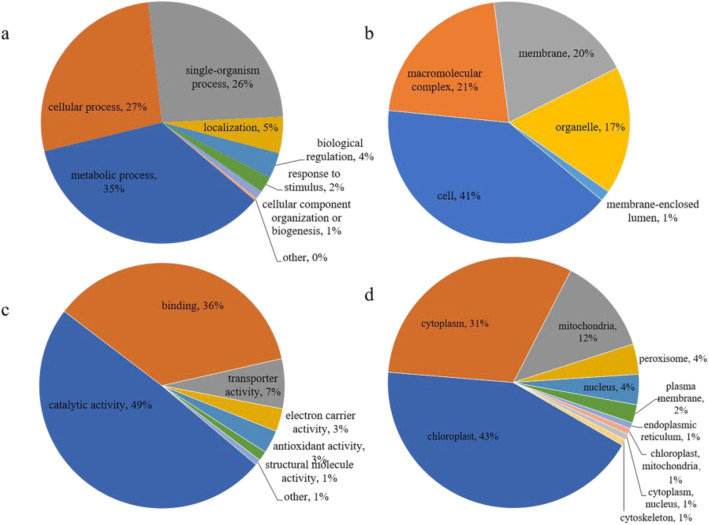
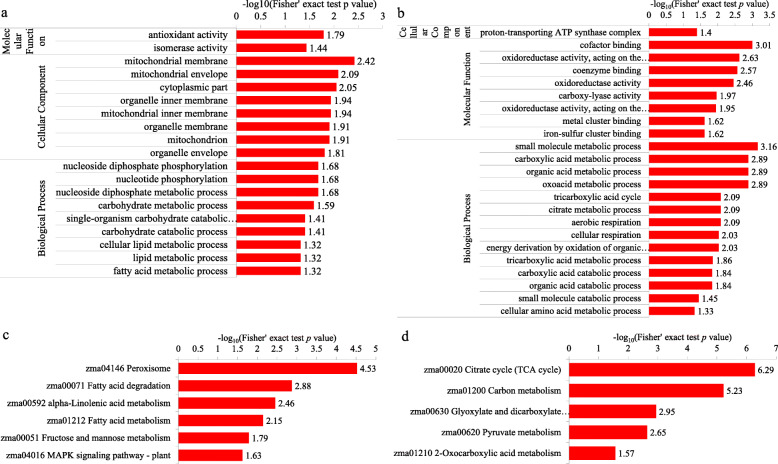
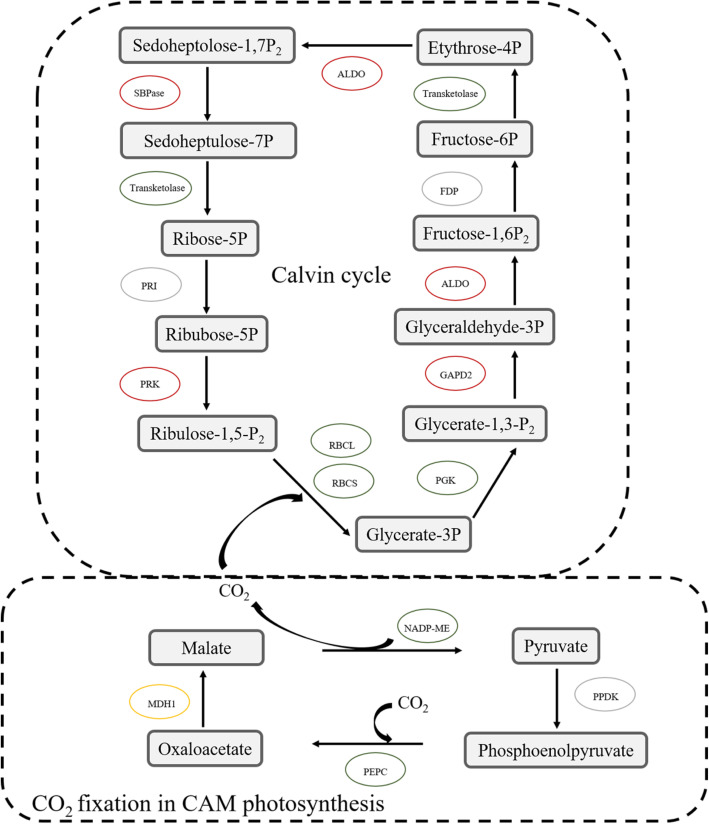
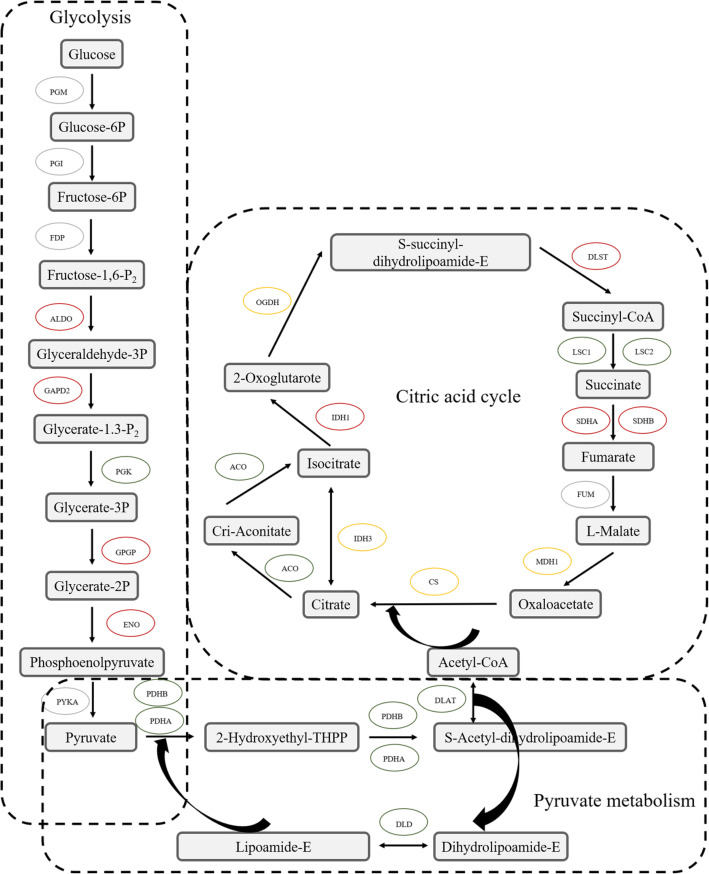
Compared to the green (Gr) parts, the global succinylation level was increased in the white (Wh) parts of chimeric leaves according to the Western blot and immunohistochemistry analysis. Furthermore, we quantitated the change in the succinylation profiles between the Wh and Gr parts of chimeric leaves using label-free LFQ intensity. In total, 855 succinylated sites in 335 proteins were identified, and 593 succinylated sites in 237 proteins were quantified. Compared to the Gr parts, 232 (61.1%) sites in 128 proteins were quantified as upregulated targets, and 148 (38.9%) sites in 70 proteins were quantified as downregulated targets in the Wh parts of chimeric leaves using a 1.5-fold threshold (P < 0.05). These proteins with altered succinylation level were mainly involved in crassulacean acid metabolism (CAM) photosynthesis, photorespiration, glycolysis, the citric acid cycle (CAC) and pyruvate metabolism.
Our results suggested that the changed succinylation level in proteins might function in the main energy metabolism pathways-photosynthesis and respiration. Succinylation might provide a significant effect in the growth of chimeric leaves and the relationship between the Wh and Gr parts of chimeric leaves. This study not only provided a basis for further characterization on the function of succinylated proteins in chimeric leaves of Ananas comosus var. bracteatus but also provided a new insight into molecular breeding for leaf color chimera.
赖氨酸琥珀酰化是一种重要的蛋白质翻译后修饰(PTM),广泛而保守。琥珀酰化在叶片颜色中的调控功能已有报道。杂交菠萝的嵌合叶片由正常的绿色部分和白化的白色部分组成。然而,赖氨酸琥珀酰化在杂交菠萝嵌合叶片中的程度和功能尚未被研究。
与绿色(Gr)部分相比,根据 Western blot 和免疫组织化学分析,白色(Wh)部分的整体琥珀酰化水平增加。此外,我们使用无标记 LFQ 强度定量了嵌合叶片 Wh 和 Gr 部分之间琥珀酰化谱的变化。总共鉴定到 335 个蛋白中的 855 个琥珀酰化位点,237 个蛋白中的 593 个琥珀酰化位点被定量。与 Gr 部分相比,在 Wh 部分中有 128 个蛋白中的 232 个(61.1%)位点被定量为上调靶标,在 70 个蛋白中的 148 个(38.9%)位点被定量为下调靶标,使用 1.5 倍阈值(P < 0.05)。这些琥珀酰化水平改变的蛋白质主要参与景天酸代谢(CAM)光合作用、光呼吸、糖酵解、柠檬酸循环(CAC)和丙酮酸代谢。
我们的结果表明,蛋白质中琥珀酰化水平的变化可能在光合作用和呼吸等主要能量代谢途径中发挥作用。琥珀酰化可能在嵌合叶片的生长以及嵌合叶片 Wh 和 Gr 部分之间的关系中具有重要作用。本研究不仅为进一步研究嵌合菠萝叶片中琥珀酰化蛋白的功能提供了基础,也为叶片颜色嵌合体的分子育种提供了新的视角。