College of Agronomy, Shenyang Agricultural University, Shenyang, 110866, PR China.
Industrial Crops Research Institute, Henan Academy of Agricultural Sciences / Key Laboratory of Oil Crops in Huang-Huai-Hai Plains, Ministry of Agriculture and Rural Affairs / Henan Provincial Key Laboratory for Genetic Improvement of Oil Crops, Zhengzhou, 450002, PR China.
BMC Plant Biol. 2020 Jun 3;20(1):249. doi: 10.1186/s12870-020-02455-8.
Web blotch is one of the most important foliar diseases worldwide in peanut (Arachis hypogaea L.). The identification of quantitative trait loci (QTLs) for peanut web blotch resistance represents the basis for gene mining and the application of molecular breeding technologies.
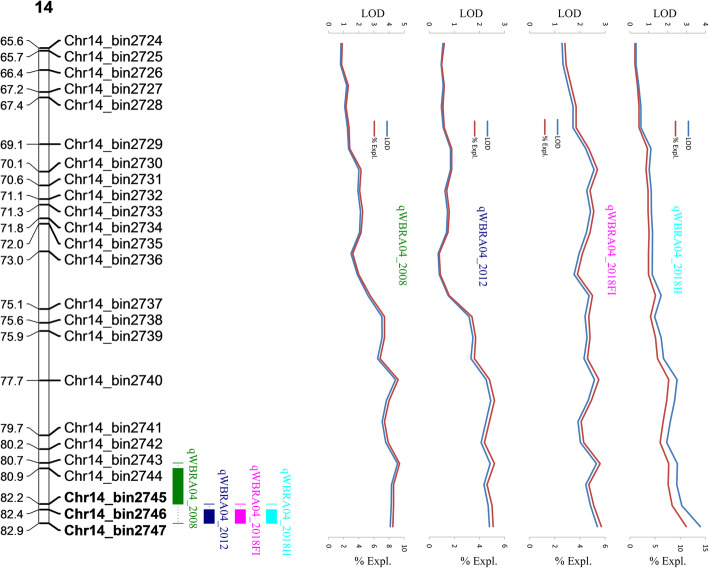
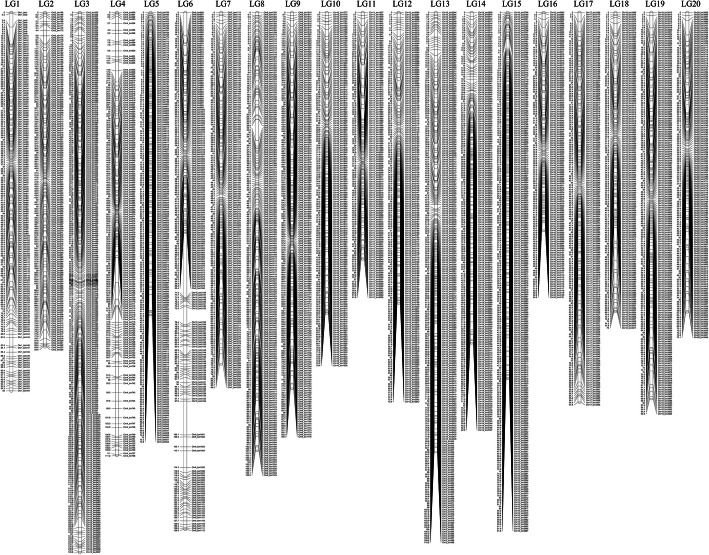
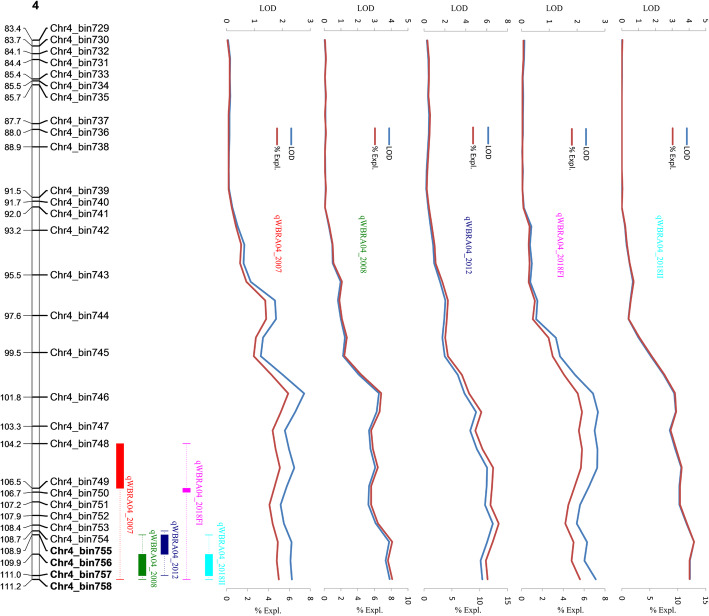
In this study, a peanut recombinant inbred line (RIL) population was used to map QTLs for web blotch resistance based on high-throughput genome-wide sequencing. Frequency distributions of disease grade and disease index in five environments indicated wide phenotypic variations in response to web blotch among RILs. A high-density genetic map was constructed, containing 3634 bin markers distributed on 20 peanut linkage groups (LGs) with an average genetic distance of 0.5 cM. In total, eight QTLs were detected for peanut web blotch resistance in at least two environments, explaining from 2.8 to 15.1% of phenotypic variance. Two major QTLs qWBRA04 and qWBRA14 were detected in all five environments and were linked to 40 candidate genes encoding nucleotide-binding site leucine-rich repeat (NBS-LRR) or other proteins related to disease resistances.
The results of this study provide a basis for breeding peanut cultivars with web blotch resistance.
叶斑病是花生(Arachis hypogaea L.)最重要的叶部病害之一。鉴定花生抗叶斑病的数量性状基因座(QTL)是基因挖掘和应用分子育种技术的基础。
本研究利用花生重组自交系(RIL)群体,基于高通量全基因组测序对叶斑病抗性进行 QTL 作图。五个环境中病情等级和病情指数的频率分布表明,RIL 对叶斑病的表型变异广泛。构建了一个高密度遗传图谱,包含 3634 个 bin 标记,分布在 20 个花生连锁群(LG)上,平均遗传距离为 0.5 cM。共检测到 8 个 QTL 在至少两个环境中对花生叶斑病抗性有影响,解释了 2.8%至 15.1%的表型变异。在所有五个环境中均检测到两个主要的 QTL qWBRA04 和 qWBRA14,与 40 个候选基因相连,这些基因编码核苷酸结合位点富含亮氨酸重复(NBS-LRR)或与抗病性相关的其他蛋白质。
本研究结果为培育具有叶斑病抗性的花生品种提供了基础。