Department of Biochemistry, School of Biological Sciences, Falavarjan Branch Islamic Azad University, Isfahan, Iran.
Cellular and Molecular Endocrine Research Center, Research Institute for Endocrine Sciences, Shahid Beheshti University of Medical Sciences, Tehran, Iran.
Cell Commun Signal. 2020 Jun 3;18(1):83. doi: 10.1186/s12964-020-00586-x.
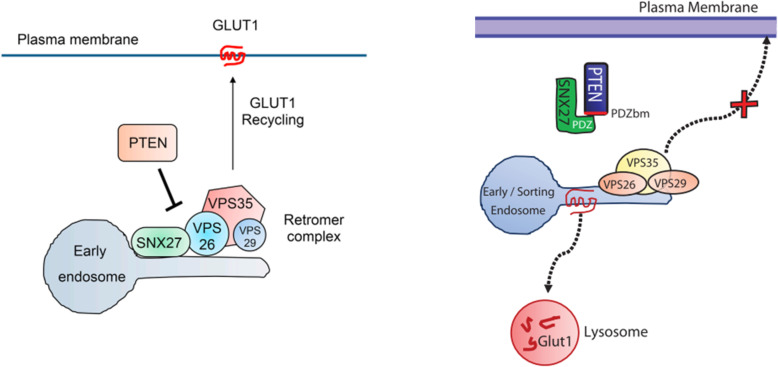
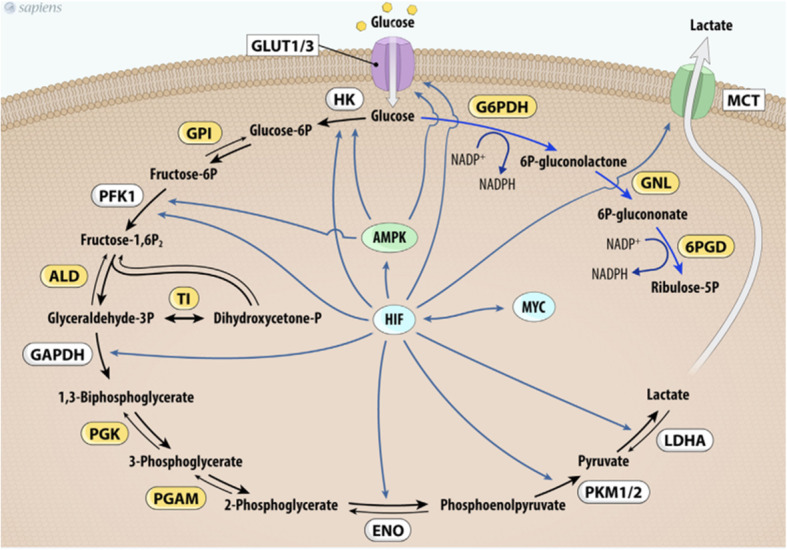
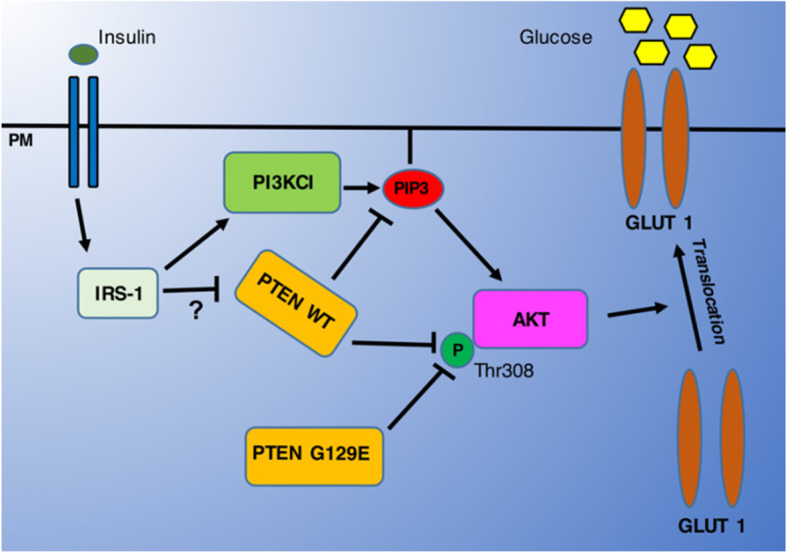
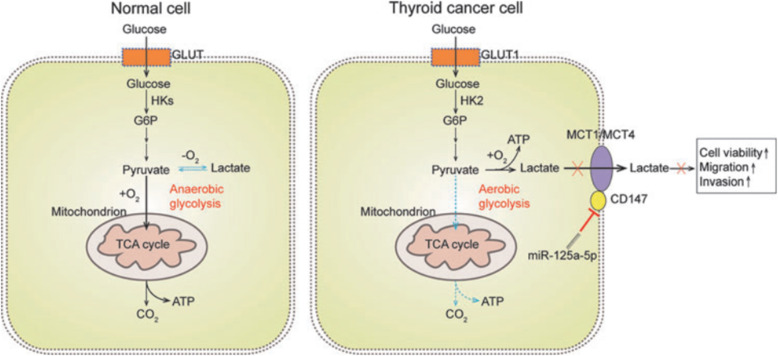
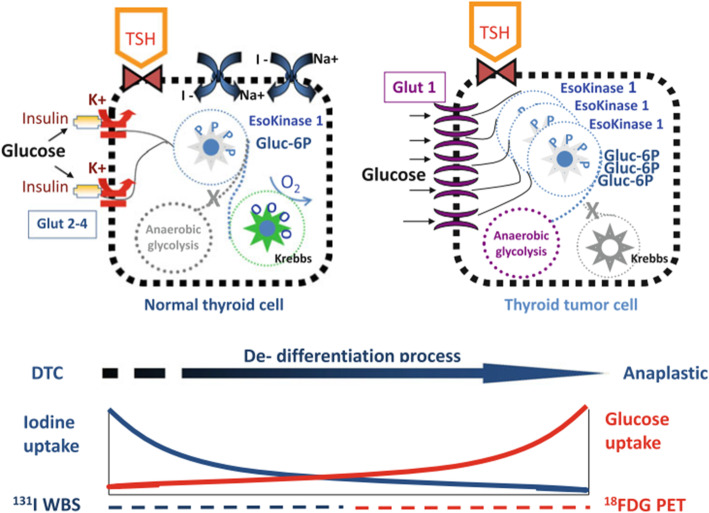
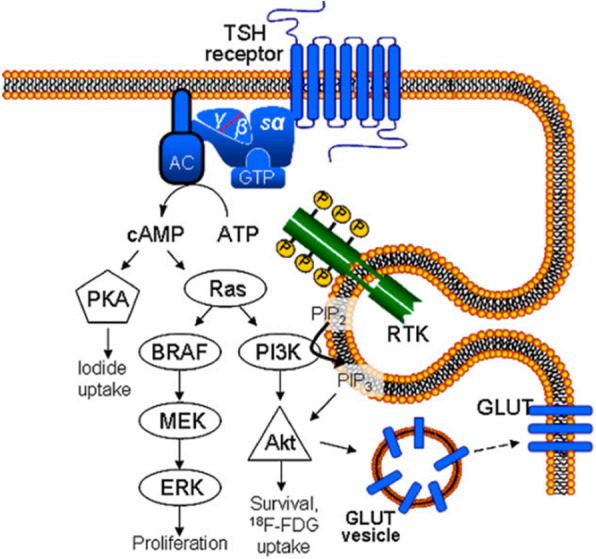
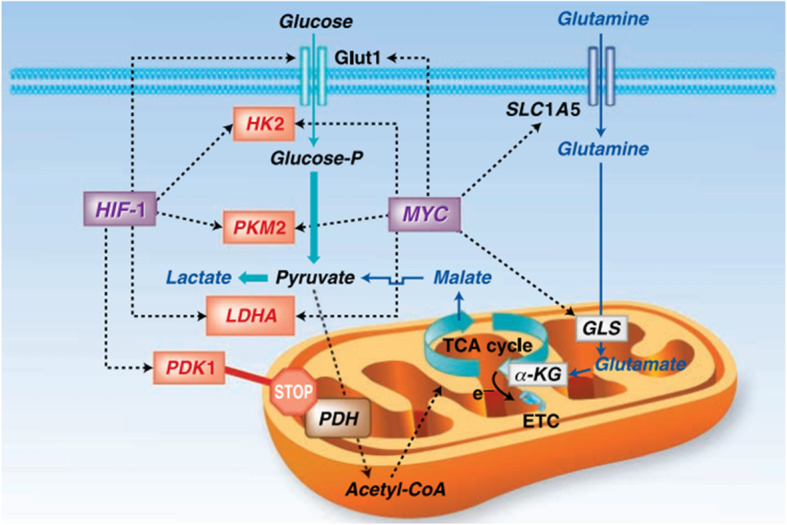
Thyroid cancer is the most common sort of endocrine-related cancer with more prevalent in women and elderly individuals which has quickly widespread expansion in worldwide over the recent decades. Common features of malignant thyroid cells are to have accelerated metabolism and increased glucose uptake to optimize their energy supply which provides a fundamental advantage for growth. In tumor cells the retaining of required energy charge for cell survival is imperative, indeed glucose transporters are enable of promoting of this task. According to this relation it has been reported the upregulation of glucose transporters in various types of cancers. Human studies indicated that poor survival can be occurred following the high levels of GLUT1 expression in tumors. GLUT-1 and GLUT3 are the glucose transporters which seems to be mainly engaged with the oncogenesis of thyroid cancer and their expression in malignant tissues is much more than in the normal one. They are promising targets for the advancement of anticancer strategies. The lack of oncosuppressors have dominant effect on the membrane expression of GLUT1 and glucose uptake. Overexpression of hypoxia inducible factors have been additionally connected with distant metastasis in thyroid cancers which mediates transcriptional regulation of glycolytic genes including GLUT1 and GLUT3. Though the physiological role of the thyroid gland is well illustrated, but the metabolic regulations in thyroid cancer remain evasive. In this study we discuss proliferation pathways of the key regulators and signaling molecules such as PI3K-Akt, HIF-1, MicroRNA, PTEN, AMPK, BRAF, c-Myc, TSH, Iodide and p53 which includes in the regulation of GLUTs in thyroid cancer cells. Incidence of deregulations in cellular energetics and metabolism are the most serious signs of cancers. In conclusion, understanding the mechanisms of glucose transportation in normal and pathologic thyroid tissues is critically important and could provide significant insights in science of diagnosis and treatment of thyroid disease. Video Abstract.
甲状腺癌是最常见的内分泌相关癌症之一,在女性和老年人中更为普遍,近几十年来在全球范围内迅速广泛扩散。恶性甲状腺细胞的共同特征是新陈代谢加速,葡萄糖摄取增加,以优化其能量供应,这为其生长提供了基本优势。在肿瘤细胞中,为了细胞存活而保持所需的能量电荷是至关重要的,实际上葡萄糖转运蛋白能够促进这一任务。根据这一关系,已经有报道称,各种类型的癌症中葡萄糖转运蛋白的表达上调。人类研究表明,肿瘤中 GLUT1 表达水平高会导致预后不良。GLUT-1 和 GLUT3 是葡萄糖转运蛋白,似乎主要参与甲状腺癌的发生,其在恶性组织中的表达远高于正常组织。它们是癌症治疗策略的有前途的靶点。抑癌基因的缺失对 GLUT1 的膜表达和葡萄糖摄取有主要影响。缺氧诱导因子的过表达与甲状腺癌的远处转移有关,它介导包括 GLUT1 和 GLUT3 在内的糖酵解基因的转录调控。尽管甲状腺的生理作用已经得到很好的说明,但甲状腺癌的代谢调节仍然难以捉摸。在这项研究中,我们讨论了关键调节因子和信号分子的增殖途径,如 PI3K-Akt、HIF-1、MicroRNA、PTEN、AMPK、BRAF、c-Myc、TSH、碘和 p53,这些都包括在甲状腺癌细胞中 GLUTs 的调节中。细胞能量和代谢失调的发生是癌症最严重的标志之一。总之,了解葡萄糖在正常和病理性甲状腺组织中的转运机制至关重要,这可为甲状腺疾病的诊断和治疗科学提供重要的见解。视频摘要。