Department of Pathology & Microbiology, University of Nebraska Medical Center, Omaha, Nebraska, USA.
Mary & Dick Holland Regenerative Medicine Program, Division of Cardiology, Department of Internal Medicine, University of Nebraska Medical Center, Omaha, Nebraska, USA.
mSphere. 2020 Jun 3;5(3):e00347-20. doi: 10.1128/mSphere.00347-20.
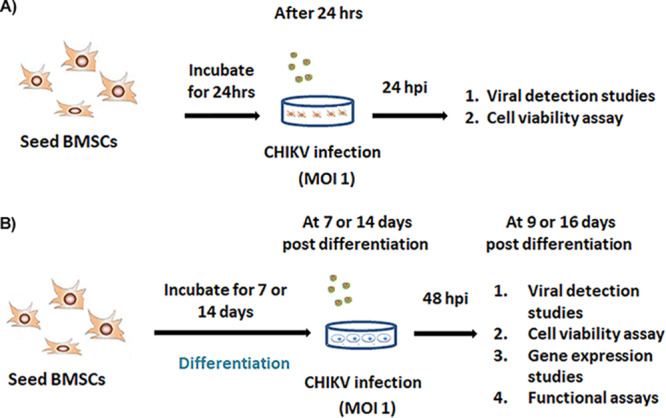
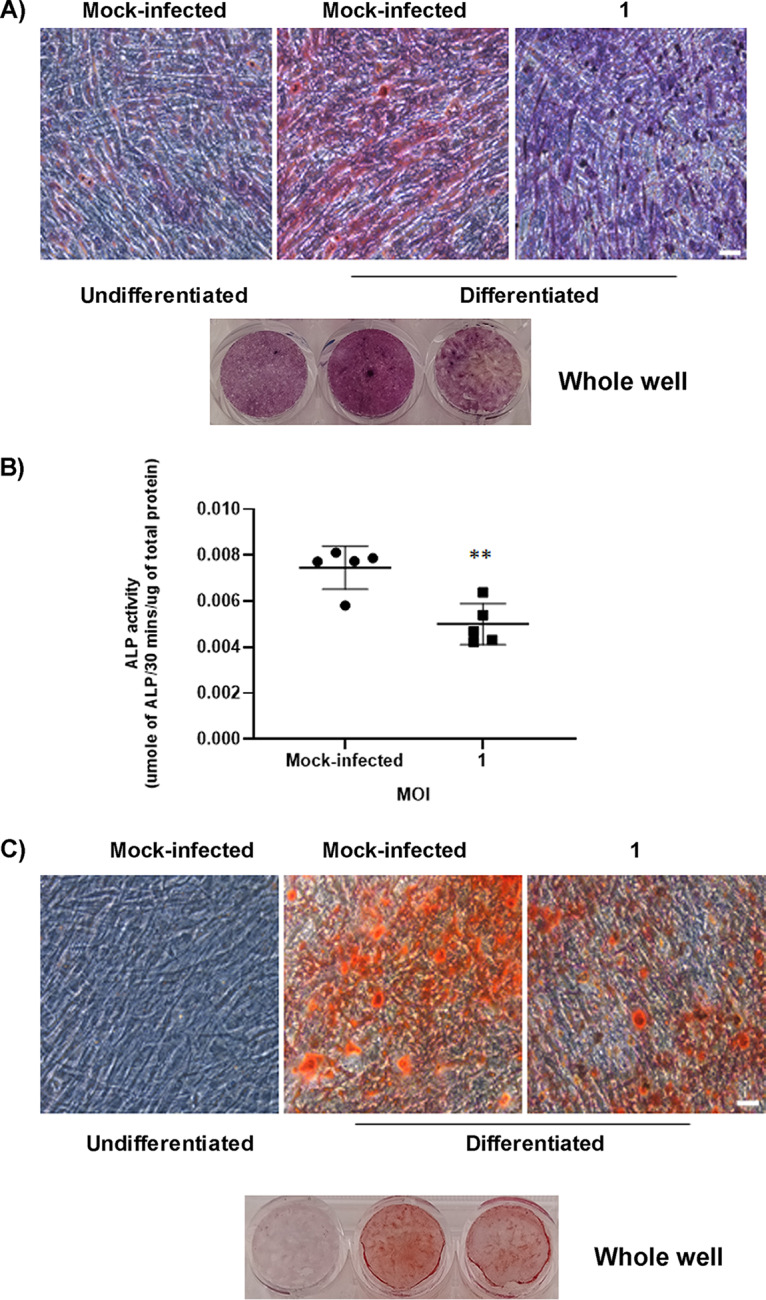
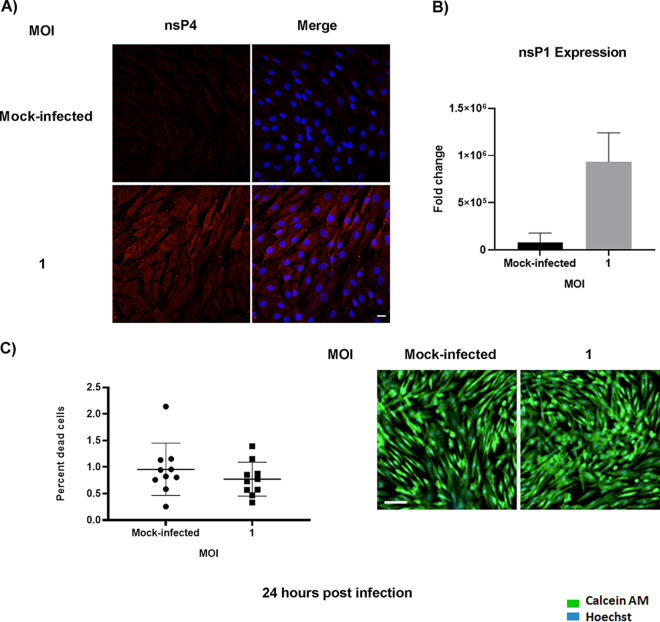
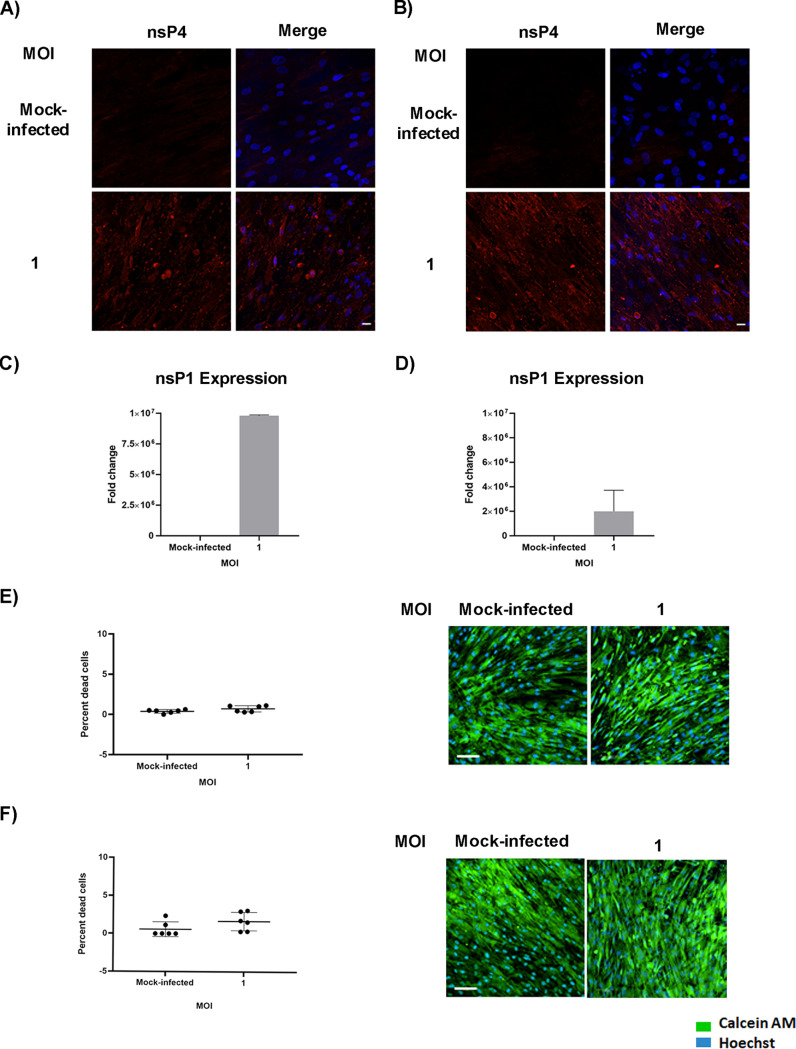
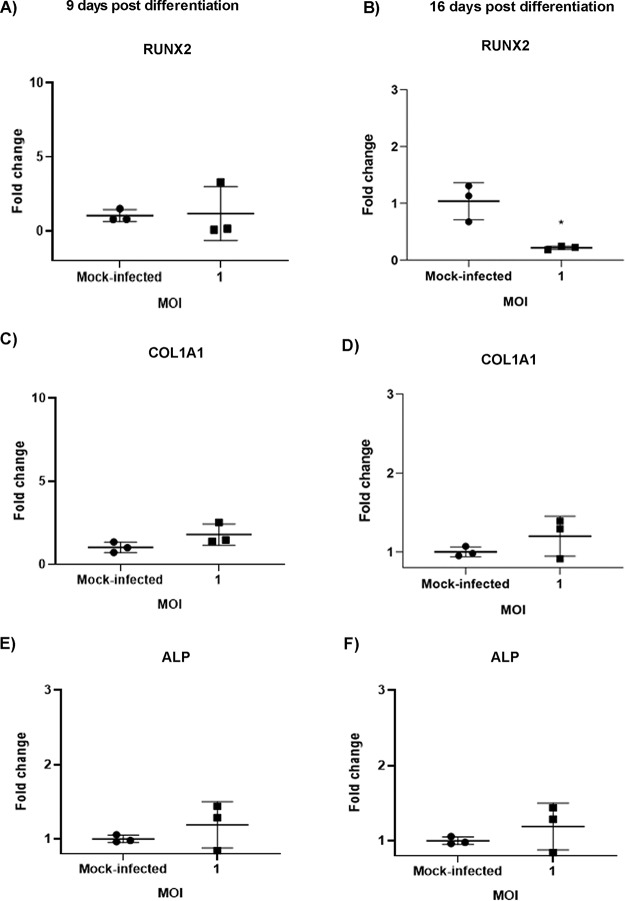
Chikungunya virus (CHIKV) is a positive-sense, single-stranded RNA virus spread by the species of mosquito. Chikungunya virus causes a condition characterized by high fever, headache, rash, and joint pain. Recent investigations reveal the presence of bone lesions and erosive arthritis in the joints of CHIKV-infected patients, indicating an association of bone pathology with CHIKV infection. However, the molecular mechanism underlying CHIKV-induced bone pathology remains poorly defined. Bone marrow-derived mesenchymal stem cells (BMSCs) contribute to bone homeostasis by differentiating into osteogenic cells which later mature to form the bone. Disruption of osteogenic differentiation and function of BMSCs leads to bone pathologies. Studies show that virus infections can alter the properties and function of BMSCs. However, to date, pathogenesis of CHIKV infection in this context has not been studied. In the current study, we investigated the susceptibility of BMSCs and osteogenic cells to CHIKV and studied the effect of infection on these cells. For the first time to our knowledge, we report that CHIKV can productively infect BMSCs and osteogenic cells. We also observed decreased gene expression of the major regulator of osteogenic differentiation, RUNX2, in CHIKV-infected osteogenic cells. Furthermore, impaired functional properties of osteogenic cells, i.e., decreased production and activity of alkaline phosphatase (ALP) and matrix mineralization, were observed in the presence of CHIKV infection. Thus, we conclude that CHIKV likely impairs osteogenic differentiation of BMSCs, indicating a possible role of BMSCs in altering bone homeostasis during CHIKV infection. Presently, no vaccines or treatment options are available for CHIKV infection. Joint pain is one of the major concerns. Although studies have shown an association between bone pathology and infection, the molecular pathogenesis in the context of bone pathology is poorly defined. Here, we demonstrate for the first time that BMSCs and BMSC-derived osteogenic cells are susceptible to CHIKV infection, and that infection likely alters the function of osteogenic cells. This study highlights altered osteogenic differentiation as a possible mechanism for causing the bone pathology observed in CHIKV pathogenesis.
基孔肯雅热病毒(CHIKV)是一种正链、单链 RNA 病毒,由蚊子传播。基孔肯雅热病毒引起的病症特征为高热、头痛、皮疹和关节疼痛。最近的研究表明,在感染 CHIKV 的患者的关节中存在骨病变和侵蚀性关节炎,表明骨病理学与 CHIKV 感染有关。然而,CHIKV 诱导的骨病理学的分子机制仍未明确定义。骨髓间充质干细胞(BMSCs)通过分化为成骨细胞来参与骨稳态,成骨细胞随后成熟形成骨骼。BMSCs 的成骨分化和功能的破坏会导致骨病变。研究表明,病毒感染可以改变 BMSCs 的特性和功能。然而,迄今为止,在这种情况下 CHIKV 感染的发病机制尚未得到研究。在本研究中,我们研究了 BMSCs 和成骨细胞对 CHIKV 的易感性,并研究了感染对这些细胞的影响。据我们所知,这是首次报道 CHIKV 可以有效地感染 BMSCs 和成骨细胞。我们还观察到感染 CHIKV 的成骨细胞中主要成骨分化调节因子 RUNX2 的基因表达降低。此外,在 CHIKV 感染存在的情况下,成骨细胞的功能特性也受到损害,即碱性磷酸酶(ALP)的产生和活性以及基质矿化减少。因此,我们得出结论,CHIKV 可能会损害 BMSCs 的成骨分化,表明 BMSCs 在 CHIKV 感染期间改变骨稳态中可能发挥作用。目前,尚无针对 CHIKV 感染的疫苗或治疗选择。关节疼痛是主要关注点之一。尽管研究表明骨病理学与感染之间存在关联,但在骨病理学背景下的分子发病机制仍未明确定义。在这里,我们首次证明 BMSCs 和 BMSC 衍生的成骨细胞容易感染 CHIKV,并且感染可能改变成骨细胞的功能。这项研究强调了成骨分化的改变可能是导致 CHIKV 发病机制中观察到的骨病理学的一种机制。