Carrocci Tucker J, Neugebauer Karla M
Department of Molecular Biophysics and Biochemistry, Yale University, New Haven, Connecticut 06520, USA.
Cold Spring Harb Symp Quant Biol. 2019;84:11-20. doi: 10.1101/sqb.2019.84.040402. Epub 2020 Jun 3.
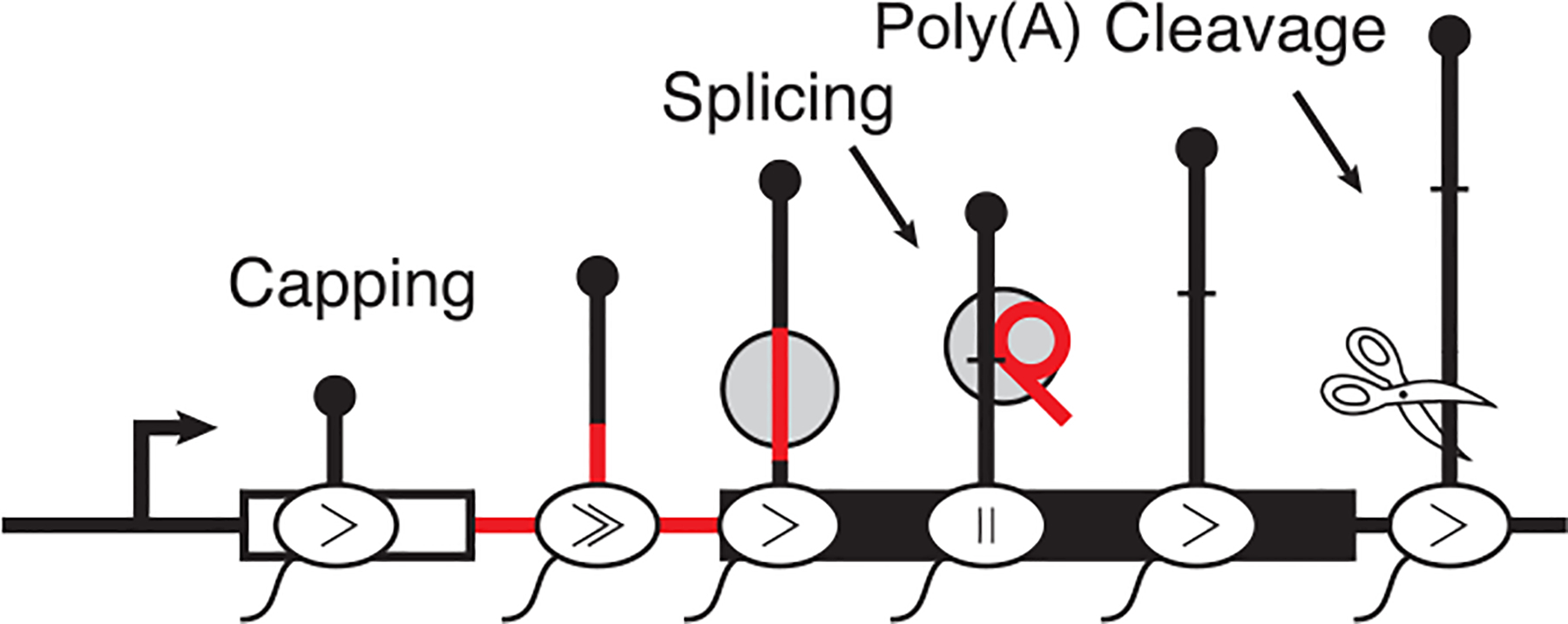
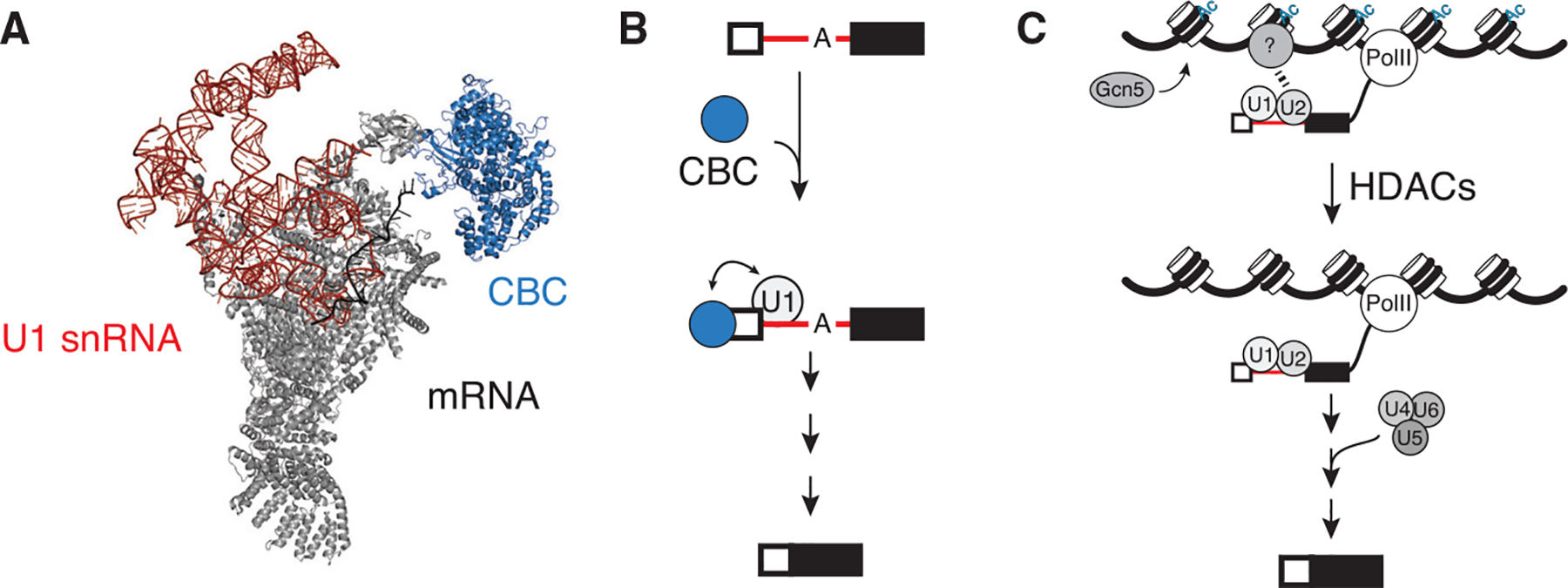
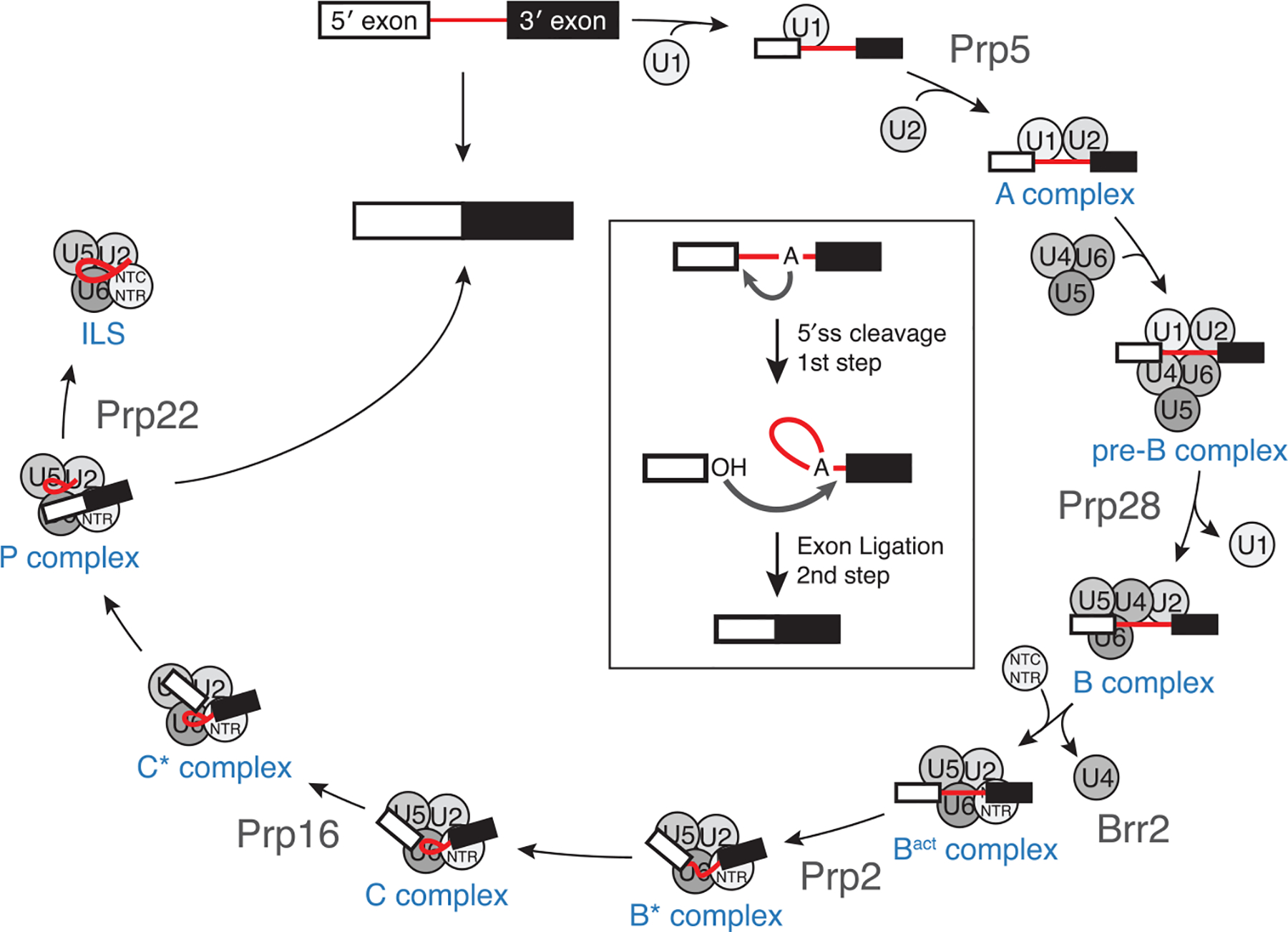
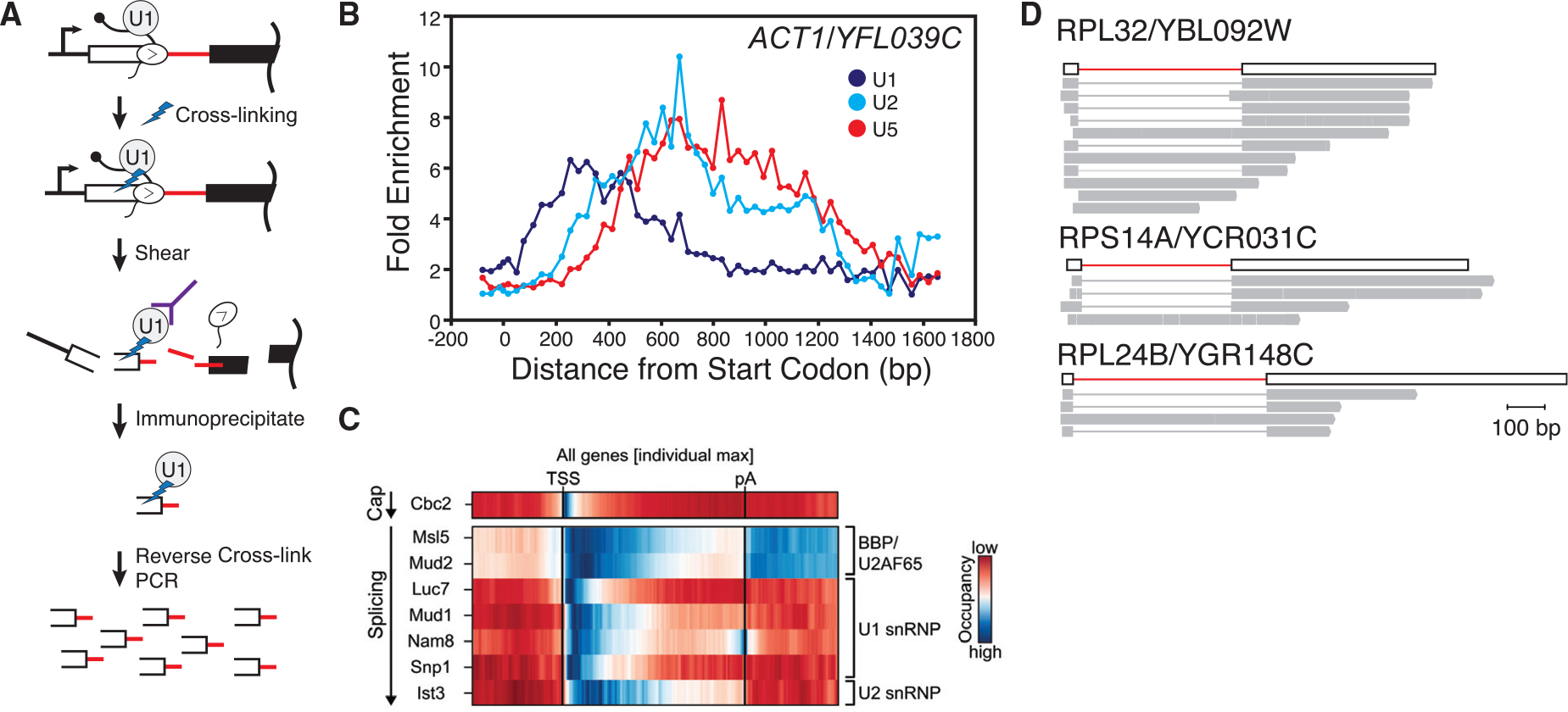
Eukaryotic gene expression requires the cumulative activity of multiple molecular machines to synthesize and process newly transcribed pre-messenger RNA. Introns, the noncoding regions in pre-mRNA, must be removed by the spliceosome, which assembles on the pre-mRNA as it is transcribed by RNA polymerase II (Pol II). The assembly and activity of the spliceosome can be modulated by features including the speed of transcription elongation, chromatin, post-translational modifications of Pol II and histone tails, and other RNA processing events like 5'-end capping. Here, we review recent work that has revealed cooperation and coordination among co-transcriptional processing events and speculate on new avenues of research. We anticipate new mechanistic insights capable of unraveling the relative contribution of coupled processing to gene expression.
真核基因表达需要多种分子机器协同作用,以合成和加工新转录的前体信使RNA。前体mRNA中的非编码区域——内含子,必须由剪接体去除,剪接体在RNA聚合酶II(Pol II)转录前体mRNA时组装在前体mRNA上。剪接体的组装和活性可受到多种因素的调节,包括转录延伸速度、染色质、Pol II和组蛋白尾巴的翻译后修饰,以及其他RNA加工事件,如5'端加帽。在这里,我们综述了最近的研究工作,这些工作揭示了共转录加工事件之间的合作与协调,并对新的研究途径进行了推测。我们期待能有新的机制性见解,以阐明偶联加工对基因表达的相对贡献。