Lim Gah-Hyun, Liu Huazhen, Yu Keshun, Liu Ruiying, Shine M B, Fernandez Jessica, Burch-Smith Tessa, Mobley Justin K, McLetchie Nicholas, Kachroo Aardra, Kachroo Pradeep
Department of Plant Pathology, University of Kentucky, Lexington, KY 40546, USA.
Department of Biochemistry & Cellular and Molecular Biology, University of Tennessee, TN 37996, USA.
Sci Adv. 2020 May 6;6(19):eaaz0478. doi: 10.1126/sciadv.aaz0478. eCollection 2020 May.
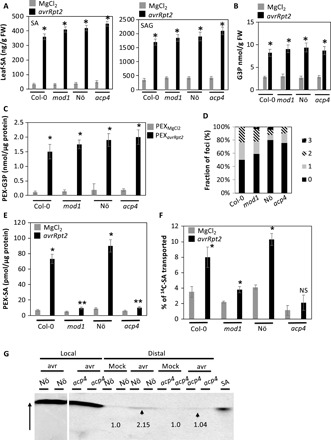
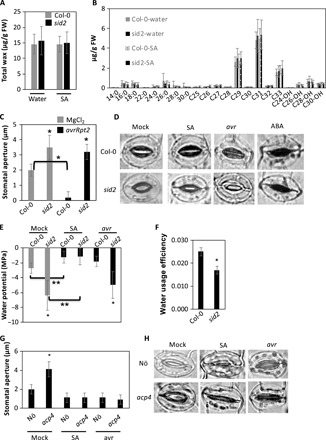
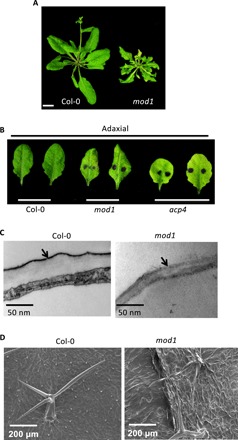
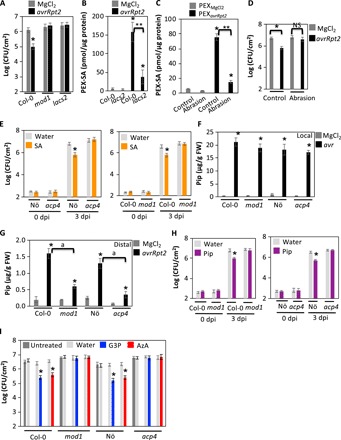
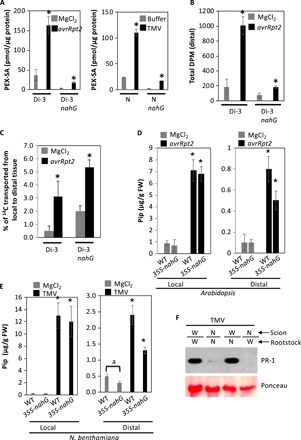
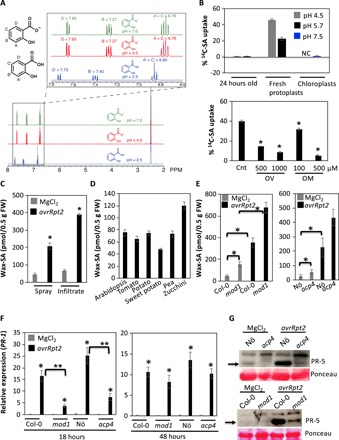
The plant cuticle is often considered a passive barrier from the environment. We show that the cuticle regulates active transport of the defense hormone salicylic acid (SA). SA, an important regulator of systemic acquired resistance (SAR), is preferentially transported from pathogen-infected to uninfected parts via the apoplast. Apoplastic accumulation of SA, which precedes its accumulation in the cytosol, is driven by the pH gradient and deprotonation of SA. In cuticle-defective mutants, increased transpiration and reduced water potential preferentially routes SA to cuticle wax rather than to the apoplast. This results in defective long-distance transport of SA, which in turn impairs distal accumulation of the SAR-inducer pipecolic acid. High humidity reduces transpiration to restore systemic SA transport and, thereby, SAR in cuticle-defective mutants. Together, our results demonstrate that long-distance mobility of SA is essential for SAR and that partitioning of SA between the symplast and cuticle is regulated by transpiration.
植物角质层通常被认为是与外界环境之间的一道被动屏障。我们发现,角质层可调节防御激素水杨酸(SA)的主动运输。SA是系统获得性抗性(SAR)的重要调节因子,它优先通过质外体从受病原体感染的部位运输到未感染的部位。SA在质外体中的积累先于其在细胞质中的积累,这是由pH梯度和SA的去质子化驱动的。在角质层缺陷型突变体中,蒸腾作用增强和水势降低会使SA优先运输到角质层蜡质而不是质外体。这导致SA的长距离运输出现缺陷,进而损害了SAR诱导剂哌啶酸在远端的积累。高湿度会降低蒸腾作用,从而恢复角质层缺陷型突变体中SA的系统运输以及SAR。我们的研究结果共同表明,SA的长距离移动对SAR至关重要,并且SA在共质体和角质层之间的分配受蒸腾作用调节。