Yu Yang, Ma Yue, Sun Mengyao, Jiang Wenyan, Yuan Tingting, Tong Dan
Department of Radiology.
Department of Internal Oncology, The First Hospital of Jilin University, Changchun, Jilin, China.
Medicine (Baltimore). 2020 Jun 5;99(23):e20270. doi: 10.1097/MD.0000000000020270.
The accurate differentiation of glioma recurrence from pseudoprogression (PSP) after therapy remains a considerable clinical challenge. Several studies have shown that diffusion magnetic resonance imaging (MRI) has potential value in distinguishing these 2 outcomes. The current meta-analysis examined the diagnostic accuracy of diffusion MRI with the apparent diffusion coefficient (ADC) in the differentiation of glioma recurrence from PSP.
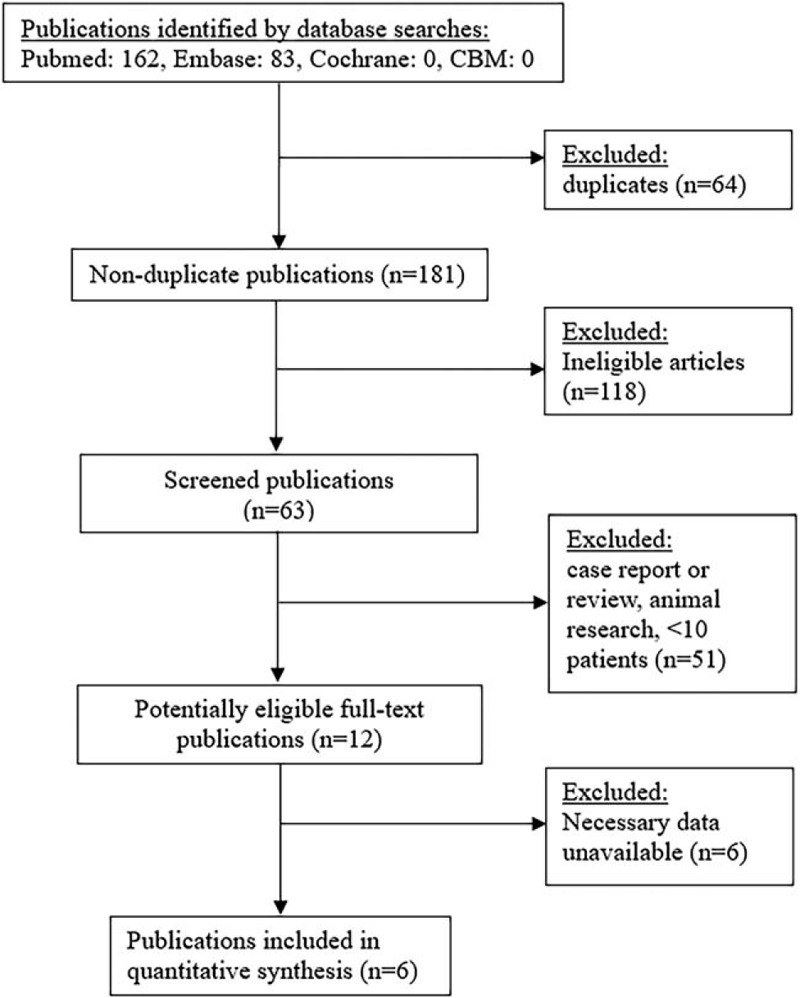
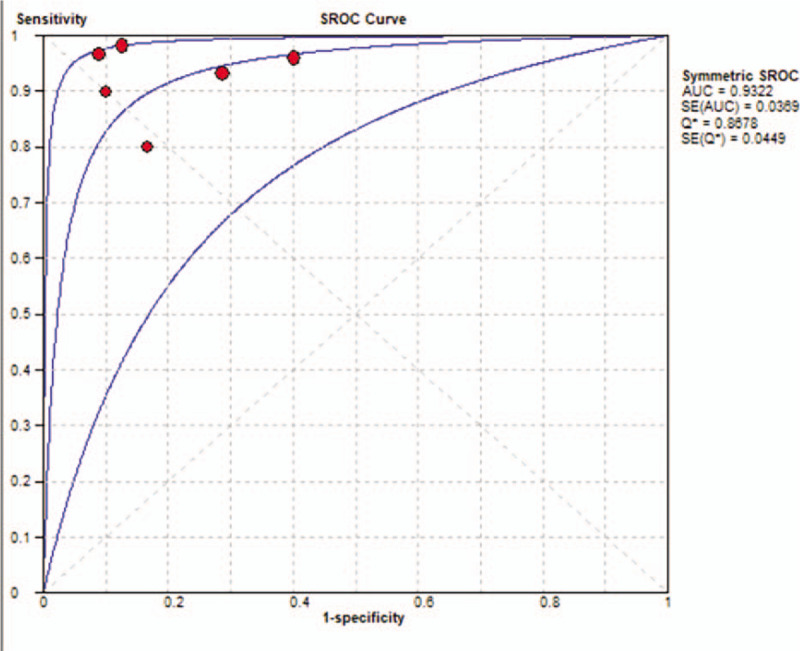
PubMed, Embase, Cochrane Library, and Chinese Biomedical databases were reviewed to identify studies that fulfilled our inclusion/exclusion criteria and were published on or before May 5, 2019. Threshold effects; heterogeneity; pooled sensitivity (SENS), specificity, positive likelihood ratio, and negative likelihood ratio; and diagnostic odds ratio were calculated. The overall diagnostic usefulness of diffusion MRI-derived ADC values was assessed by calculating the area under the curve (AUC) following summary receiver operating characteristic (SROC) analysis.
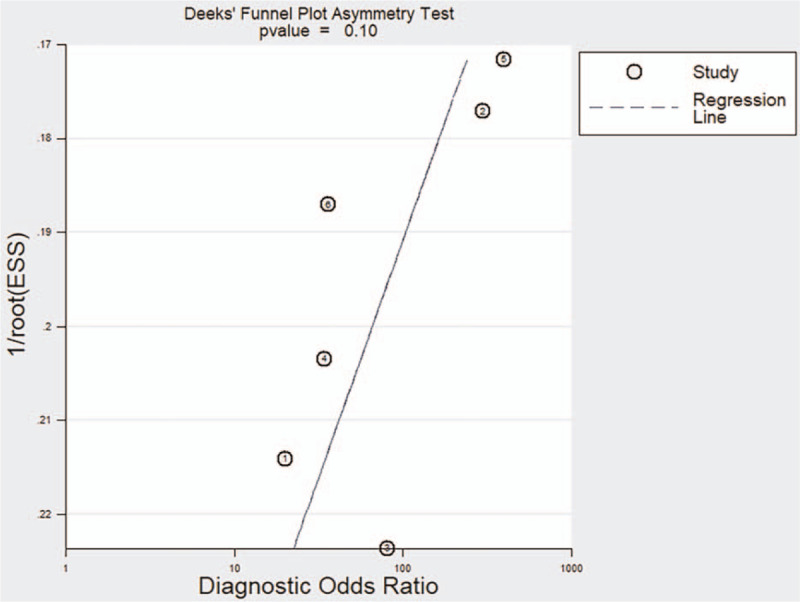
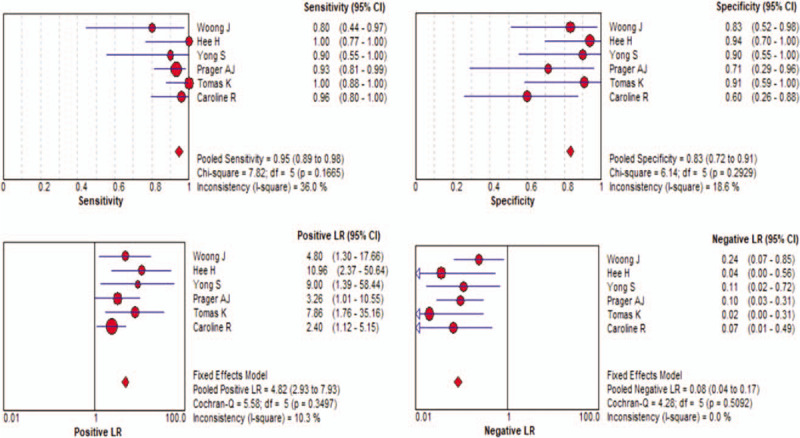
Six eligible studies examined a total of 214 patients. Calculation of pooled values indicated the SENS was 0.95 (95% confidence interval [CI] = 0.89-0.98), specificity was 0.83 (95% CI = 0.72-0.91), positive likelihood ratio was 4.82 (95% CI = 2.93-7.93), negative likelihood ratio was 0.08 (95% CI = 0.04-0.17), and diagnostic odds ratio was 59.63 (95% CI = 22.63-157.37). The SROC AUC was 0.9322. Publication bias was not significant, and SENS analysis indicated the results were relatively stable.
Our meta-analysis indicated that diffusion MRI with quantitative ADC is an effective approach for differentiation of glioma recurrence from PSP, and can be used as an auxiliary tool to diagnose glioma progression.
准确区分治疗后胶质瘤复发与假性进展(PSP)仍是一项重大的临床挑战。多项研究表明,扩散磁共振成像(MRI)在区分这两种结果方面具有潜在价值。本荟萃分析探讨了基于表观扩散系数(ADC)的扩散MRI在鉴别胶质瘤复发与PSP中的诊断准确性。
检索PubMed、Embase、Cochrane图书馆和中国生物医学数据库,以识别符合纳入/排除标准且于2019年5月5日或之前发表的研究。计算阈值效应、异质性、合并敏感度(SENS)、特异度、阳性似然比和阴性似然比以及诊断比值比。通过汇总接受者操作特征(SROC)分析计算曲线下面积(AUC),评估扩散MRI衍生的ADC值的总体诊断效用。
六项符合条件的研究共纳入214例患者。合并值计算表明,SENS为0.95(95%置信区间[CI]=0.89-0.98),特异度为0.83(95%CI=0.72-0.91),阳性似然比为4.82(95%CI=2.93-7.93),阴性似然比为0.08(95%CI=0.04-0.17),诊断比值比为59.63(95%CI=22.63-157.37)。SROC AUC为0.9322。发表偏倚不显著,SENS分析表明结果相对稳定。
我们的荟萃分析表明,基于定量ADC的扩散MRI是区分胶质瘤复发与PSP的有效方法,可作为诊断胶质瘤进展的辅助工具。