National Centre for Biotechnology, King Abdulaziz City for Science and Technology, Riyadh 11442, Saudi Arabia.
Institute of Bioinformatics, University of Georgia, Athens, GA 30602, USA.
Viruses. 2020 Jun 3;12(6):611. doi: 10.3390/v12060611.
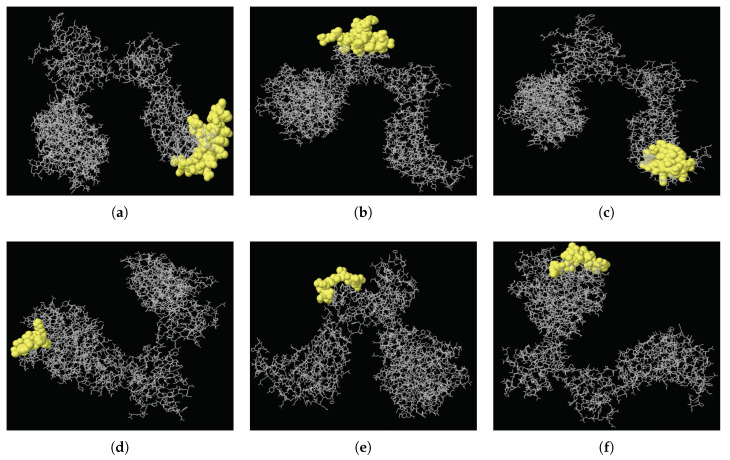
Middle East respiratory syndrome coronavirus (MERS-CoV) causes severe respiratory illness in humans; the second-largest and most deadly outbreak to date occurred in Saudi Arabia. The dromedary camel is considered a possible host of the virus and also to act as a reservoir, transmitting the virus to humans. Here, we studied evolutionary relationships for 31 complete genomes of betacoronaviruses, including eight newly sequenced MERS-CoV genomes isolated from dromedary camels in Saudi Arabia. Through bioinformatics tools, we also used available sequences and 3D structure of MERS-CoV spike glycoprotein to predict MERS-CoV epitopes and assess antibody binding affinity. Phylogenetic analysis showed the eight new sequences have close relationships with existing strains detected in camels and humans in Arabian Gulf countries. The 2019-nCov strain appears to have higher homology to both bat coronavirus and SARS-CoV than to MERS-CoV strains. The spike protein tree exhibited clustering of MERS-CoV sequences similar to the complete genome tree, except for one sequence from Qatar (KF961222). B cell epitope analysis determined that the MERS-CoV spike protein has 24 total discontinuous regions from which just six epitopes were selected with score values of >80%. Our results suggest that the virus circulates by way of camels crossing the borders of Arabian Gulf countries. This study contributes to finding more effective vaccines in order to provide long-term protection against MERS-CoV and identifying neutralizing antibodies.
中东呼吸综合征冠状病毒(MERS-CoV)可导致人类严重的呼吸道疾病;截至目前,第二大规模和最致命的疫情发生在沙特阿拉伯。单峰驼被认为是该病毒的可能宿主,也可能作为病毒的储存宿主,将病毒传播给人类。在这里,我们研究了包括从沙特阿拉伯的单峰驼中分离出的 8 株新测序的 MERS-CoV 基因组在内的 31 株完整β冠状病毒的进化关系。通过生物信息学工具,我们还利用现有的 MERS-CoV 刺突糖蛋白序列和 3D 结构,预测了 MERS-CoV 表位并评估了抗体结合亲和力。系统发育分析表明,这 8 个新序列与在阿拉伯海湾国家骆驼和人群中检测到的现有菌株密切相关。2019-nCoV 株似乎与蝙蝠冠状病毒和 SARS-CoV 的同源性高于与 MERS-CoV 株的同源性。刺突蛋白树的聚类与完整基因组树相似,但来自卡塔尔的一个序列(KF961222)除外。B 细胞表位分析确定,MERS-CoV 刺突蛋白共有 24 个不连续区域,其中只有 6 个表位的得分值>80%。我们的研究结果表明,该病毒通过骆驼跨越阿拉伯海湾国家的边界传播。本研究有助于寻找更有效的疫苗,以提供对 MERS-CoV 的长期保护并鉴定中和抗体。