Institute of Non-Communicable Disease Control and Prevention, Guangdong Provincial Center for Disease Control And Prevention, 160 Qunxian Road, Panyu District, Guangzhou, Guangdong, China.
Department of Epidemiology and Biostatistics, School of Public Health, Guangdong Pharmaceutical University, Guangzhou, China.
BMC Public Health. 2020 Jun 5;20(1):858. doi: 10.1186/s12889-020-8420-7.
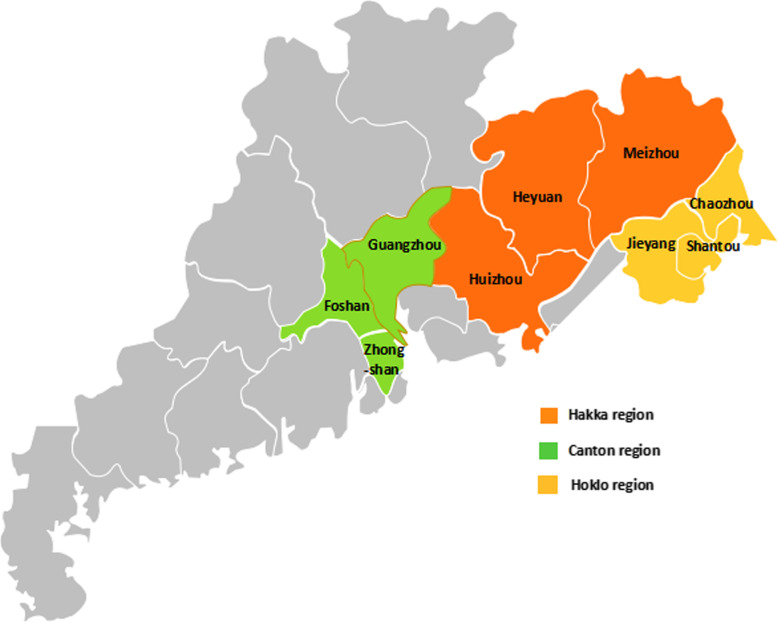
Guangdong province is dominated by three cultural regions: Canton, Hakka and Hoklo. However, little is known about the disease burden within these regions, particularly because different population,environmental and socioeconomic risk factors might cause different patterns of mortality, disability-adjusted life-years (DALY), life expectancy and healthy life expectancy (HALE). We aimed to compare the patterns of disease burden in Canton, Hakka and Hoklo regions between 2005 and 2015.
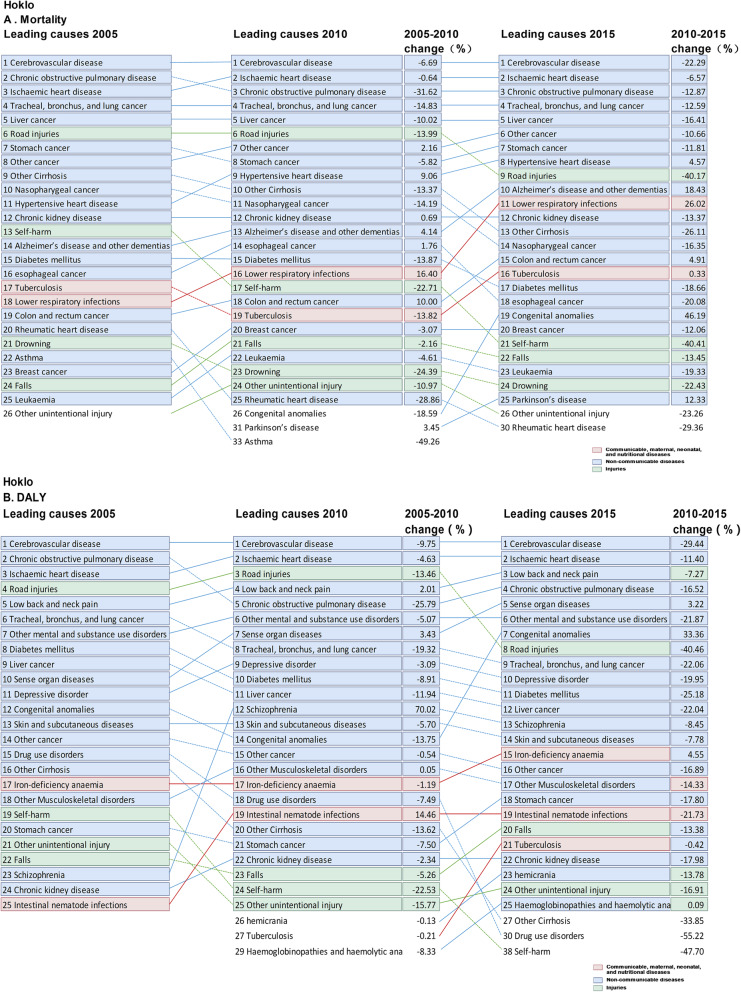
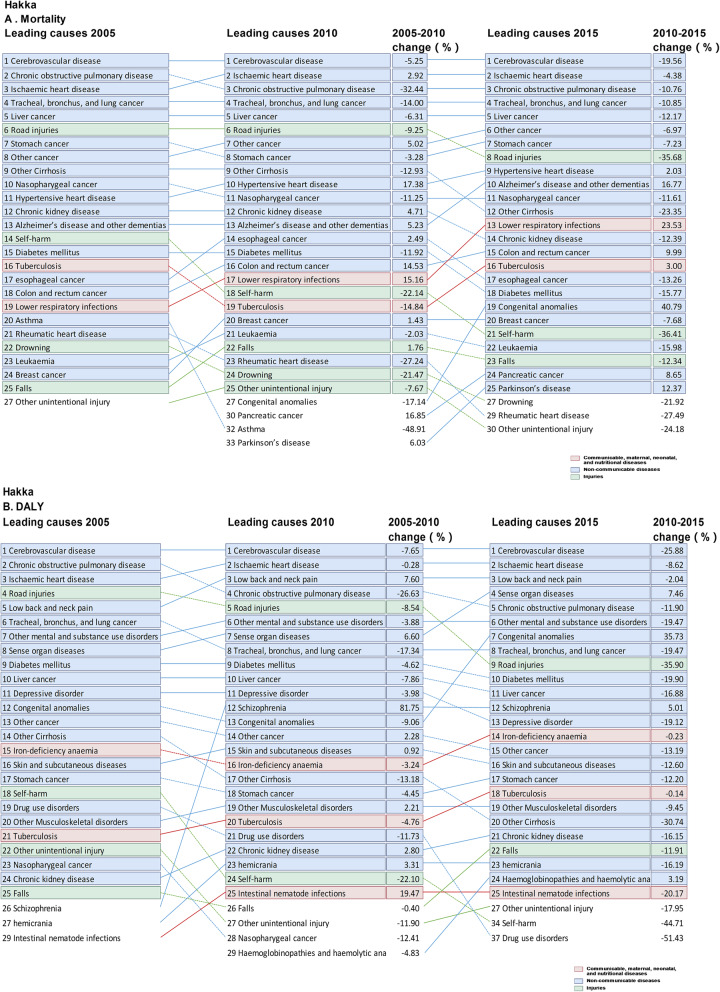
We calculated the mortality, YLL, YLD for 116 diseases for different cultural regions between 2005 and 2015. We calculated the DALYs for 116 causes as the sum of YLLs and YLDs. We estimated the life expectancy and HALE by using sex-specific mortality rates and YLDs for the three cultural regions.
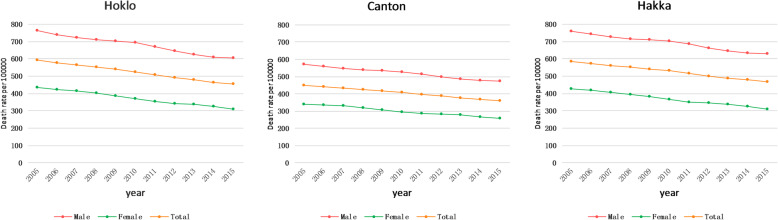
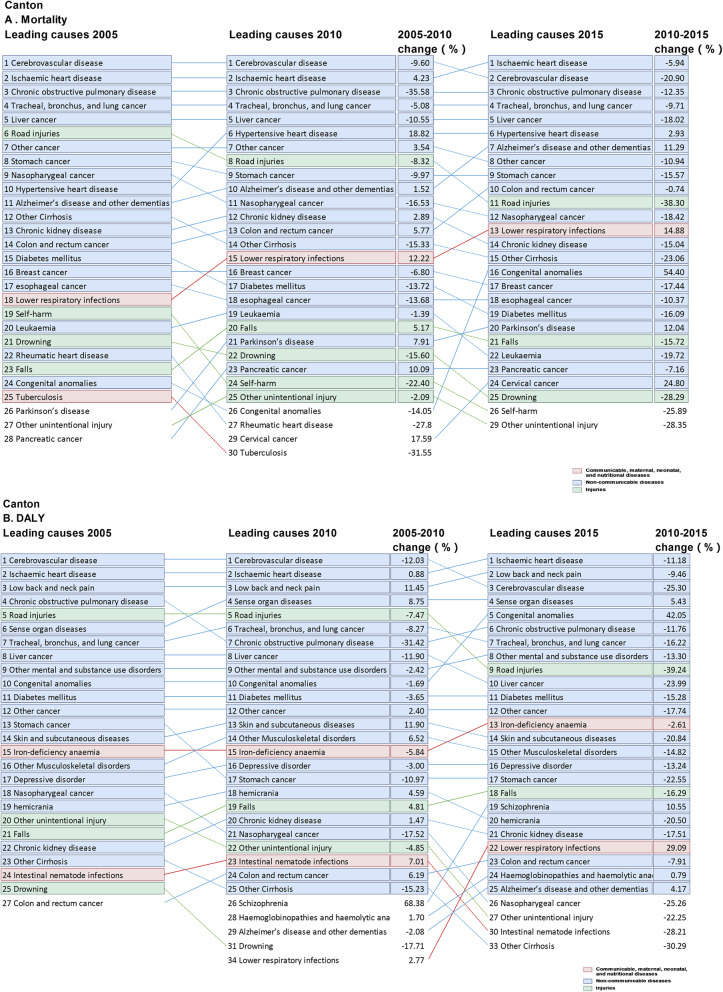
With a respective reduction of 22.3, 15.8 and 17.8% in 2015 compared with 2005, the age-standardized DALY rates in 2015 was 19,988.0, 14,396.5 and 20,436.6 in Hakka, Canton and Hoklo region. Canton region had a significantly lower mortality and DALYs in most diseases, followed by Hoklo and Hakka regions. The life expectancy and HALE at birth were highest in Canton region in both 2005 and 2015, than in Hoklo and Hakka region.
Our findings call for improved public health care via the refinement of policy and effective measures for disease prevention. Understanding the environmental and culture-related risk factors of diseases in Hoklo and Hakka regions may help inform public health sectors to reduce the disease burden and the between-region inequality.
广东省主要分为三个文化区域:广府、客家和潮汕。然而,对于这些地区的疾病负担知之甚少,特别是因为不同的人口、环境和社会经济风险因素可能导致不同的死亡率、伤残调整生命年(DALY)、预期寿命和健康期望寿命(HALE)模式。我们旨在比较 2005 年至 2015 年期间广府、客家和潮汕地区的疾病负担模式。
我们计算了 2005 年至 2015 年期间不同文化区域的 116 种疾病的死亡率、YLL 和 YLD。我们将 116 种病因的 DALY 计算为 YLL 和 YLD 的总和。我们使用三个文化区域的性别特异性死亡率和 YLD 来估计预期寿命和 HALE。
与 2005 年相比,2015 年的年龄标准化 DALY 率分别下降了 22.3%、15.8%和 17.8%,客家、广府和潮汕地区的 DALY 率分别为 19988.0、14396.5 和 20436.6。在大多数疾病中,广府地区的死亡率和 DALY 明显较低,其次是潮汕和客家地区。在 2005 年和 2015 年,广府地区的出生预期寿命和 HALE 均最高,而潮汕和客家地区则较低。
我们的研究结果呼吁通过改进政策和采取有效的疾病预防措施来改善公共卫生保健。了解潮汕和客家地区与环境和文化相关的疾病风险因素可能有助于为公共卫生部门提供信息,以减轻疾病负担和减少地区间不平等。