State Key Laboratory of Stem Cell and Reproductive Biology, Institute of Zoology, Chinese Academy of Sciences, Beijing, 100101, China.
University of Chinese Academy of Sciences, Beijing, 100049, China.
Protein Cell. 2020 Jul;11(7):483-504. doi: 10.1007/s13238-020-00728-4. Epub 2020 Jun 6.
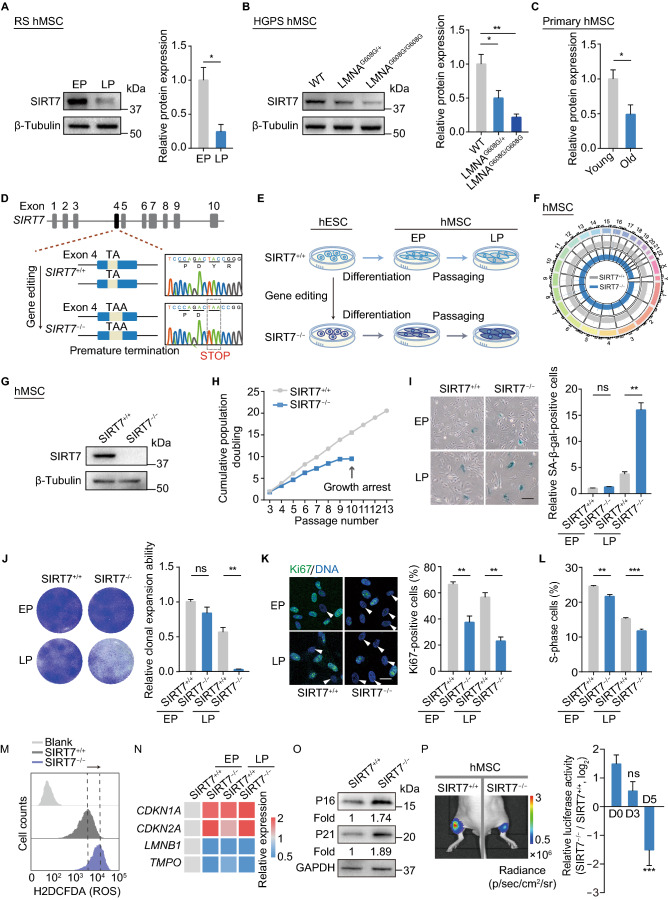
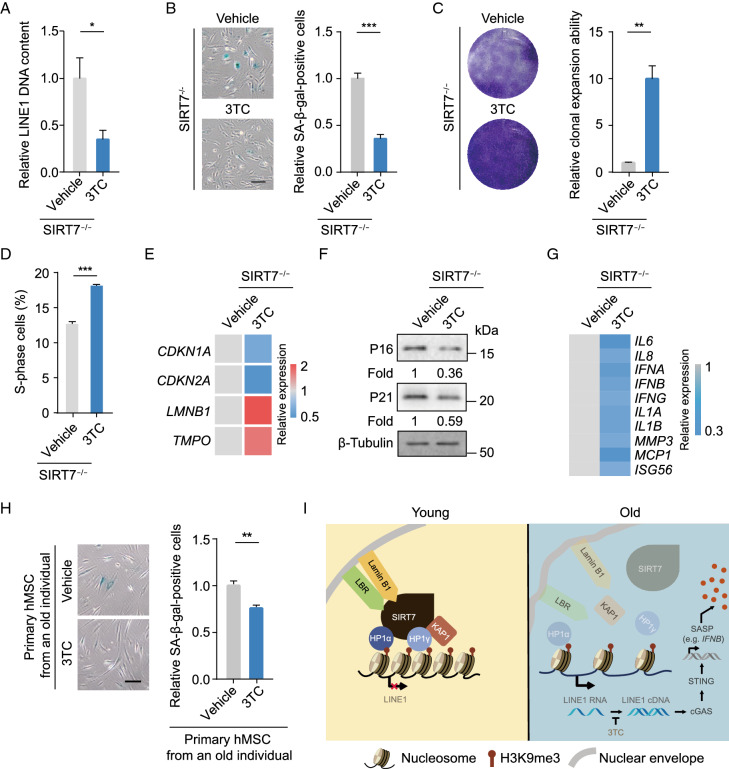
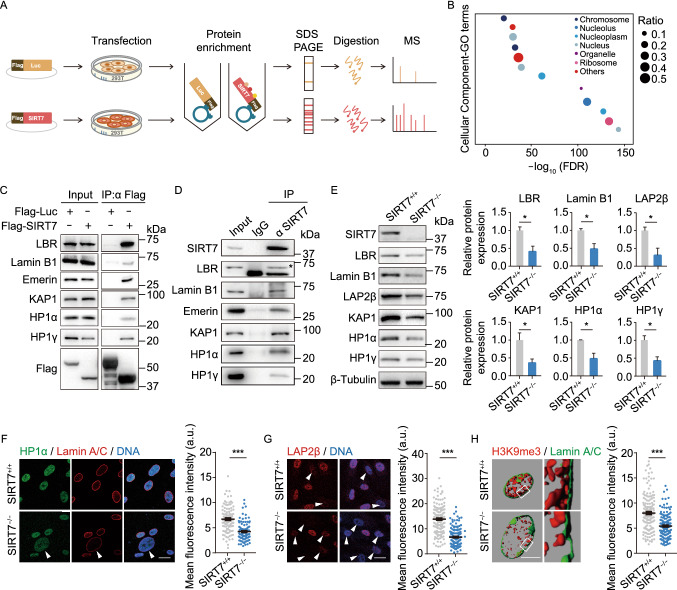
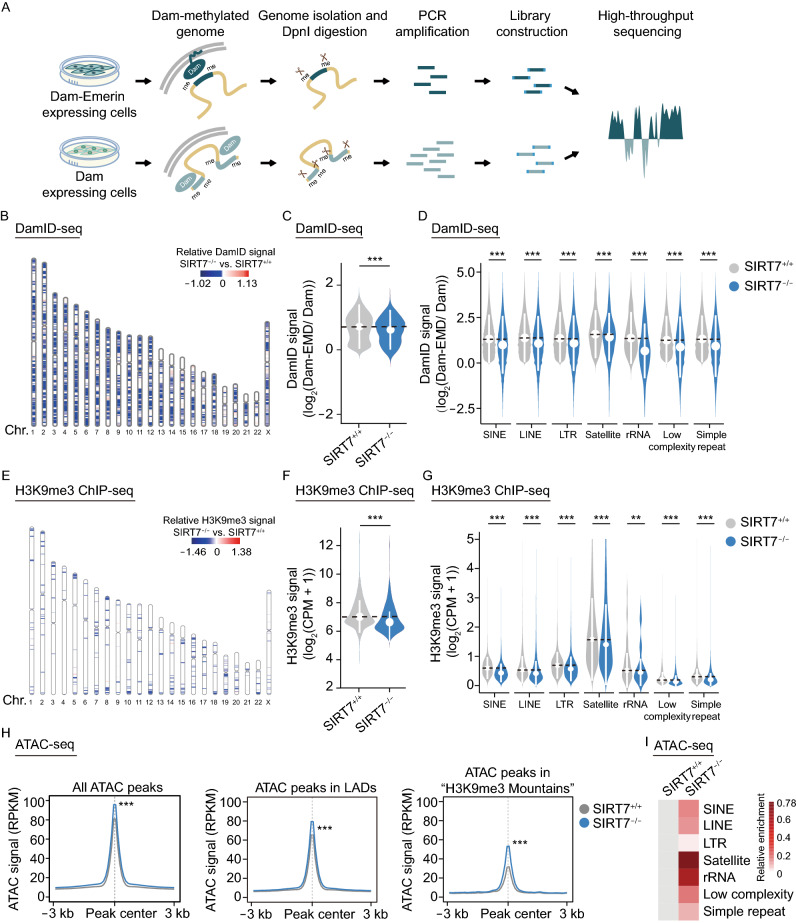
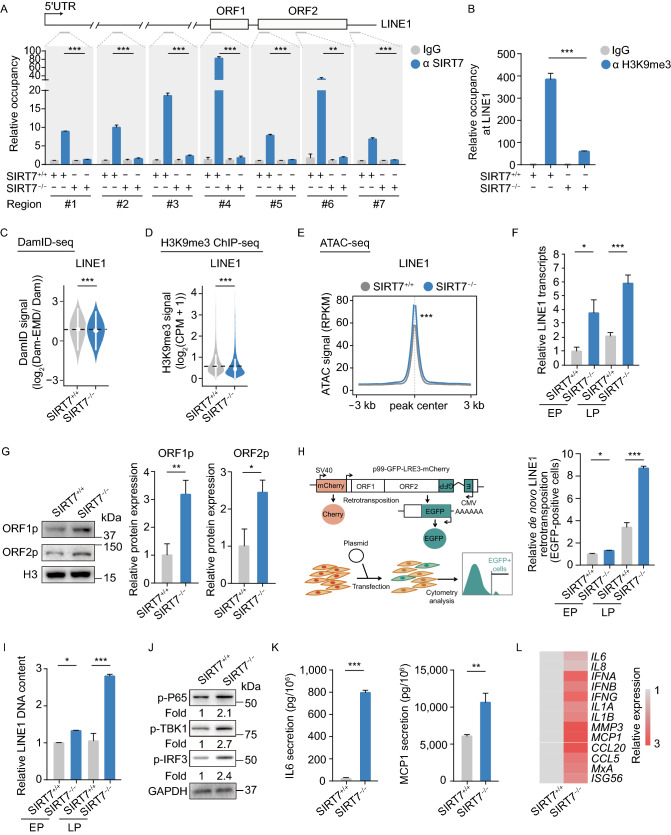
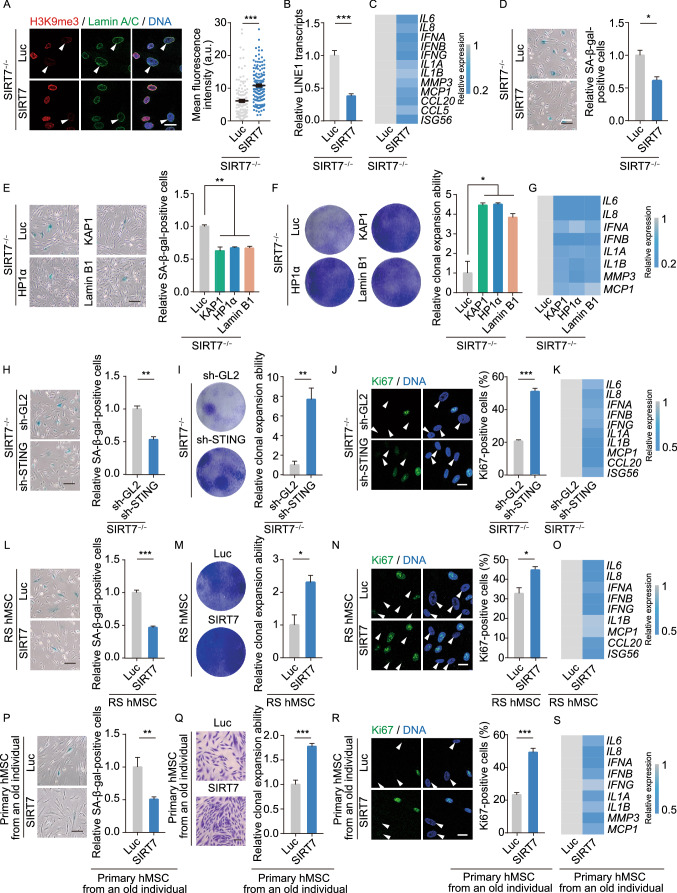
SIRT7, a sirtuin family member implicated in aging and disease, is a regulator of metabolism and stress responses. It remains elusive how human somatic stem cell populations might be impacted by SIRT7. Here, we found that SIRT7 expression declines during human mesenchymal stem cell (hMSC) aging and that SIRT7 deficiency accelerates senescence. Mechanistically, SIRT7 forms a complex with nuclear lamina proteins and heterochromatin proteins, thus maintaining the repressive state of heterochromatin at nuclear periphery. Accordingly, deficiency of SIRT7 results in loss of heterochromatin, de-repression of the LINE1 retrotransposon (LINE1), and activation of innate immune signaling via the cGAS-STING pathway. These aging-associated cellular defects were reversed by overexpression of heterochromatin proteins or treatment with a LINE1 targeted reverse-transcriptase inhibitor. Together, these findings highlight how SIRT7 safeguards chromatin architecture to control innate immune regulation and ensure geroprotection during stem cell aging.
SIRT7 是一种与衰老和疾病有关的 sirtuin 家族成员,是代谢和应激反应的调节剂。目前尚不清楚 SIRT7 如何影响人类体干细胞群体。在这里,我们发现 SIRT7 在人类间充质干细胞 (hMSC) 衰老过程中表达下降,并且 SIRT7 缺失会加速衰老。从机制上讲,SIRT7 与核纤层蛋白和异染色质蛋白形成复合物,从而维持核周异染色质的抑制状态。因此,SIRT7 的缺失会导致异染色质丢失、LINE1 逆转录转座子 (LINE1) 去抑制以及通过 cGAS-STING 途径激活先天免疫信号。这些与衰老相关的细胞缺陷可以通过异染色质蛋白的过表达或 LINE1 靶向逆转录酶抑制剂的治疗来逆转。总之,这些发现强调了 SIRT7 如何保护染色质结构以控制先天免疫调节并确保干细胞衰老过程中的 geroprotection。